


 March 29, 2019, 03:03 AM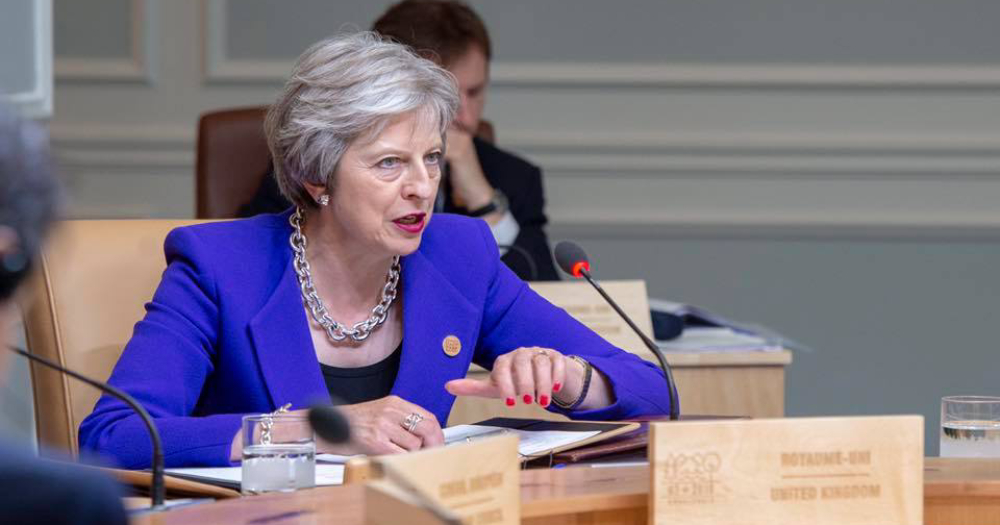

On March 27, 2019, yet another twist was added to the sh*tstorm popularly known as Brexit.
The Guardian reported that British Prime Minister Theresa May has told her party that she will resign as Prime Minister if her Brexit withdrawal agreement is approved by parliament.
[caption id="" align="alignnone" width="960"]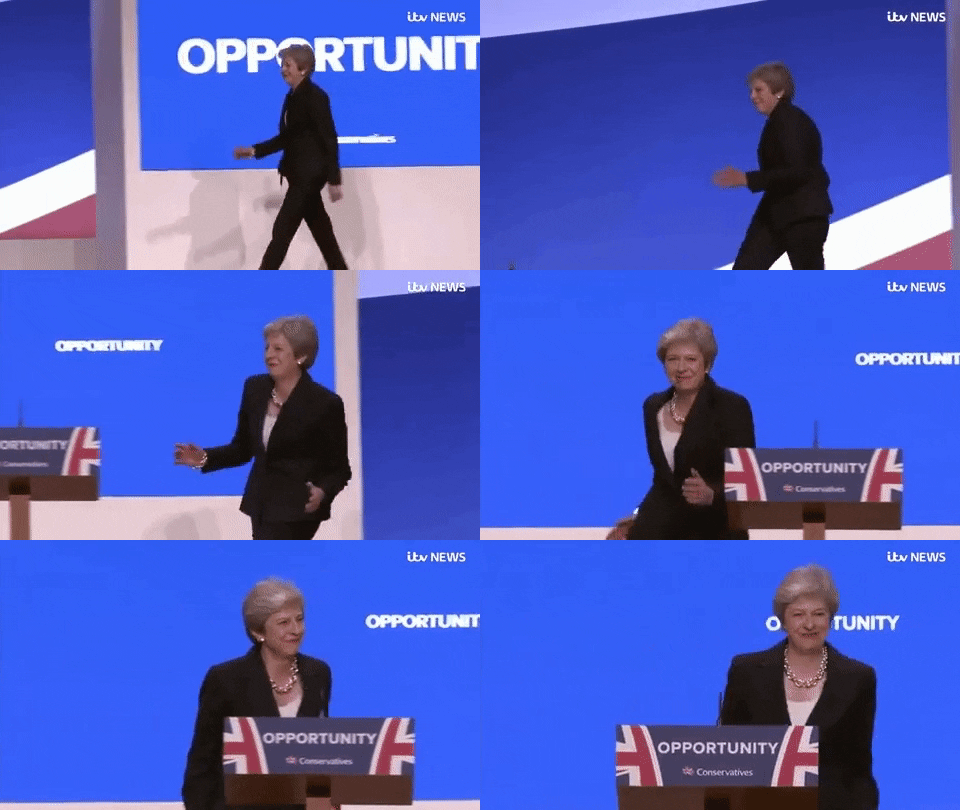 Dancing out of office and away from all her troubles. From Giphy.[/caption]
It will be the third attempt by May to pass her Brexit deal, and one can't help but look at this latest move as a desperate attempt to salvage a bad situation.
But how did it get to the point where the United Kingdom's head of government has to dangle her resignation as a prize (or price, depends on who you ask) for Members of Parliament (MPs)?
And what the heck is even going on with Brexit?
May’s Brexit Deal
Let's start with the basics.
May is trying to get support for the withdrawal agreement that she had negotiated with the European Union.
It is basically the terms of separation between the UK and the EU.
According to The Guardian, the three major components of the deal include:
- The UK’s financial settlement with the EU to meet agreed commitments
- What will happen to EU citizens in the UK and UK citizens in the EU
- And the backstop, which is a workaround on the prospect of a “hard border” between Ireland and Northern Ireland.
The last component has proved to be the major sticking point that MPs have with May’s deal.
What is the backstop?
The backstop controversy is centred on the Republic of Ireland (IRL), which is part of the EU, and Northern Ireland (NIR), which is part of the UK.
In theory, after Brexit, there should be a hard border separating the two.
However, this could prove problematic, because historically, the customs checkpoints needed at such a border have been a magnet for violence and conflict.
While neither the UK nor the EU wants the return of a hard border between IRL and NIR, disagreements have arisen over how exactly to work around it.
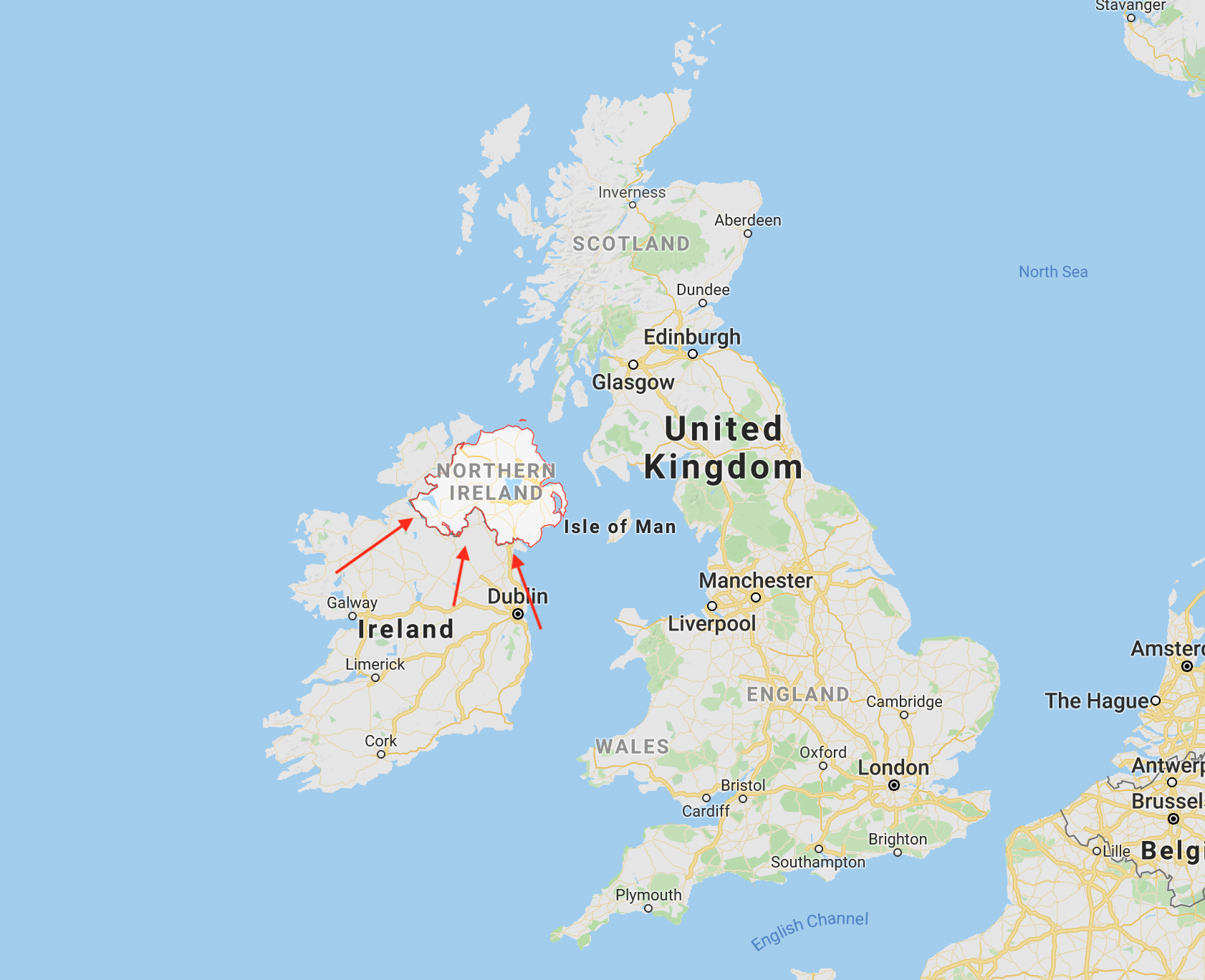 The border between NIR and IRL has been a flashpoint of conflict in times past and would represent the only land border between the EU and the UK. Screenshot from Google Maps.
According to the Irish Times, what was eventually agreed upon was an "insurance policy" that would be triggered should the UK and the EU fail to agree on a deal over the NIR-IRL border during their free trade negotiations after Brexit.
Under this insurance policy, NIR would continue to follow EU regulations in regards to the movement of goods.
This should avoid the need for customs checkpoints.
The EU would also hold the authority as to when the UK could leave the backstop arrangement.
If you're still a bit confused, the BBC has a pretty helpful video on the backstop here.
Sounds good. So what’s the hold-up?
In order for this deal to take effect, May will have to get it ratified in parliament through a vote by the MPs.
And as mentioned above, it is the backstop component of the deal that has been met with the most opposition and halted the proceedings.
The most prominent of the detractors are 10 MPs from the NIR’s Democratic Unionist Party (DUP) who are technically a part of May’s coalition government.
It is thought that the DUP MPs are key to May getting the support she needs for her deal to be ratified in parliament.
According to the BBC, if May can get the DUP MPs on her side, it is believed that many other opposing MPs will follow suit.
The BBC reported that opposition to the backstop has mainly been about two issues:
- Fears that it could compromise the integrity of the UK, as NIR will be governed under separate laws
- The prospect that it will tie the UK to EU regulations indefinitely
2 votes, 2 defeats
In accordance with their objection to the backstop, DUP MPs -- along with many other rebel MPs from May’s own party -- voted down May’s Brexit deal twice already.
The first was a historic defeat on Jan. 15, with the 432 votes to 202 votes in favour of rejecting May’s deal becoming the largest-ever losing margin experienced by a sitting government.
[caption id="" align="alignnone" width="900"]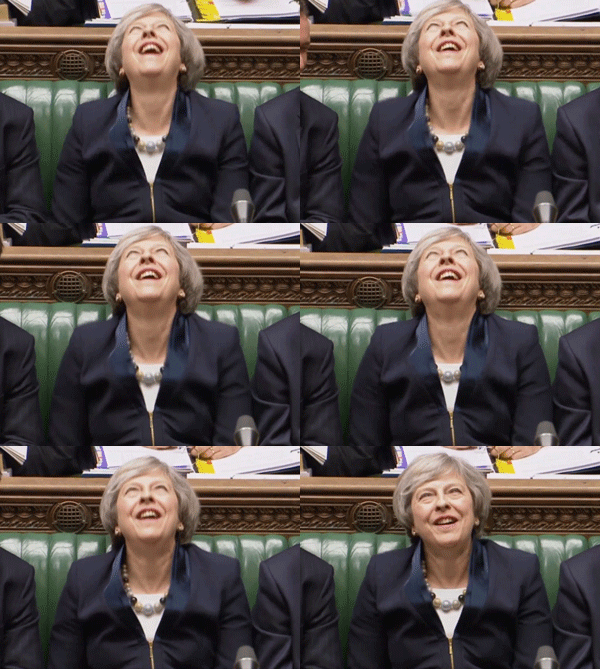 Unconfirmed footage of May -- shookth after her historic defeat. From Giphy.[/caption]
A second attempt to have the deal passed on March 12 was once again defeated.
This time 391 MPs voted against May’s deal while 242 supported it.
Offer of resignation
Since May’s last defeat, a few things have happened.
MPs finally agreed on two things about Brexit, voting in parliament to:
- Reject the possibility of a "no-deal Brexit"
- Delay the initial Brexit deadline of March 29, 2019
This leaves the UK staring down the barrel of yet another vote on May’s Brexit deal.
Avoiding another defeat
In one last effort to avoid yet another defeat and convince MPs from her own coalition to support the deal that she negotiated with the EU, May has played the ace in her hand.
As reported by The Guardian, May has vowed to her MPs that she will leave her post as Prime Minister should they vote and pass her Brexit deal.
Where does that leave the UK?
May’s resignation is dependent on her deal being approved by parliament, which is still some ways from happening.
While her bold move has apparently bought over some MPs, many are still vehemently against it.
The 10 DUP MPs are said to be unmoved by May’s offer, with the DUP's Deputy Leader Nigel Dodds confirming on Facebook that they would continue to reject any deal including the backstop.
Should the deal get rejected by parliament at the third attempt, it will send the UK hurtling towards the feared "no-deal Brexit".Basically, this will mean that the UK will leave the EU without any agreements as to what their future relationship will look like.
But what if the deal gets passed?
May manages to conjure the amount of support needed and her deal passes the next vote, then she will be expected to follow through on her promise and resign from the post of Prime Minister.
An article by The Guardian reported that MPs believe she will start the process of leaving office on May 22.
This is the date of the UK’s departure that May had agreed with the EU if her deal is passed.
May's party, the Conservative Party, will then hold an internal election among their MPs to determine the new leader of the party and Prime Minister of the UK.
It is not clear at this time, who the front-runner for the position would be.
Major uncertainty
Either way, there continues to be immense uncertainty over the future of the UK and how Brexit will be handled.
At this time, the possibility of a new prime minister just seems part and parcel of what is becoming the longest, most drawn out, and tedious circus show in recent times.
And that's saying a lot given this is the guy in charge of the US.
[caption id="" align="alignnone" width="720"]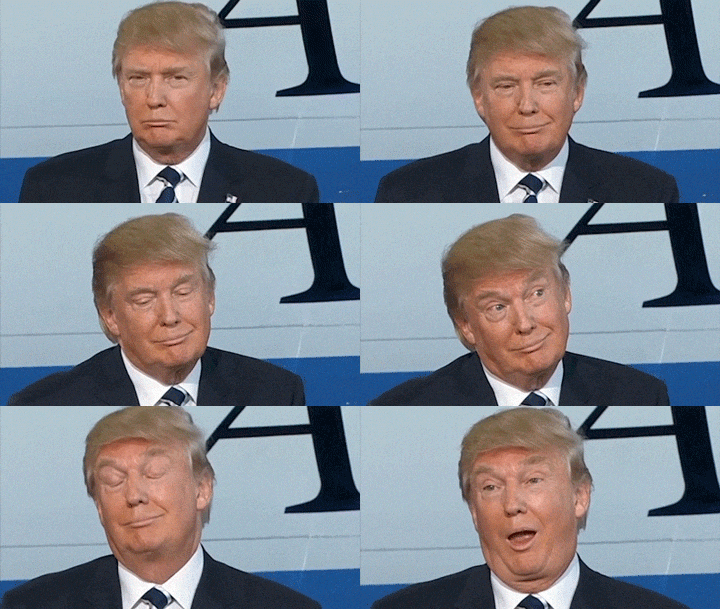 "Circus you say? I might have something to say about that!" From Giphy.[/caption]
Top image from Theresa May Facebook
Content that keeps Mothership.sg going
??️
Here's a constructive response to cyberbullying which doesn't involve arguing in Facebook comments.
??
These people willingly clean up other people's trash. Find out why.
?
You could be watching new episodes of Game of Thrones fuss-free.
??
Find out where all your tax money is going.


If you like what you read, follow us on Facebook, Instagram, Twitter and Telegram to get the latest updates.