


 February 26, 2019, 10:38 PM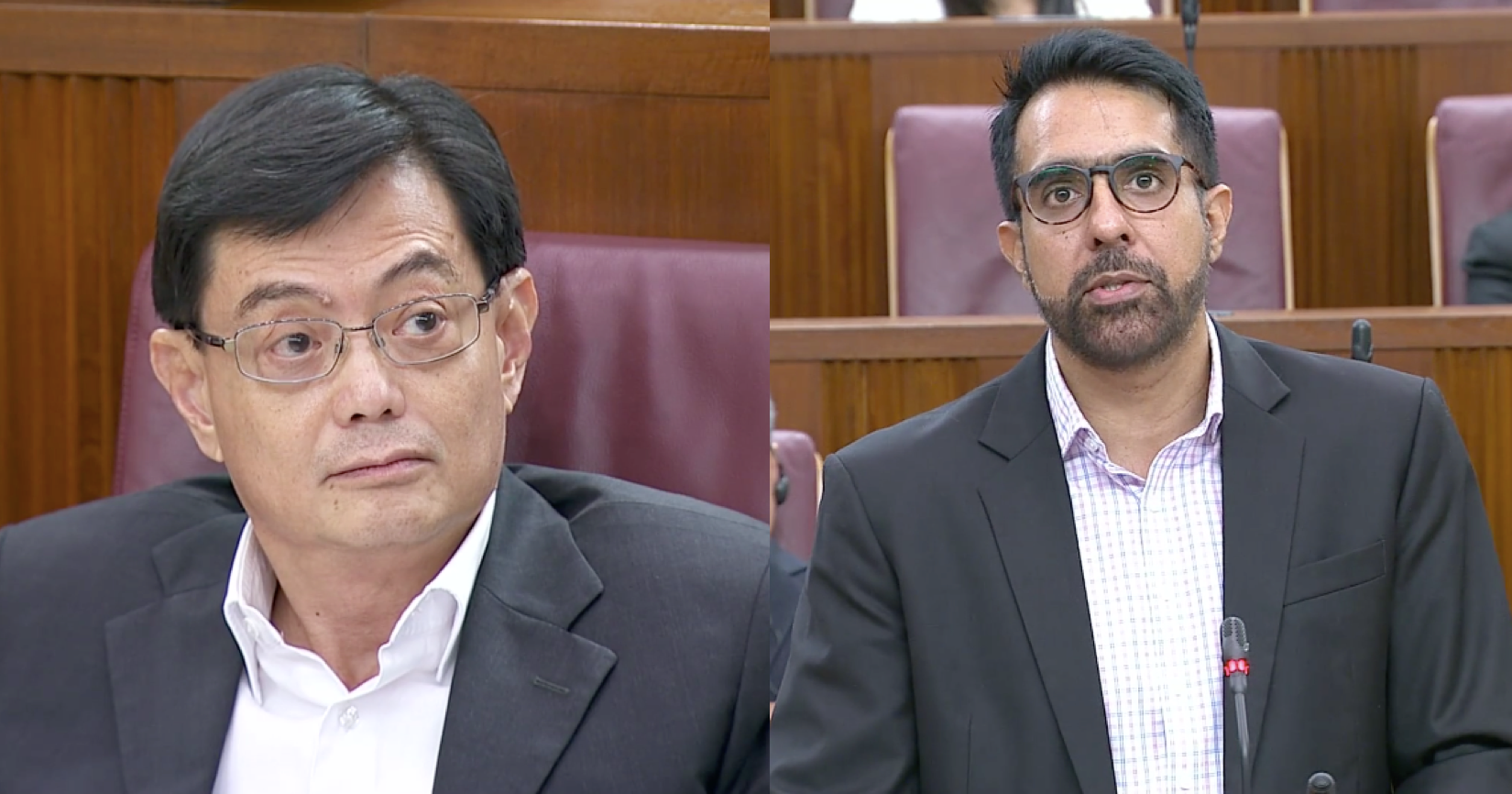

Workers' Party's (WP) Pritam Singh gave his first ever Budget speech as Secretary-General of the WP on Feb. 26 where he took aim at the Budget Statement delivered by Finance Minister Heng Swee Keat on Feb. 18.
In loyal opposition
With Heng named as the next leader of the People's Action Party, Pritam's speech as the leader of the WP dissecting Heng's budget statement could set the tone for future clashes in the House.
One such sign was that Pritam chose to address three specific phrases used by Heng himself in his budget statement:
- Developing our people on a lifelong basis.
- Not only take care of this generation but our children and their children's generation.
- Changes ahead will be faster and deeper.
Stop the one-off packages
While most MPs had no issue with Heng's Merdeka Generation Package (MGP), Pritam took it head-on.
Heng had previously dismissed the notion that the MGP was part of an "Election Budget".
However, Pritam countered that the "ground feel" was that the MGP was "pungently timed" with the election cycle, giving off the "odour of an unfair advantage" aimed at the electoral prospects of the PAP.
Pritam also pointed out that due to the interval between these one-off packages, there were some senior citizens who would miss out on the benefits, although Heng stated in his speech that MGP benefits would be extended to those born in 1949 or earlier who missed out on the Pioneer Generation Package.
As an alternative, Pritam suggested doing away with one-off packages altogether, and instead institute a universal and permanent healthcare package, for senior citizens aged 60 and above.
The "centre-piece" of this scheme should be aimed at mitigating the out-of-pocket expenses for primary healthcare.
This would then help with the larger aim of addressing cost of living for older Singaporeans, and therefore truly develop Singaporeans on a lifelong basis.
A universal, permanent healthcare plan instead?
Pritam outlined the reasons why he believed a permanent plan would be better than one-off packages.
First, he said that parliament should not underestimate the "peace of mind" that comes with a permanent and universal plan, not just for seniors but for citizens of all ages.
The "constant reminder" that a "covenant exists between state and citizen" would improve confidence without compromising work ethic.
Pritam also touched upon that perennial political hot-potato, immigration, to make a point about unity.
With "20,000 new citizens" per year, he feels that the permanent plan for all citizens of the right age would be just as vital a symbol of integration as a "red passport." Added Pritam:
"As all Singaporeans commit their best years and pay taxes like the GST to the state throughout their working lives, a permanent package that helps our seniors manage their cost of living issues in their golden years will inject a powerful message of unity into Singaporeans of all ages."
A permanent plan can be supported
In his speech, Heng explained how the MGP would be paid for, by setting aside S$6.1 billion in Budget 2019.
With accumulated interest, this would be enough to cover the full projected costs of the MGP, about S$8 billion, over time.
But Pritam believes the Budget could support his universal, permanent plan instead.
Pritam referred to the introduction of Temasek into the NIRC framework, which brought an additional S$5 billion "into the mix", and about S$25 billion in total across a five-year-term of government.
He also mentioned the "35 per cent-odd increase" in the NIRC from 2016 which contributed to the "healthy accumulated surpluses".
Pritam also suggested a way to create another "buffer" by linking additional components of the packages, such as Medisave and PAssion Silver Card top-ups, to the fiscal position of the government.
This would allow the government to address specific healthcare needs of specific workers. Said Pritam, in another reference to a political hot-potato:
"They would include those that had taken up gig-economy jobs, or for example, to address the CPF shortages of workers who made sacrifices when the Government moved to cut the employer contribution of their CPF in 2003 to keep Singapore economically competitive."
It is irresponsible to borrow for recurrent spending
Pritam next took aim at Heng's quote that the government seeks to take care of future generations as well as this one.
Heng said in the budget statement that the government would use a "differentiated fiscal strategy" for different types of investments. Said Heng:
"For these large and lumpy expenditures where the benefits span many generations of Singaporeans, paying for them through some borrowing is fairer and more efficient."
Heng remarked that borrowing, when done in a responsible and sustainable manner, would distribute the share of funding more equitably across different generations for projects like the development of Changi East.
However, for "recurrent" expenditures like healthcare and security, the government will not resort to borrowing. Said Heng:
"Many countries have taken the easier route by funding these recurrent expenditures through borrowing. We must not do this, as such borrowing shifts the burden of paying for today's needs onto future generations. That is not the Singaporean way."
How will this impact future spending?
However, Pritam questioned this principle directly. He agreed that taking care of future generations was in line with Singaporean values.
But he said that Heng's differentiated fiscal strategy called into question as to whether it placed a limit on how much the current generation could pay for future generations.
If certain expenses can be paid for through borrowing, does it mean more revenue freed up for recurrent spending? Said Pritam:
"If it does, it would appear that funding such a universal and permanent healthcare initiative for our seniors cannot be dismissed as dishonest, unreasonable or imprudent."
He asked if he could clarify with Heng whether the government also intended to borrow to fund other infrastructure projects besides the expansion of Changi Airport, like the Jurong Lake District and Woodlands North Coast.
He added if he could clarify how this differentiated approach would impact future budgeting, and therefore revenue for recurrent spending.
Looming threat of climate change
Along with borrowing and spending, Pritam also addressed climate change as a problem facing future generations.
He mentioned that dykes and seawall defences to guard against rising sea levels would require great expense, and asked for an estimate of the cost.
Pritam then took issue with Heng's point about "greening" as a policy to counter rising temperatures, and said that researchers have found that greening on its own did little to mitigate the effects of urban island heat.
He asked how the upcoming URA Masterplan would take into account the impact of greater urbanisation on temperature levels. Asked Pritam:
"If the Government is not finished building Singapore, how will it ensure that this effort will not come at the expense of our green spaces?"
Transparency for meaningful participation
Finally, Pritam turned to the issue of a fast-changing society, as mentioned by Heng.
Pritam said the government had to consider directly supporting businesses with tax relief or rebates, so that they in turn could re-design jobs to accommodate older workers, working mothers, and gig-economy workers.
But he also sounded a strong call for legislation to promote "greater transparency and accountability," such as a Freedom of Information law. Said Pritam:
"If change is indeed going to be faster and deeper, then Singaporeans must be ready to become active participants of this process with the Government facilitating conversations by sharing more information."
He used the Budget itself as an example, saying that Singaporeans wanted to "crunch the numbers" themselves, but were prevented due to a lack of information.
He cited a Business Times article from 2018 titled "Lack of data on Singapore's reserves limits discussion on its use."
With 20 per cent of the Budget financed by proceeds from the reserves, Pritam feels that this is a relevant issue, adding that the Bicentennial was a good time to consider the "richness and breadth" of future conversations.
Related stories:
Top image adapted from Channel NewsAsia's video.


If you like what you read, follow us on Facebook, Instagram, Twitter and Telegram to get the latest updates.