


 August 17, 2018, 04:14 PM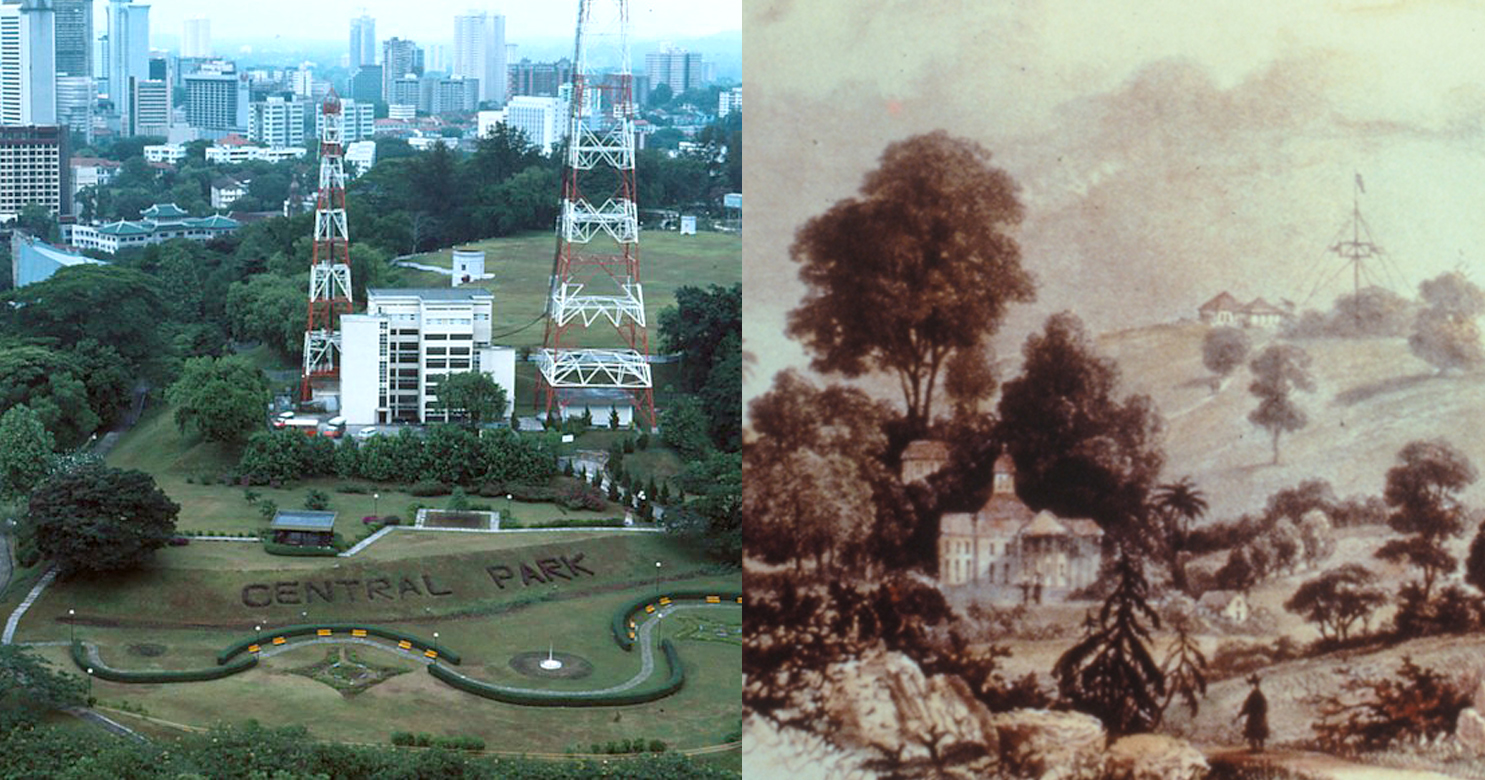

Three historical gardens that used to be on and surrounding present-day Fort Canning Park are being recreated.
According to Singapore's National Parks Board (NParks), these three parks are the Royal Garden, the Jubilee Park, and the First Botanic Garden -- each situated on the Fort Canning Park site throughout various times in history.
- The Royal Garden will showcase fruit trees like rambutans, jackfruits, bael fruit, lontar palms, as well as fragrant plants such as different species of gardenias, jasmines, and magnolias.
- The First Botanic Garden will be landscaped with plants introduced to Singapore in the early 19th century. These fall under four themes -- economic spices, ornamental plants, medicinal plants and plants that are native to the region.
- Jubilee Park is modelled after the original King George V Jubilee Park and will have more family-friendly venues for arts and culture activities in a garden setting.
1. Royal Garden (14th century)
Fort Canning, also called Bukit Larangan (Forbidden Hill), was the seat of ancient Malay royalty.
They weren't likely to have had a royal garden for its blue-blooded inhabitants (more on that later).
Described by 14th century Chinese trader Wang Dayuan as a people with an "honest disposition", the royals on the hill wore their hair short covered in gold-brocade turbans, and red cloths that covered their bodies.
However, Wang also said that the soil on the hill was poor, infertile or had little vegetation.
Perhaps this new Royal Garden by NParks would be inspired by what we imagine a garden in an ancient Malay royal court would look like.
A Forbidden Spring on the Forbidden Hill
Wang called the hill Banzu, which could refer to pancur, which is Malay for spring (of water).
This spring is believed to be a natural spring where Malay royals used to bathe, called Pancur Larangan (Forbidden Spring).
When the British arrived in 1819, they found this supposed spring gushing from the side of the Forbidden Hill.
According to Raffles' Malay teacher, Munshi Abdullah, the Temenggong said:
"There is a story dating from the kings of ancient times, that it was on this hill that their palace was built. So it is forbidden for any man to ascend the hill except at the ruler's command or summons. For this reason it was known as the Forbidden Hill. Behind it is a stream known as Forbidden Stream, for it is the place where the consorts and the wife of the king used to bathe, and no one was allowed to approach."
This Forbidden Spring will also be featured in NPark's enhancement of Fort Canning park, in a re-curated 14th century heritage trail.
2. First Botanical & Experimental Garden (19th century)
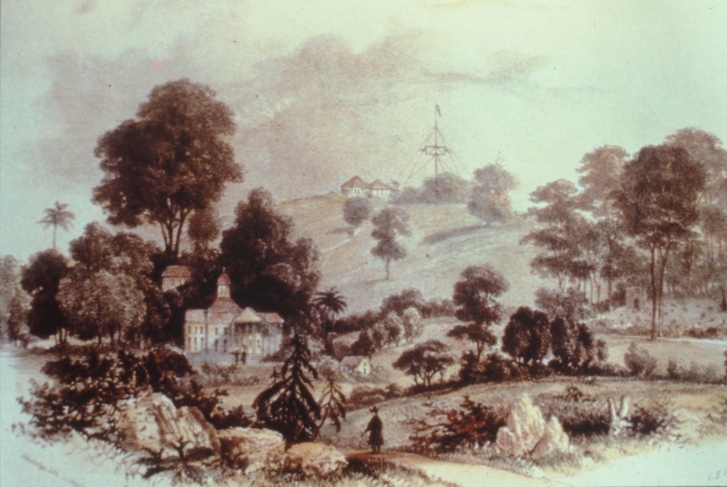 A 1840 lithograph showing Government Hill, (presently Fort Canning Park) and some evidence of the first botanical and experimental garden in Singapore. Via NAS.
In 1822, Raffles started the first Botanical and Experimental Garden to cultivate economic crops, such as nutmeg and clove, and other experimental crops such as coffee, tea, and Pernambuco cotton.
After Raffles left Singapore, the garden was left languishing, and subsequently closed in 1829.
The garden was subsequently revived by the Agricultural and Horticultural Society in the 1830 to cultivate ornamental trees, such as Kedah Gardenia and Champaca.
After 1835, during the nutmeg mania, the garden was use to grow nutmeg, but subsequent decline in nutmeg prices and the outbreak of "nutmeg canker" wiped out the nutmeg production. The garden and Society became defunct.
Part of Armenian Street to be pedestrianised
According to NPark, a part of Armenian Street will be pedestrianised to become Armenian Street Park within the First Botanic Park.
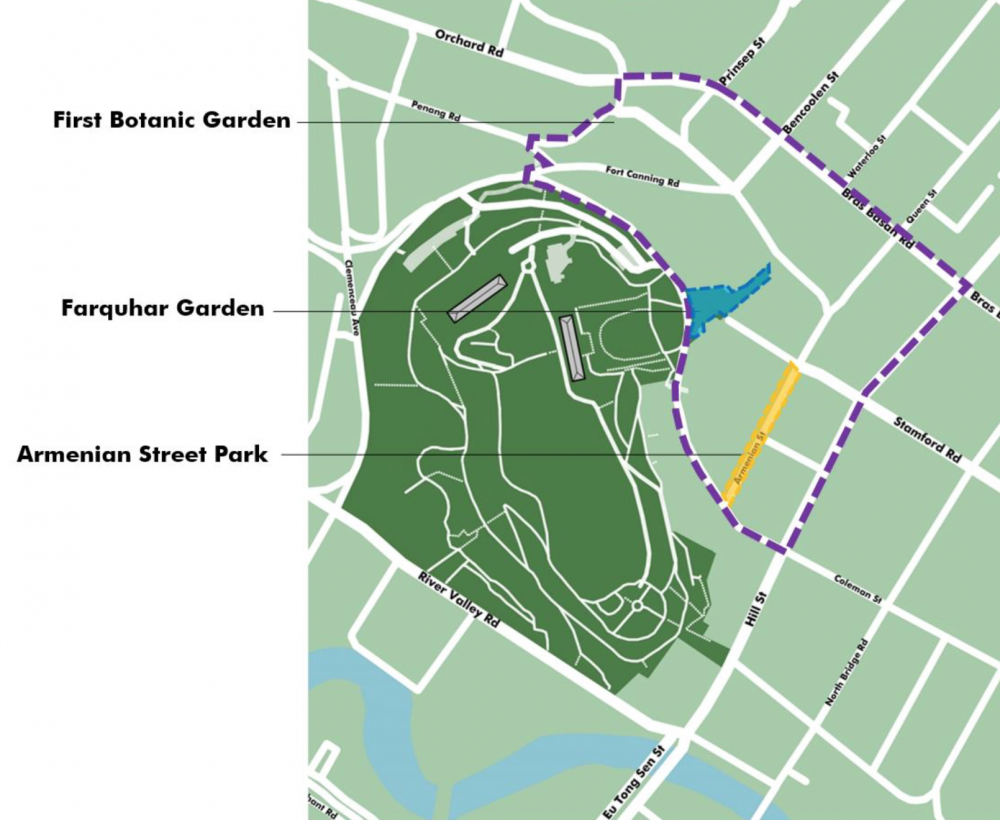
NParks mentioned that "spices, economic crops, culinary plants such as those used in Peranakan cuisine, and orchids, including Singapore’s National Flower, Papilionanthe ‘Miss Joaquin’" will be featured in the Armenian Street node.
Here are a couple of artist impressions of the Armenian Street node:
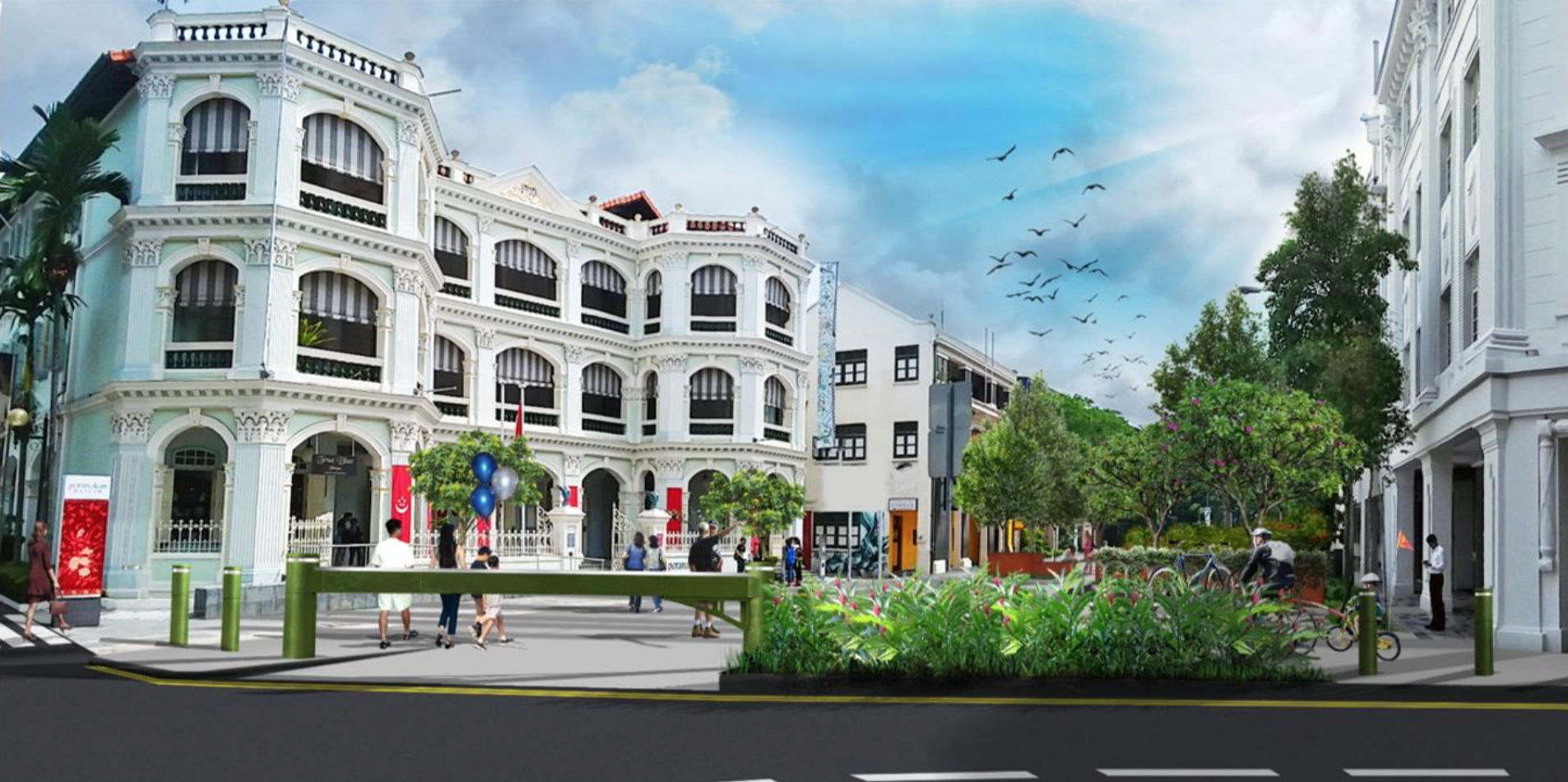 Via NParks.
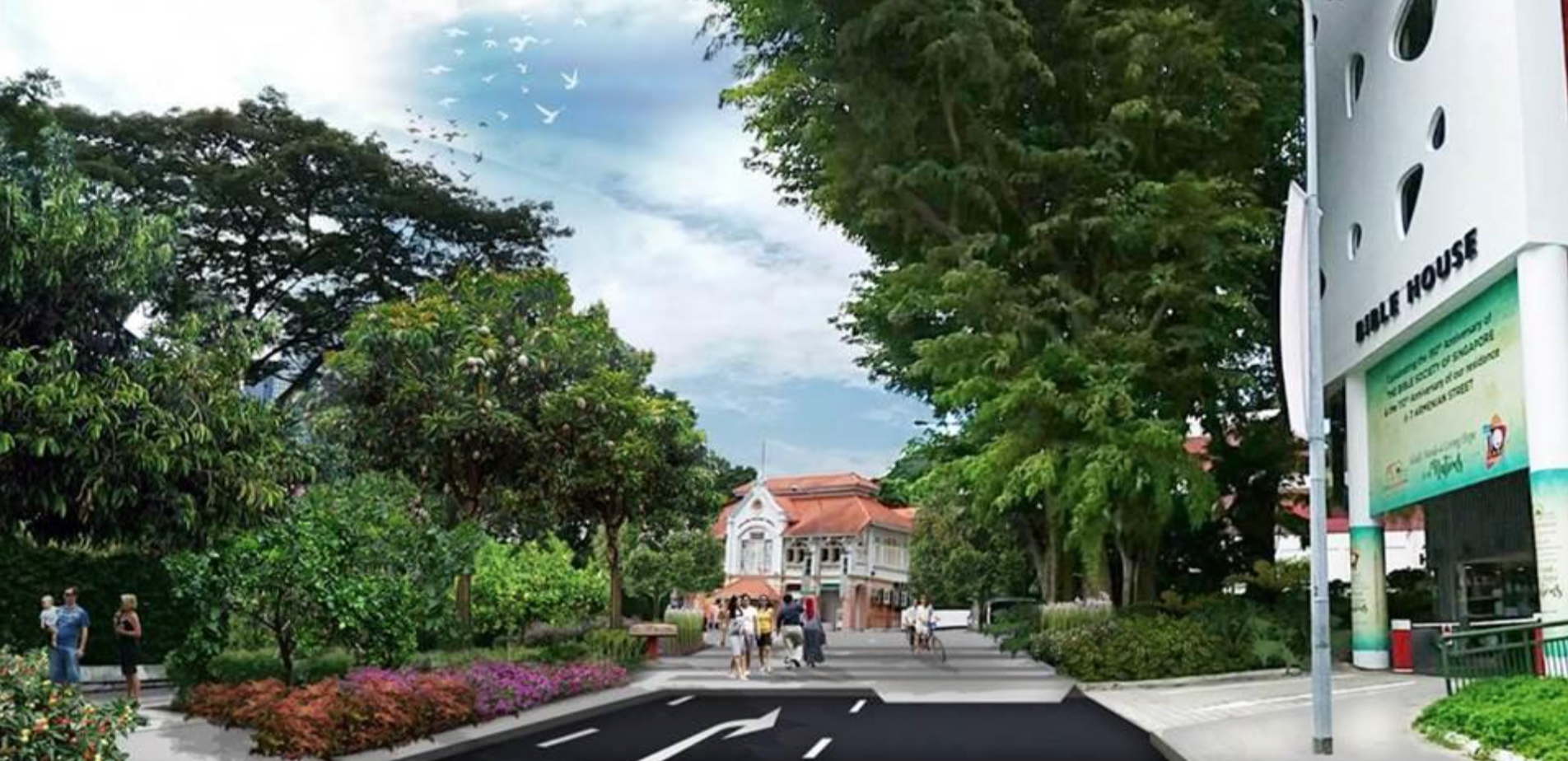 Via NParks.
As you can see from the photos, only the portion of road between Bible House and the Peranakan Museum will remain.
The portions of road between the Philatelic Museum and Bible House, as well as from the Peranakan Museum to Singapore Management University's Law School will be pedestrianised.
Another node within the First Botanic Garden, the Farquhar Garden, will feature flora from the William Farquhar Collection of Natural History Drawings collected between 1819 and 1823. This garden will also be featured in a 19th century heritage trail.
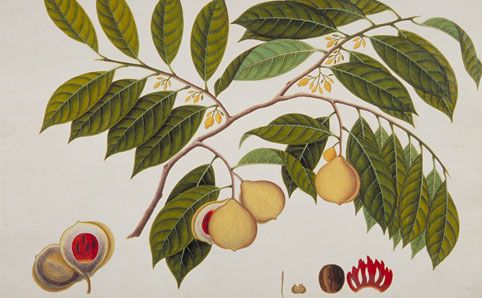 Drawing of nutmeg from the William Farquhar Collection of Natural History Drawings.
Economic spices, ornamental plants, medicinal plants, and plants that are native to the region will be used to landscape the First Botanic Garden.
This includes the Rose Myrtle (Rhodomyrtus tomentosa), Singapore Rhododendron (Melastoma malabrathicum), and Gutta Percha (Palaquium gutta), which was originally produced to insulate the first undersea transatlantic telegraph cable.
3. Jubilee Park aka King George V Jubilee Park (20th century)
King George V Jubilee Park was set up before the war and used to cover the base of Fort Canning, bounded by Clemenceau Avenue and River Valley Road.
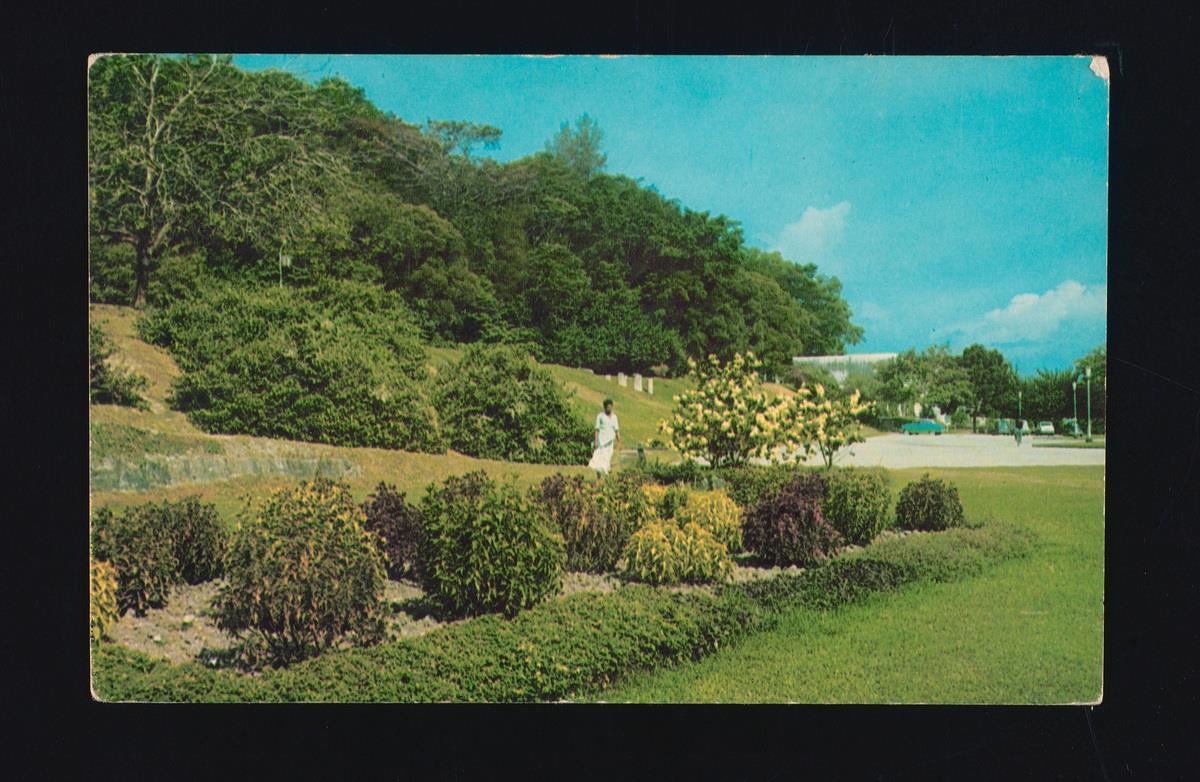 King George V Jubilee Park. Via Roots.sg
Together with the land occupied by British Armed Forces, the entire area was renamed Central Park in the 1970s.
Here below, you can see an aerial shot of Central Park, courtesy of Australian photographer Darren Donlen:
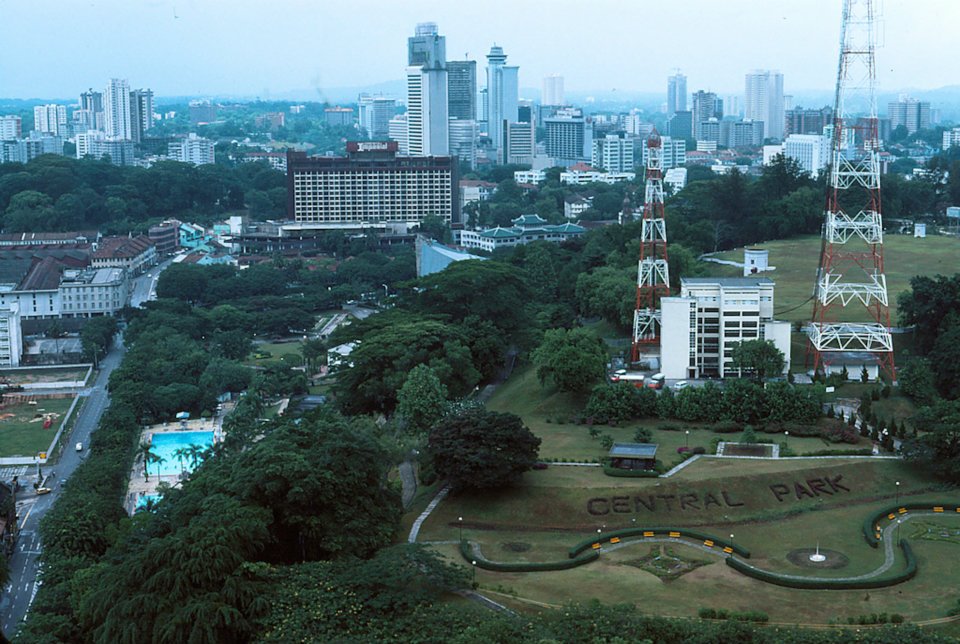 Image courtesy of Darren Donlen.
Central Park used to be where the National Theatre and Van Cleef Aquarium used to be. It was only in 1981 that Central Park was renamed Fort Canning Park.
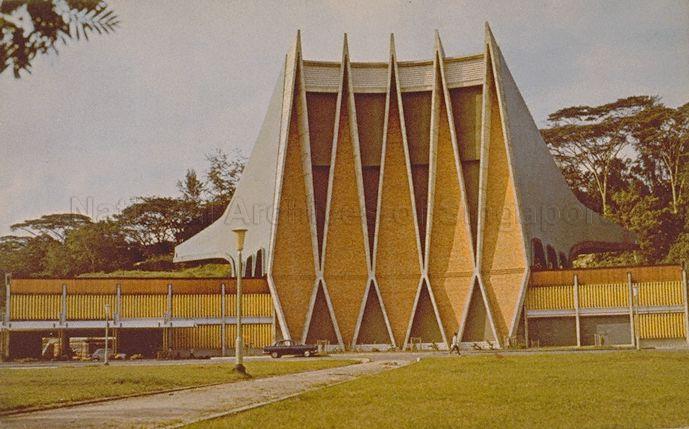 National Theatre. Via NAS.
[related_story]
NPark's plans to revive these historical gardens fall in line with the government's plans for the Singapore Bicentennial Commemoration in 2019, which looks at Singapore's modern founding from 1819, as well further back 500 years and more, from 1299.
The enhancement works have already started and is expected to be completed by June 2019.
Singapore has been happening even before 1819:
Top images via Darren Donlen and NAS


If you like what you read, follow us on Facebook, Instagram, Twitter and Telegram to get the latest updates.