


 December 21, 2017, 03:07 PM
The habit of queuing comes fairly naturally to Singaporeans these days, especially when it comes to getting good deals and free stuff.
But this willingness to queue apparently diminishes when it comes to the scramble to board the bus or the MRT train.
And it seems like it's a perennial problem for public transportation.
Queue-up at bus-stops campaign
In the past, bus-stops were chaotic places, especially during peak hours, when crowds of people would scramble to get on board their bus. It was every man/woman for himself/herself.
At times, the more desperate of commuters would even try board buses by squeezing through the windows.
The bus-stop scramble presented a safety issue in those days, and to instil some order into the whole process of waiting for buses, a national campaign called Queue-up at Bus-Stops was introduced in 1969.
Organised by the National Safety First Council and supported by the government and the NTUC, the first campaign lasted for two weeks in March.
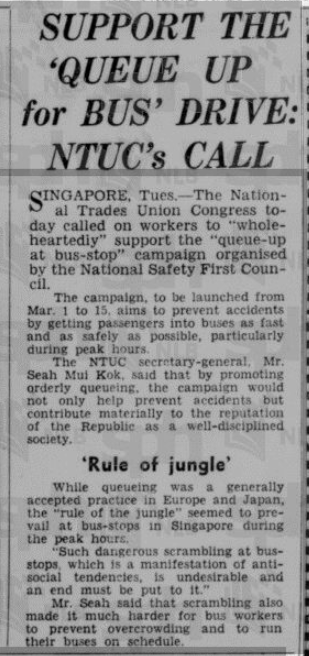 ST on Feb. 5, 1969. Source: NewspaperSG
It was launched by then parliamentary secretary to the Ministry of Education Lee Chiaw Meng at Tanjong Katong Girls' School.
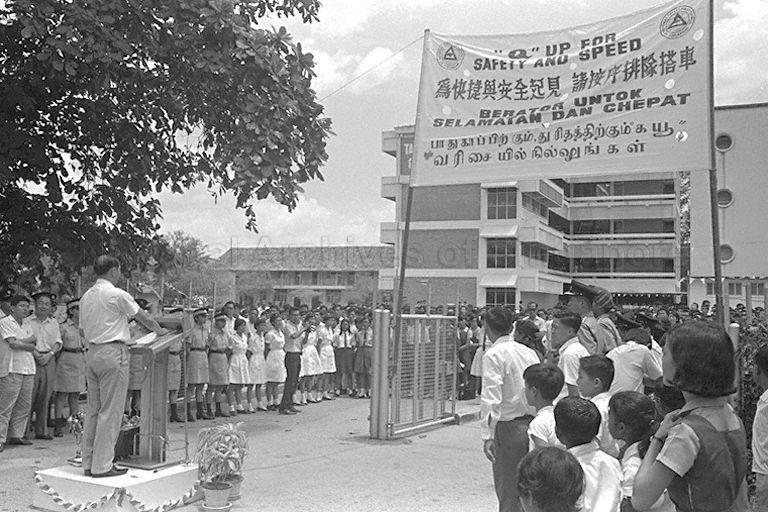 Source: NAS
Here are some pictures from the campaign.
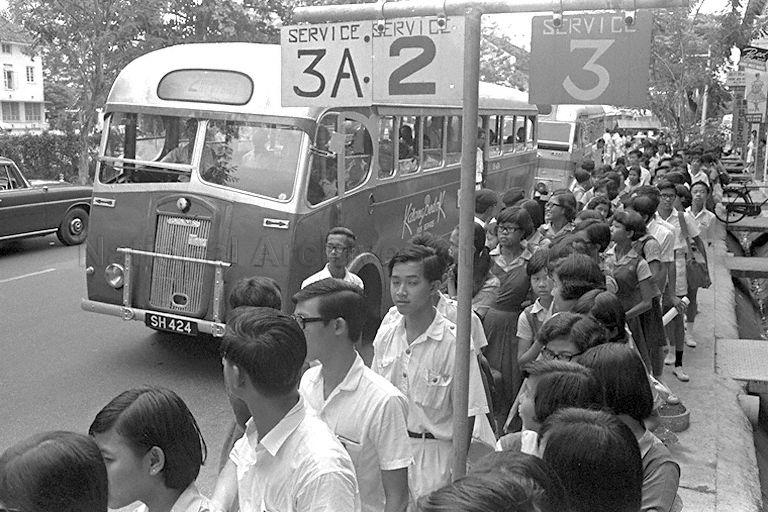 Source: NAS
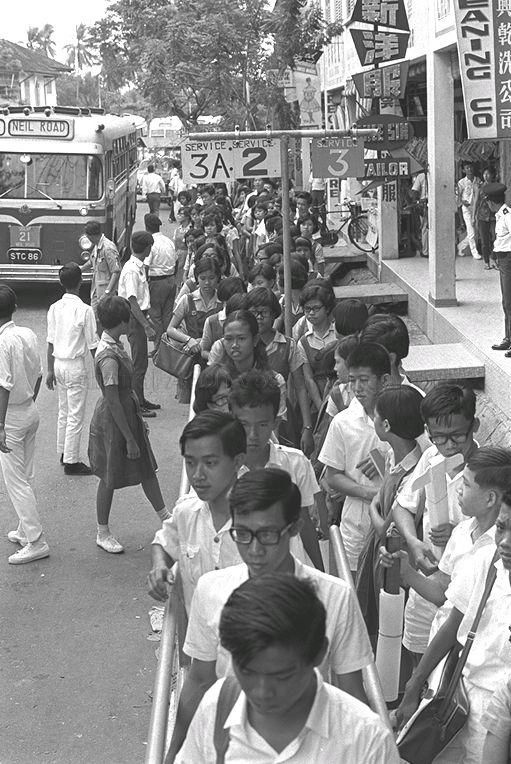 Source: NAS
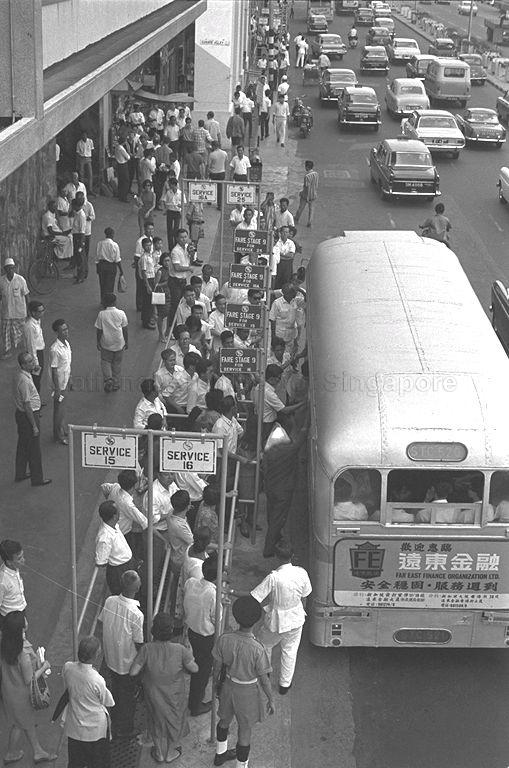 Source: NAS
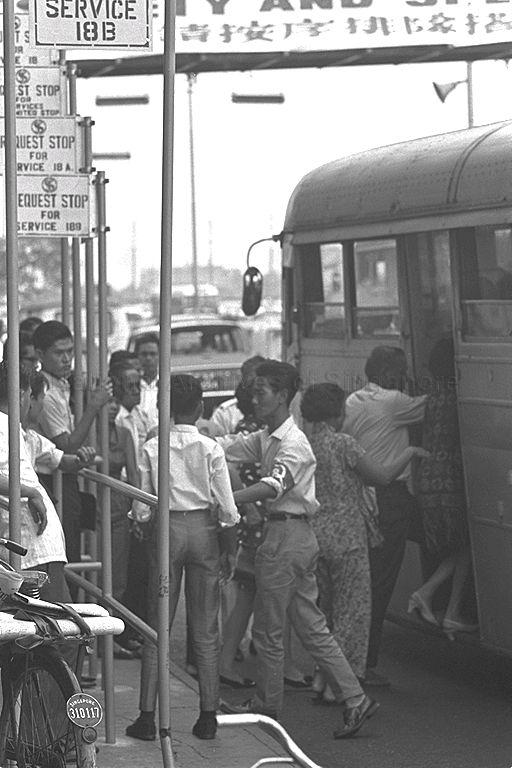 Source: NAS
[related_story]
Ineffective results
Unfortunately, the campaign failed.
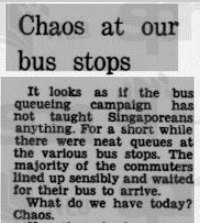 New Nation, August 25, 1971. Source: NewspaperSG
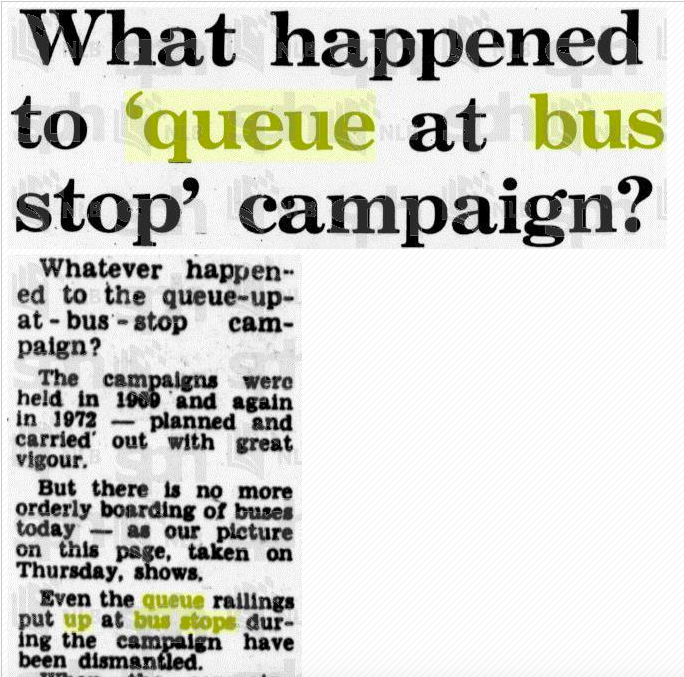 New Nation, March 26, 1977. Source: NewspaperSG
According to then chairman of the National Safety First Council in 1973, reasons for the failure included the lack of follow-up campaigns to shape social behaviour, and having too many buses stopping at one bus stop.
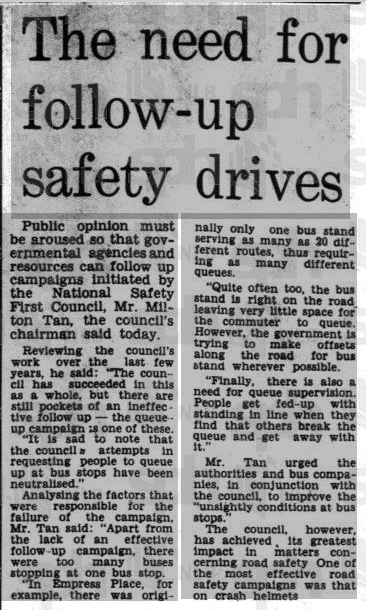 New Nation, January 16, 1973. Source: NewspaperSG
Things got slightly better over time
Over time, with the development of better transport infrastructure such as better bus-stops, and the revamp of the public bus system, things improved slightly.
One interesting development that contributed a little towards making people a bit more civil in their behaviour at bus-stops was perhaps the introduction of one-man-operated (OMO) buses, or at least that's what this newspaper report claims.
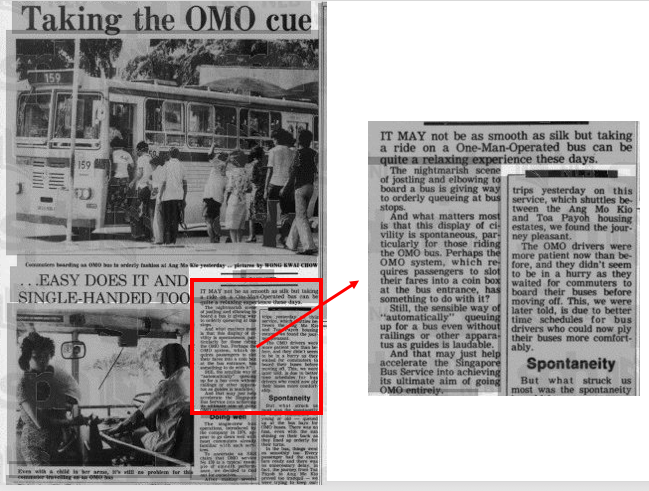 Straits Times, August 16, 1979
These were single crew public buses that did not rely on bus conductors to collect commuters' fares for their journeys.
Instead, passengers would pay for their journeys by dropping coins for their fare when they board, via the automated coin collection box beside the driver and administered by him.
This system may seem old-fashioned to us now, compared our EZ-Link system today, but it was groundbreaking in the past.
While the problem of getting people to queue to board our public transport still persists to an extent today, it does seem that things were worse in the past.
Changes in social behaviour take time, improvements to systems and infrastructure also help to bring about a much more pleasant living environment.
Here are a few interesting articles you should check out next:
My Mom went on a day out with a film camera. Here’s how she views the world
Why you should reignite that kampong spirit with your neighbours
Top image from NAS.


If you like what you read, follow us on Facebook, Instagram, Twitter and Telegram to get the latest updates.