


 November 24, 2016, 02:07 PM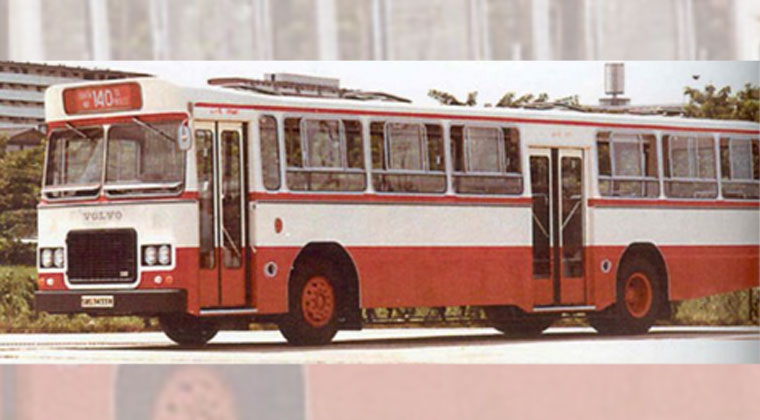

Public transportation has come a long way in Singapore to reach our current state of First World problems, which includes many train disruptions.
The present state of public transport might still be found wanting, so let's look at some photos of what things were like in the past.
Rickshaw
The rickshaw originated from Japan as "jinrikisha", meaning "man-powered carriage" in Japanese. Later, it became known as "jinrickshaw" and shortened to "rickshaw" as we know it today.
Rickshaws were introduced to Singapore in 1880. They became a major form of transportation in colonial Singapore. However, they were banned in 1947 on humanitarian grounds.
[caption id="" align="aligncenter" width="671"]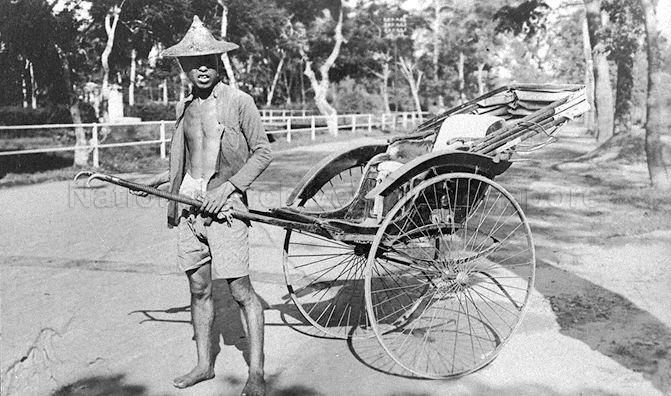 Photo from National Archives[/caption]
[caption id="" align="aligncenter" width="674"]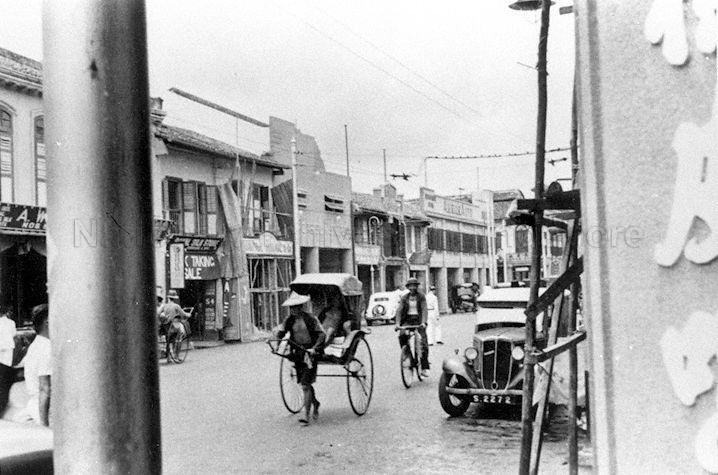 Photo from National Archives[/caption]
Steam trams
Early trams in Singapore were steam-powered trams. The first steam tram line running from Tanjong Pagar to the old Johnston's Pier along Collyer Quay began operating in 1886. However, stiff competition from rickshaws, high operating costs and expensive fares led to their closure eight years later in 1894.
[caption id="" align="aligncenter" width="462"] Steam tram in Tanjong Pagar in 1892. Photo from National Archives[/caption]
Electric trams
Electric trams replaced steam trams and began operating in 1905. Despite facing stiff competition from rickshaws, electric trams were more successful than their steam predecessors.
However, the colonial authorities eventually stopped extending tramway concessions due to differing interests among parties over the state of the roads, which the trams ran on. This resulted in the winding up of the Singapore Electric Tramways Limited in 1926, and the last electric tram in Singapore ceased service in late 1927.
[caption id="" align="aligncenter" width="729"] Electric tram at Collyer Quay. Photo from National Archives[/caption]
[caption id="" align="aligncenter" width="654"]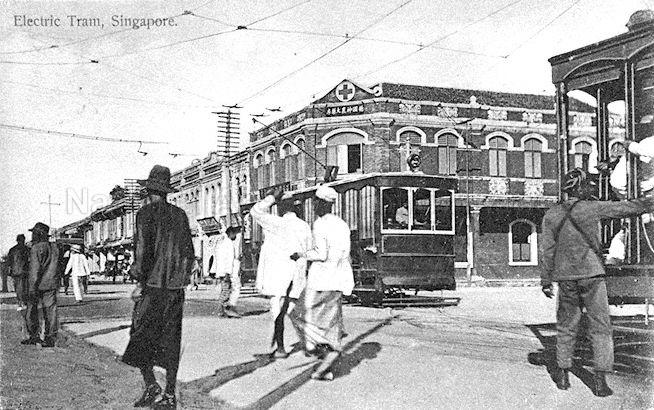 Electric tram at the junction of North Bridge Road with Bras Basah Road 1908. Photo from National Archives[/caption]
Trolley buses
The Singapore Traction Company Limited (STCL) began operations in 1925. The company replaced the existing electric trams with trolley buses, which were highly successful.
In 1926, the first trolley bus began operating between Joo Chiat and Tanjong Pagar. By 1929, there were 90 trolley buses serving 19 routes in Singapore.
Trolley buses ceased operations in 1962, as STCL incurred losses due to employee strikes and the competition from pirate taxis.
[caption id="" align="aligncenter" width="641"]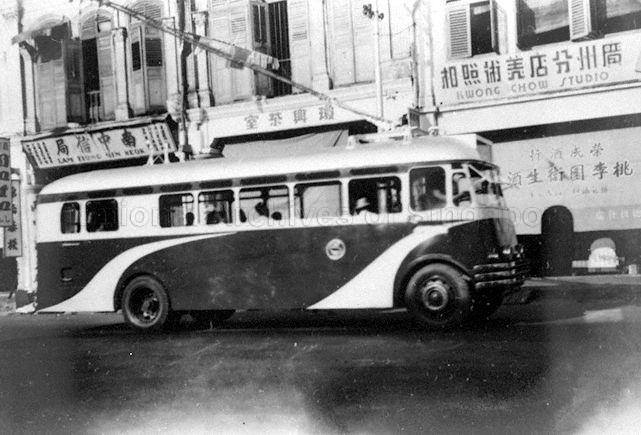 Trolley bus at Tanjong Pagar. Photo from National Archives[/caption]
[caption id="" align="aligncenter" width="592"]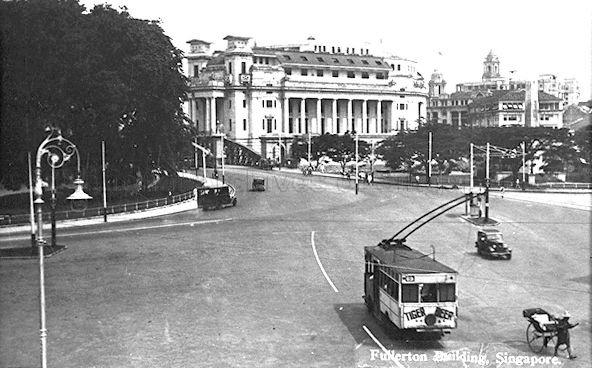 Trolley bus near Fullerton Building. Photo from National Archives[/caption]
Mosquito bus
Privately-owned motorised bus services known as the "mosquito bus" operated in the 1920s and 1930s. These buses were small seven-seaters, and most were made from modified American cars using the Ford Model T's chassis.
Mosquito buses were the disruptors of the 1920s and 1930s public transport industry like Uber and Grab in modern times. They provided stiff competition to rickshaws and trams. These buses were eventually phased out in the 1930s due to regulations implemented by the colonial government.
[caption id="" align="aligncenter" width="611"]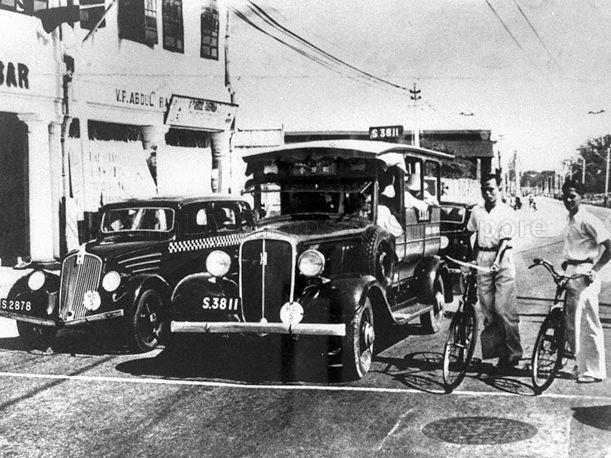 Mosquito bus on Bukit Timah Road 1935. Photo from National Archives[/caption]
Buses
Motorised bus services have served Singapore since before the Second World War. Right up till 1970, various private operators provided the local population with bus services. Then, in 1971, the private operators were combined to form three public bus companies. These companies would eventually merge to form Singapore Bus Service (SBS) in 1973.
Here are pictures of Singapore's bus services through the years.
[caption id="" align="aligncenter" width="662"]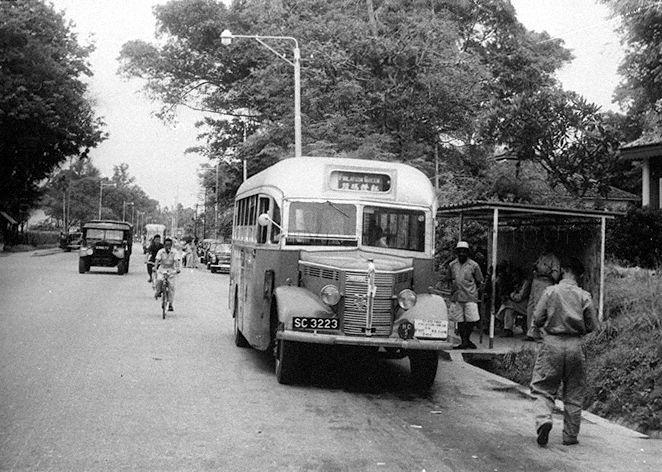 Keppel Bus Company's "Bedford" bus. Photo from National Archives[/caption]
[caption id="" align="aligncenter" width="665"] Photo from National Archives[/caption]
[caption id="" align="alignnone" width="768"]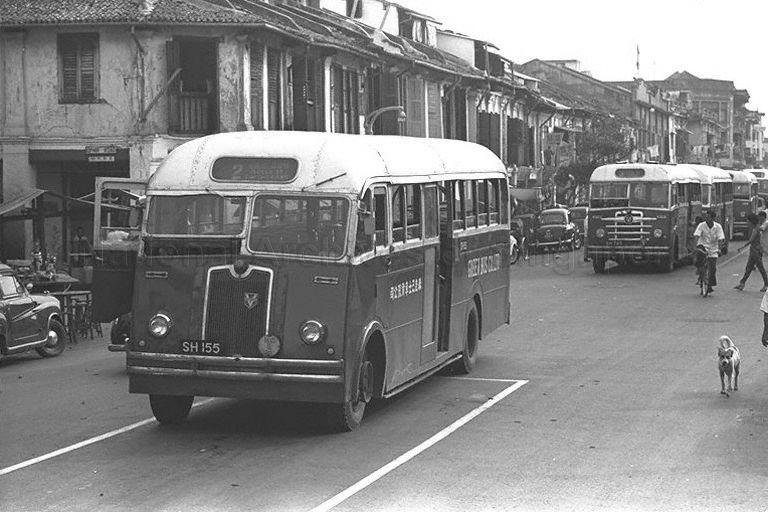 Photo from National Archives[/caption]
[caption id="" align="aligncenter" width="768"]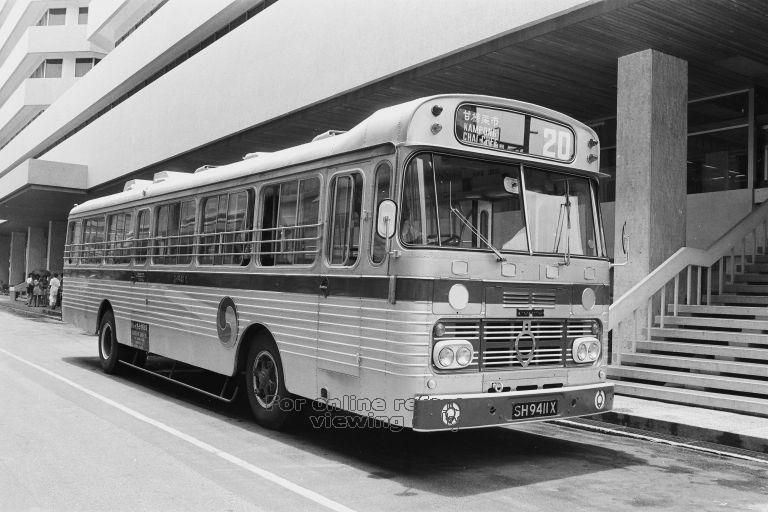 Photo from National Archives[/caption]
[caption id="" align="aligncenter" width="768"] Photo from NHB[/caption]
[caption id="" align="aligncenter" width="500"] Photo from here[/caption]
[caption id="" align="aligncenter" width="500"] Photo from here[/caption]
[caption id="" align="aligncenter" width="300"]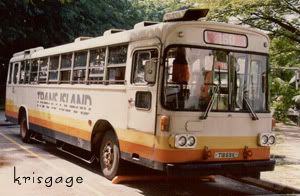 Photo from here[/caption]
[caption id="" align="aligncenter" width="600"]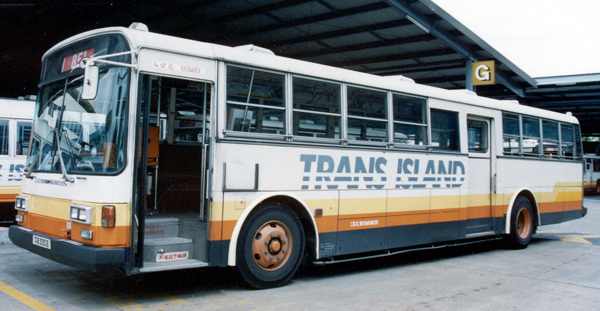 Photo from here[/caption]
[caption id="" align="aligncenter" width="500"] Photo from here[/caption]
Related Article:
10 public transport pet peeves that will set every Singaporean off
Top photo from SBSTransit
If you like what you read, follow us on Facebook and Twitter to get the latest updates.


If you like what you read, follow us on Facebook, Instagram, Twitter and Telegram to get the latest updates.