


 April 25, 2019, 12:09 PM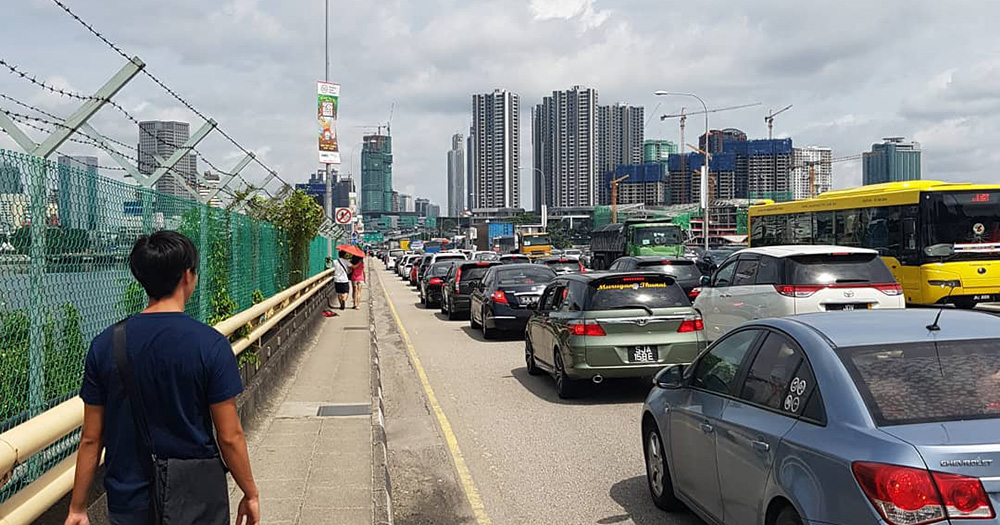

The weakness of Malaysia's ringgit vis-a-vis the Singapore dollar is producing a labour shortage of sorts for our neighbour up north.
SMEs in Johor struggle to hire local Malaysians
In Johor, small and medium enterprises (SMEs) in the manufacturing sector are struggling to hire local Malaysians as many of them prefer to work in Singapore, The Star reported.
The SME advisor for Johor South, Teh Kee Sin, stated that this had been a challenge in particular for manufacturers in Johor Bahru, Pasir Gudang, Kulai and Senai.
He added that the reason why Malaysians preferred to work in Singapore was because of the exchange rate and that there was nothing they could do about the phenomenon:
"There is nothing we can do about it. We definitely cannot stop them from working over there."
In a separate report, Teh said that a majority of the SMEs were still in the dark as on the manpower shortage.
Financial gains in Singapore means Malaysians willing to take on any jobs
Teh highlighted that the depreciation of the Malaysia ringgit against the Singapore dollar since 2014 was the main reason why many Malaysians came to Singapore to look for work, The Star further reported.
Moreover, as of April 2019, the ringgit has become Asia's worst performing currency, Bloomberg reported.
Teh said:
"At the end of the day, financial gains remain the main factor and thousands of Malaysians are willing to spend hours commuting to Singapore daily to work."
Separately, Johor Indian Business Association President P Sivakumar stated that Malaysians were willing to take on dirty and dangerous jobs in Singapore, but not in Johor Bahru:
"Malaysians are willing to take on any work in Singapore, including as a cleaner and work at high-rise buildings there but not in Johor Baru."
Sivakumar added that the phenomenon was a troubling one:
"Something is not right. Thousands living in Johor Baru are working in Singapore."
He further explained that the absence of skilled workers was slowing Malaysia's economic growth and progress.
Salaries need to be increased to attract investment
In putting forward a potential solution, Sivakumar said that Malaysia had to increase the salaries of the semi-skilled and skilled workforces to attract more foreign direct investment into the country, and make it more competitive.
Sivakumar pointed out:
"Foreign investors will only invest in Malaysia if we have a skilled and competent workforce."
A slightly different note of optimism was struck by Teh.
He said that local companies, especially those in Iskandar Malaysia, would benefit from the skills and experience of Malaysians who worked in Singapore.
Top photo by Joshua Lee


If you like what you read, follow us on Facebook, Instagram, Twitter and Telegram to get the latest updates.