


 August 20, 2018, 06:30 PM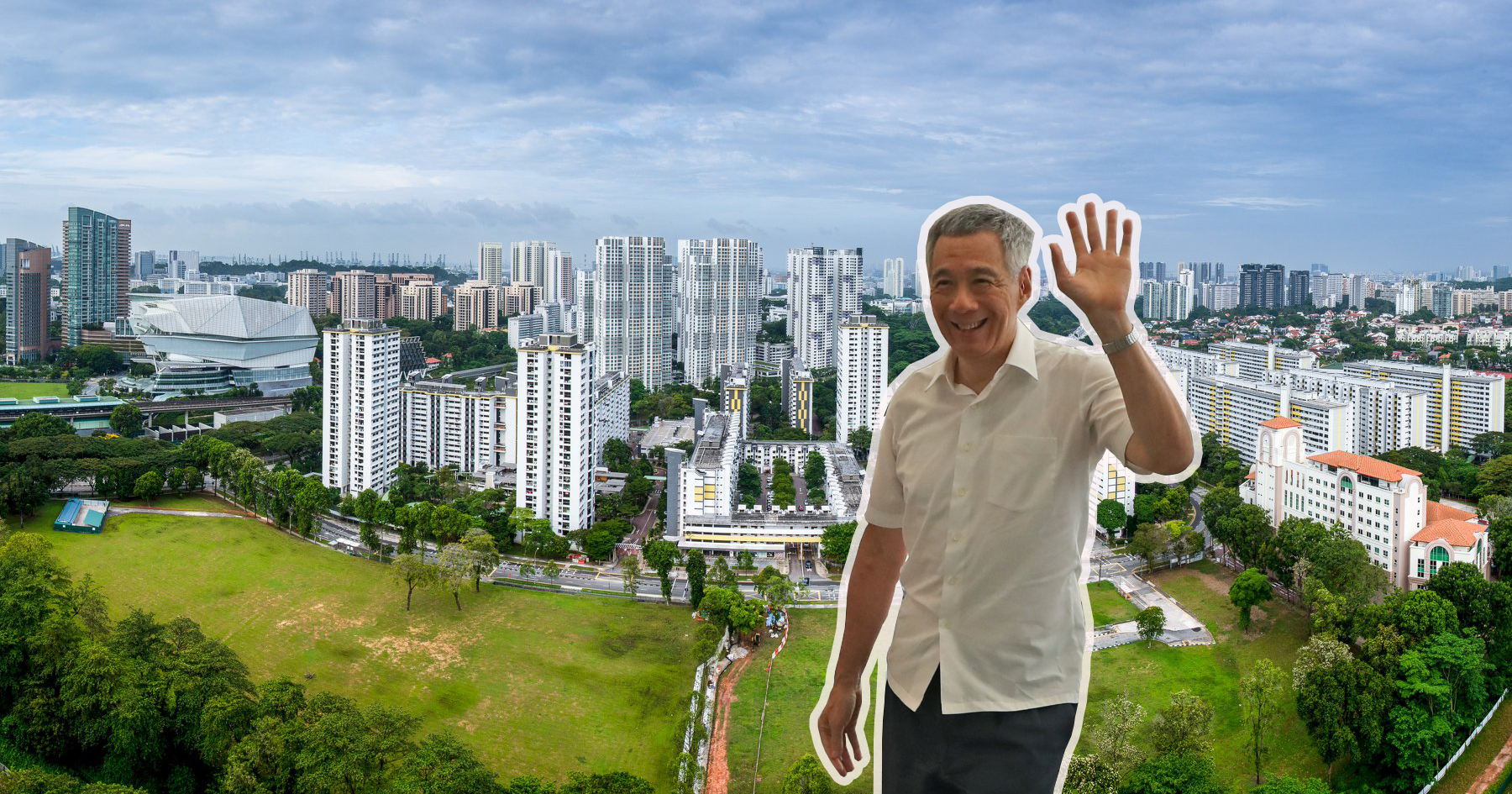

During the National Day Rally last night (Aug. 19), Prime Minister Lee Hsien Loong addressed the hot-button HDB 99-year lease housing issue.
He also announced new housing policies, such as the Home Improvement Programme (HIP) 2.0 and the Voluntary Early Redevelopment Scheme (VERS).
With these new initiatives, the aim is to mitigate the unprecedented but perennial issue of 99-year leases decaying over time to zero value, as Singapore continues to mature and the oldest HDB flat is now 52 years old.
First, we break down the acronyms for you:
HIP
- Home Improvement Programme (HIP) first implemented in 2008
- Residents receive help with maintenance problems such as ceiling leaks and damages pipes, as well as upgrading electrical supply
- Applies to older HDB flats built up to 1986
- HIP will be extended to blocks built up to 1997 as more flats approaching the 30-year mark start to show wear and tear,
But what about when these flats (built up to 1997) go through another 30 years?
Enter HIP 2.0
- In 30 to 40 years, HDB flats will undergo HIP 2.0, where they will undergo a second round of upgrading.
- According to PM Lee, HIP 2.0 will "keep the flats safe and liveable, and also help them retain their value as their leases run down".
- The first flats will reach 60 to 70 years old about 10 years from now.
[related_story]
SERS
- The Selective En bloc Redevelopment Scheme (SERS) is a very limited scheme meant for selected HDB blocks or precincts, which have high development value which the government can unlock
- Residents will be compensated generously
- PM Lee said that only 5 percent of flats are estimated to be suitable.
VERS
- Residents not eligible for SERS might be eligible for VERS.
- The government will take back flats progressively over several decades, starting from 70 years, and stage out redevelopment.
- Residents can vote for the government to buy back the flats.
- The compensation will be less generous than SERS.
- VERS won’t start for at least the next 20 years. Details still to be worked out.
Given these schemes, we weigh the considerations for you when you are thinking of purchasing a flat:
Build-To-Order (BTO)
Pros:
- BTOs are newly-built
- Highly subsidised and affordable
- Flat may be passed on to children
Cons:
- Can be located in less accessible locations as compared to mature estates
- Have to wait several years for your flat to be built
- There is a ceiling to appreciation of flat's value as Singapore is now a mature economy
30-year-old flat
Pros:
- Usually located in estates with better amenities
- Eligible for HIP and HIP 2.0 (if you stay in it for another 30 years)
- Possibility of SERS, depending on location
- Possibility of VERS at 70-year mark
- Flat may be passed on to children
Cons
- The lease of the flat has already decayed by slightly less than one-third at this point. In a decade, the flat price will most likely face downward pressures as it crosses the 40-year mark.
- If the flat is put up for sale later on, there is a need to manage seller expectations: There may be a mismatch in terms of high valuation and actual selling price, which might be lower.
- You may luck out with VERS when your flat reaches 70 years old, but VERS is dependent on majority voting, meaning that the estate may vote "No" to the buy-back
- VERS will not start for at least another 40 years
50- to 60-year-old flat
Pros:
- Usually located in mature estates with better amenities
- Eligible for HIP 2.0
- Possibility of SERS, depending on location
- Possibility of VERS when it reaches 70 years and above
Cons:
- Flat prices typically continue to depreciate as the lease runs out.
- It will be difficult to pass on the flat to your grandchildren.
- If you choose to sell it later on, you may face a situation where your actual selling price is lower than the price you paid for the flat
- You may luck out with VERS when your flat reaches 70 years old, but VERS is dependent on voting, meaning that your estate may vote "No" to the buy-back.
Top photo adapted from Lee Hsien Loong
Related National Day Rally stories:


If you like what you read, follow us on Facebook, Instagram, Twitter and Telegram to get the latest updates.