


 June 13, 2018, 04:59 PM

When I was in my last year of primary school I started browsing and editing Wikipedia pages, a pastime which never really ended until I got busier in university. I remember reading articles after articles and bookmarking them when I couldn't finish them in one go. I was quite obsessed.
It all started with an innocent edit just to see if the "edit this page" button really works. I changed the name of the principal of my school, which was incorrect. I clicked “save this page" and my edit was live. I was amazed at my new-found power to "change the Internet".
While Wikipedia looks like a fairly organised source of information (most of the time), there's a lot of drama in the background: users arguing with each other, administrators block accounts, investigations of "sockpuppet" accounts, dispute arbitration, elections, deletion requests... the list goes on.
Getting blocked and blocking others
I was never blocked for editing, but I have gotten others blocked for disruptive edits. I do admit, however, that I get a sense of satisfaction when the users I reported get banned.
A blocked user cannot edit Wikipedia for a period of time or even indefinitely. To get blocked, a user has to have done something very wrong.
Wikipedia has many policies and guidelines that keep everything in place and to prevent disruptive edits. As of now, English Wikipedia has 61 policies and more than 100 guidelines that users are expected to follow. In line with typical Wikipedia humour, there's a policy telling that it's fine to ignore rules sometimes.
Though violating policies repeatedly will generally get you blocked.
Ordinary users don't have the power to block other users, but they can leave stern warnings on a user's talk page like this one:
 Screenshot via Wikipedia, icon by user Ezekiel53746
You can get warnings and suspensions for acts like vandalising an article, making legal threats and harassing other users. When you have received four warnings in a short period of time, you are likely to be reported to an administrator to be suspended from editing or even permanently banned.
But if you've done something really serious, then you can get blocked indefinitely without warning. Take, for example, this unfortunate user:
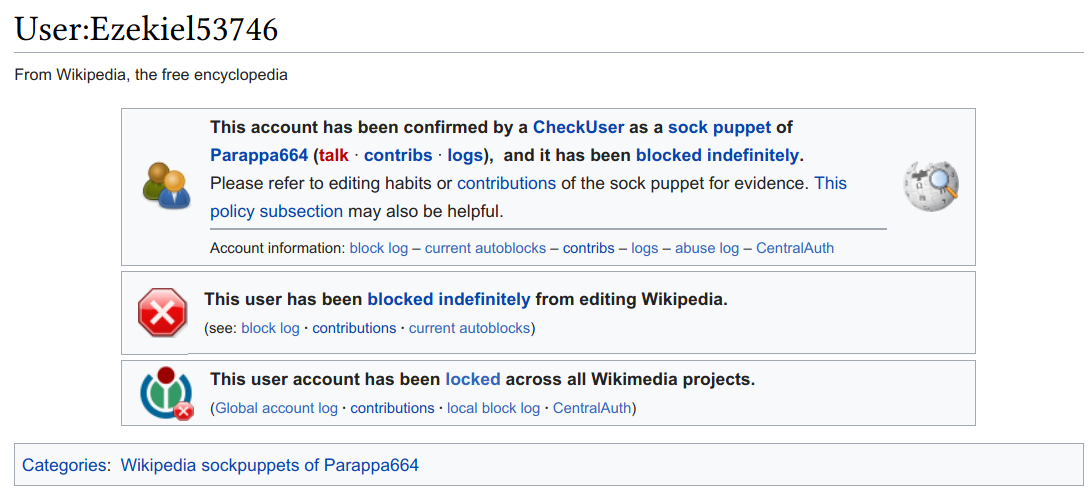 Screenshot via Wikipedia, "X" icon by user Stannered
This user was caught "sockpuppeteering", meaning that multiple accounts were created by the same person for nefarious purposes like influencing a vote or dominating a discussion. This person has edited Wikipedia using 20 different accounts. Each sockpuppet case has a publicly available investigation page where editors can chime in and give evidence on whether they think a user is a sockpuppet.
How does Wikipedia know these accounts belong to the same person? Users called "CheckUsers" are authorised to check the IP addresses used to access the accounts. CheckUsers must be at least 18 years old and have signed a confidentiality agreement with Wikimedia, Wikipedia's parent organisation. The Arbitration Committee (ArbCom), composed of editors elected by other editors, select CheckUsers nominated by the editing community. Ordinary users can use tools like the Editor Interaction Analyzer to check their suspicions.
Behind all the policies and processes, I guess this is what makes Wikipedia even possible: the whole idea of check and balances is based on collective decision making. Everything, from blocking users to appointing ArbCom members, are done collectively. But the flip-side is that sometimes things turn into witch-hunts where editors actively police other editors, citing policies after policies to justify what they do. That has led many to fled from the online encyclopedia.
The lighter side of things
Of course, Wikipedia isn't only about blocking and yelling at people for the mess they've created - far from it. It's about the community and in my opinion that's the most valuable thing Wikipedia has taught me while growing up with it. Dealing with people is an art, be it online or offline.
When I first joined Wikipedia, I also joined several Wikiprojects -- groups of users who dedicate themselves to a certain subject area. There are Wikiprojects for nearly everything, from cutlery to Doctor Who. One of which I naturally joined was the Wikiproject on Hong Kong, my hometown.
There, I discussed with other editors on how to improve articles related to Hong Kong, debated which is the best format for the list of post offices in Hong Kong, collaborated with others on the article on Jackie Chan, among others things.
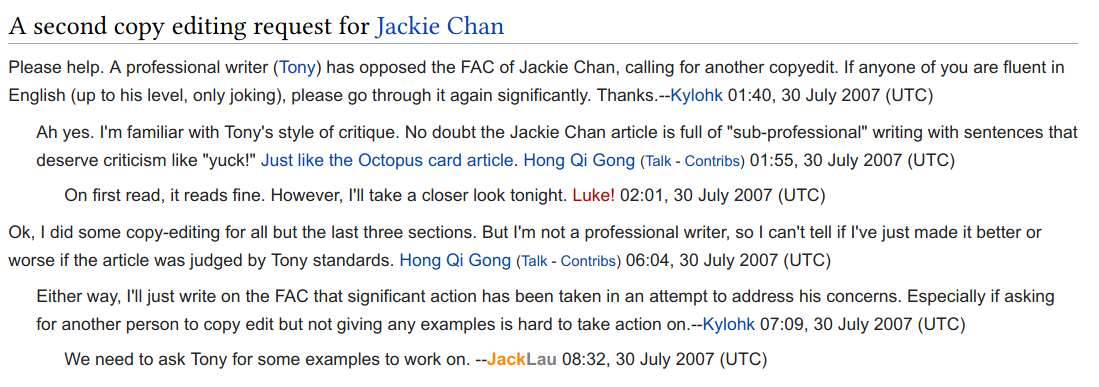 Screenshot via Wikipedia
Wikipedia also has a culture of giving other users "barnstars" to award them for the good work they've done. There's also a Birthday Committee to wish users a happy birthday.
Wikiproject Hong Kong had occasionally organised meetups in real life, but I never attended those. For me, my life as a Wikipedia editor is purely an online hobby.
Why I became a Wikipedian
There are many people around the world that makes Wikipedia possible, and most readers don't realise the community and the drama behind the articles. My favourite Wikipedia feud is on whether "into" in the film Star Trek Into Darkness should be capitalised, which was rightly parodied by xkcd.
Here's a gist of what I'm talking about:
 Screenshot via Wikipedia
This user cites "MOS:CT", or Wikipedia's manual of style on capitalisation, but this user disagrees:
 Screenshot via Wikipedia
This user argues on the aesthetics of the title:
 Screenshot via Wikipedia
And sometimes things get feisty:
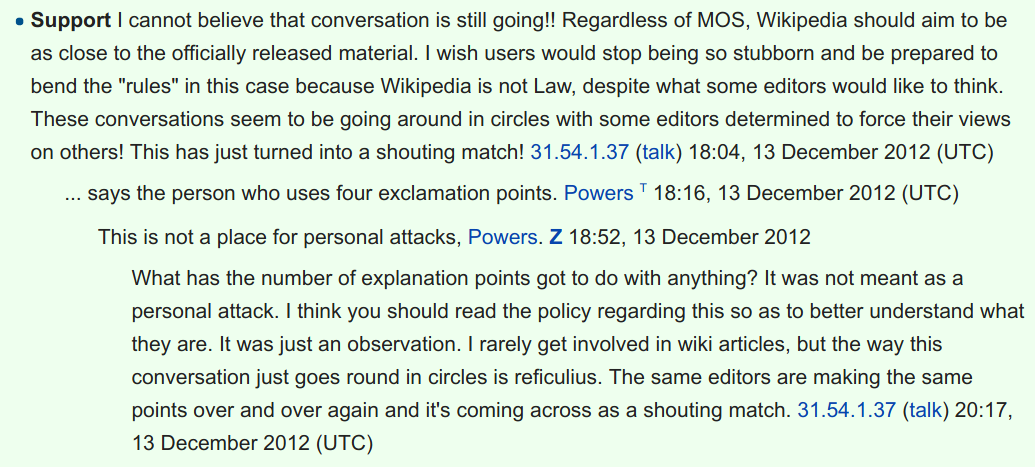 Screenshot via Wikipedia
And after month-long the drama and more than 22,000 words submitted by users supporting and opposing the renaming of "Star Trek into Darkness" into "Star Trek Into Darkness", the administrator decided there's no consensus and nothing was done:
 Screenshot via Wikipedia
I'm not sure why I became a Wikipedia editor (or "Wikipedian"). I wasn't paid or recognised for my work. Now reflecting on it, I think it was the sense of community that drawn me to editing. I felt I was part of a team striven to make knowledge free and accessible. Though Wikipedia is frowned upon by teachers and professors around the world, and that I have left the encyclopedia, I remain proud that I had once contributed to what so many students and casual readers rely on for knowledge.
Top image by Wikimedia Foundation, taken by author.


If you like what you read, follow us on Facebook, Instagram, Twitter and Telegram to get the latest updates.