


 November 22, 2017, 06:04 PM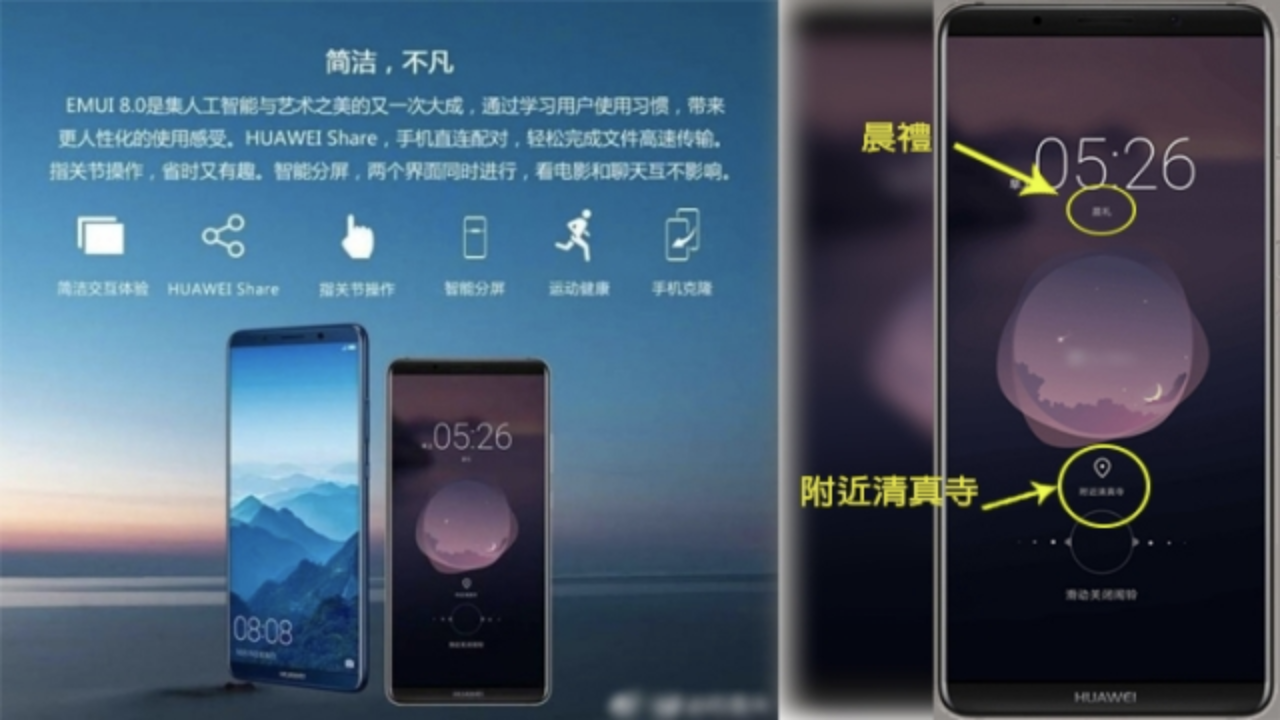

Here's the latest thing to cause online controversy in China -- a Muslim-friendly feature on a smartphone.
The company that became a victim to Islamophobic netizens is Huawei, a prominent Chinese smartphone brand. It has the third largest market share in the world for smartphones, after Samsung and Apple.
It launched its new Mate 10 Pro phone in Nov. 2017, which generally received good reviews.
Prayer reminder
However, the company decided to include certain features on the phone that would be useful to Muslims. These included a reminder for prayer times, and a function that helps users find nearby mosques.
These features were displayed in one of Huawei's advertisements.
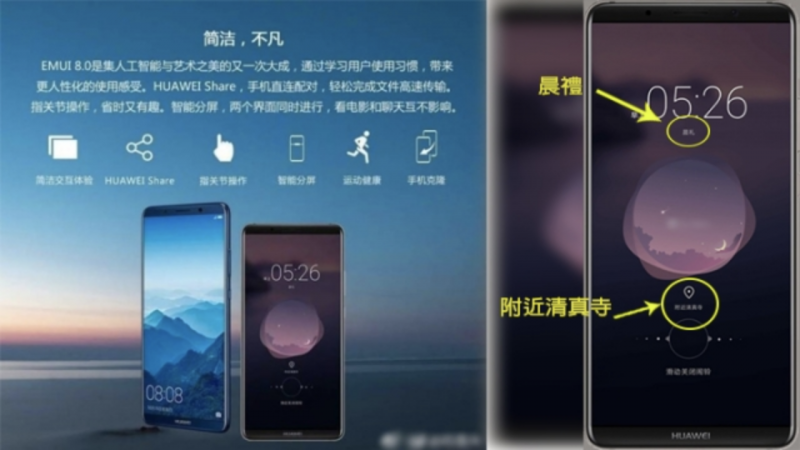 Image from Weibo. Upper comment says "prayer time" while the lower comment says "mosque nearby".
Somehow, this triggered a flood of angry responses from netizens on the Chinese social networking site, Weibo.
An online backlash
It began with a Weibo account called "Innocuous Plea", which regularly shares anti-Muslim content. It posted a picture of Huawei's advertisement and commented "very halal".
The account, which has over 570,000 followers, was soon followed by other Chinese netizens.
They described the feature as giving "preferential treatment" to Muslims, "discriminating" against non-Muslim users of Huawei phones, and calling for a boycott of the company.
Response by Huawei
In response, Huawei issued a statement in Chinese on Nov. 16, clarifying that the phone's alarm function is meant for customers in overseas markets and would not be available in China.
But it also said that the online attacks were part of a targeted campaign by people who "distorted the facts". Huawei referred to the commentators literally as "an organized water army” (有组织的水军), which in effect refers to a group of astroturfers paid to post comments about a specific company.
The translated statement reads as follows:
"Explanation for Huawei mobile phone's alarm reminder function with regards to malicious accusations by organized water army.
Huawei is a Chinese corporation, and also a global brand. We provide high quality services and products to over 170 countries all over the world. For the different countries, cultures and people, we provide a wide range of personalised functions to better serve our customers. This also reflects our innovative approach that puts our users first.
Recently, while the Huawei Mate 10 series is experiencing brisk sales, a surge of comments with ulterior motives attacking Huawei's "alarm reminder function" have surfaced on the Chinese internet. The function is provided for certain locations overseas to allow personalised reminder services. It is not available in China. There are people who are opportunistically distorting facts and inciting emotions to cast aspersions. Huawei is determined to take legal action."
The original post from Innocuous Plea has since been deleted, along with the discussion and various anti-Muslim comments. However, Huawei has also removed the advertisement from its website and other online platforms.
[related_story]
Anti-Muslim sentiment in China
This is not the first time China has had to grapple with rising anti-Muslim sentiment.
In July 2017, controversy erupted after popular food delivery service Meituan introduced separate boxes for halal and non-halal food orders. There was a boycott and calls for Chinese users to delete the app.
There are about 21 million Muslims in China today, with most living in the autonomous western region of Xinjiang. The majority-Muslim, ethnic Uighur community in Xinjiang have experienced severe restrictions from the government.
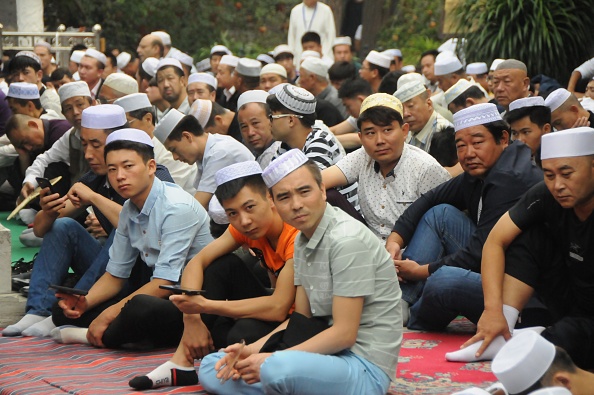 Muslims gather to perform the Eid Al-Adha prayer at Niujie Mosque in Beijing, China on September 01, 2017. Eid Al Adha also called the "Sacrifice Feast", is the second of two Muslim holidays celebrated worldwide each year, and considered the holier of the two. (Photo by Fuat Kabakci/Anadolu Agency/Getty Images)
The restrictions escalated after unrest and a number of terrorist incidents whom the government has linked to religious separatist groups.
It looks like Chinese companies -- especially those with a presence in overseas markets -- will have to balance their outreach to one of the fastest growing consumer demographics in the world, against possible backlash by a vocal group of Chinese consumers with a growing sense of Islamophobia.
Tricky.
Top image from Weibo.


If you like what you read, follow us on Facebook, Instagram, Twitter and Telegram to get the latest updates.