


 October 15, 2017, 12:15 PM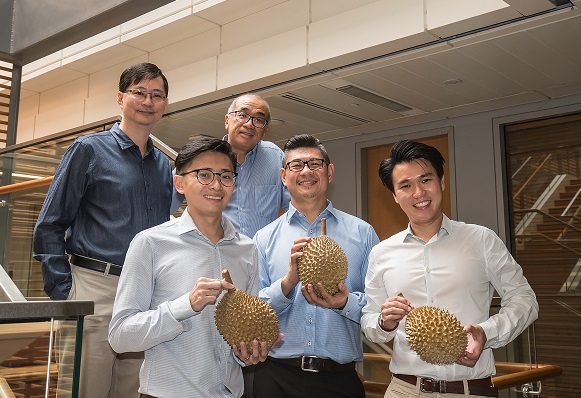

Trust Singaporeans to do this.
Scientists from the Humphrey Oei Institute of Cancer Research, National Cancer Centre Singapore (NCCS) and Duke-NUS Medical School managed to map out the complete genetic makeup of our king of fruits — the great Durian, Mao Shan Wang in particular.
Notably, it is a world's first.
If all these factoids sound gibberish to you, here's something easier to understand: we now know what makes a durian looks, tastes and smells from this study.
What makes a durian smell so distinctly that one either loves or hates it?
The study found a class of genes called methionine gamma lyases (MGLs), which control the production of volatile sulphur compounds (VSCs), which in turn give the durian its unique pungent smell.
So what does this mean to a durian lover?
Think odourless durian you can bring on public transport and durian siu dai for the health conscious.
Because with the knowledge of the durian's genetic makeup, you could modify it to your preference.
[related_story]
According to the scientists' speculation, the ability to produce high VSC levels to produce that pungent smell might play a crucial part in the durian's propagation as the scent might attract animals to eat and subsequently disperse durian seeds to other places.
This genetic blueprint is also important to study other durian species or plants especially those endangered in the region due to increasing deforestation and industrialisation.
What's also interesting is that Durian has twice the number of genes (46,000 genes ) than what a human-being has (23,000 genes) and the team of scientists found out that durians might be related to the cacao plant, which is used in chocolates, 65 million years ago.
So now you know.
Top photo from National Cancer Centre Singapore (NCCS)


If you like what you read, follow us on Facebook, Instagram, Twitter and Telegram to get the latest updates.