


 August 16, 2021, 08:46 PM

Follow us on Telegram for the latest updates: https://t.me/mothershipsg
Recently, Singapore actor Nick Mikhail made headlines when he expressed his dissatisfaction with how the authorities conducted an inspection at his place of residence.
Among other things, he pointed out that a group of public officers — comprising a mix of police officers and Safe Distancing Enforcement Officers — entered his home without a warrant.
The Urban Redevelopment Authority (URA) later clarified that no warrant is necessary for officers to check for potential infringements of Covid-19 regulations.
Naturally, this incident raises a few questions. For example, in what situations are the authorities allowed to enter your house? What happens if you refuse to let them in?
Mothership spoke to Cory Wong, who is the Associate Director of Invictus Law, to find out more.
Which law grants health officers powers to search your house?
Here's "the short answer", according to Wong:
"Section 35 of the Covid-19 (Temporary Measures) Act 2020 read with Section 55A of the Infectious Diseases Act allows for a police officer, or a Health Officer, or a public officer, or an officer of a statutory body (such as URA), or an auxiliary police officer, or an employee of a prescribed institution, to enter into any premises without a warrant for the purposes of ascertaining (and not even requiring the prior commencement of investigation) whether the currently in-force control order (such as Phase 2 Heightened Alert) is being complied with."
This means that the authorities are empowered to enter any premises without needing a warrant, if they are ascertaining whether Covid-19 measures are being adhered to.
However, Wong elaborated further, noting that prior to the Covid-19 pandemic, Health Officers could already enter premises without a warrant to inspect or conduct searches, under Section 55A of the Infectious Diseases Act.
In other words, the current situation of Health Officers being able to conduct searches is not new, and such officers have been authorised to do so to prevent other diseases, since the implementation of the act in 1977.
What the new law (namely, the Covid-19 (Temporary Measures) Act 2020) does is simply to confer the same authorisation on more public officers.
What about the police? When are they allowed to search your house?
According to Wong, the answer to this question is not so clear cut, as the law does not spell out every scenario where such a request is allowed.
Instead, it largely depends on whether the investigation is regarding an arrestable or non-arrestable offence.
Under various sections in the Criminal Procedure Code, the police can enter and search any place without a warrant, in order to arrest an individual who may have committed an arrestable offence, or to arrest someone who is at risk of escaping during the delay in obtaining a warrant, among other reasons.
For example, offences such as theft, robbery and most sexual offences are considered arrestable, whereas offences such as giving a false statement to an officer, or simple mischief (i.e. causing slight property damage) are considered non-arrestable.
This means that if the police suspects that you have committed a robbery, they have every right to enter and search your residence, even without a warrant.
While breaches of Covid-19 regulations do not appear to be arrestable offences, police officers who are investigating the breaches are still empowered to enter a house, under the Covid-19 (Temporary Measures) Act 2020.
Does this mean public officers can force their way into your house?
Yes, and no.
According to Wong, the Covid-19 laws grant relevant authorities the power to investigate any potential breaches of Covid-19 regulations within your house, or simply to check whether everything is in order.
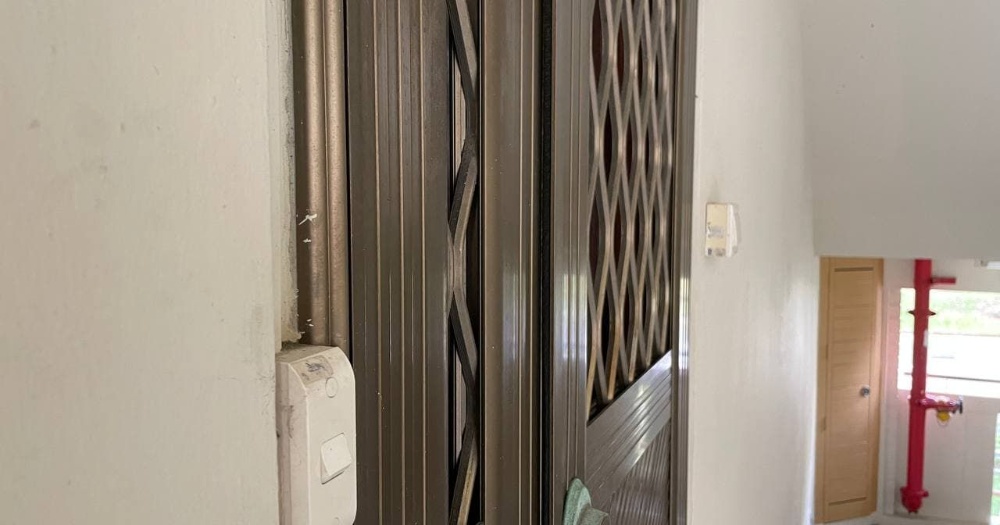
Taken to the extreme, Wong said that there's technically nothing to stop the authorities from tearing down your gate in the process, although he added that such a dramatic action would need to be justified in the first place.
He said that in most cases, the police aren't likely to break down your door just for this because "any such discretion or power has to be exercised responsibly and be able to withstand scrutiny. Proportionality is key."
Police raids on illegal establishments are a prime example of when the police would use force to enter; after all, requesting permission is likely to lead to the suspects getting away.
And what about walking through an open gate?
According to Wong, such an act would be considered "neither irresponsible nor unreasonable", given that the officers involved in the recent incident already had statutory powers (i.e. powers conferred by statute, or written law) to enter the residence without a warrant to perform checks for Covid-19 related breaches.
The URA statement also said that the officers involved spotted two cars parked outside the residence, leading them to ascertain whether there were any visitors in the unit, and if the numbers were within permissible limits.
How do you deal with people at your door?
If you ever find yourself in a situation where public officers are at your door, these are the steps you need to take.
Verify their identifies
Firstly, to ensure you don't fall prey to a scam, you need to verify that whoever is at the door is indeed a police officer, or government official.
In case you're laughing right now, and telling yourself you would never fall for such a scam, people who impersonate police officers do exist, and people do get tricked from time to time.
According to the Singapore Police Force (SPF), if in doubt, you should request the police officer's warrant card to verify his or her identity, before complying with any instructions given.
A genuine warrant card will have identification features, such as the Police crest, the photo of the officer, as well as the officer's name and NRIC number.
For safe distancing enforcement officers, you may identify them through the passes and red armbands that they wear while on duty.If you are unsure of the person's credibility as a police officer, and any other public officer, you should contact the relevant authorities for assistance, before complying.
Ask what law they are enforcing
If you have verified that they are indeed police officers or safe distancing officers, the next step is to check what law they are enforcing.
For example, if they are checking whether you are complying with Covid-19 regulations, then you would have to let them into the house, to ensure that you aren't breaking any rules.
It's also in your best interests to simply let them in, because you could be punished heavily for not complying.
Under Section 35 of the Covid-19 (Temporary Measures) Act 2020, first-timers who refuse to comply with orders by relevant officers can be issued a fine of up to S$10,000 and jail term of up to six months.
On the other hand, if a police officer is looking for you regarding a non-arrestable offence, then you need not allow them into the house if they do not possess a warrant.
If you let them in, they don't need a warrant
In addition, Ong also said that the need for a warrant can be waived by consent, be it express or implied.
Basically, in a situation where a warrant would normally be needed, if police officers request to enter your house, and you unlock the door and allow them in without saying anything, this is taken as implied consent, meaning a warrant would no longer be necessary.
Now you know.
Follow and listen to our podcast here
Top image via Jason Fan.


If you like what you read, follow us on Facebook, Instagram, Twitter and Telegram to get the latest updates.