


 October 07, 2020, 01:40 PM
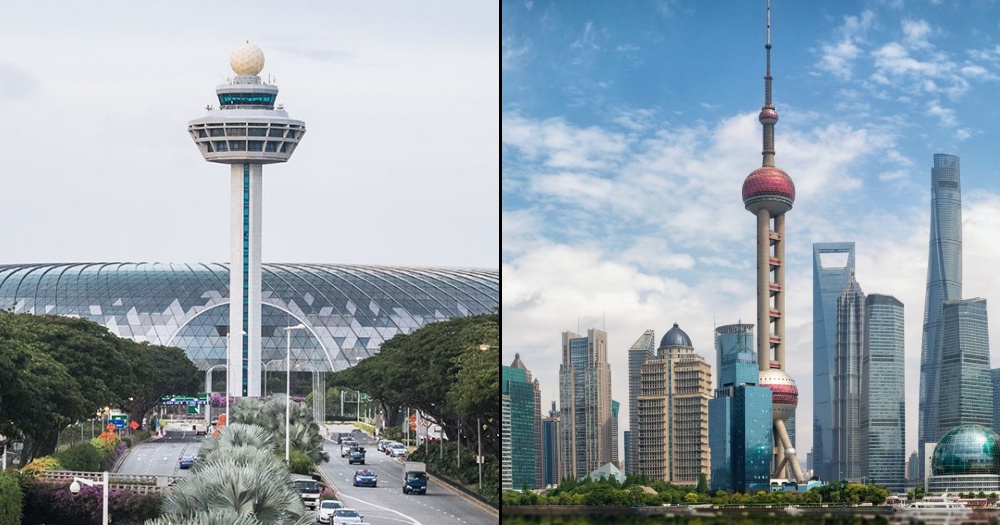

It is not the time to consider reducing Stay-Home Notice duration for travellers from countries and regions that have been successful in limiting the spread of Covid-19, said Transport Minister Ong Ye Kung in Parliament on Oct. 6.
Instead, it is better to lift border restrictions unilaterally for countries and regions that have "comprehensive public health surveillance systems, and comparable incidence rates to Singapore".
Ong was responding to a supplementary question by Member of Parliament Poh Li San who asked if the Ministry of Transport (MOT) would consider reducing the Stay-Home Notice duration for travellers from regions that are relatively successful in controlling the virus, like China and Taiwan.
Poh suggested that the Stay-Home Notice duration for travellers from these places be reduced from the current seven days to three or five days.
The shorter Stay-Home Notice will help reduce the deterrence for travellers to come to Singapore, reasoned Poh.
Unilateral opening better than reducing SHN
In response, Ong said that a "unilateral opening is better than reducing SHN from 14 days".
Singapore has begun to open its borders unilaterally to places with similar risk profiles — like Brunei, New Zealand, Vietnam, and Australia (excluding Victoria).
He reasoned that for regions and countries with similar risk profiles, there is technically no need for SHN or tests.
"When you have similar risk profiles, technically, there's actually no need for tests because someone from those countries coming to Singapore — not different from someone from Jurong or Sembawang, or Bedok going to Changi Airport — same risk profile."
However, out of an "abundance of precaution", travellers from these places will still need a post-arrival swab test before they are allowed to move about freely.
In his ministerial statement, Ong also said that testing is the key to unlocking air travel and the emerging international practice is to get tested before one travels.
Testing then, can start to replace border closures and Stay-Home Notices.
Here is Poh's question in full:
Thank you Mr Speaker, Sir. I thank Minister Ong for sharing MOT's strategies for the aviation sector.
I feel very heartened, I'd like to first declare my interest as an employee of the Changi Airport Group. Currently there are different travel schemes, and swap and isolation protocol upon arrival for travellers — some 14-day isolation, some seven days, and some zero, for example, Australia and Brunei, in the latest case.
And I'd like to ask the Minister...in the next three to six months, will MOT consider to reduce the SHN (Stay-Home Notice) duration, for countries that are relatively successful like China, Taiwan, for example, from the current seven days to perhaps three to five days — a shorter period — following negative swab results.
Pre-Covid, I believe China [had] the highest travel volume into Singapore. So if we can actually reduce that number of days for SHN, that will reduce a deterrence for travelers to enter into Singapore. Thank you.
Here's Minister Ong's reply in full:
Mr Speaker Sir, selectively, the MTF (Multi-Ministry Task Force) [has] been reducing SHN (Stay-Home Notice), but backed by healthcare experts' advice, and our findings and understanding of the virus; 14 days to seven days for example, for some countries and regions with safer track records.
But what I mentioned earlier about unilateral opening is better than reducing SHN from 14 days.
In the case of Brunei, New Zealand, Vietnam, and Australia (excluding Victoria), we require zero days of SHN. Because these countries, [in terms of] their incidence rates and risk profiles, they're similar to, or better than Singapore.
And that, like I mentioned, when you have similar risk profiles, technically, there's actually no need for tests because someone from those countries coming to Singapore — not different from someone from Jurong or Sembawang, or Bedok going to Changi Airport — same risk profile.
But out of an abundance of precaution, we still administer a post-arrival test. And once negative, they are free to move about, there's no need for SHN.
So I think right now, it's not to simplify rules or reduce requirements and then apply generally. It's not the time to do that. Now what we need to do is to understand every single country or region, understand their risk profile and customized our approach for travelers from each of these countries, or region — which is what we are doing.
We deliver more stories to you on LinkedIn
Top images via Changi Airport and Atlas Logistic Network


If you like what you read, follow us on Facebook, Instagram, Twitter and Telegram to get the latest updates.