


 August 25, 2020, 01:02 PM
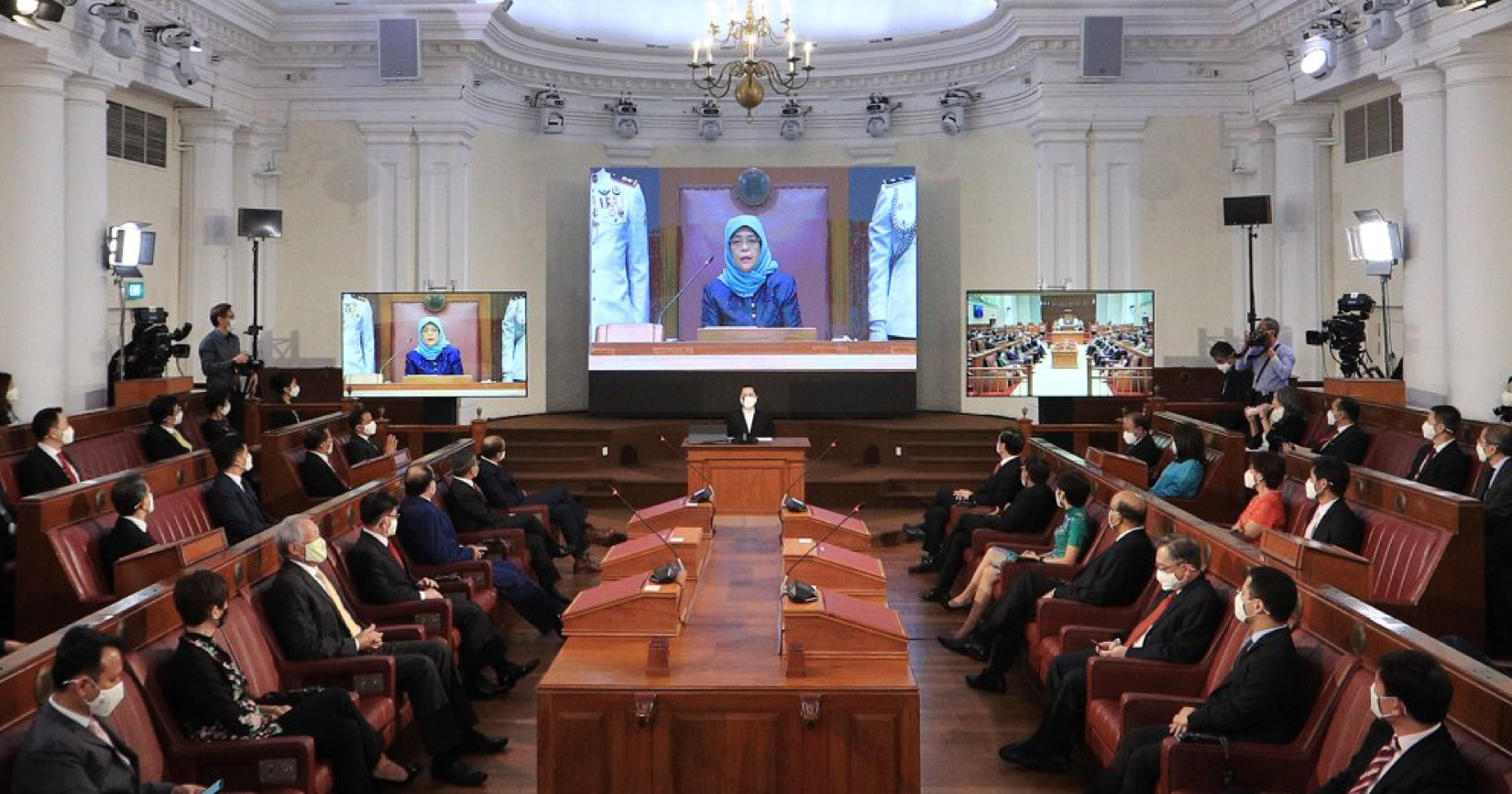

President Halimah Yacob delivered her opening address for the commencement of Singapore's 14th Parliament on Aug. 24, her second address to Parliament, after her first in 2018.
Her address set out the government's priorities and policies for its next term.
So what are the similarities and differences between President Halimah's address and the past two president's addresses to Parliament?
The ruling People's Action Party (PAP) won the preceding general elections (in 2011, 2015 and 2020), albeit in different circumstances, and they got to write the addresses for the president to deliver to the House.
While it's no surprise that the addresses touched upon similar themes, such as the economy, the engaging of Singaporeans, fostering a more caring society, there are some hints of changes in the new parliament term.
Length of speech
Of course, one major difference was the length of the speeches.
It appears that the length of the president's speech has increased over the years, at about 500-plus words per election cycle.
After the 2011 watershed election, where PAP lost a GRC for the first time, President Tony Tan's speech clocked in at 1,901 words.
President Tan's speech in 2016 after PAP's landslide win in 2015 came in at 2,583 words.
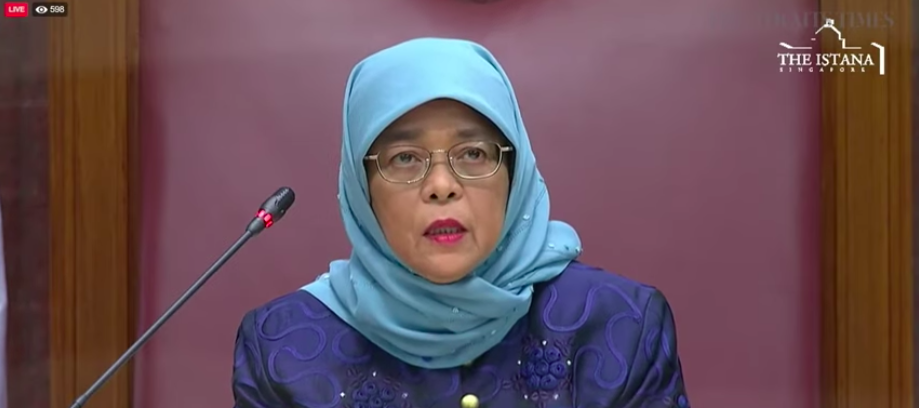
However, President Halimah had 3,103 words, or 600 more.
It perhaps demonstrates the unprecedented and complex times we live in, and the number of additional things the government feels it needs to address.
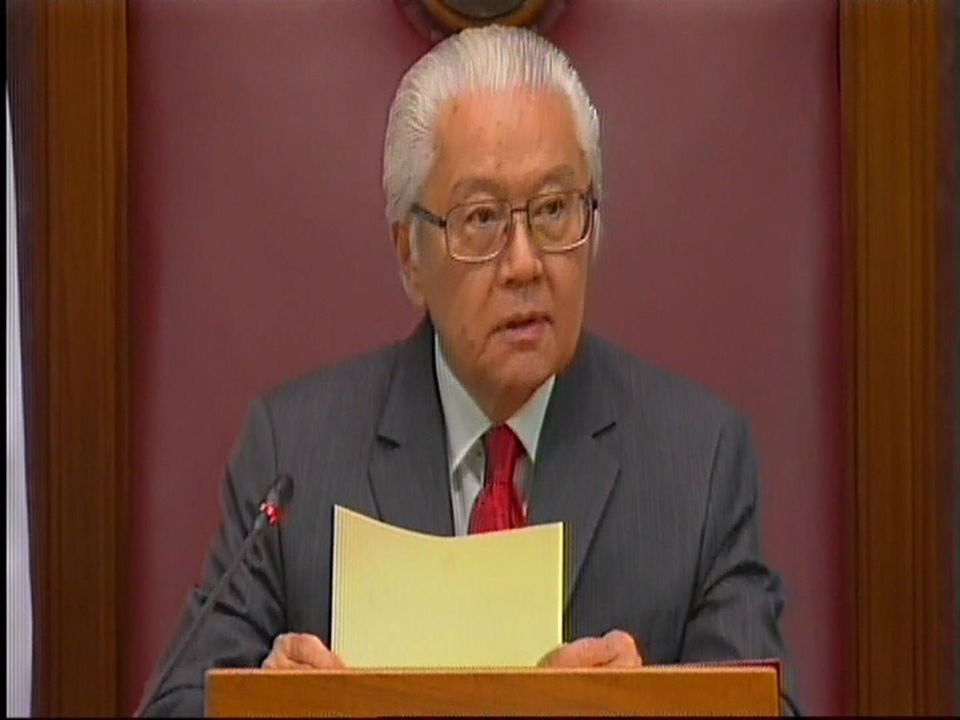 Photo from CNA Facebook.
A new type of politics?
The language on politics in the president's address marks the most open and broad-minded yet, especially if one compares the 2020 speech, with the 2011 and 2016 speeches.
Take the acknowledgement of the opposition, for instance.
In the president's address following the watershed GE2011, the opposition was not mentioned once.
The opposition was mentioned once in the 2016 president's address after GE2015.
In the current address, the opposition was mentioned six times, with the acknowledgement that they have a part to play.
The address also calls on both the government and opposition to set aside differences and work together for the safety and future of Singapore, when the situation demands.
Two paragraphs on politics require closer reading:
"The new generation of leaders and Singaporeans will have to form bonds and connections afresh, forge their own compact, find their own ways of working together and strike their own balances. They have to continue to deliver effective and sound government, while accommodating the growing diversity of views. And they have to foster a more open spirit in our society, even as we strengthen the common cause holding us together as Singaporeans." (Emphasis ours)
The 2015 president's address, delivered in 2016, also focused on leadership renewal like the 2020 address.
It noted that every new generation of leaders must win anew the people’s trust, for the right to leadership is "not transferable from one generation to the next".
The 2011 president's address did not mention leadership renewal yet but noted that Singapore politics is becoming more diverse and open, and that the government should "expect more diverse views and vigorous debates in the House".
Accommodate growing diversity of views
This speech by President Halimah went further than the 2015 and 2011 addresses by acknowledging the need to accommodate the growing diversity of views and foster a more open spirit in the society.
Will this result in a different style of debate about policies and politics in Parliament?
How will the government foster an open yet constructive debate online and on social media?
The following paragraph also stood out:
"The government will continue to evolve our economic and social models, and our policies to suit the new circumstances. We will encourage citizen initiatives and participation. We will listen to and examine novel ideas objectively, recognising that no solutions are right for all time." (Emphasis ours)
Back in 2016, President Tan mentioned citizen participation, noting that the government "must foster partnership and collaboration amongst citizens so that everyone plays a part in building our nation".
In fact, both presidents emphasised the importance of engaging Singaporeans, because to be fair, that is a perennially important issue.
President Tan mentioned the SG50 celebrations, and the mourning over the death of former Prime Minister Lee Kuan Yew, experiences shared by many Singaporeans.
"We must foster partnership and collaboration amongst citizens so that everyone plays a part in building our nation. During SG50, we saw how willing Singaporeans were to contribute and share a part of their lives with one another. Let us all participate in shaping our common future."
Meanwhile, President Halimah invited all Singaporeans to partner each other in the Singapore Together journey, which sounds similar to the SGfuture dialogues and Our Singapore Conversation mentioned in 2016.
Interesting new ideas
But President Halimah's speech shows that the government is actively encouraging novel ideas.
Not just new ideas, but interesting new ideas.
So is the minimum wage model an interesting but old idea?
And will the concept of Universal Basic Income be explored as a new but not so interesting idea?
Importantly, the government also noted that it will evolve our economic and social models, and our policies to suit the new circumstances caused by Covid-19 pandemic.
But there is a caveat.
The 2020 President's Address noted that "sometimes, staying the course will remain the best way forward", and the government must "convince Singaporeans to persevere".
A slight shift to the left?
Nurturing a kinder society was on the cards for the government in 2016.
President Tan spoke of the need to build a society where the bonds of kinship run deep and people look out for each other.
But he also emphasised that taking care of Singapore's needy must be done in a sustainable manner, and Singapore cannot emulate other developed nations with "over-generous" welfare schemes.
President Halimah mentioned that social safety nets needed to be financially sustainable for future generations.
But her address was more specific in this area.
While President Tan spoke mainly about improving healthcare, President Halimah highlighted the need to help Singaporeans in buying homes, securing good jobs, and ensuring dignified retirement.
President Halimah also hinted at the evolution of social models when she spoke about the strengthening of social safety nets.
"In this crisis, we have implemented many emergency measures to help Singaporeans cope. These are temporary relief measures, but we do expect a permanent shift to a new normal after the crisis. We are entering an era of volatility, uncertainty and disruption in people’s lives. Individuals will need greater social support than before."
What are some of the permanent social support shifts post-Covid-19?
Could the government potentially do more for unemployed Singaporeans who worked in industries disrupted by Covid-19?
 Screen shot from ST YouTube channel.
Ongoing support for Singaporeans affected by Covid-19
One of the new measures during Covid-19 was the Covid-19 Support Grant (CSG).
CSG, introduced earlier in May to help Singaporeans who are unemployed or suffered significant income loss due to Covid-19, has been extended to December 2020.
Those who have lost their jobs or have been put on involuntary no-pay leave for at least three consecutive months may receive a monthly cash grant of up to S$800, for three months.
For those who have experienced a pay cut of at least 30 per cent for three consecutive months, they may receive up to S$500 for three months.
For those who have experienced a pay cut of at least 30 per cent for three consecutive months, they may receive up to S$500 for three months.
Many years ago, then deputy prime minister and finance minister Tharman Shanmugaratnam told The Straits Times in an exclusive interview that the weight of thinking in Cabinet has shifted to the left-of-centre in how it views social policy and helping the lower income.
It appears that the government may be inching more to the left with its view that individuals will need great social support than before in a post-Covid-19 world.
But regardless of whether the politics is "left" or "right", what is important is the very process of the government and the opposition working for the good of Singaporeans and Singapore.
And the good judgement of our political leaders will be required to re-examine ideas and suggestions, old and new, and engage in the continuing struggle to try to solve the problems for Singapore, and not from the vain hope of looking or settling for perfect solutions.


If you like what you read, follow us on Facebook, Instagram, Twitter and Telegram to get the latest updates.