


 August 26, 2020, 09:26 PM

More than 915 cases of Covid-19 have been identified in mass infections linked to worshippers at a church in northern Seoul as of Aug. 25 (Tuesday), which have been blamed for the recent surge in the capital.
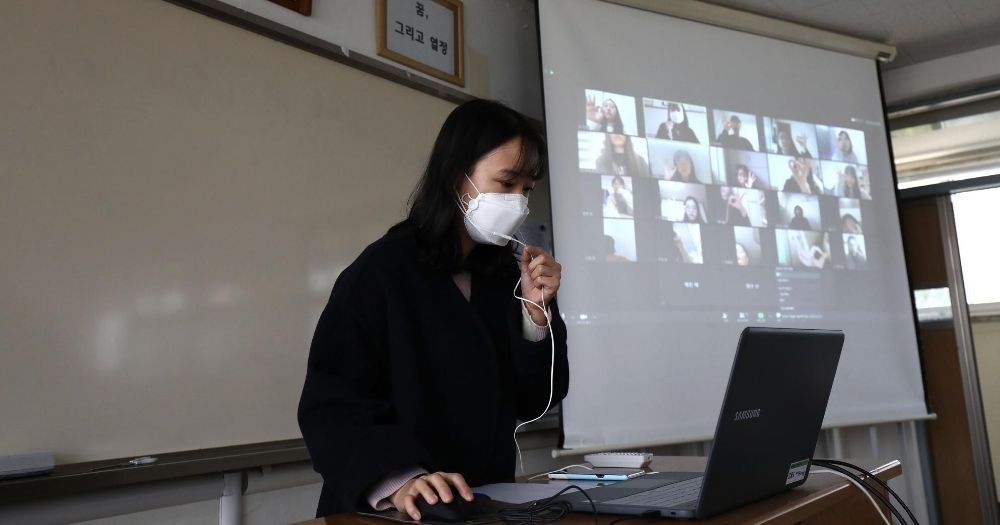
Seoul returns to online learning except high school seniors
In light of the skyrocketing numbers in the capital, Schools in Seoul will return to remote learning, announced South Korea's education ministry.
The schools will be closed from Aug. 26 to Sep. 11.
However, high school seniors will be exempted from the new rule, reported Yonhap, due to ongoing preparations for their national university entrance exams pending December.
The decision for schools to return online is a precautionary response to what South Korean health authorities have called the biggest crisis yet since the pandemic hit earlier this year.
After successfully fighting off the initial wave of the pandemic largely triggered by the Shincheonji religious sect, South Korea went through a phased reopening of schools in May after seeing a slowdown in new cases.
However, over the past two weeks, 175 students and 52 teachers and faculty members have tested positive for the virus in the greater Seoul area, including Gyeonggi Province and Incheon.
An extension of the school closure will be decided after further monitoring by the education ministry.
Resurgence of mass infections triggered by church in northern Seoul
The country had seen stable numbers for months before the mass infections broke out in mid-August, after members of Sarang Jeil Church, located in northern Seoul, attended a Mass Liberation Day rally in central Seoul on Saturday, Aug. 15 to protest against South Korean President Moon Jae In's policies despite repeated warnings from the government.
Over 915 confirmed cases have been linked to worshippers of Sarang Jeil Church.
Soon after news of the mass outbreak spread, an online petition calling for Jun Kwang Hoon, Sarang Jeil Church's pastor, to be detained was created.
The author of the petition heavily criticised Jun for "wasting" the country's efforts to curb the pandemic, and for showing no sign of remorse or concern for the health of his members.
On Aug. 22, KBS World reported that Jun had offered to step down as the president of the Christian Council of Korea (CCK), claiming that he was suffering due to "terrorism by unsavoury forces".
He said that he was stepping down as head of the council as it was too difficult to hold onto the post in the current circumstances.
Earlier in February and March 2020, South Korea battled its largest Covid-19 cluster in Daegu originating from religious sect Shincheonji, which amounted to 5,214 cases linked to the cult.
Thousands of members reportedly refused to cooperate with authorities, some of whom had been diagnosed with Covid-19.
The cult's branch in Daegu was reported to have 240,000 congregants, all whom revered the founder, Lee Man Hee, a self-styled messiah figure.
Travellers entering S'pore from South Korea will serve 14-day SHN at dedicated facilities
Travellers entering Singapore who have recent travel history, including transit, to South Korea within the last 14 days will be required to serve a 14-day Stay-Home Notice (SHN) at dedicated SHN facilities, rather than their own place of residence.
This will take effect from Aug. 29, 2020, 12am.
They will also need to undergo a Covid-19 test before the end of their SHN, as is the current requirement.
According to the Multi-Ministry Taskforce, travellers planning to enter Singapore will be subjected to the prevailing border measures upon entry, including payment for their stay at dedicated SHN facilities and tests, where applicable.
Related stories:
Photo by Chung Sung-Jun/Getty Images


If you like what you read, follow us on Facebook, Instagram, Twitter and Telegram to get the latest updates.