


 August 24, 2020, 01:47 PM

Littering, or pollution, is one of the visible impacts that humans have on the environment.
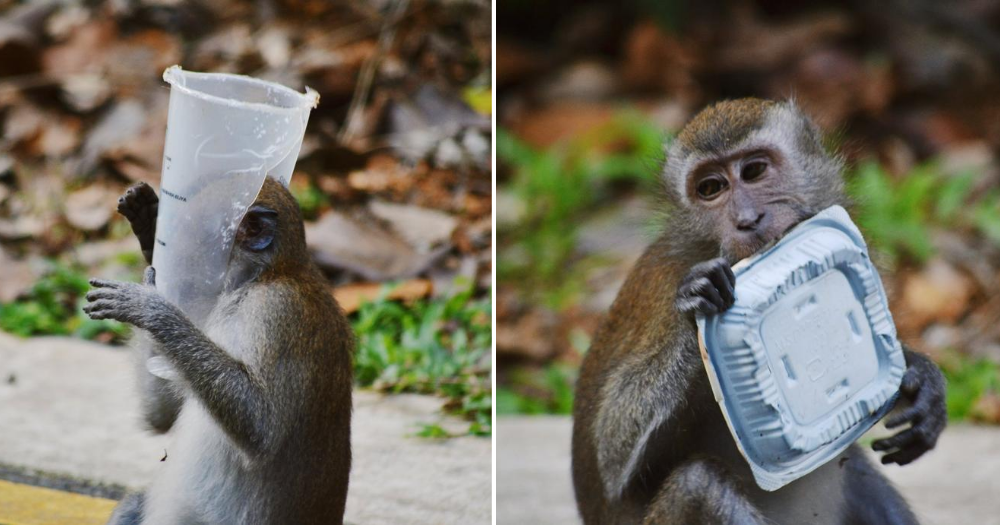
Animals entangled with trash has been a common sight around the world, including Singapore, as several long-tailed macaques were seen toying with trash recently.
Juvenile macaques playing with plastic
One Glendon Kee shared in a Facebook post on the Raffles' Banded Langurs page about his and a friend, Amos Chua's, encounter along Old Upper Thomson Rd.
Kee and Chua, who participate in field surveys at Singapore's green spaces to collect data and learn more about the vulnerable langurs, came across several juvenile macaques playing along the forest line.
"They were exceedingly cute, playfully biting each other and overall having a wonderful time," Kee wrote.
While they were playing, another individual appeared playing with an empty, discarded bubble tea cup.
Here it is with the plastic item over its head.
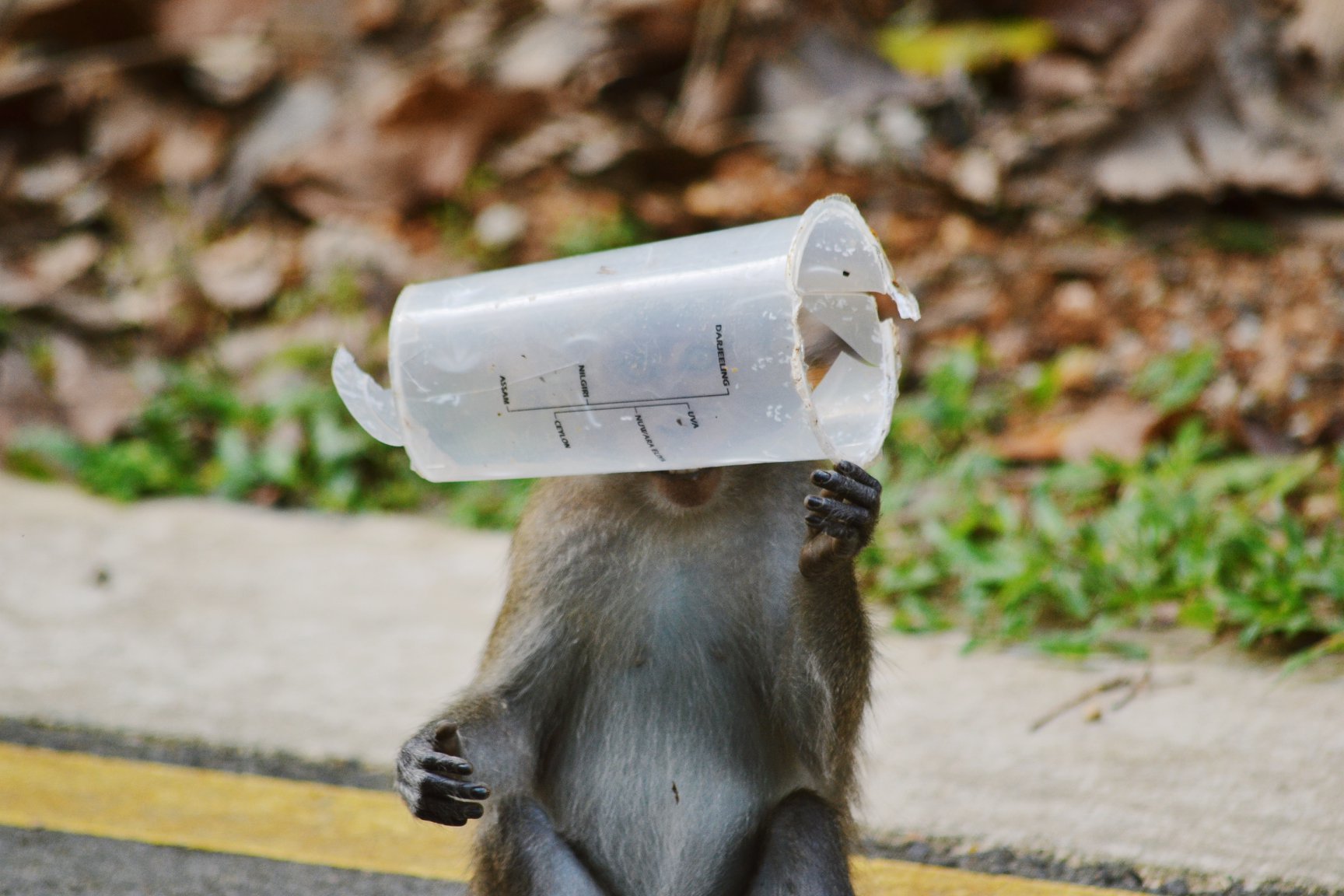 Photo from Raffles' Banded Langurs / FB
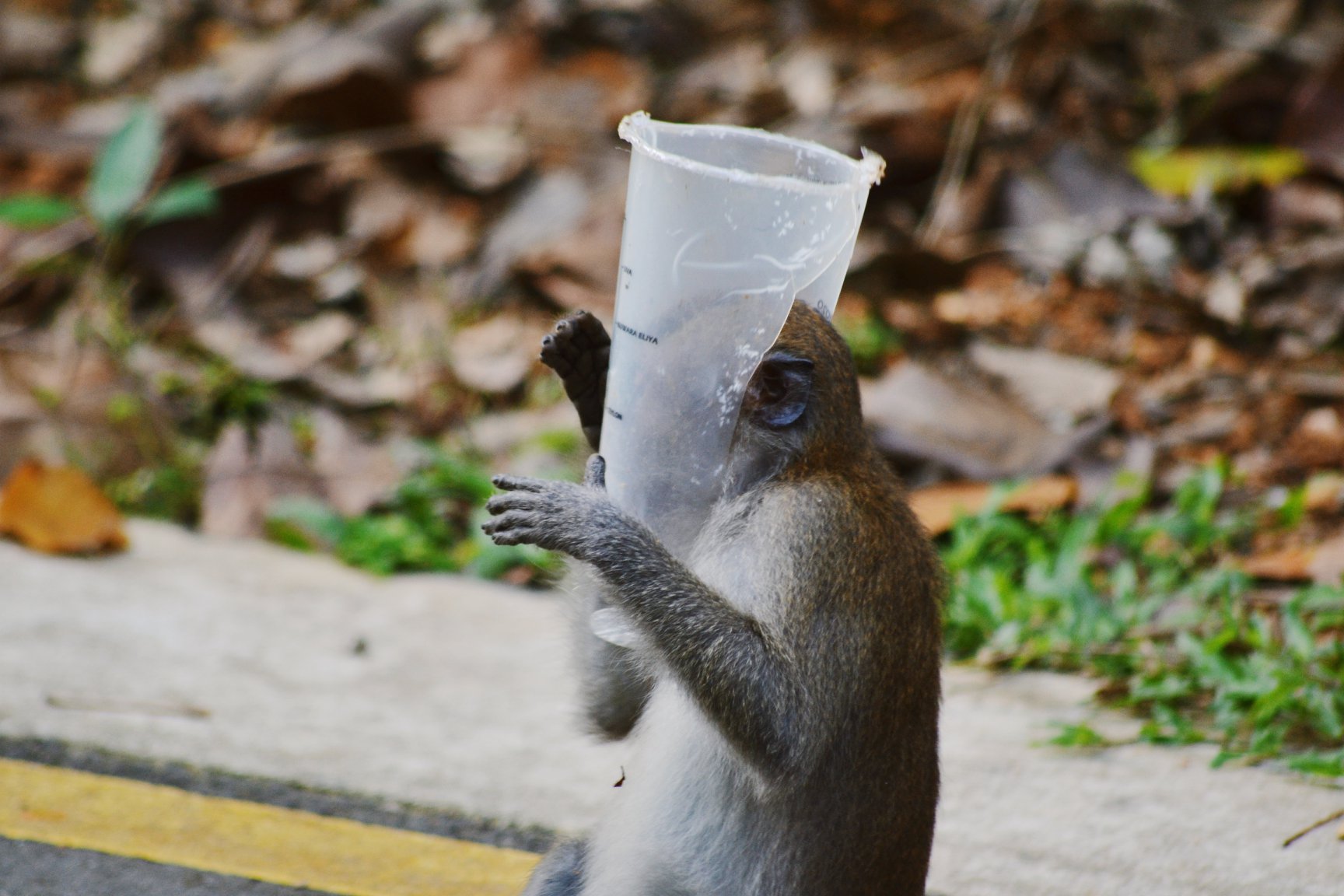 Photo from Raffles' Banded Langurs / FB
Another juvenile then appeared with a plastic takeaway plate.
Kee said that both monkeys were so engrossed in playing with the trash they did not bother with the other macaques around them.
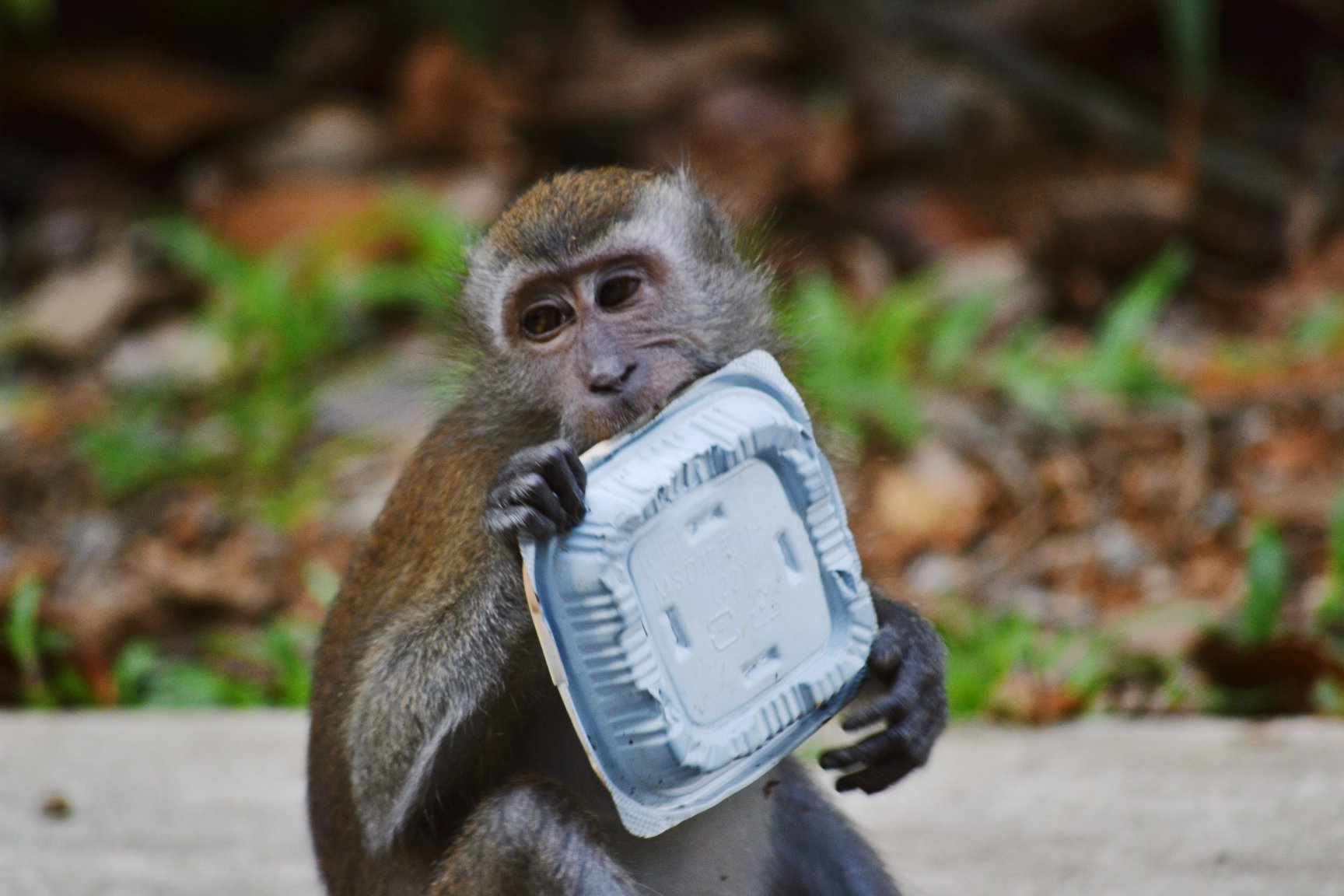 Photo from Raffles' Banded Langurs / FB
Speaking to Mothership, the Raffles' Banded Langur group said that Kee and Chua did not attempt take the trash away from the macaques.
Based on past experience, the creatures could get aggressive, defensive, or run away with the trash.
Visitors should dispose of trash and food properly
Such an encounter reflects the unfortunate reality wildlife faces at the hands of less-than-considerate visitors.
The National Parks Board (NParks) advises all members of the public to dispose of their trash properly in designated rubbish bins at parks and nature reserves.
These creatures are curious, and visitors should close the lid of trash bins and tie up and hide their food to prevent them from snatching it away.
Feeding, or inappropriately disposing of food in nature areas, can further narrow the human-wildlife gap, leading to more incidences of human-wildlife conflict, such as macaques entering people's homes to steal food.
Both actions are thus highly discouraged.
Kee said:
"By disposing of food trash in and around nature parks, we provide an opportunity for animals like macaques to rummage through bins, which might not be properly secured. In this way, we not only create hazards for wild animals and contribute further damage to the environment with our trash, but might also deny the macaques socialisation time with their buddies."
Kee urged all visitors to bring along a garbage bag to dispose of their trash outside of parks and nature reserves.
Under the Environmental Public Health Act, litterbugs can be fined up to S$2,000 for their first court conviction.
You can read Kee's full post here.
We deliver more stories to you on LinkedIn
Top photo from Raffles' Banded Langurs / FB


If you like what you read, follow us on Facebook, Instagram, Twitter and Telegram to get the latest updates.