


 August 15, 2020, 02:00 PM
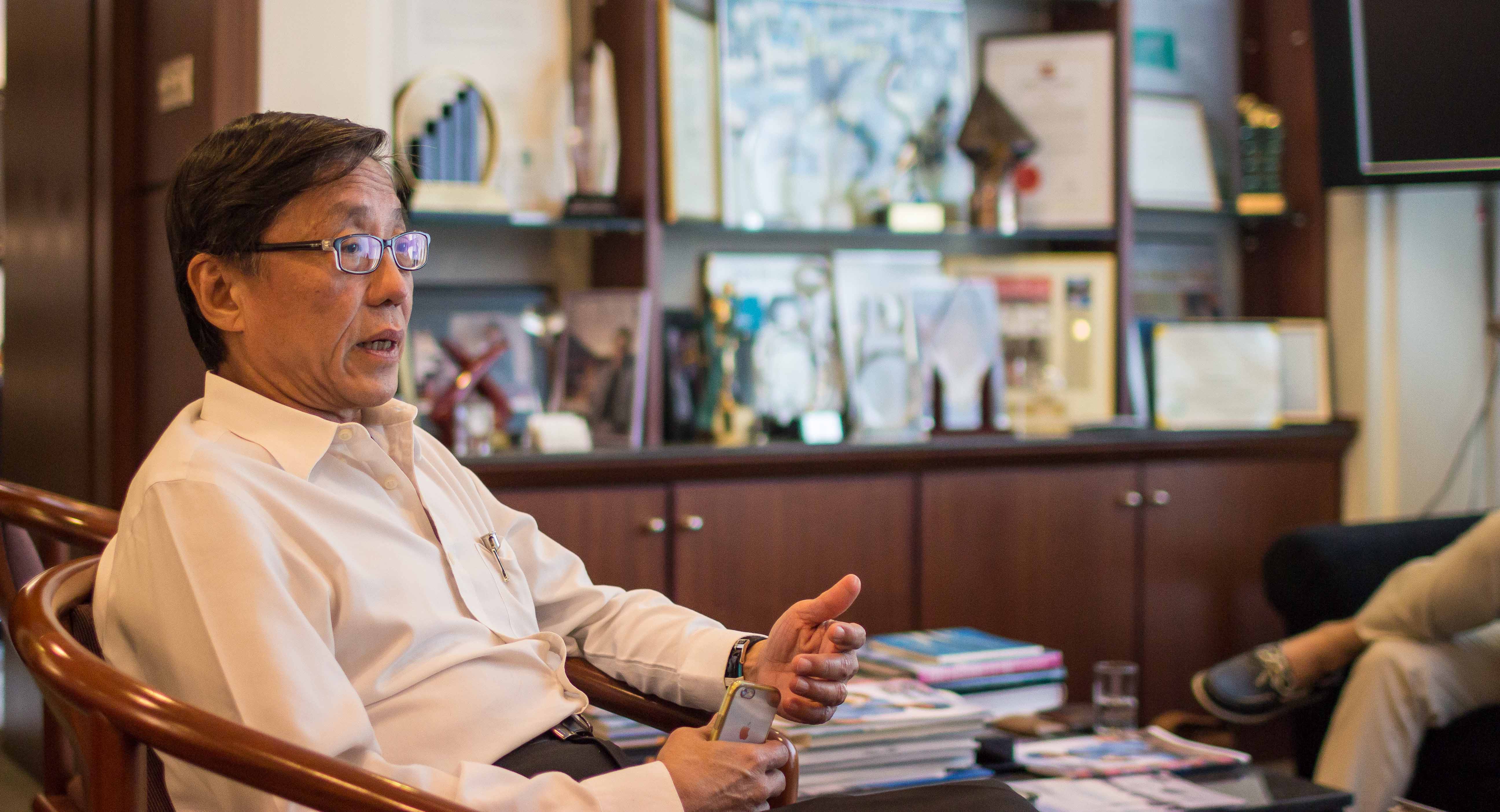

PERSPECTIVE: What is Covid-19's impact on the travel industry and what will the future of tourism look like?
In a recent digital event, Senior Associate of Global Counsel Andrew Yeo spoke with Ho Kwon Ping, Executive Chairman, Banyan Tree Holdings, on the future of the global tourism industry, with a focus on Asian markets.
Global Counsel is a strategic advisory business that helps companies and investors across a wide range of sectors anticipate the ways in which politics, regulation and public policymaking create both risk and opportunity – and to develop and implement strategies to meet these challenges.
We have reproduced a shortened transcript of the event. You can listen to the full digital event here.
Andrew Yeo & Ho Kwon Ping
Yeo: You’ve been in the hospitality industry for about 25 years. You’ve been through multiple crises before. What’s different about the nature of Covid-19?
Anyone in the hospitality industry would know that this industry, probably more than any other in the world, is more (except for maybe aviation), is susceptible to event risk, and in the 25 years that we've been around, there have been certainly a lot of event risks, from 911 to SARS to Global Financial Crisis, Asian Financial Crisis, the tsunami and so on and so forth.
And every crisis has got similarities. And, of course, every crisis is always different. And the problem is everybody always thinks the next crisis is going to resemble the last crisis, which is not ever the case.
And now, after Covid-19, everyone is getting themselves all prepared with super hygienic protocols and super healthcare protocols and so on, and will be of course, absolutely prepared for the next crisis, which we all suspect would be health related but of course, it will be absolutely not health related at all.
So, I mean one of the things I can observe about this crisis is that like any other crisis, it always hits you when you least expect it. And at the same time, where you think you are prepared for it, and Covid-19 is a perfect example.
It's an example like the San Francisco earthquake that's supposed to come sometime in the next 70 years. You just don't know when, and the whole world was prepared in theory for a pandemic.
But when it finally hit, we weren't prepared at all.
Yeo: What do you think has changed in the travel industry, and what do you think needs to change, due to Covid-19?
If you say the tourism industry, you have to really sort of dissect a little bit more. If you take hospitality, I would say, Covid-19 will result in a lot of winners and losers, but it's not going to result in that much of a structural change as even the rise of online travel agencies (OTAs), or even the rise of the shared economy with Airbnb and so on; that has caused a more deep rooted structural change and the business models of hospitality.
Whereas Covid-19 itself, if you really look at it, and you look at the word quarantine, you know it started in Venice centuries ago with people having to quarantine themselves, because of epidemics.
And yet the hotel industry and the accommodation industry have lasted for several hundred years still. Despite the existence of epidemics regularly every 50 years or so. So I don't think there'll be a big change there, of course, there'll be entities that would not be able to survive because of their own cash flow problems and so on.
But I think the change, the impact on the hospitality industry besides the fact that it's going to be a very long lasting recession. And that's of course very serious and many of us will not survive, but I'm not so sure that it will lead to that many structural changes.
In the aviation industry, I think you're going to see massive consolidation. Whereas I don't see that kind of consolidation occurring in the accommodations industry.
If you look at the sector called meetings incentives conferences and exhibitions (MICE), I think you'll see incentives still continuing.
In terms of conferences and meetings, a lot of that will be rendered unnecessary as a lot of people have found that they don't even need to travel to visit each other's own companies. They can have virtual meetings, and a lot of the big conferences will be much more efficiently organised with thousands of people just going into virtual breakout rooms and virtual plenary sessions, so that will probably be affecting the tourism industry considerably.
But in terms of hygiene protocols and so on, I don't think many people would find that risk to be the problem about visiting a hotel.
Entertainment industries will be far more affected. But there's been quite a lot of evidence that you don't really get, you don't contract the virus, by being in a hotel, you get a lot more by being in restaurants or in live entertainment areas.
Yeo: Are you saying that essentially, there will be no large, structural changes, but rather soft, tactical ones in the travel industry?
When 911 happened... excited journalists and other people are saying well the whole world has changed after 911.
Now, we go through Heathrow you got to pack all your toiletries into a little plastic bag, that's the extent of how the world has changed after 911.
Of course I'm being a bit facetious; behind the scenes there’s a lot more work by counter terrorist organisations about terrorism as a whole. But in terms of the normal human beings whose lives are being changed as a result of 911, actually when you think about it, it's not very much.
The impact of Covid-19 on the average person's life, and their experience of the hotel industry. I don't think it's going to change very much.
It used to be after 911 you would even go you walk into a hotel lobby you still have to have all your luggage, you know checked and so on and so forth, because they were, they were bombings in hotel lobbies. But now I can expect for the next one year or two, people going into hotels will have to have contactless check-in and so on and so forth.
But it will go back to normal.
We will accept the normal hygiene protocols, we'll go through them, and then the work life will go back to normal. And then when, out of the blue, we will be hit with another massive crisis, but it will not be anything related to Covid-19.
The only thing about Covid-19 that makes it really quite different than any other crisis I've seen. And that, that is really worrying me and worrying the hospitality industry is that you have the real threat of recurrence of an outbreak.
Now you don't have that, you know, after the tsunami, you don't expect the second tsunami. After the global financial crisis you have some aftershocks of that but you could argue that the debt crisis caused, you know, possibly a domino effect with maybe, you know, Greece also going insolvent and then Italy going insolvent and so on. But even Greece going insolvent doesn't have a massive impact on the rest of the world.
But as we can see with a second outbreak in Beijing. And then, the U.S. and so on, that there is the uncertainty of how long this crisis is going to last. Probably what sets it aside from other crises that I've seen in the past.
Yeo: There’s always talk about finding an opportunity within a crisis. What are some of the changes you would like to see about travel in general?
Certain things I would like to see, certain things I think are happening of their own accord and it's just that it's a matter of whether we jump onto the trend or not.
Everyone has been locked down around the world. And everyone has seen how high density living and so on is not really a very mentally healthy thing.
So clearly one big tendency of travel in the post-Covid era is going to be travel for more meaningful experiences for nature for an encounter with nature, for personal enrichment, and wellness. And this is not a new trend, it's an incipient trend that was beginning to grow already in the travel industry.
And it's just going to really grow much, much faster. And we see that happening. We've been very much a part of that whole trend in Banyan Tree, and we see that's happening and we're going to simply ride that a lot more. Now that's something that's happening.
Whether we like it or not, but we want to take advantage of that and we want to ride that wave.
Another tourism trend which I also see beginning to happen but which I would like to see a lot more and I think it’s critical that it happens is that you really see that it is in the large countries of China and the U.S. where after Covid-19, domestic travel started to happen because these economies were big enough to generate domestic travel.
Smaller economies like in Thailand, which is a world famous tourism destination, is having a very hard time because domestic tourism and even regional tourism is not very strong in the ASEAN economies.
If you take this fact, plus the fact that general geopolitical decoupling is going to result in far less travel intercontinentally, then you begin to realise that the future of Southeast Asia would depend very much on the rise of a regional tourism market or regional tourism demand.
Here we have 600 million people who are on the cusp of reaching really solid middle class status. We have a lot of budget carriers, we have a lot of midscale hotels and so on. And you have a lot of people who are just beginning to have reached a middle class status to want to travel.
That's a trend that I really want to encourage and I think it's necessary to encourage, if this industry is to survive in Asia.
Yeo: Are you hoping for more inter-ASEAN travel, given that this is where most of your properties are located?
I think travel bubbles, as they call it, is a short term solution, in a world where there are still many large, highly infected areas.
So if you look at the world as a whole now, we're finding that in the subcontinent, in South Asia, and in Latin America, the virus is still at a stage of exponential growth.
So, travel bubbles are purely a commonsensical and practical way to try to isolate corridors between countries, so that you don't have globally, unfettered and unrestricted travel. Because if we were to wait until we have globally unrestricted travel, then there's going to be no travel at all.
It's a way of, in fact, ring fencing certain areas, so that the areas that are beginning to recover, will not be reinfected by countries that are in fact, not in the travel bubble. So, the travel bubble to me is a temporary ad hoc phenomenon, to eventually go away when a vaccine is found.
Whereas trends like wellness tourism, trends like regional travel, to me are much longer term trends going into five, 10 years, whereas travel bubbles is probably just a temporary response lasting about 12 months or so to the current instability in the global health situation.
Well you know one of the trouble is, travel bubbles being bilateral in nature is almost like having to negotiate a trade agreement, because it's actually equivalent to a trading agreement between two countries for the free movement of people, not migrant labourers but transient visitors, and there is no protocol for that.
This is a very complicated thing to do, especially when multilateralism is sort of shot to pieces. Politically, you're beginning to see governments, you know, talking to each other about simple things like, even in a travel bubble, or the fast lane that people are talking about. They have to accept the protocols of one country checking.
The fact that the two countries may have different levels of efficiency, when they define quarantines or testing. So, this is taking quite a long time, unfortunately.
Only now are people even beginning to talk about business, or what they call essential travel between countries. And even then, that requires quarantining to now, up to today, all the countries in the world that are talking about fast lanes and travel bubbles are still talking about quarantines, they're talking about testing on both sides and can’t come to an agreement yet.
So, this crisis in aviation is lasting much longer than anybody can expect it.
Top photo by Kelly Wong for Mothership.sg


If you like what you read, follow us on Facebook, Instagram, Twitter and Telegram to get the latest updates.