


 July 29, 2020, 06:47 PM
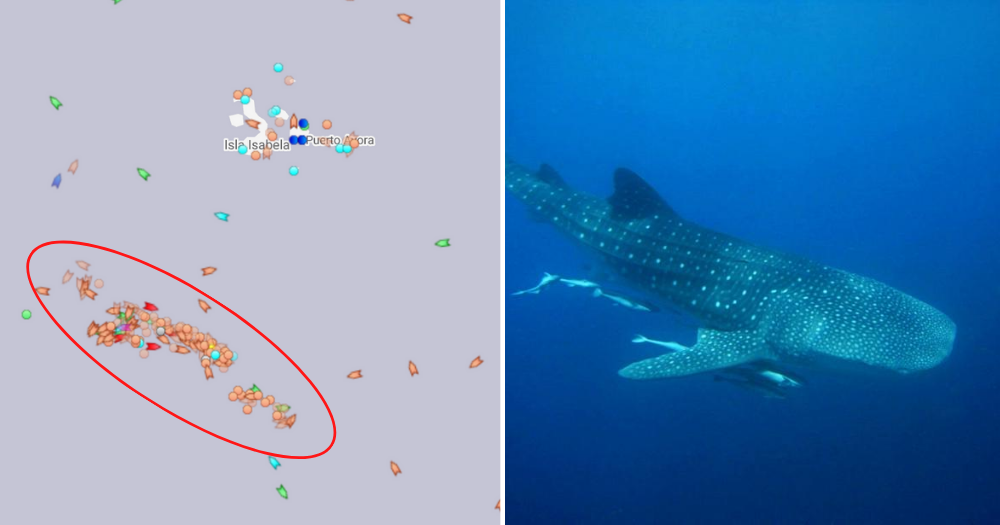

A huge Chinese fishing fleet comprising hundreds of fishing vessels were recently detected off the waters of the Galápagos Islands.
Huge fishing fleet found in waters near protected zone
Around 260 fishing vessels were spotted in international waters on the boundaries of the protected Galápagos Marine Reserve via satellite imaging.
It's been reported to us that hundreds of Chinese fishing vessels are currently forming a line below the Galapagos Islands. We are watching the destruction of the ocean in real time. https://t.co/6IfmuhJRdo pic.twitter.com/ZunJurJRQd
— Blue Planet Society (@Seasaver) July 18, 2020
In the satellite images, a large cluster of ships were seen south of the Galápagos Islands in the Pacific Ocean. These fishing vessels are marked in orange in the image below.
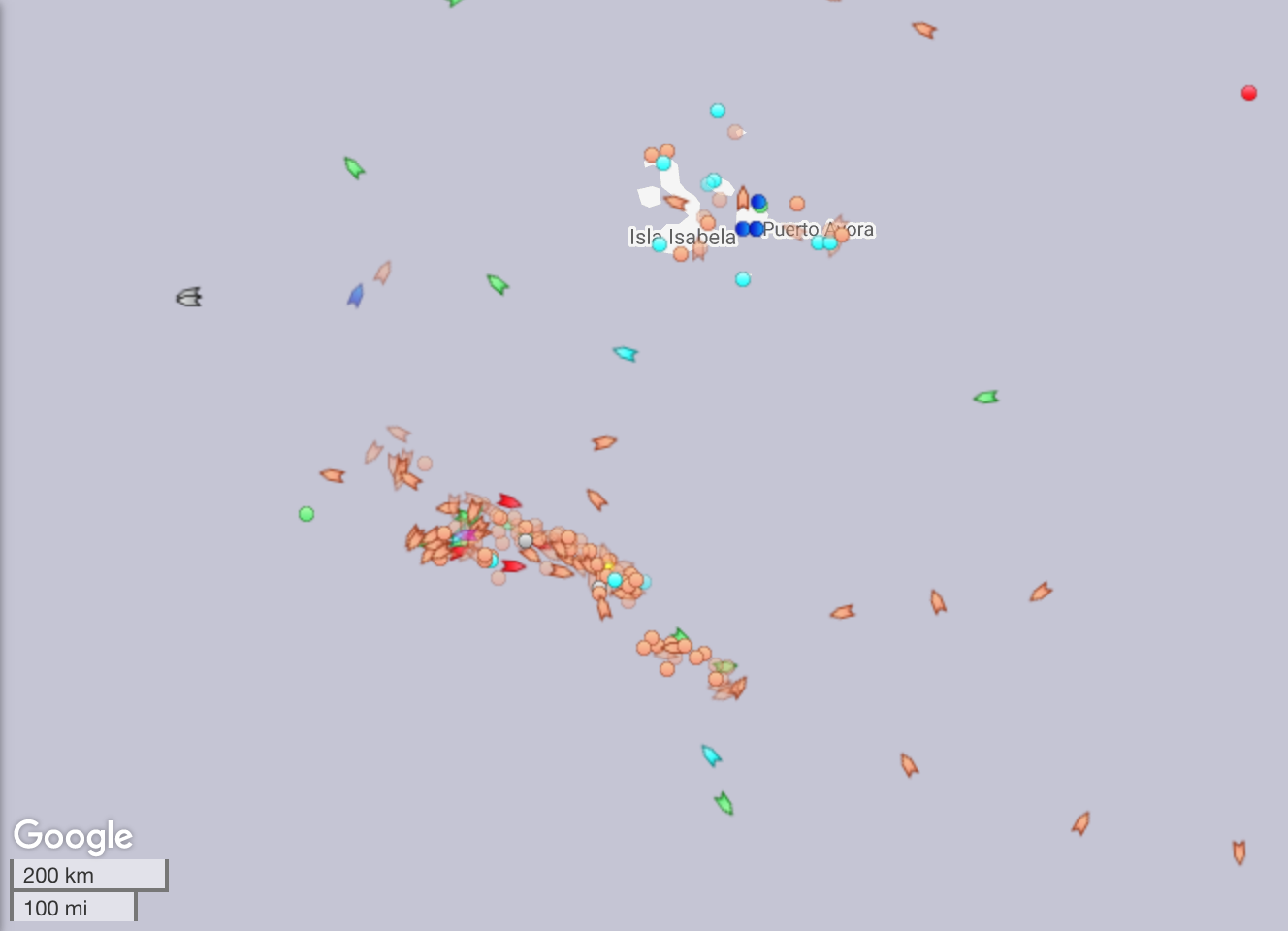 Screenshot from Marine Traffic
According to Hong Kong Free Press, the ships are operating in an area serving as a major migratory route for marine life.
The discovery of these vessels have sparked alarm amongst environmental organisations concerned that overfishing could threaten the delicate ecosystem and rich biodiversity inhabiting these waters.
Although Chinese fishing vessels are spotted every year near the Galápagos, the fleet this time is one of the largest in recent years.
Marine life in the waters surrounding the Galápagos Island have been protected since 1988 as part of the Galápagos Marine Reserve, which spans around 133,000 sq km around the archipelago.
The islands and waters are also a UNESCO World Heritage site due to the array of unique and endemic species found there and nowhere else in the world.
Galápagos a treasure trove of wildlife
The Galápagos Islands and the ocean surrounding it are a renowned wildlife treasure trove.
Due to how isolated and remote the islands are, many species have been around since prehistoric times and have not changed much.
The volcanic islands are home to unique species like marine iguanas and giant tortoises, and was where famed English naturalist Charles Darwin got the inspiration to develop his theory on evolution and natural selection.
The Galápagos Marine Reserve is thus one of the largest and most biologically diverse marine protected areas in the world, with over 2,900 species recorded there such as whales, dolphins, albatrosses, sharks, sea lions, penguins, fur seals, ray, sea turtles, and tropical fishes.
These waters are home to the largest density of sharks in the world, including the endangered whale shark and hammerhead sharks, reported The Guardian.
Ecuador’s president, Lenín Moreno, stated in a tweet that the archipelago is “one of the richest fishing areas and a seedbed of life for the entire planet”.
Although the Galápagos Marine Reserve was designated with the purpose of conservation, artisanal fishing is still allowed in certain areas, while industrial or commercial fishing is prohibited.
Fishing is also completely banned for certain wildlife like sea turtles.
Overfishing and illegal fishing thus remain of the main threats to marine life with tuna and sharks being some of the most overfished.
Fishing vessels could ruin conservation efforts
“This fleet’s size and aggressiveness against marine species is a big threat to the balance of species in the Galápagos,” former environment minister of neighbouring Ecuador, Yolanda Kakabadse told The Guardian.
The ex-mayor of Ecuador's capital Quito, Roque Sevilla, said that "unchecked Chinese fishing" could ruin Ecuador's efforts to protect marine life in the Galápagos.
As such, diplomatic efforts would be made to request the withdrawal of the Chinese fishing fleet.
In the meantime, authorities from Ecuador are also devising a "protection strategy" for the islands.
There are fears there would be a repeat of a 2017 incident where a Chinese vessel was captured by Ecuadorean navy within the Galápagos Marine Reserve with 300 tonnes of marine life, mostly sharks, onboard.
The navy has since been monitoring the Chinese fleet, conducting surveillance and patrols.
Kakabadse added that efforts would be made to extend the protected zone around the Galápagos to rejoin the exclusive economic zone off Ecuador's mainland, which would close off the corridor of international waters the Chinese vessels are currently operating at.
Top photo from Marine Traffic and Marcel Ekkel / Flickr


If you like what you read, follow us on Facebook, Instagram, Twitter and Telegram to get the latest updates.