


 December 12, 2019, 11:06 AM
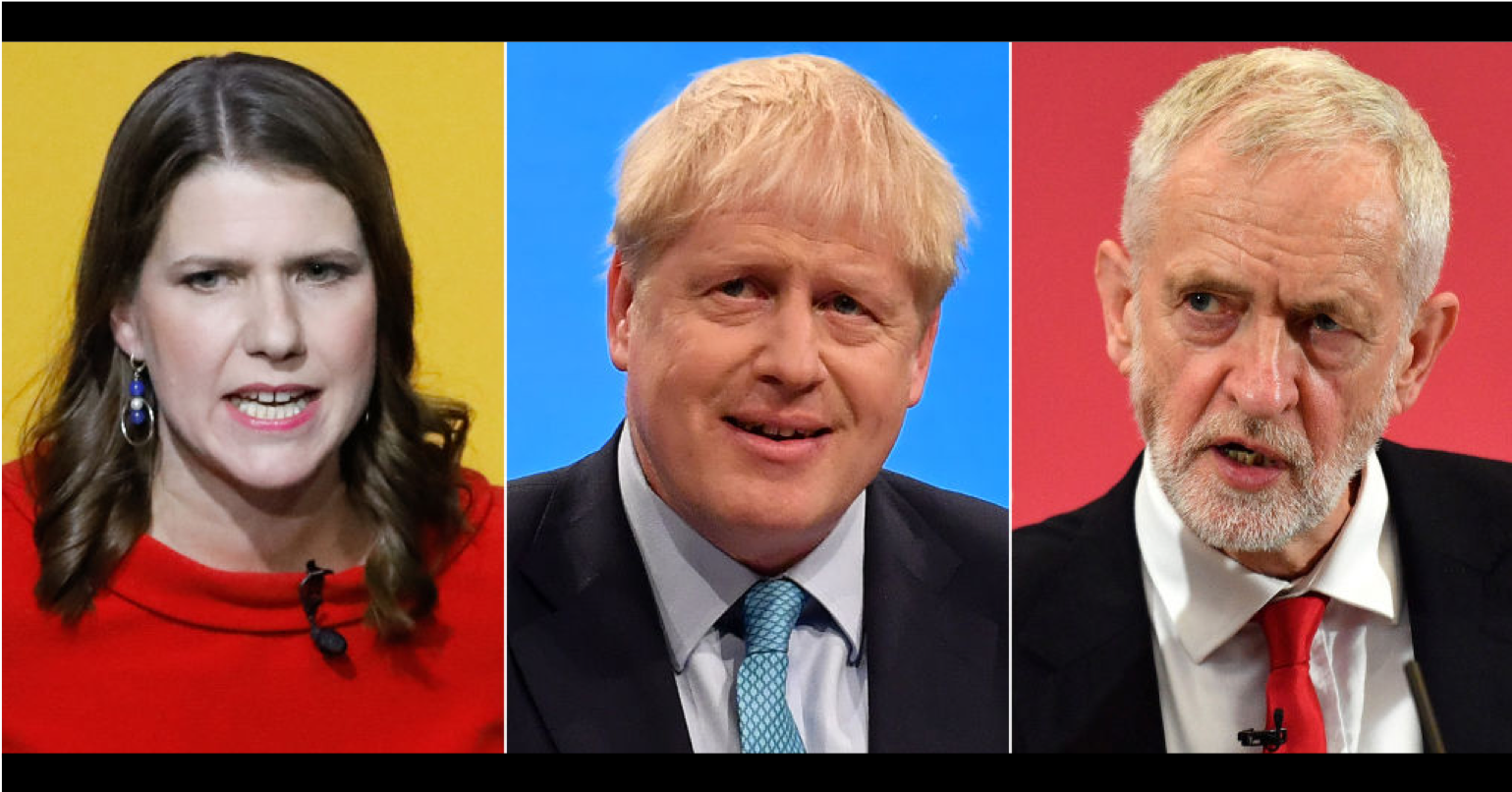

2019 has been a significant year for elections, with voters in Canada, Thailand, Australia, India and Indonesia going to the polls.
Before the year is out, the United Kingdom (UK) will join them, just two years after their previous general election in 2017.
The main players
The election on Thursday, Dec. 12 (UK time) gives voters the opportunity to decide their next Prime Minister.
The four main players are:
- Boris Johnson, current Prime Minister and leader of the Conservatives (also known as the Tories).
- Jeremy Corbyn, leader of the Labour Party.
- Nicola Sturgeon, leader of the Scottish National Party.
- Jo Swinson, leader of the Liberal Democrats.
A number of smaller parties will also take part, including the Brexit Party, the Green Party, Plaid Cymru in Wales, and the Democratic Unionist Party in Northern Ireland.
Johnson, who previously served as Foreign Secretary, became Prime Minister in July 2019. He was elected as the leader of the Conservatives with 66 per cent of the vote after Theresa May's resignation.
Swinson became the first female leader of the Liberal Democrats in July this year.
Corbyn, the leader of the Opposition since 2015, led Labour in the 2017 election. Labour won more seats than expected, but fell short of claiming a majority in Parliament.
Sturgeon has led the SNP since 2014.
What's at stake
Tories
Johnson has framed the campaign around the message of "getting Brexit done".
Despite voting to leave the European Union in the 2015 referendum, the UK has not officially done so.
The failure to get Parliament to agree to a workable deal arguably sunk May's Premiership.
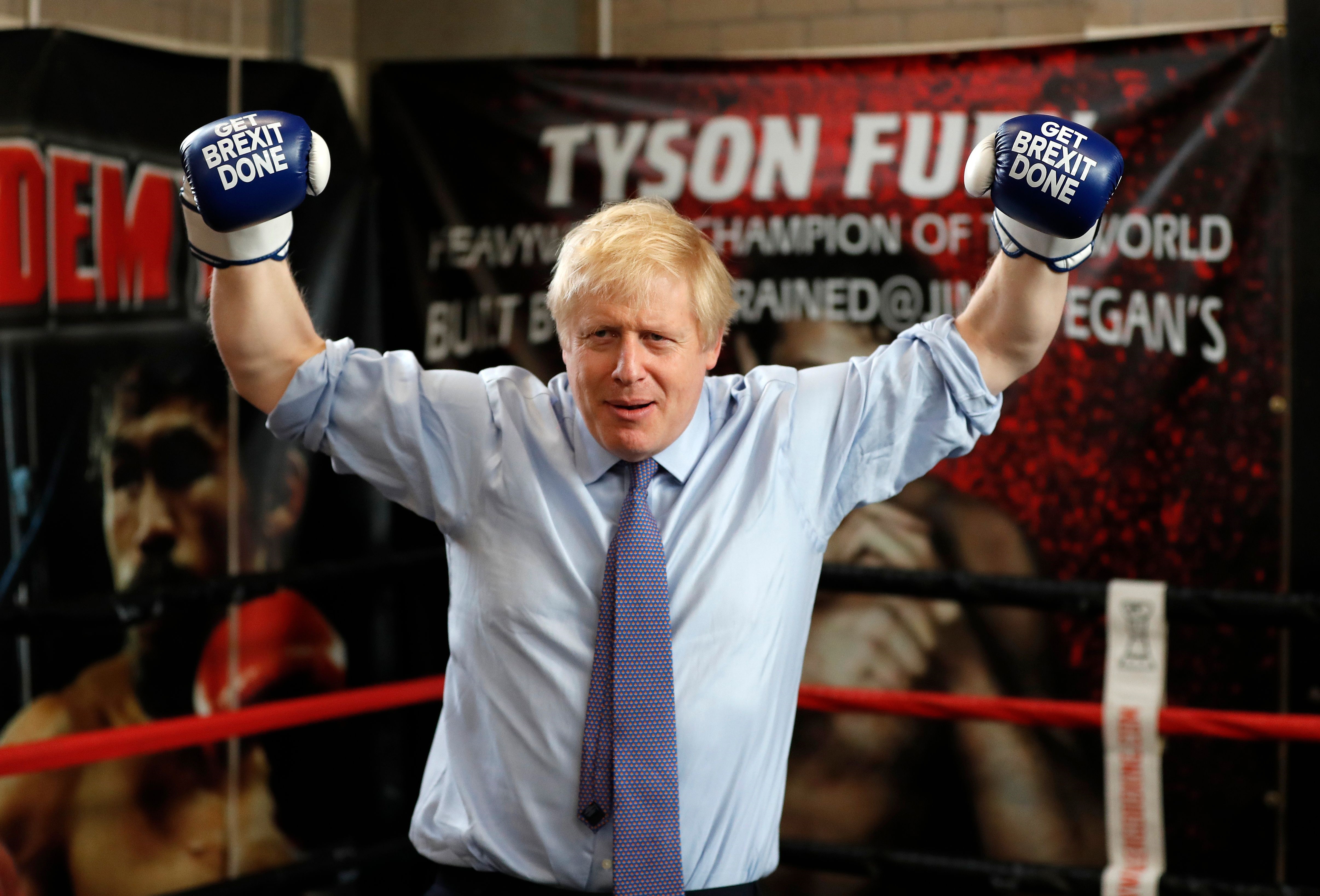 Johnson wears boxing gloves emblazoned with "Get Brexit Done" as he poses for a photograph at Jimmy Egan's Boxing Academy on November 19, 2019, during a general election campaign trip. (Photo by Frank Augstein / AFP via Getty Images).
Johnson and the EU have agreed to an extension of Brexit until Jan. 31, 2020, after his earlier deadline of Oct. 31, 2019 was blocked by legislation passed by Parliament.
Johnson claims to have a Brexit deal that addresses concerns over trade and customs checks ready for implementation if his party.
His deal is similar to the one negotiated by May in Nov. 2018, with some amendments made to customs checks on goods passing through the border between Northern Ireland (part of the UK) and the Republic of Ireland.
However, like May, Johnson still needs to get Parliament to accept his deal, even if he wins the election.
There remains the possibility of Britain crashing out in a "No-deal Brexit" if Parliament does not agree to Johnson's deal.
Let’s break the deadlock and get Brexit done! pic.twitter.com/5scYwvtyGx
— Boris Johnson (@BorisJohnson) December 10, 2019
Labour
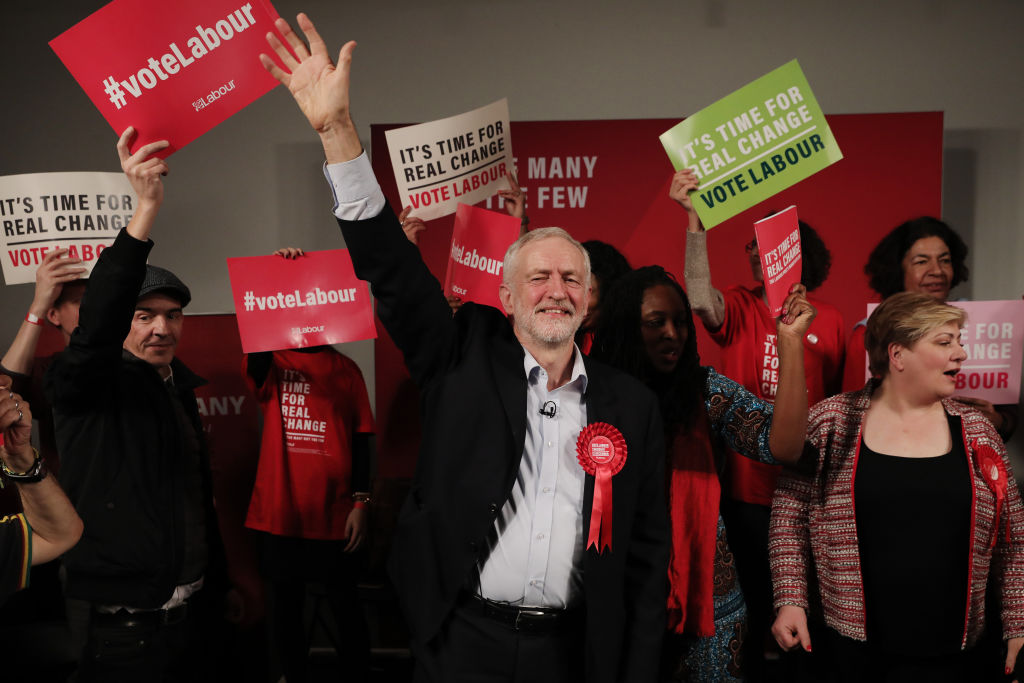 Corbyn acknowledges supporters following his address in Hoxton on December 11, 2019 in London, United Kingdom. Corbyn is speaking to Labour activists across the country as part of his final campaign tour before polling day tomorrow. (Photo by Dan Kitwood/Getty Images)
Corbyn has focused on a traditional Labour strength in the campaign -- healthcare.
He has framed the vote as one to "save the National Health Service (NHS)."
In the run-up to the election, Corbyn revealed government documents which he claimed was evidence that the NHS was part of a potential UK-U.S. trade deal.
This, he added, would lead to the "runaway privatisation" of the NHS. Johnson has denied this, and said that the NHS was not on the table in any trade negotiation.
Labour and Corbyn have promised to boost healthcare funding by £26 billion (S$46.4 billion), and hire "thousands more" nurses and doctors.
Polling station: come over
— Jeremy Corbyn (@jeremycorbyn) December 10, 2019
Me: I can’t, it’s too cold outside
Polling station: Boris Johnson is going to sell off our NHS
Me: pic.twitter.com/4JybDw7vc9
Lib Dems
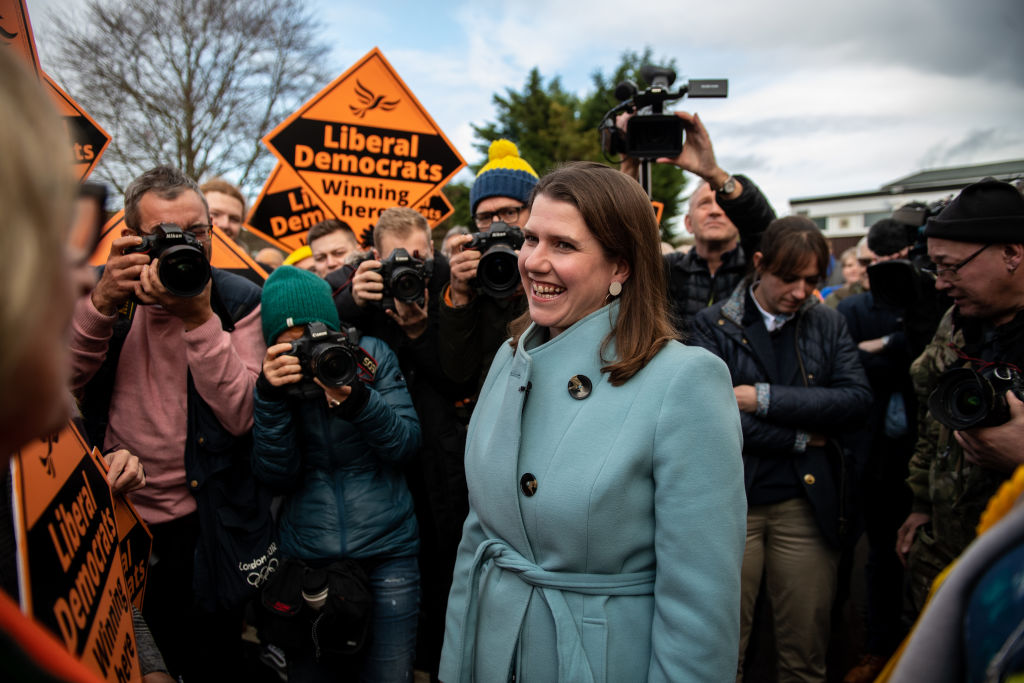 Swinson meets activists during a rally at Jacobs Well Village Hall on December 11, 2019 in Guildford, England. Leaders of all the British political parties have entered their last day of campaigning for the general election before voters go to the polls tomorrow. (Photo by Chris J Ratcliffe/Getty Images)
Meanwhile, the pro-EU Liberal Democrats have pledged to revoke Article 50 and keep the UK in the EU if they win a majority in Parliament.
This is at odds with Johnson's withdrawal plan, and Labour's plan to negotiate an agreement before putting that to another referendum.
Swinson is also promising investment in infrastructure to the tune of £130 billion (S$232.1 billion) to upgrade transport and energy systems.
These people have got the message... pic.twitter.com/FvlW4C8ZXW
— Jo Swinson (@joswinson) November 26, 2019
SNP
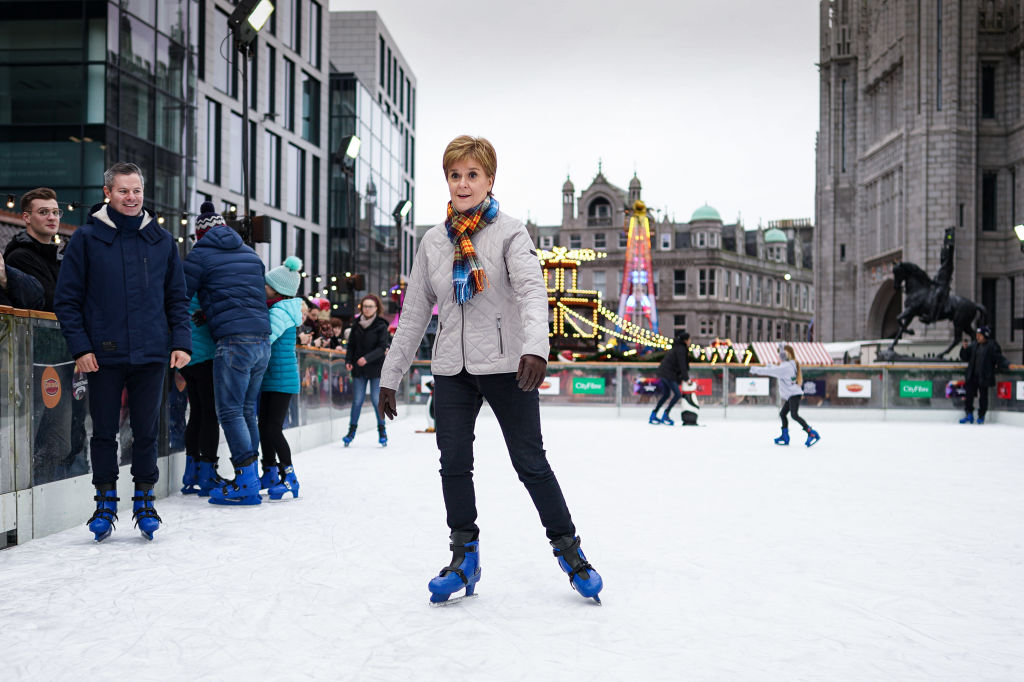 Sturgeon ice skates as she joins Kirsty Blackman, SNP election candidate for Aberdeen North campaigning at the Aberdeen Christmas Market on December 7, 2019 in Aberdeen, Scotland. Sturgeon said that they only have five days left to stop five more years of Boris Johnson, asking voters to unite around the SNP as the only party in Scotland capable of defeating the Tories. (Photo by Jeff J Mitchell/Getty Images)
The SNP only fields candidates in Scotland, and therefore are not looking to win a majority in Parliament.
Sturgeon's main goal as leader of the SNP is to secure an agreement for another independence referendum for Scotland.
The previous referendum on Scottish independence was held in 2014, with a majority of Scottish voters choosing to stay within the UK.
However, events since then may have contributed to a stronger yearning for independence.
Sturgeon has said that no matter who ends up in Number 10 after the election, they have to "respect the will" of the Scottish people.
Seven days to stop Boris Johnson, escape the Brexit mess and put Scotland’s future in Scotland’s hands. #VoteSNP #GE19 pic.twitter.com/HnWz3q27Ry
— Nicola Sturgeon (@NicolaSturgeon) December 5, 2019
The campaign so far
Johnson's gaffes
Back in 2017, Theresa May's campaign revolved around the use of two slogans -- "Strong and stable" leadership, and warning against Corbyn's potential "Coalition of Chaos".
The Conservatives have been using similar slogans so far, but Johnson appears to be dealing with gaffes better than May.
He dismissed new scrutiny over comments he made in 2005, in which he called rising Islamophobia in the UK a "natural reaction" to Islam.
He was also caught taking a journalist's phone and putting it in his pocket, after the journalist tried to show him a photo of an ill boy in a hospital.
Tried to show @BorisJohnson the picture of Jack Williment-Barr. The 4-year-old with suspected pneumonia forced to lie on a pile of coats on the floor of a Leeds hospital.
— Joe Pike (@joepike) December 9, 2019
The PM grabbed my phone and put it in his pocket: @itvcalendar | #GE19 pic.twitter.com/hv9mk4xrNJ
Johnson also faced criticism for ducking an interview with prominent BBC journalist Andrew Neil.
Corbyn was interviewed by Andrew Neil, although his performance was panned by some media outlets.
Despite these stumbles, the Conservatives have maintained a substantial lead in the polls, although the size of the lead has waxed and waned.
Labour troubles
Meanwhile, Labour has their own problems too.
Labour's own Shadow Health Secretary, Jon Ashworth, was caught on tape saying to a friend that Corbyn had no hope of winning the election.
Corbyn has dismissed it as "banter."
However, accusations of antisemitism within the Labour party have been harder to bat away.
Corbyn did not apologise for antisemitic incidents within the party during his interview with Andrew Neil, but later said he was "sorry for everything's that happened" adding that he and Labour rejected antisemitism in any form.
He also said that Labour is dealing with the problem.
Despite the rough and tumble of the campaign, the major party leaders came together in a moment of unity after a man stabbed two people to death and wounded three others in a "terror-related attack" on Nov. 29.
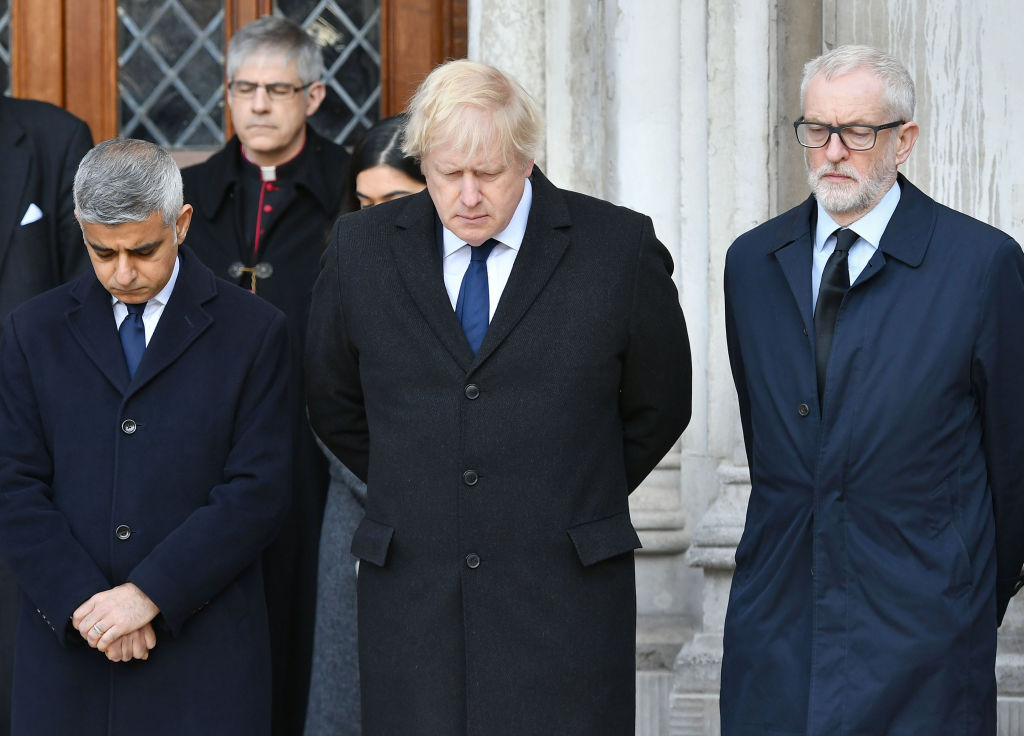 (left to right) Mayor of London Sadiq Khan, Johnson and Corbyn take part in a vigil in Guildhall Yard, London, to honour the victims off the London Bridge terror attack. (Photo by Dominic Lipinski/PA Images via Getty Images)
How to win
The UK votes in a Westminster-style democracy (having invented it) and the party with the most seats in Parliament gets to form the next government.
The leader of that party gets to become (or remain) Prime Minister.
There are 650 seats in the House of Commons, so total of 326 would be needed for a majority.
However, candidates from the Sinn Fein party in Northern Ireland may win their election contests, but refuse to take their seats in Parliament.
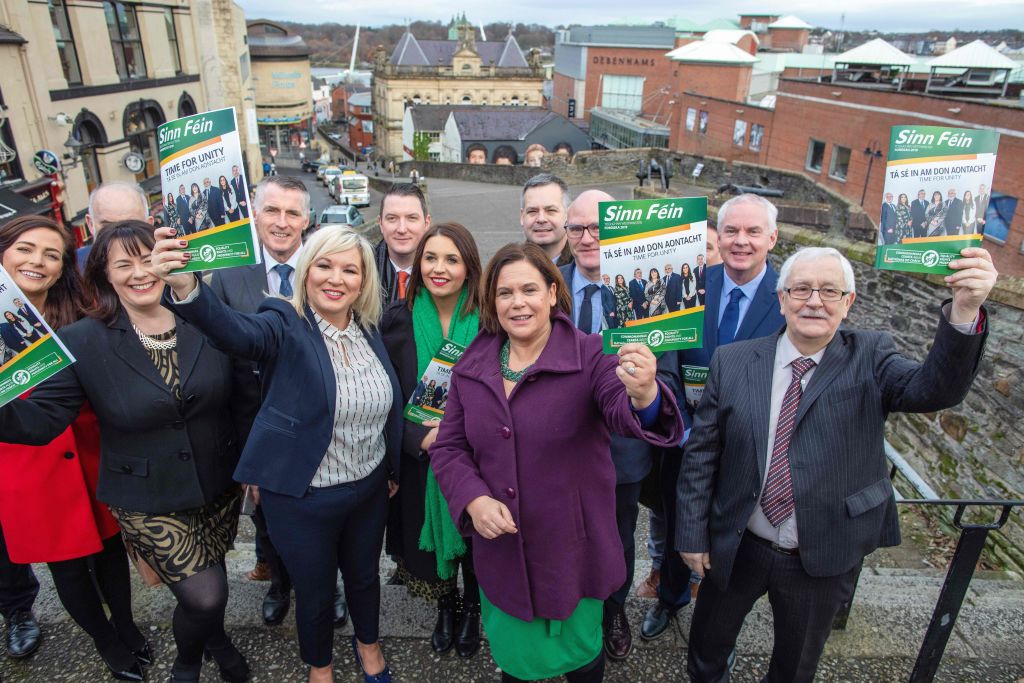 Sinn Fein President Mary Lou McDonald (2R) and Northern Leader Michelle O'Neill (2L) pose with party candidates after their manifesto launch in Londonderry, northern Ireland on December 2, 2019. (Photo by PAUL FAITH / AFP) (Photo by PAUL FAITH/AFP via Getty Images)
This is because it requires taking an oath of allegiance to the Queen, which members of Sinn Fein refuse to do so.
So depending on how many Sinn Fein candidates win, the number of seats needed for a majority might be lower than 326.
The Speaker of the House of Commons and his deputies also traditionally do not vote, except in special circumstances.
Most polls are predicting a Conservative majority -- but anything can happen.
The results of the final YouGov MRP model for #GE2019 are now here:
— YouGov (@YouGov) December 10, 2019
Con – 339 seats / 43% vote share
Lab – 231 / 34%
SNP – 41 / 3%
LD – 15 / 12%
Plaid – 4 / 1%
Green – 1 / 3%
Brexit Party – 0 / 3%
Conservative majority of 28https://t.co/IAyXTc89vH pic.twitter.com/yk3dNAhN0p
Top image from Ben Standall, Daniel Leal-Olivas and Tolga Akmen/AFP via Getty Images.


If you like what you read, follow us on Facebook, Instagram, Twitter and Telegram to get the latest updates.