


 December 22, 2019, 11:23 AM
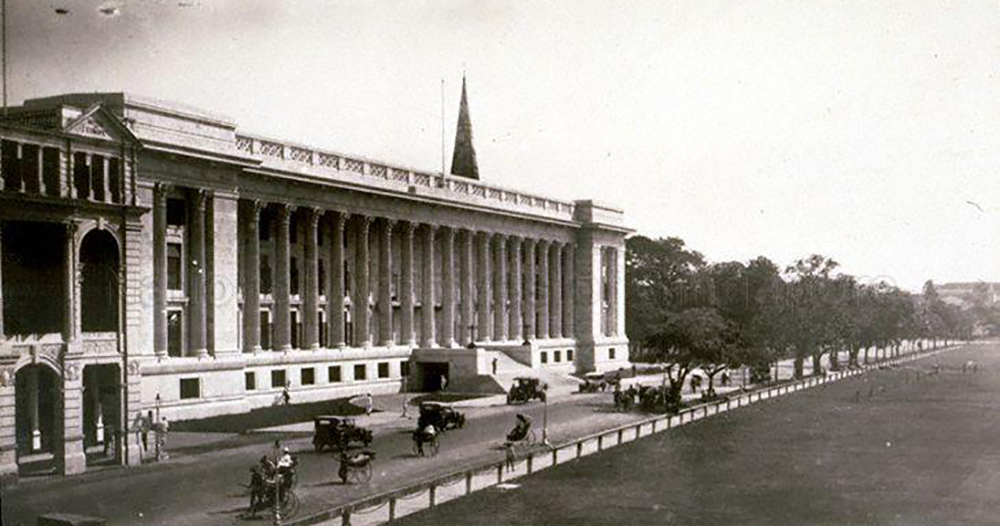

The Sound of Memories: Recordings from the Oral History Centre, Singapore is a collection of accounts, interviews and anecdotes that the National Archives of Singapore's Oral History Centre has collected since 1979.
The book, written by journalist Suk-Wai Cheong, examines people's experiences of Singapore from the late colonial period, and early years of independence.
Here, we reproduce an excerpt from the book examining the racial discrimination and segregation perpetuated by Singapore's colonial authorities against locals during the 1930s.
The Sound of Memories is published by World Scientific and you can get a copy of it here.
***
Singapore's racist governor
The year was 1930 and Peter William Benson was beside himself with excitement.
He had just scored a coup for journalism in Singapore – an interview with Sir Cecil Clementi, the new Governor of the Straits Settlements, no less.
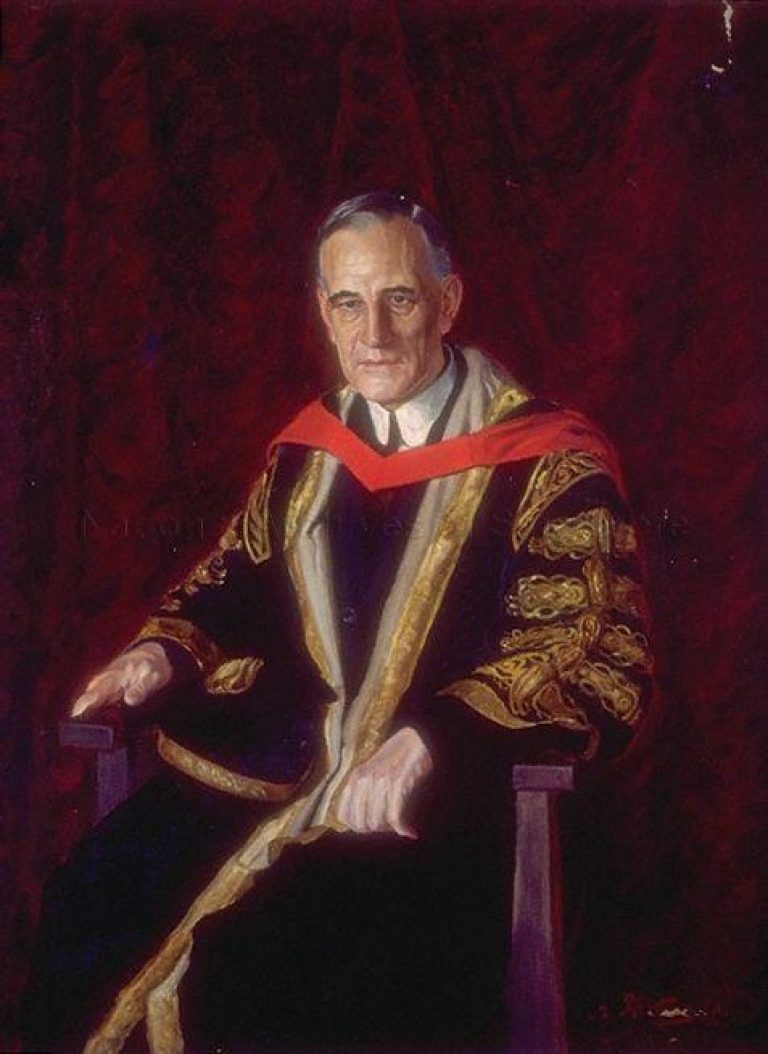 Source: National Archives of Singapore
His colleague Khoo Teng Soon recalled that Benson, who was Indian, “had a huge paunch, drank a lot of gin and tonic, had money problems and smoked cheap cheroots”.
Khoo added, however, that Benson was very good at his job as a reporter with The Malaya Tribune and had “great contacts” in the police force.
So off Benson went for the interview at Government House. Alas, he was out within seconds.
“Clementi had never granted an interview to any local reporter,” Khoo said. “That is, until Benson wrote to him for an interview. Clementi obviously looked at that name – Peter W. Benson – and decided that Benson must be an expat. And of course, when he got into Government House, Clementi took one look at him and ordered him out.”
Actively clamped down on anti-colonial sentiments in Singapore
During his time in Singapore between 1929 and 1934, Clementi tried to stamp out the spread of anti-colonial sentiments by censoring the vernacular press.
He also stopped the local Chinese community’s efforts to raise funds for China in their fight against the Japanese and angered the Peranakan Chinese with his anti-Chinese education and immigration policies.
After Clementi prohibited education grants for Chinese and Tamil vernacular schools, only the Malay community received free education.
Khoo mused: “Those were the days when you could have these types of governors.”
But the problem of racism extended to expats as well
Such prejudice, however, went beyond racist governors of the time.
Frederick Arthur Chua, one of Singapore’s pioneering judges, recalled that when he returned to Singapore in the 1930s with a law degree from Britain’s Cambridge University, he was not accepted into Singapore’s circle of expatriates.
Chua said: “Young people like me did not mix with the expatriates, only the older people and business people. We youngsters who just graduated, we didn’t mix with the expats. We didn’t socialise with them and we didn’t get invited either.”
Toilets and supermarkets were racially segregated
Chua also recalled in the 2013 book, Legal Tenor: Legal Voices from Singapore’s Legal History 1930–1959, that when he worked in the Straits Settlements Civil Service from 1937 till 1942 in the Municipal Building – now part of the National Gallery Singapore – he and his local colleagues had a toilet to themselves.
That was because they were barred from sharing a lavatory with white folk.
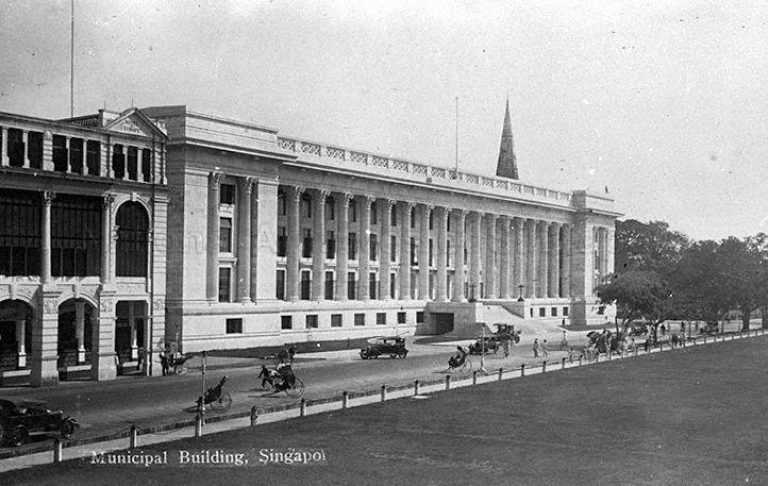 Source: National Archives of Singapore
Khoo remembered other forms of racial discrimination.
His first job was as a ledger clerk at Cold Storage supermarket in 1938 where the Centrepoint shopping mall sits today.
“Very few locals patronised it,” he recalled. “Unless you were a big name, you would never have an account there because they were very, very discriminating.”
Luckily for the locals, shops such as Kee Mun and Koon Heng sold frozen foods to rival Cold Storage, albeit on a much smaller scale.
He added: “Nine out of 10 Cold Storage customers were expats; I knew this from going through the everyday bills in the ledger... the highest a local worker at Cold Storage could aspire to was Chief Clerk – but you still could not get a staff discount!”
Despite such blatant discrimination, Khoo stuck it out as Cold Storage paid him $30 a month – big money in those days when a plate of chicken biryani was 25 cents.
Locals were paid a fraction of what expats received
His salary, however, was nowhere near that of his expat colleagues. The average young expat earned between $200 and $250 a month then.
Khoo eventually switched to a career in journalism in August 1938 as that paid him $40 a month, with an additional monthly travel allowance of $15.
His nose for news led to his promotion as the first local chief sub-editor of The Straits Times in 1951.
By then, his expat peers were drawing between $600 and $800 a month, while he and other locals had to get by on a third of those salaries.
Glass ceiling for locals
Joseph Anthony Desker, who worked in the Colonial Secretary’s office in Singapore after World War II, recalled that in the colonial government, even locals who were graduates could not rise above the level of chief clerk.
The exceptions were professionals such as doctors, or lawyers such as Chua, who became the second local-born judge of the Supreme Court of Singapore on 15 February 1957.
“So,” Desker added, “we knew that our career was limited. The attitude towards us was that we were to be subservient.”
Things changed for the better with the achievement of self-governance in 1959
That all changed when Singapore attained self-government in June 1959. The new government, formed by the People’s Action Party, carried out the policy of Malayanisation – the exercise of replacing expatriates with local talents in all ranks of government, especially those at senior levels.
Desker found Malayanisation a sea change:
“There was greater cooperation and friendliness. We knew who we were talking to. We belonged, perhaps, to the same community. We understood one another and so there was greater rapport between the junior staff and the senior officers.”
But a hierarchy still remained
There remained, however, the expectation of a certain decorum between junior and senior staff.
When journalist Tan Wee Him first reported for work at The Straits Times on 1 May 1970, one of the first colleagues he met was the paper’s news editor Sit Yin Fong.
Tan recalled:
“I went into his room and he was standing behind his desk and extending his hand. ‘Sit here,’ he said referring to himself by his surname. So I sat immediately in the chair in front of him – leaving a bewildered Mr Sit standing, with his hand outstretched.”
The relationship between masters and their apprentices was not always straightforward.
Chua Eng Cheow, a master potter who was an expert at firing ceramic wares in dragon kilns, recalled how master potters would guard their secrets jealously.
“It was their rice bowl and if they taught their skills to others, it would threaten their livelihood. Hence, we apprentices had to depend on our imagination and secret observations instead.”
While World Scientific respects the narratives recounted by our interviewees, they recognise that all oral history accounts, by their very nature, are personal, experiential and interpretive. They are founded on the memories, perceptions and viewpoints of individuals. While all reasonable attempts have been taken to avoid inaccuracies, the excerpts of the interviews found in this book should not be understood as statements of fact endorsed by the National Archives of Singapore, an institution of the National Library Board; the publisher; or the editor.
Top image from National Archives of Singapore


If you like what you read, follow us on Facebook, Instagram, Twitter and Telegram to get the latest updates.