


 October 19, 2019, 01:49 PM

Portrait Mode is a new photo essay series of Singapore and all the people and things in it, seen through the lenses of our young photographers at Mothership.
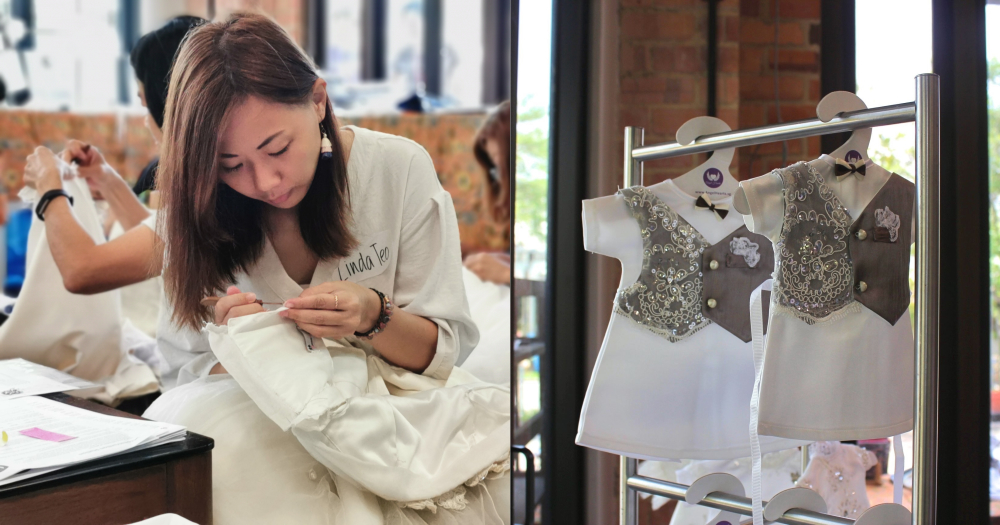
This week, we meet the different people who turn wedding gowns into clothes for babies who pass away too soon, thus giving them a dignified send off.
One in four pregnancies end in miscarriage in Singapore.
And Angel Hearts has made it its mission to bring comfort to bereaved families whose babies have gone too soon.
Started by 44-year-old Rosalind and 41-year-old Felicia, the non-profit organisation has been operating for about three years now.
Angel Hearts create baby apparel from old wedding gowns for these babies (also known as angel gowns) to wear on their final journey. It is also a form of emotional and social support for bereaved parents.
Recently, Angel Hearts had a wedding gown deconstruction event on Oct. 11 and 12 at Kampung Kampus in Khatib. It was the perfect opportunity for us to join them and find out more about this initiative.
Even though it was a weekday, the turnout was encouraging with about 30 volunteers showing up. There were some coffee and pastries provided which the volunteers were free to help themselves to.
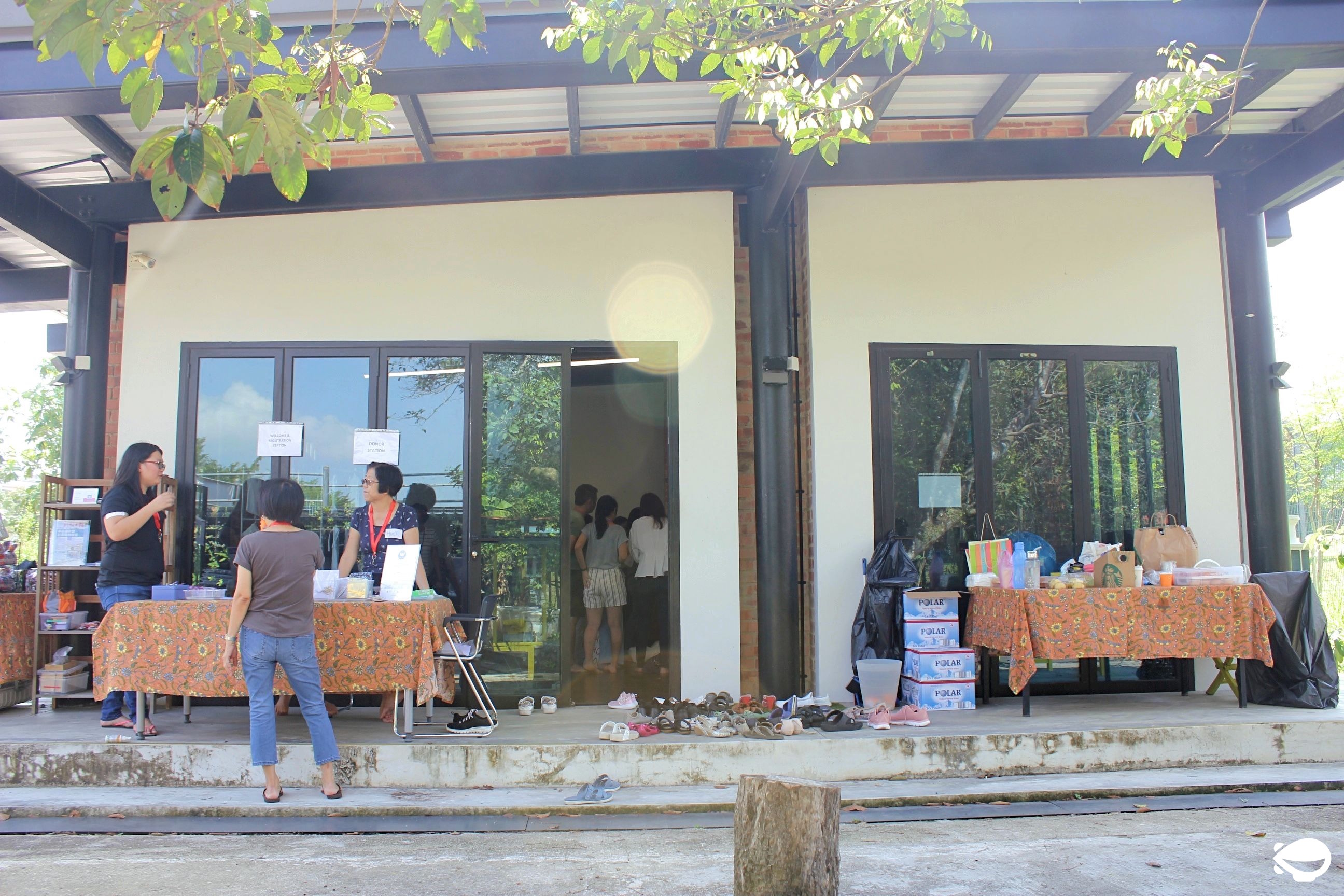 The deconstruction event was held at the Kampung Kampus, in a room opposite a rambutan tree. Photo by Zheng Zhangxin.
The briefing started at around 10am as Hui Boon, a regular volunteer went through the instructions on how to deconstruct wedding gowns.
Some volunteers came with a family member or friend -- we spotted a mother and son pair -- while there was quite a number who attended the event alone.
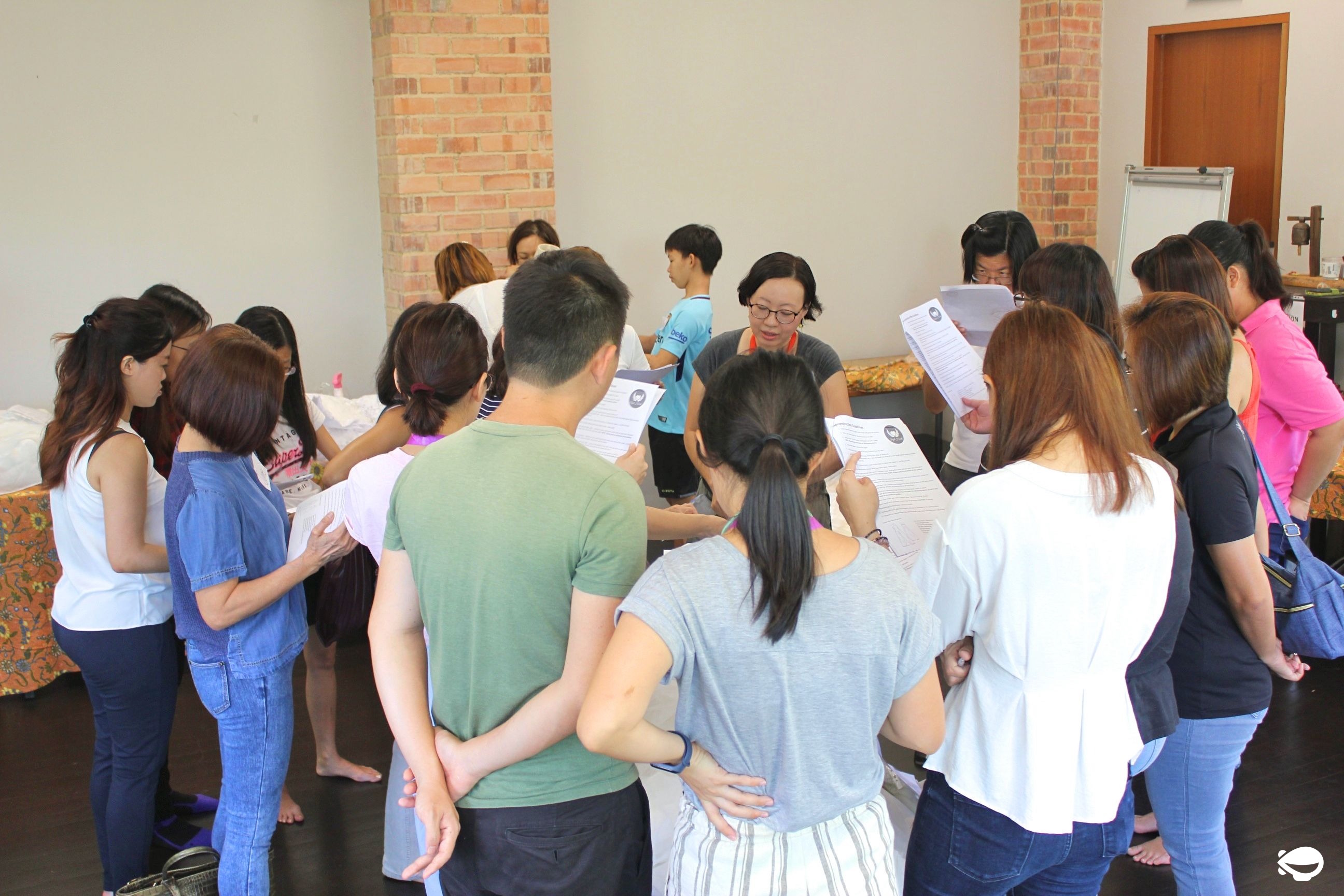 Hui Boon going through the instruction manual with volunteers on how to deconstruct the gowns. Photo by Zheng Zhangxin.
The volunteers got cracking soon after.
They sat on the floor with the wedding gowns that were collected from an earlier donation drive.
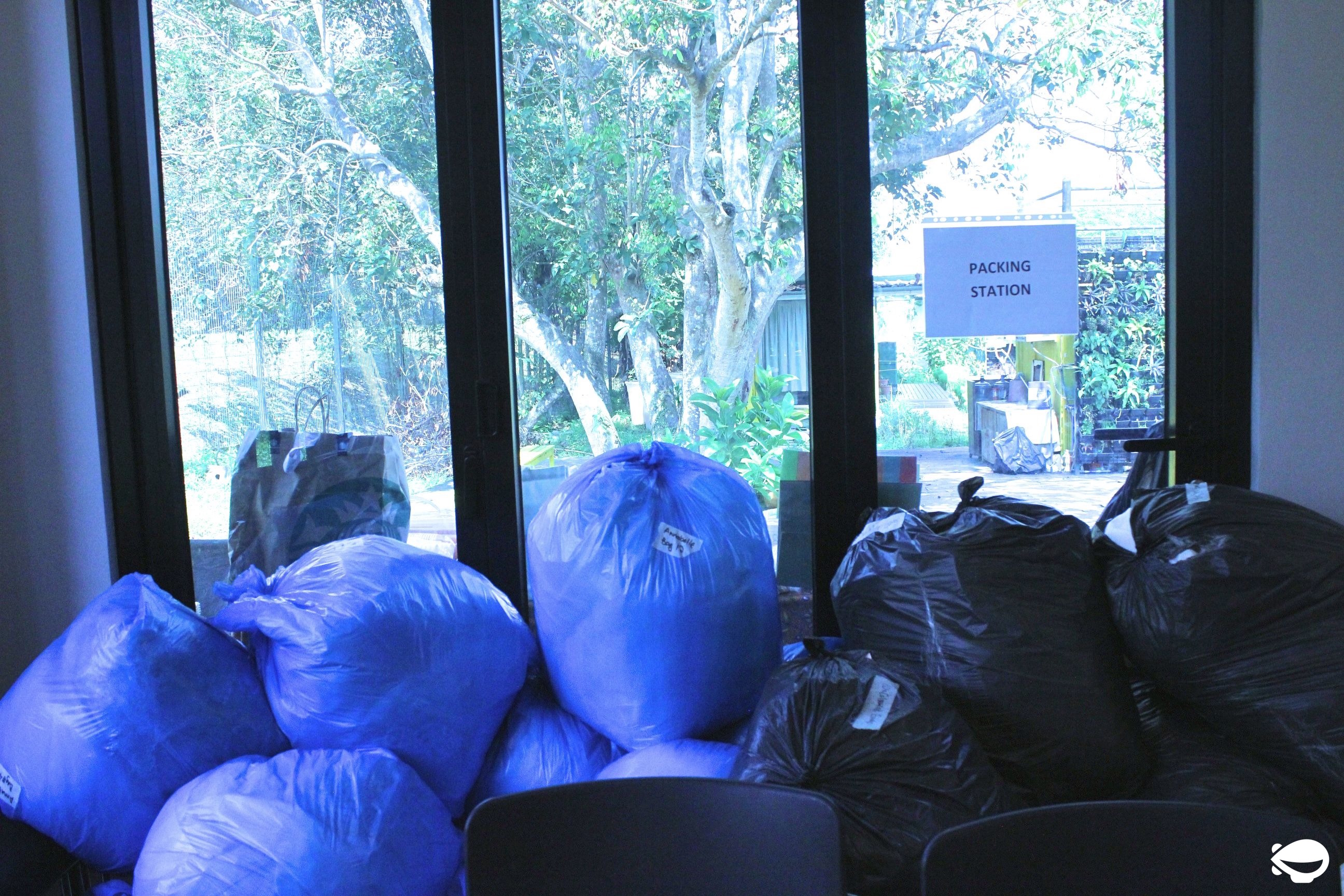 Bags of wedding gowns collected in an earlier donation drive. Some gowns can cost up to S$12,000. Photo by Zheng Zhangxin.
While it looks pretty disorganised at a quick glance, there is a system in place and everyone had a role to play in deconstructing the gowns.
Felicia was the key coordinator that day.
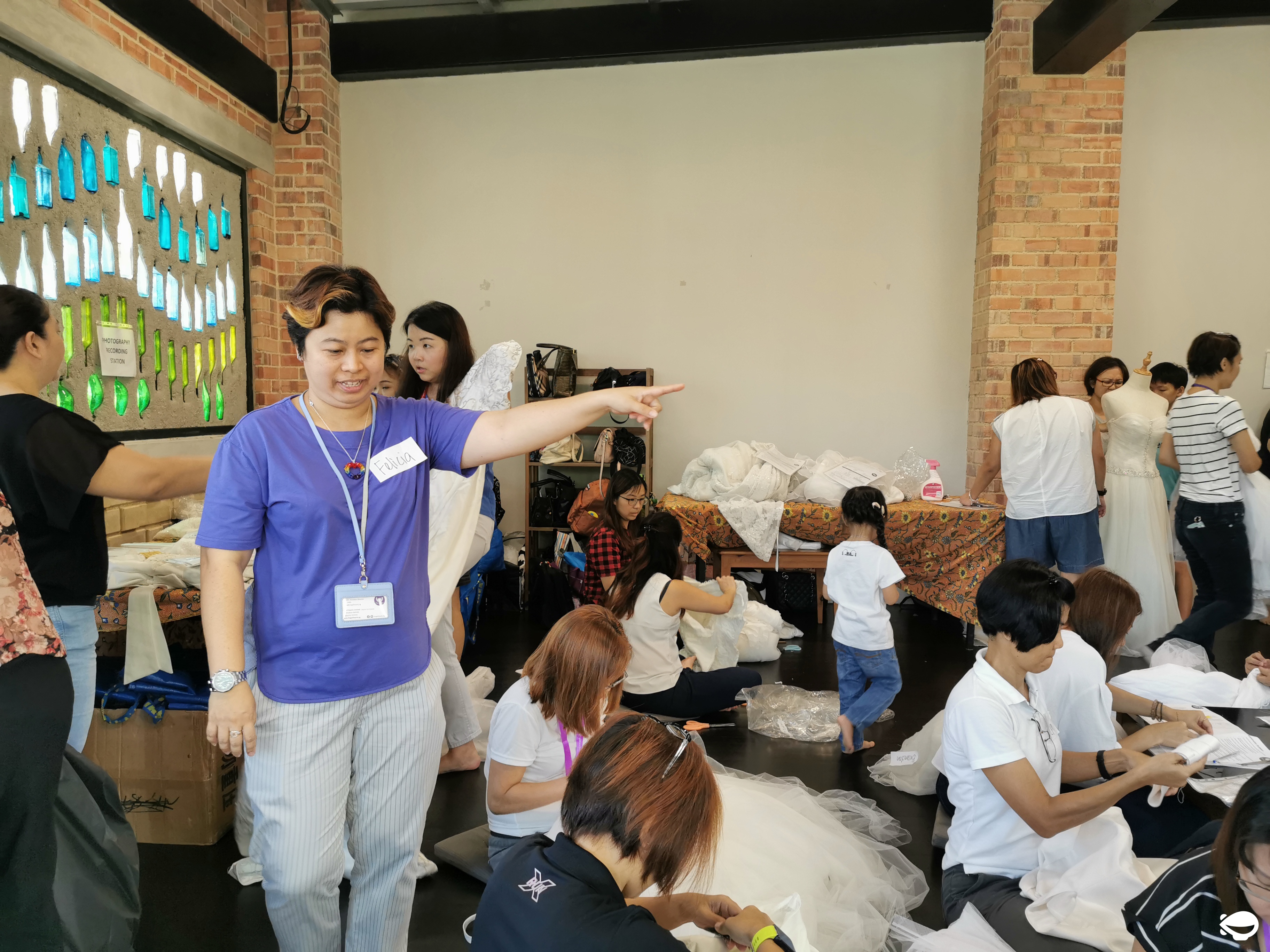 Felicia brought me through the happenings in the room: First, the gowns were unpacked at a station. Then, they were passed on to the next station for a photoshoot so as to keep a record before the actual deconstructing. Photo by Zheng Zhangxin.
Felicia joined Rosalind in this cause after experiencing miscarriages twice in 2011 and 2012.
Rosalind (Ros, in short), who prefers to stay behind-the-scenes, shared that Felicia is a lot more outspoken while she's someone who prefers hands-on work.
Having experienced the grief of losing their babies before, both of them want to support bereaved mothers better through making angel gowns or other forms of grief therapy.
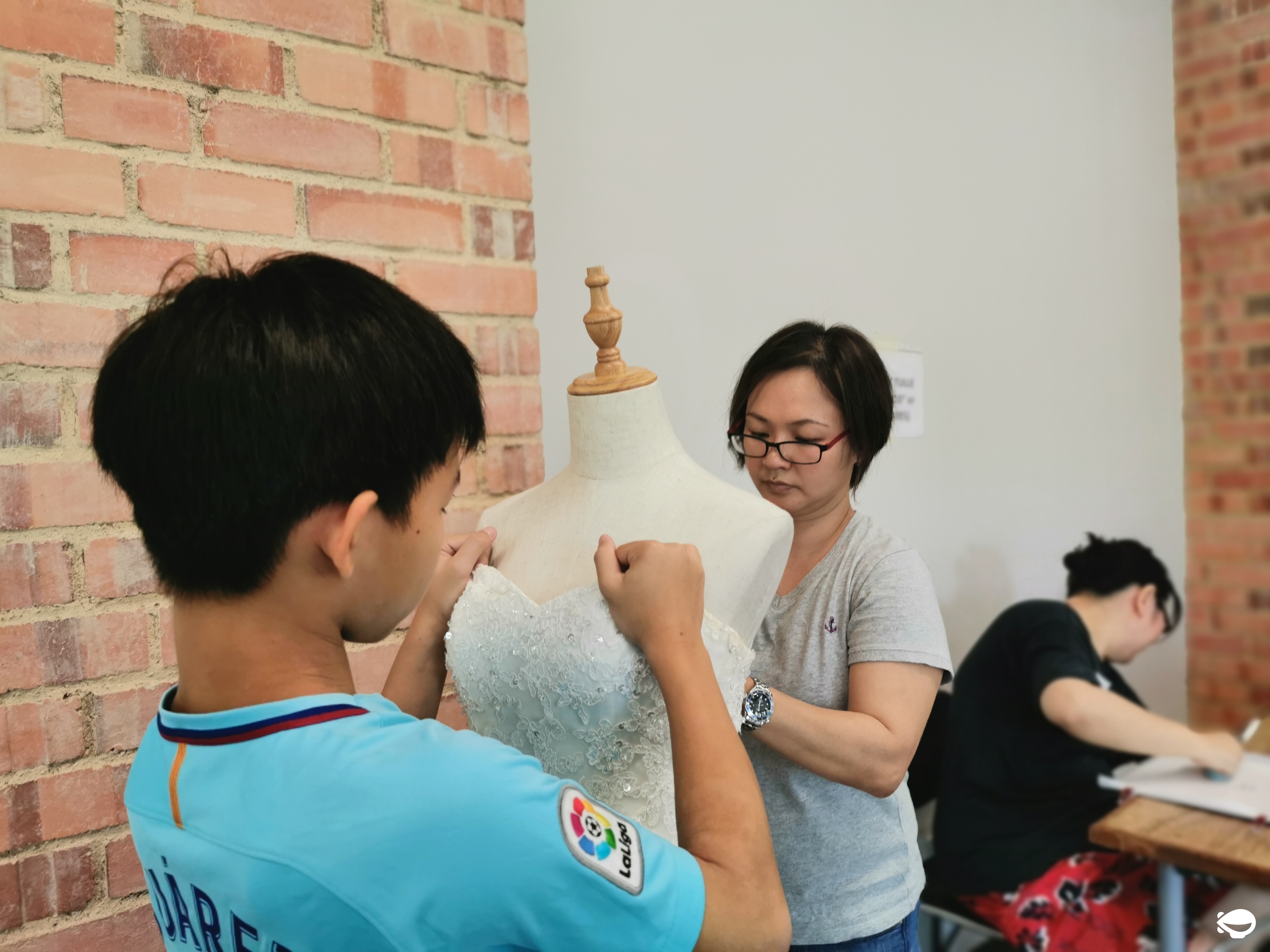 One volunteer also brought her son along to this event. They helped to put the donated gowns onto a mannequin for the final photoshoot for recording purposes. Photo by Zheng Zhangxin.
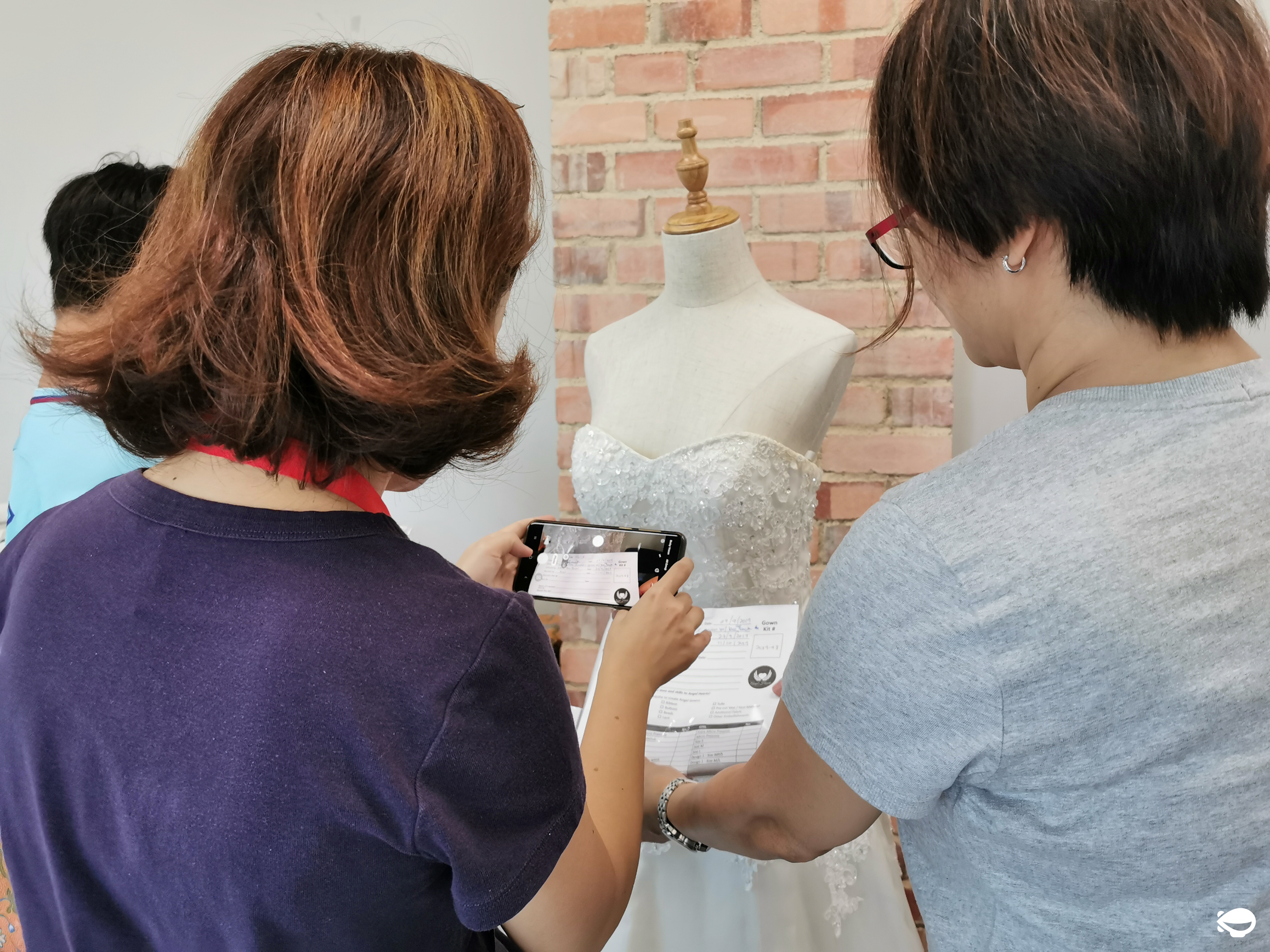 Photo by Zheng Zhangxin.
At the deconstruction phase, volunteers were tasked with removing the stitches on the wedding gowns.
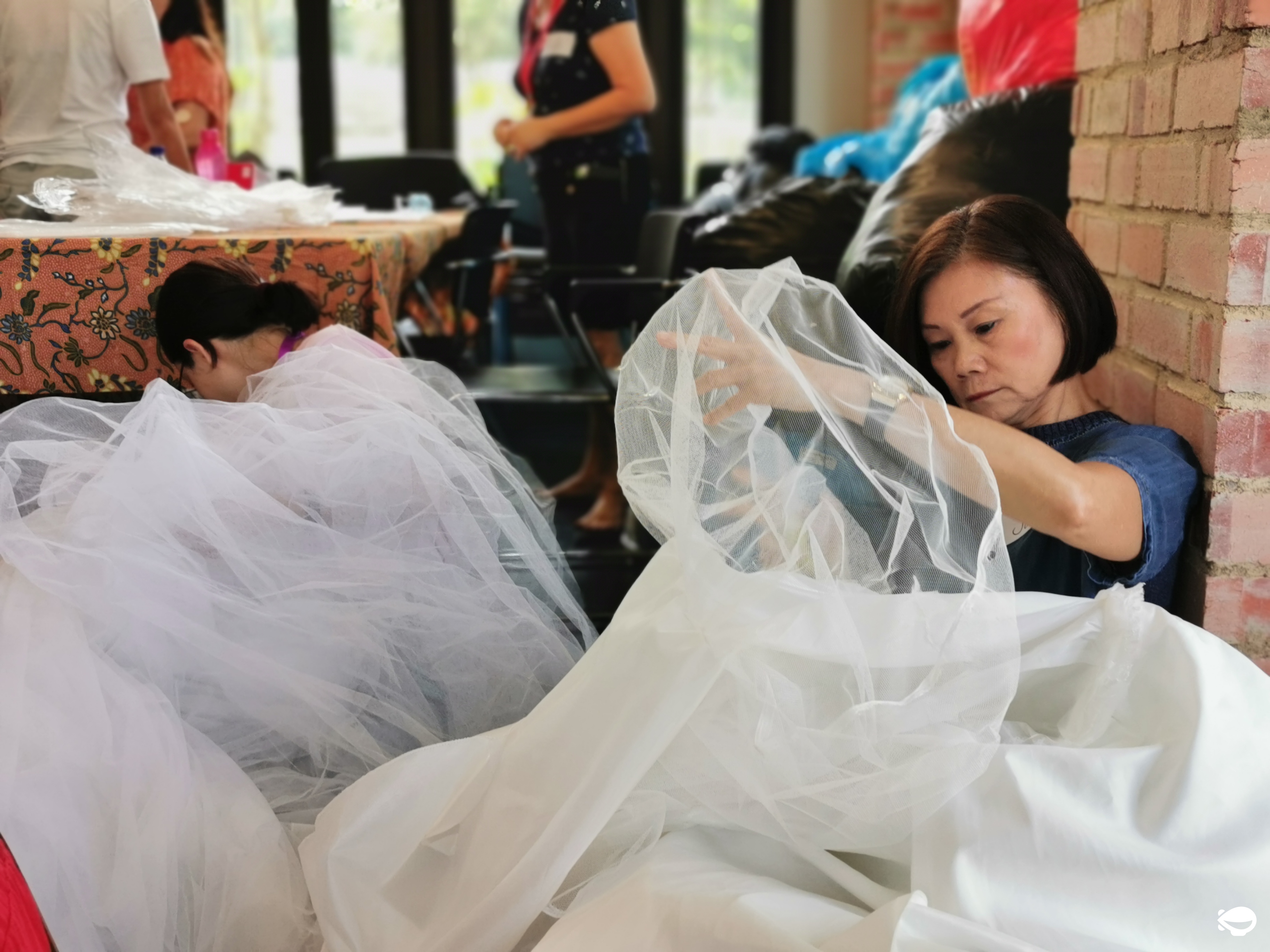 Deconstructing gowns can be very tedious and requires careful concentration. Photo by Zheng Zhangxin.
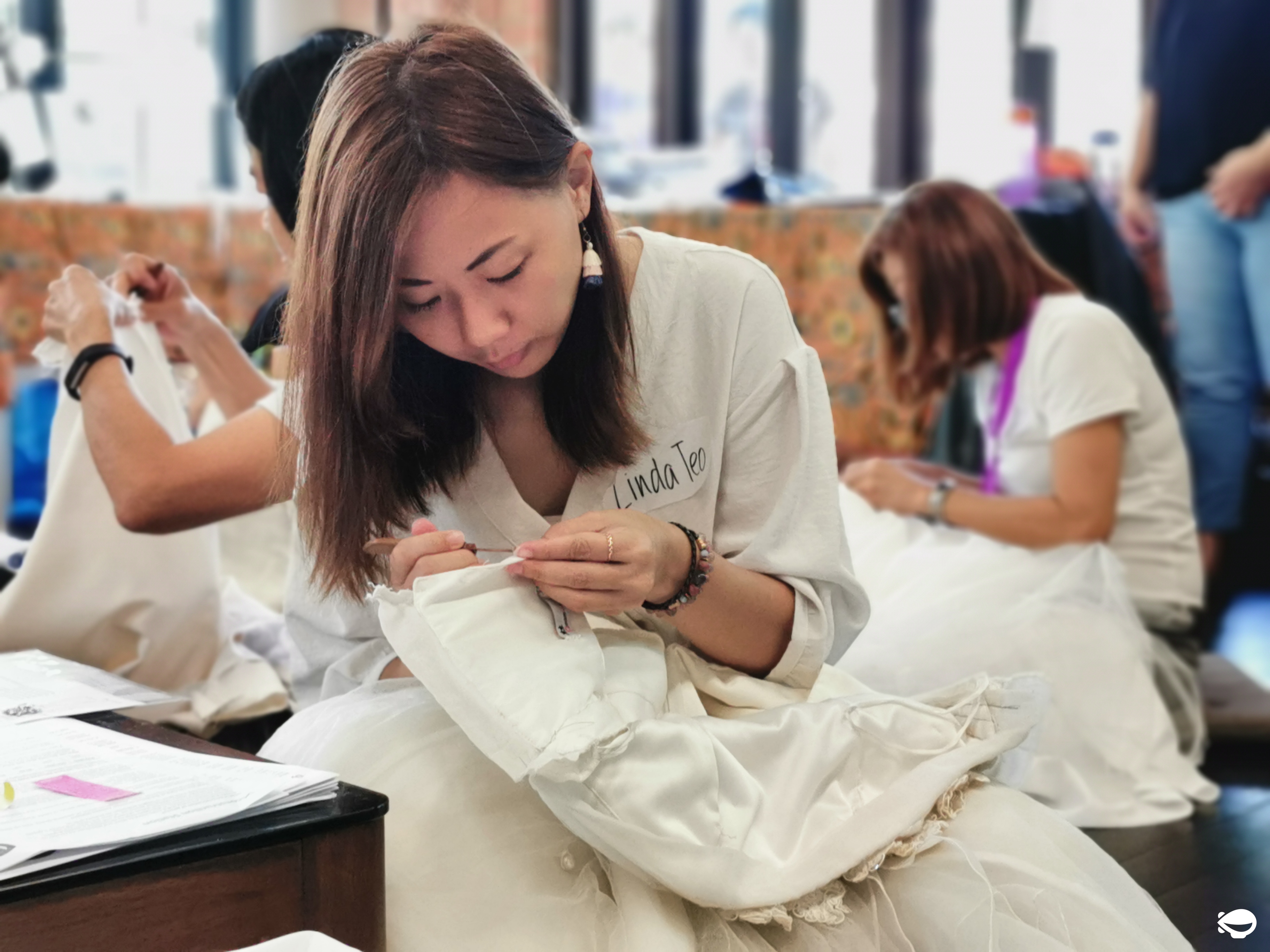 Photo by Zheng Zhangxin.
Hui Boon has been helping out with the organisation for almost two years. She started volunteering because she loves to sew but gradually becomes more involved without her knowing. At the event, she constantly kept a lookout for anyone who needs help and would patiently guide the new volunteers through the deconstruction process.
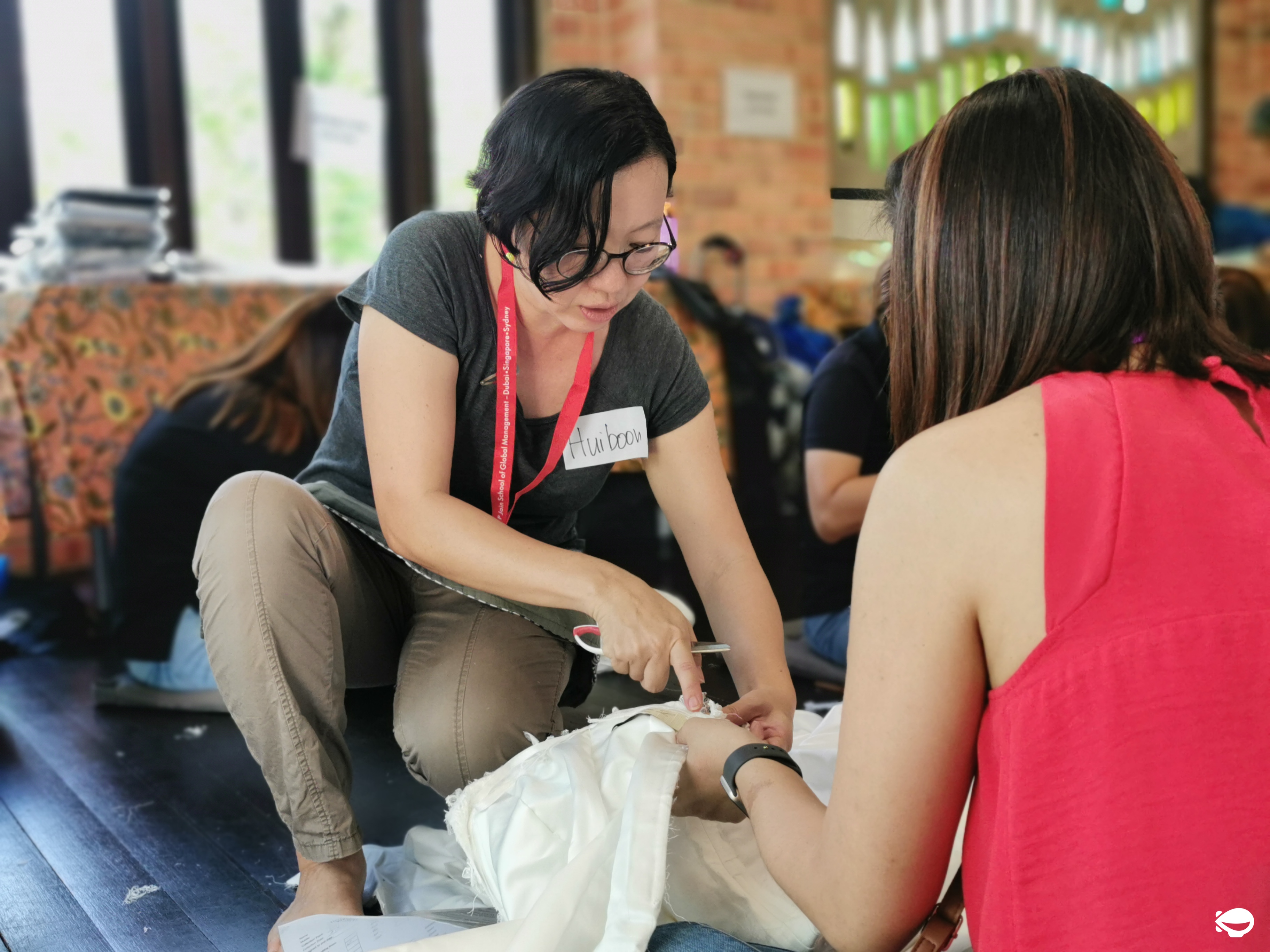 "First of all, I sew. I sew quite a bit. even before my friends told me about this group and said you know you can sew so you should join and contribute. As a woman, as a mother, the idea that babies just swaddle in a cloth perhaps just sounds wrong. I text Ros to say I’m interested and Ros said fine I'll courier gown to you. To be fair, it is very well-organised, I have an instruction manual and it’s pretty clear what I should do. There’s a WhatsApp group for sewing and when I had any queries which I had a lot at the beginning which I just sent in the WhatsApp. Slowly, slowly, without me really wanting to, I become more and more involved. But it’s always a joy to sew the gown, I find a lot of joy and purpose." Photo by Zheng Zhangxin.
Yuh Han, 25, shared that while she has volunteered for other causes before, this is something different.
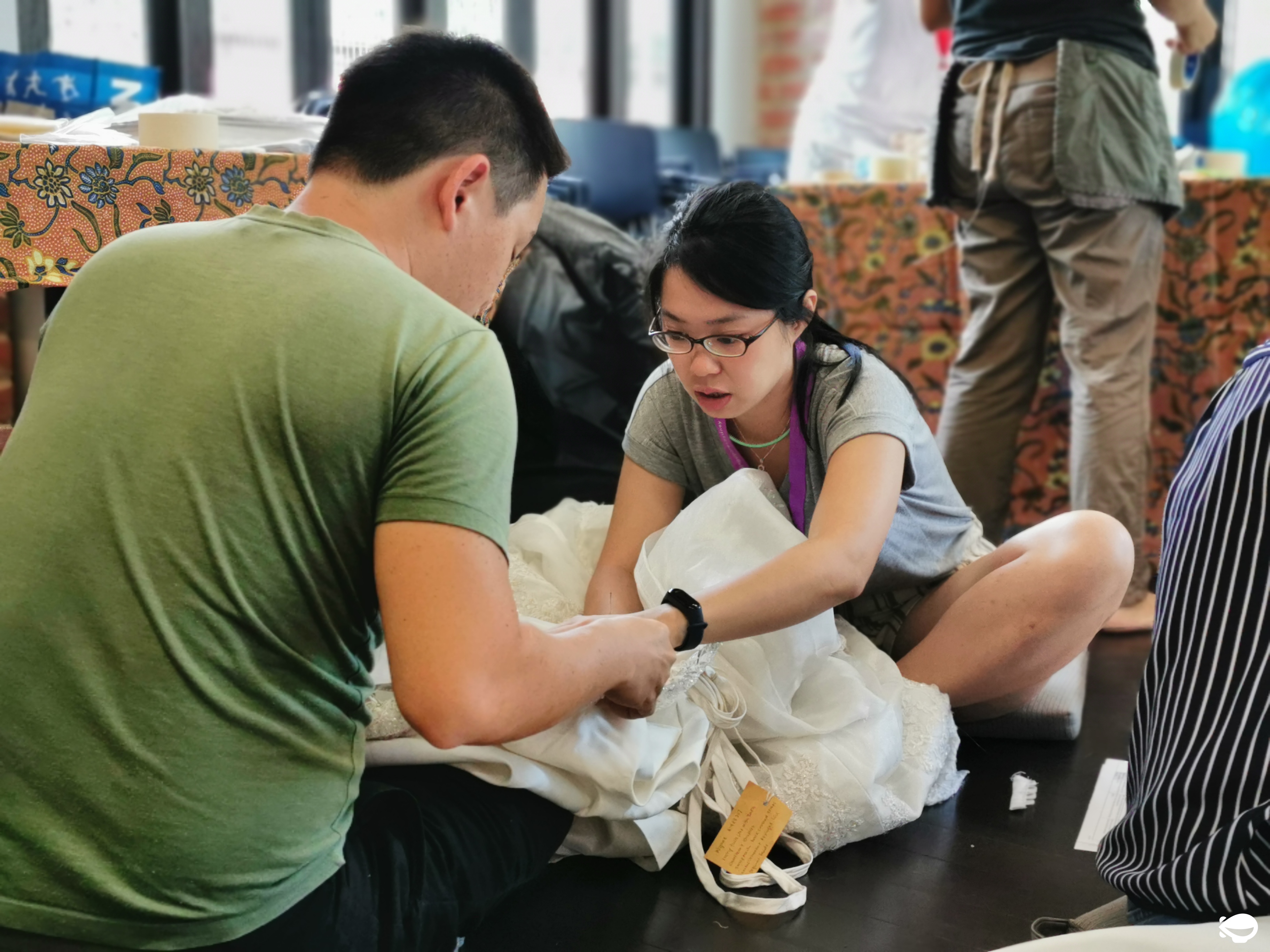 "I found out about this organisation half a year ago at some event and they had a booth, showing all types of volunteering jobs you can take on. I saw that there’s this event and it sounded pretty interesting so I just decided to give it a try. I was pleasantly surprised, it’s a very nice movement and it’s nice that there’s a group of people choosing to use their free time to give back to mums in heartbreak and just to show their love…sounds like something I’d like to support as well. I like sewing and it’s just something got to do with fabric and cloths and got my interest and I don’t mind trying it." Photo by Zheng Zhangxin.
Her boyfriend also joined her at the event as deconstructing gowns does not require much technical expertise.
After deconstruction, volunteers will repack the fabrics before delivering to others who will sew them into angel gowns.
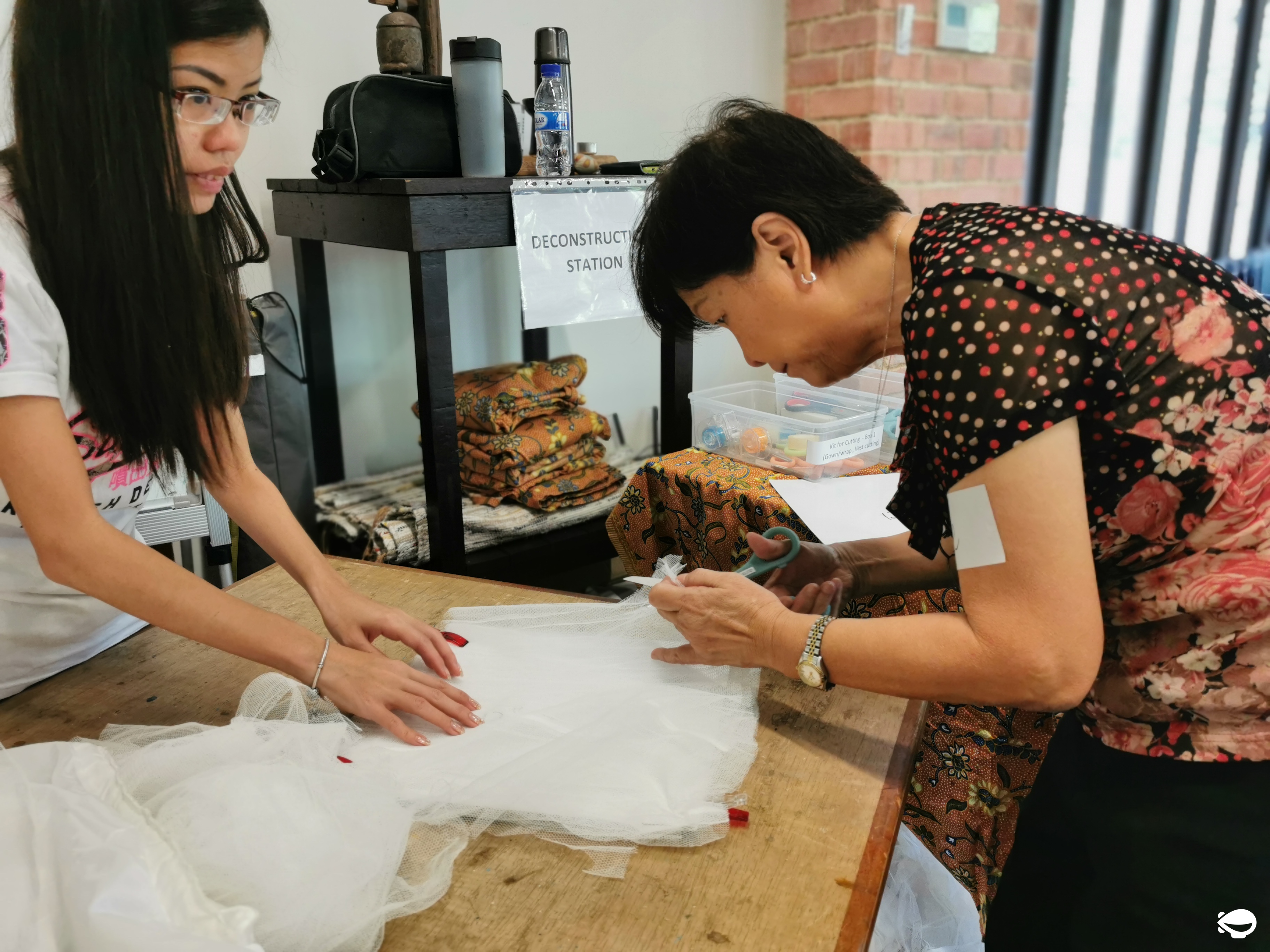 Cutting the gowns into smaller pieces of fabrics. Photo by Zheng Zhangxin.
Depending on the complexity of a gown, it typically takes close to three hours to deconstruct a wedding gown.
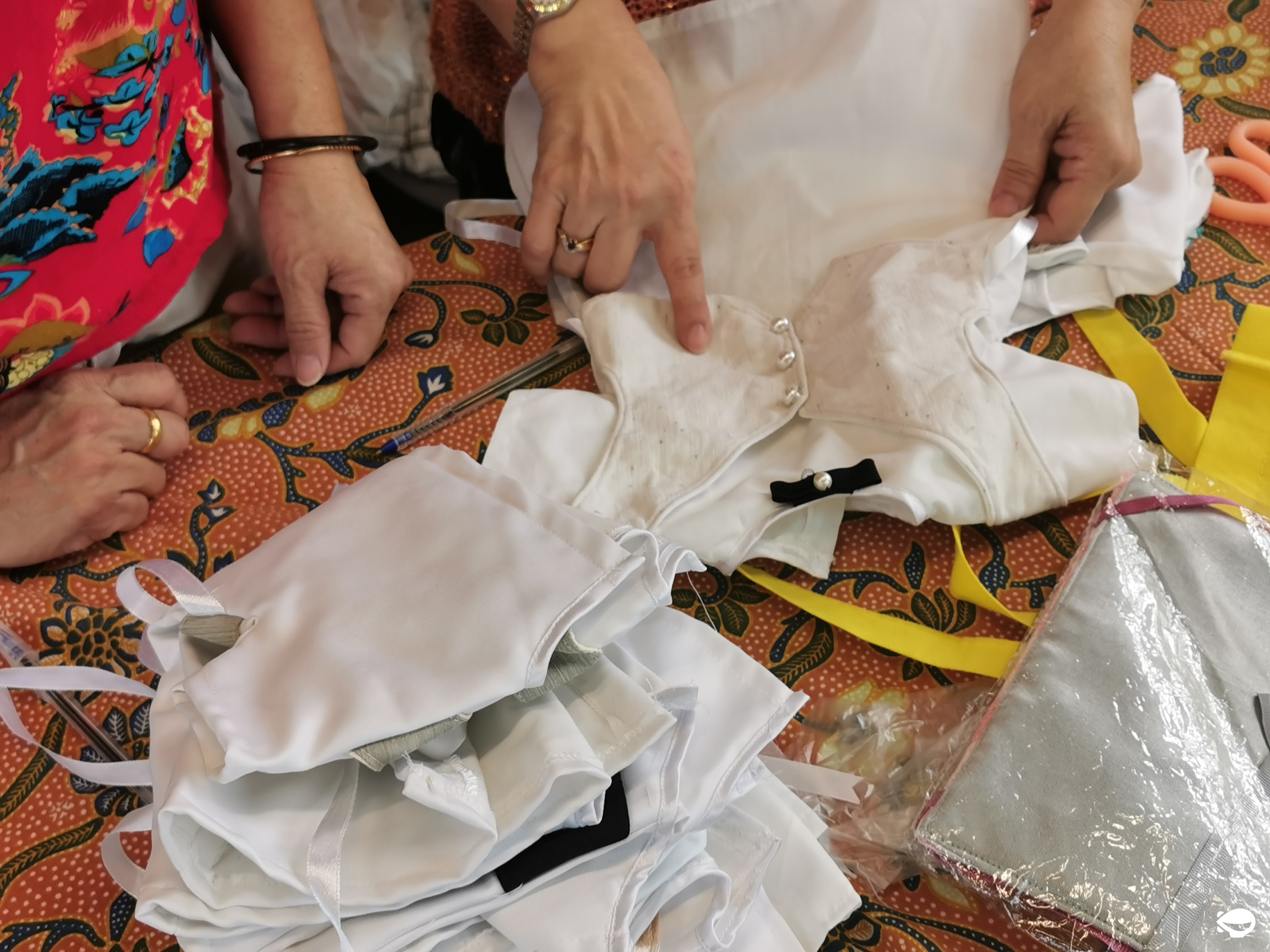 Checking through the angel gowns before packing them up for delivery. Photo by Zheng Zhangxin.
Here are some repurposed angel gowns on display at Kampung Kampus:
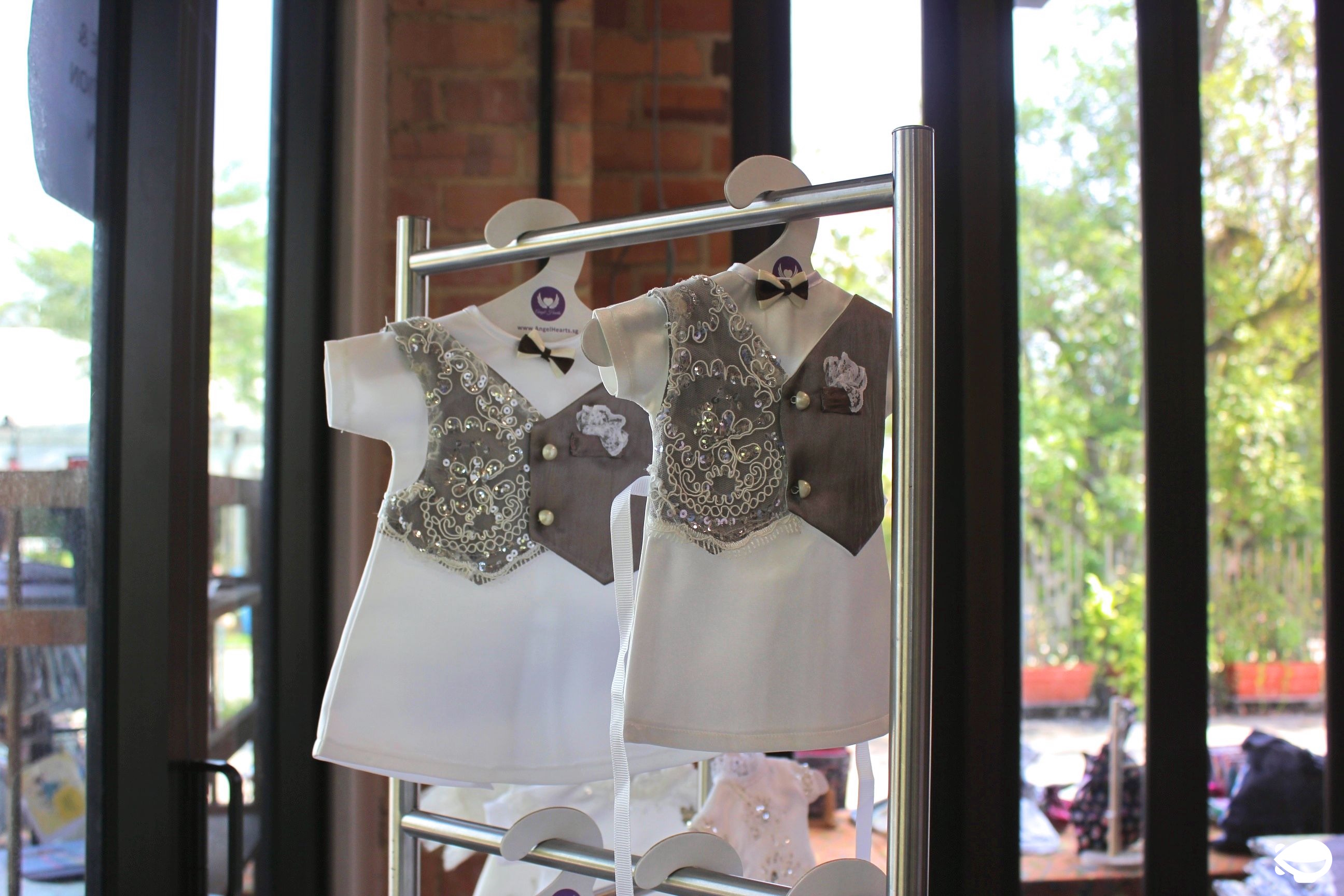 Photo by Zheng Zhangxin.
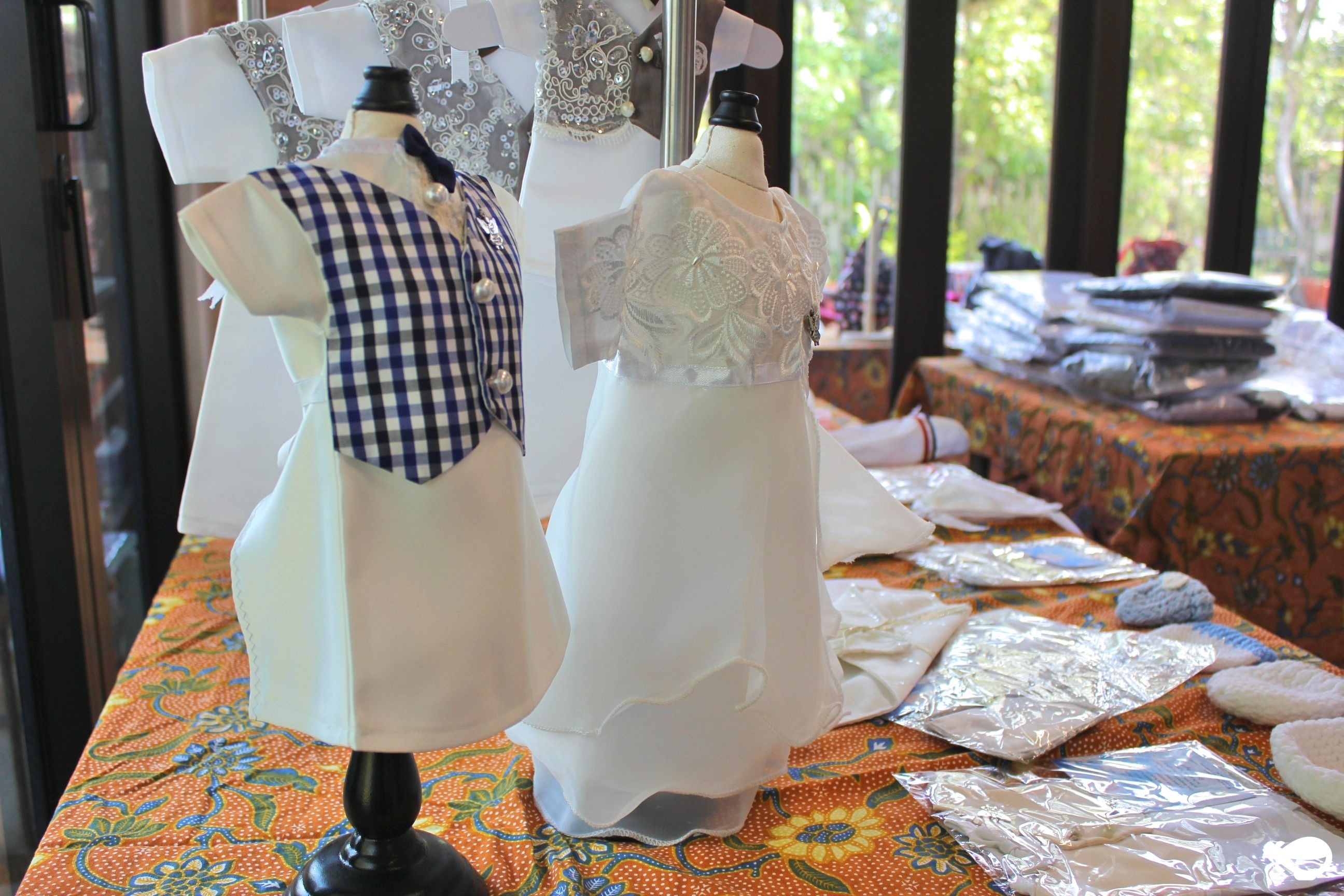 Photo by Zheng Zhangxin.
These are also baby wraps, beanies, bonnets, receiving blankets and, the latest addition in 2019, angel booties.
These apparel are used to dress babies who are gone too soon in a dignified manner before they are sent to the mortuary.
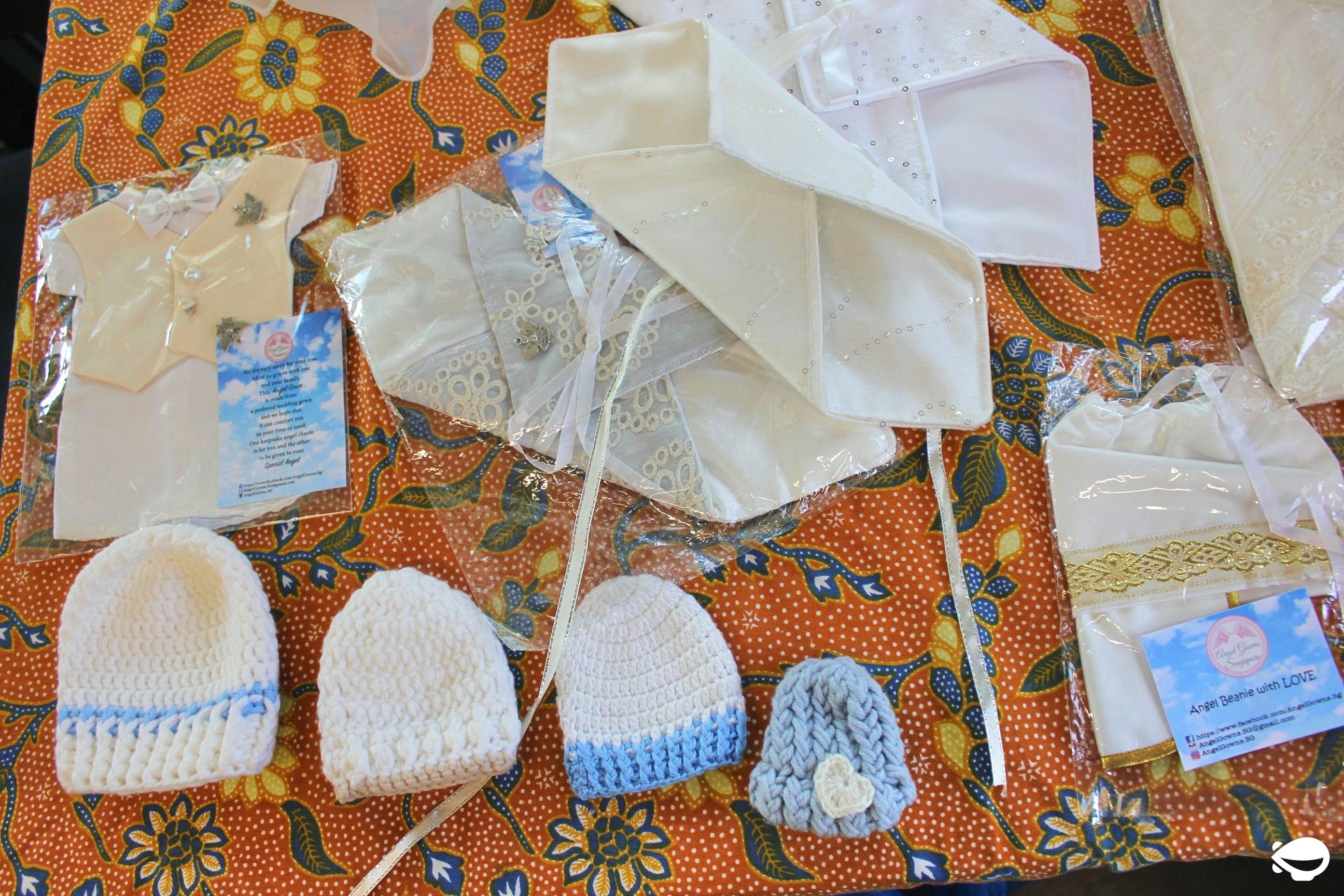 Photo by Zheng Zhangxin.
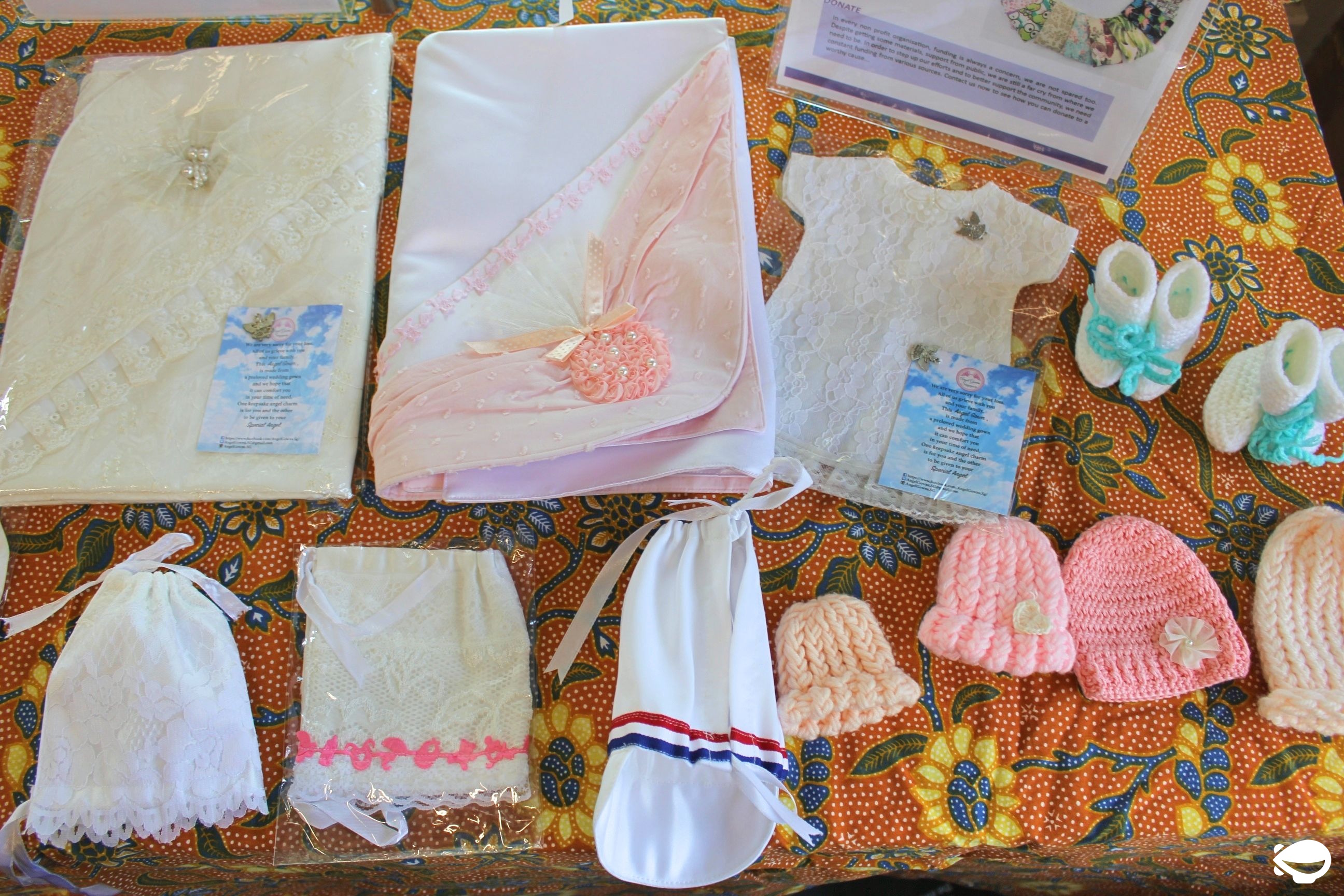 Photo by Zheng Zhangxin.
With more than 100 active volunteers, the group has since supplied over 3,600 angel gowns and wraps to eight hospitals and four funeral homes in Singapore for free.
Every quarter, Angel Hearts will receive an order of up to 100 pieces of angel apparel from hospitals. Hospitals can indicate the size and gender preference in their order and the volunteers will then deliver the apparel.
There are also occasions where mothers approach the organisation directly to personally pick the gowns for their deceased babies.
Some mothers will make a donation to give back but the volunteers do not solicit for funds after giving away the gowns.
Instead, Angel Hearts sets up booths to raise funds to support their logistics cost. They are not able to solicit funds publicly as they are not an official charity organisation.
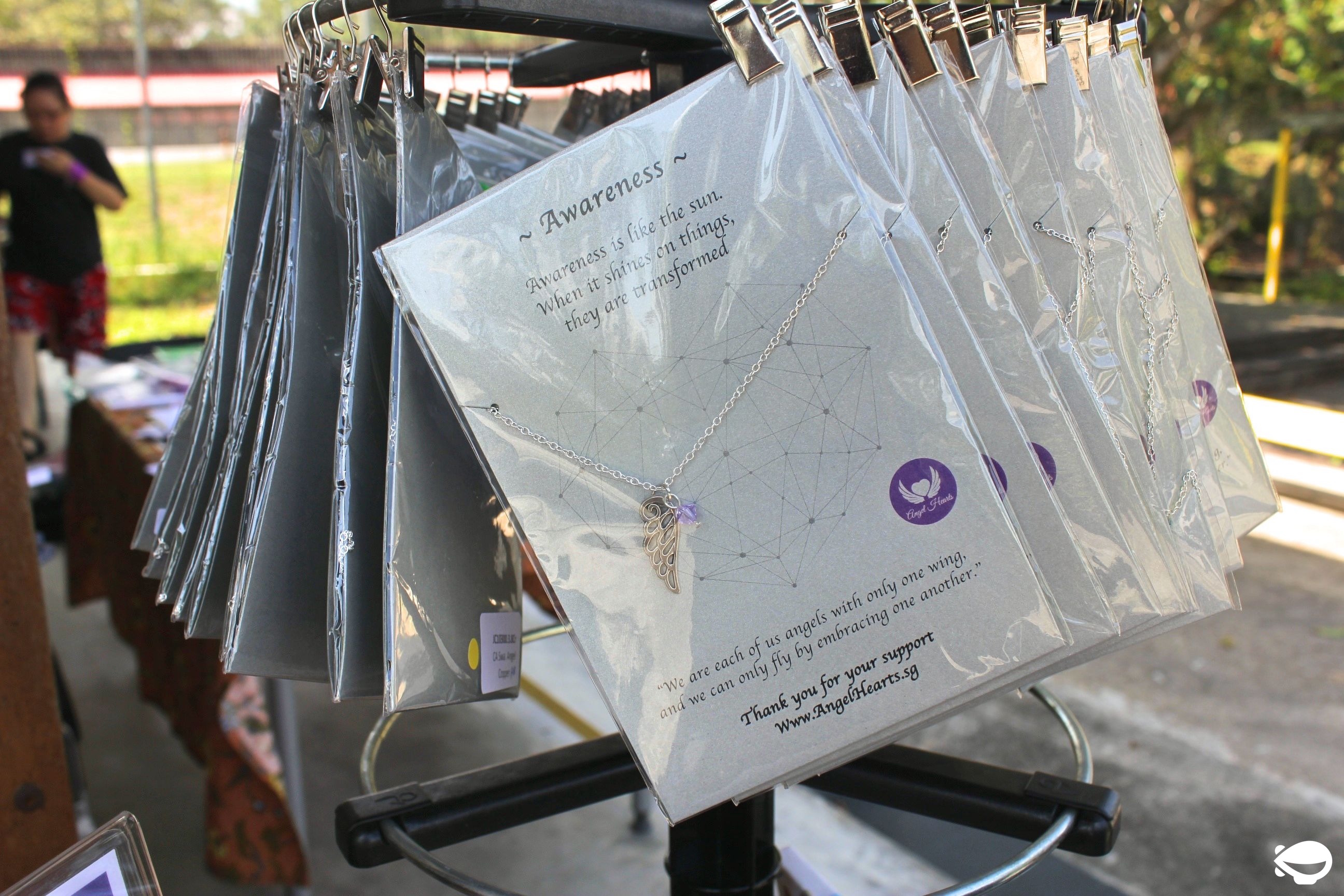 Accessories sold to raise funds. Photo by Zheng Zhangxin.
If Angel Hearts wishes to run as a charity, they will need an estimated S$10,000 to cover costs for incorporation, company secretarial, legal and annual audit fees.
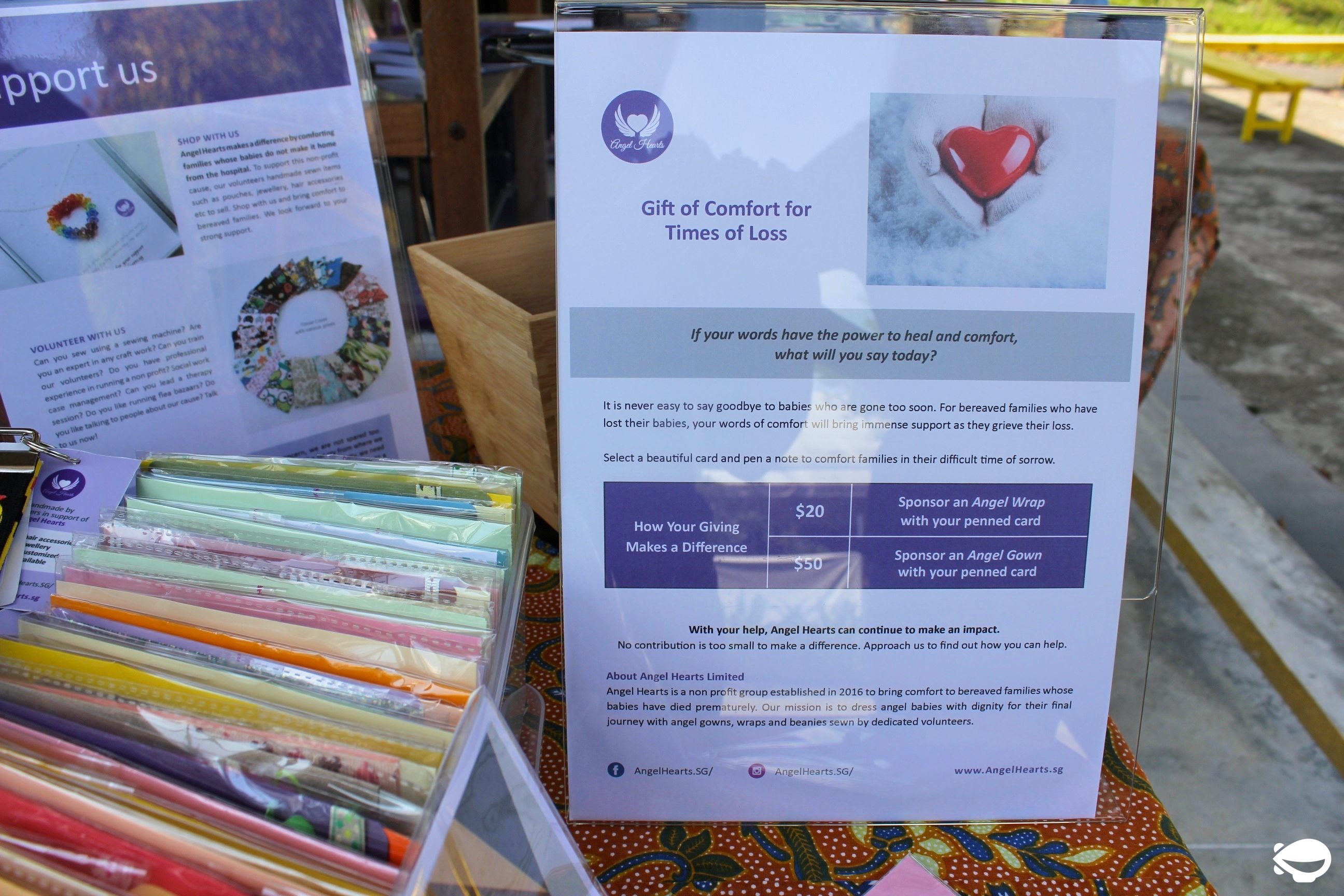 Photo by Zheng Zhangxin.
Most of the items on sale, such as the pouches and bags, are also made by volunteers.
Visitors to Angel Hearts can also pen words of comfort or sponsor an angel gown or wrap.
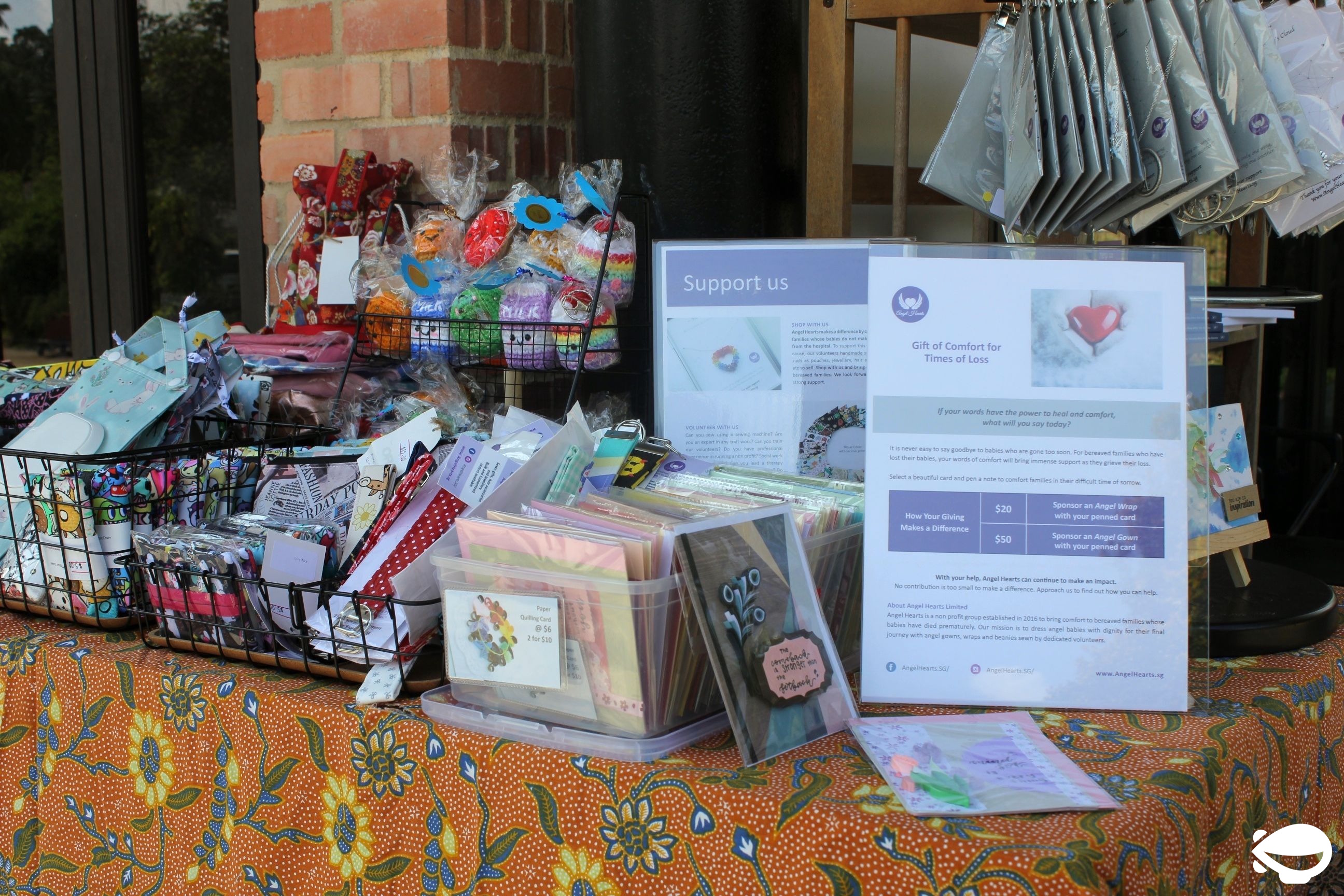 Small booth set up outside the room to sell handmade items to raise funds for the organisation.
If you are interested in the work that Angel Hearts do, you can visit their booth at the Science Centre from Oct. 18 to 20 (until 2pm).
Top photo by Zheng Zhangxin


If you like what you read, follow us on Facebook, Instagram, Twitter and Telegram to get the latest updates.