


 October 29, 2019, 07:32 PM
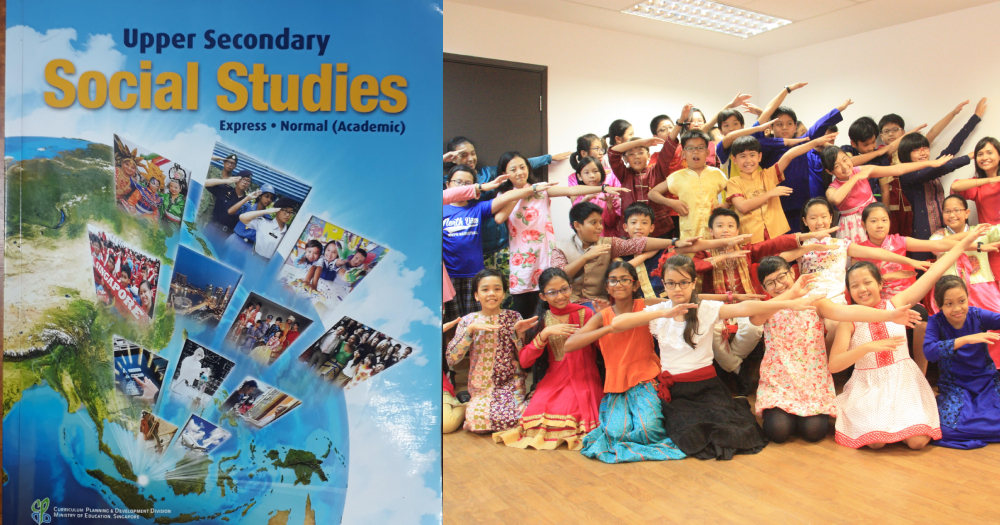

A working paper by the Institute of Policy Studies (IPS) has found that the majority of Singaporeans are aware of the seriousness of managing societal faultlines, such as issues related to race and religion.
The paper also found that younger respondents were more sensitive to the gravity of racial and religious issues, suggesting that national education efforts on social issues have played a significant role.
A survey of approximately 4,000 respondents was conducted by the IPS last year on race, religious and language issues.
The survey, which concluded in Jan. 2019, was part of a working paper published by the think-tank on Oct. 29, 2019, reviewing community attitudes towards social cohesion and division in Singapore.
State involvement enough already, youths want more public discourse
While older respondents surveyed preferred more government intervention, the majority of youths aged 18 to 25 felt that current state efforts were sufficient for racial and religious issues.
Only 7.2 per cent of youths felt that Singapore should have less public discourse about racial and religious issues, compared to 15.3 per cent of older respondents above 65.
The study added that education has a significant impact on the desire for public discourse regarding societal faultlines, as it plays a key role in sensitising individuals to the dangers of mismanaging racial and religious issues.
"Young people were certainly more likely to have learnt from National Education and Social Studies education efforts alongside available media that such issues are potent.
However, they are likely to believe that we have had enough of government intervention in this area, and that community efforts are sufficient."
Minorities want more public discourse about race & religion
When views on public race and religion discourse were segmented by race, the findings revealed that there was a significantly larger proportion of minorities who desired more public discussion, compared to the Chinese respondents.
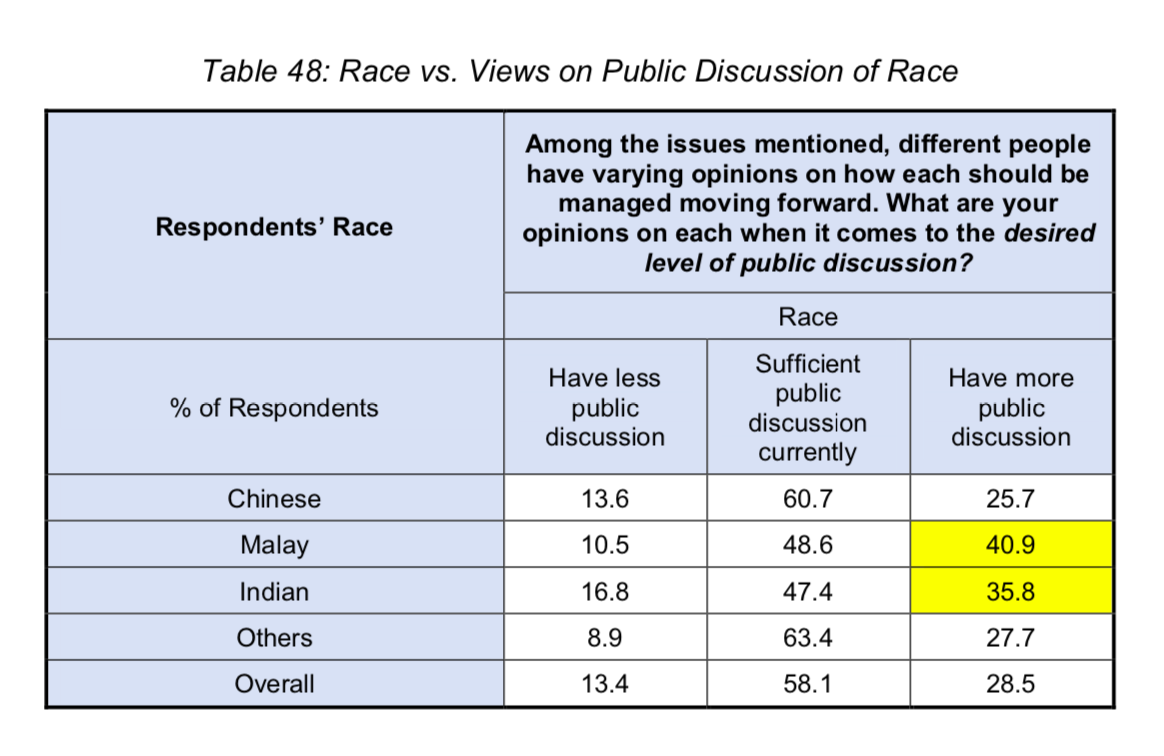 Image via IPS
The paper added that the trend was consistent with notions of "majoritarian privilege and the lived experiences of minorities".
Other issues discussed in the paper included local perceptions of immigrants, and socio-economic class frictions.
S'poreans generally open to meeting & learning from immigrants
The survey revealed that almost nine out of 10 Singaporeans felt that they could learn a lot from foreign cultures.
They also felt that they were able to appreciate people of different nationalities living in the same neighbourhood, to varying degrees.
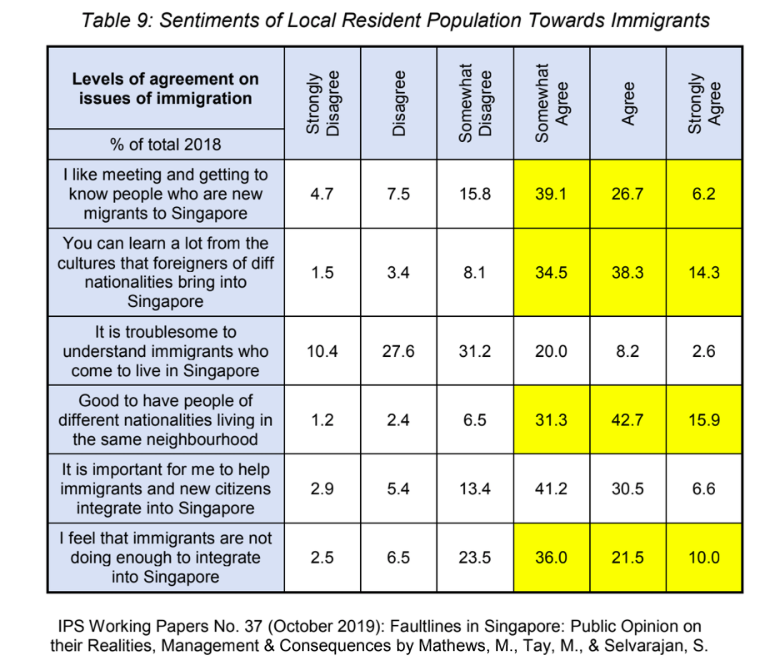 Image via IPS
Almost three out of four respondents agreed to varying degrees that they like meeting and getting to know people who have recently migrated to Singapore.
However, more than 70 per cent also felt, to varying degrees, that immigrants were not doing enough to integrate into Singapore.
Less than half willing to marry naturalised S'porean
The IPS study also derived that levels of comfort and trust towards naturalised Singaporeans were relatively lower, compared to local-born individuals.
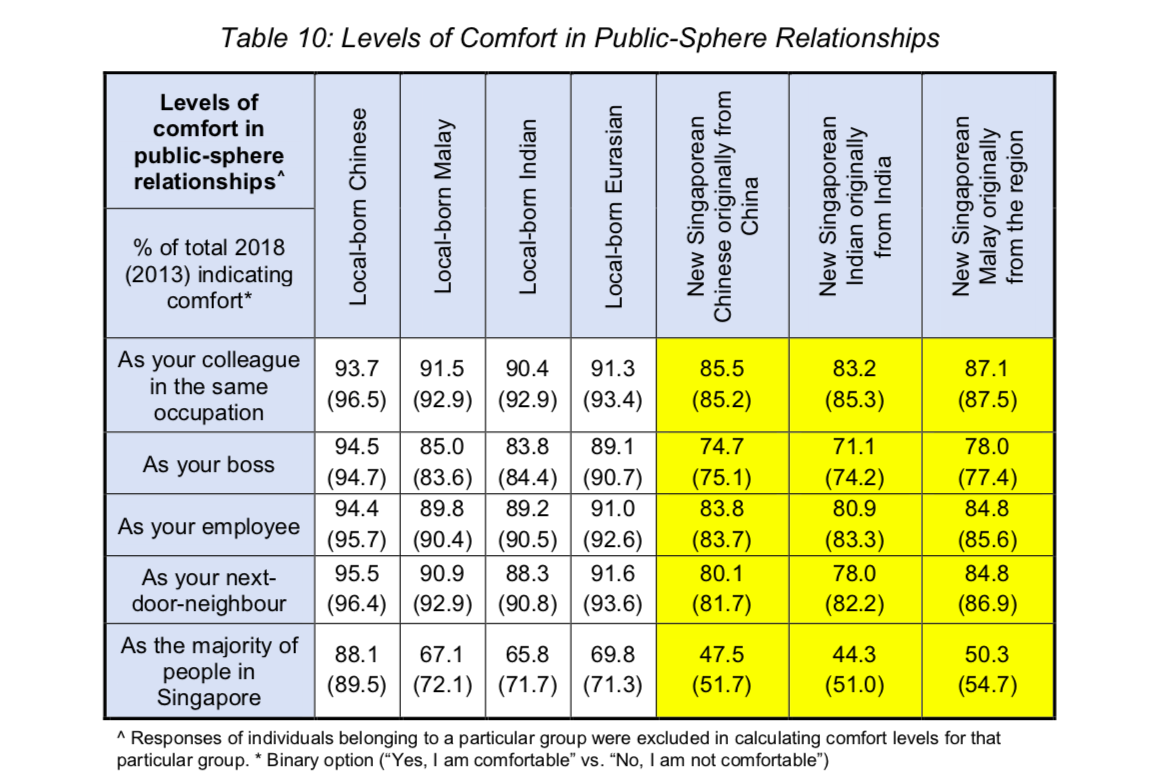 Image via IPS
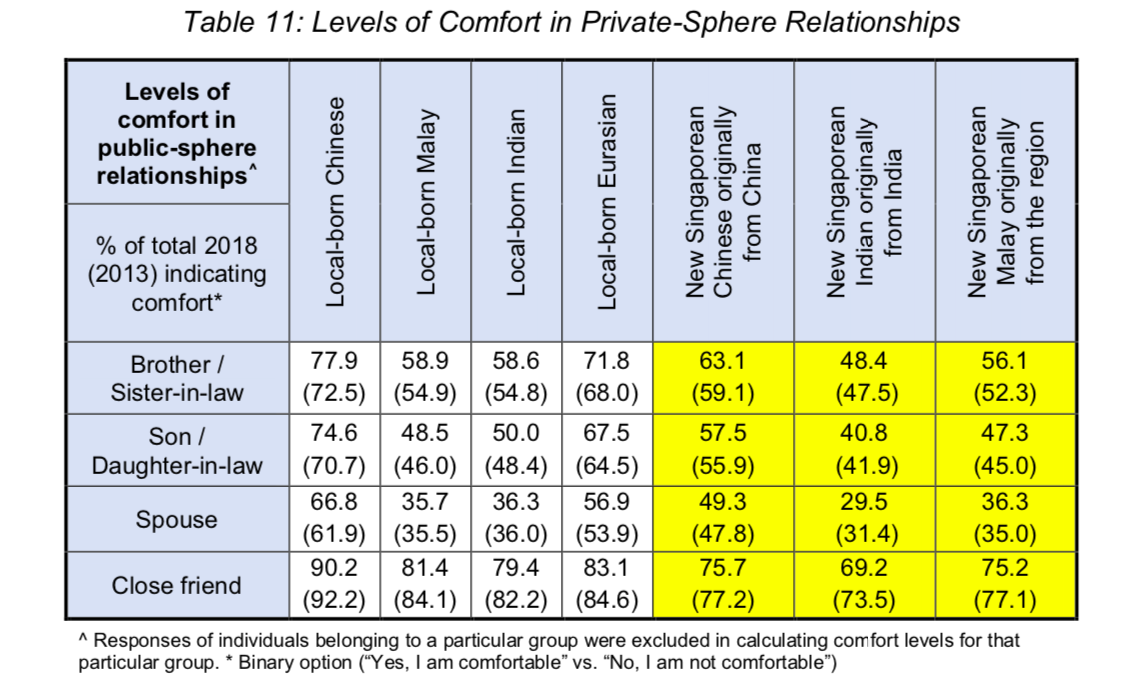 Image via IPS
While most were comfortable with foreign-born individuals at work or in their neighbourhood, half or less were comfortable with them as spouses or in-laws, or making up the majority of Singapore's population.
According to the survey results, less than 30 per cent of respondents were comfortable with a naturalised Singaporean originally from India as their spouse, compared to nearly half for naturalised Singaporeans from China.
Younger respondents slightly more accepting of immigrants
When asked about their opinion on immigrant proportions by location, such as their neighbourhood, housing, and workplace, the majority answered between one to 20 per cent.
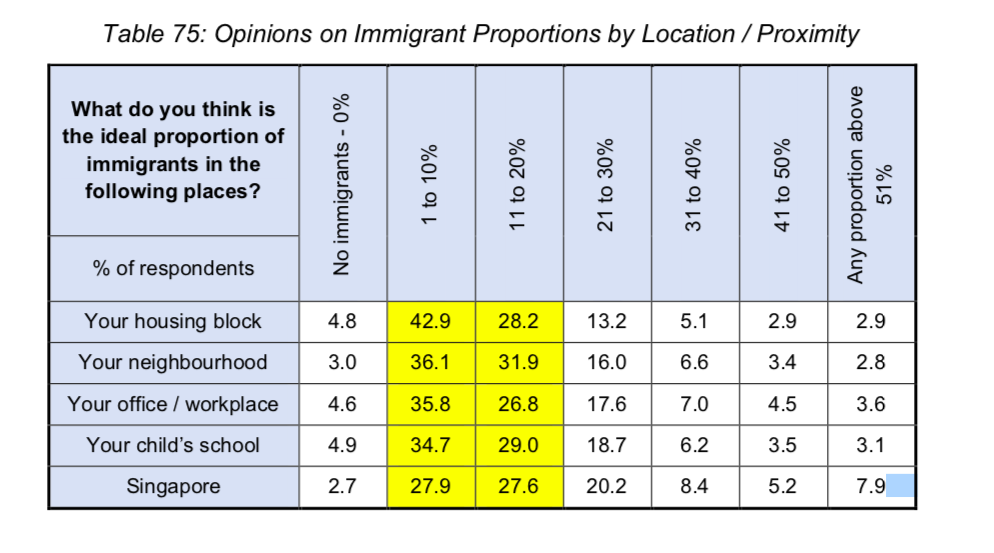 Image via IPS
Further results revealed that younger respondents, between 18 to 25, were slightly more accepting than respondents above 65 years old.
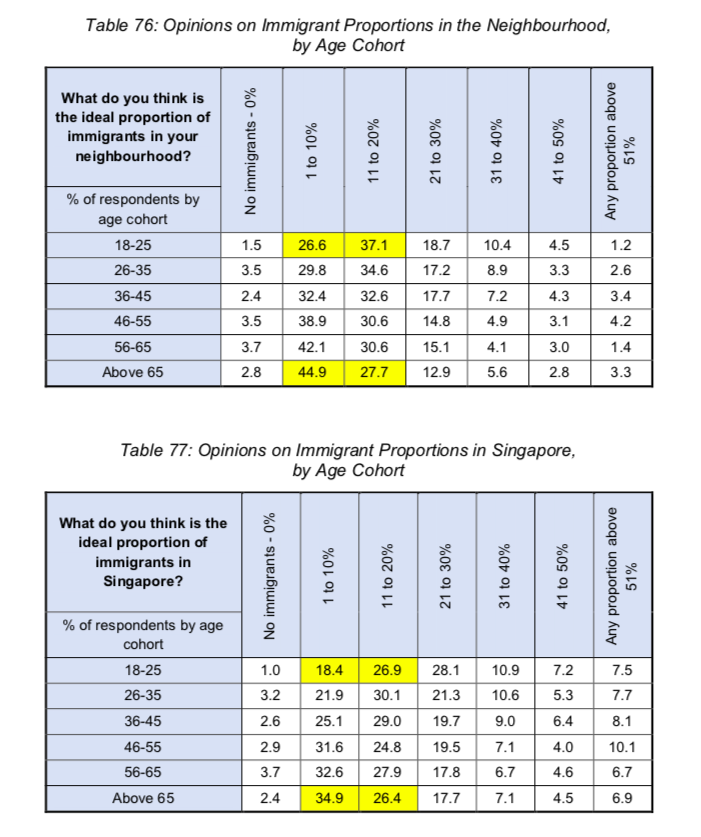 Image via IPS
Close to half of respondents above 65 indicated that their ideal immigration proportion in their neighbourhood was one to 10 per cent, compared to roughly one quarter of respondents aged 18 to 25 indicating similarly.
Top image via xinsicaaa/Carousell, North View/MOE


If you like what you read, follow us on Facebook, Instagram, Twitter and Telegram to get the latest updates.