


 April 24, 10:39 AM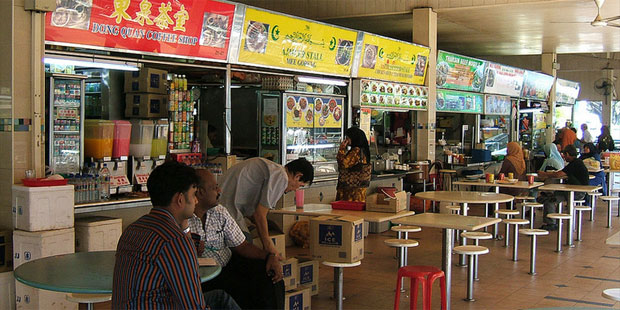
 514 Chai Chee Lane 03-16, Singapore 469029
 What is it about the sound of the Singaporean accent that makes my ears prick up when I hear it overseas, miles away from Singapore?
It’s funny how, just like a call to a homing pigeon, I can somehow always pick the accent out, from a crowd of people talking, in the middle of an airport, or a shopping centre.
[quipbox float="right" boxcolor="000000" boxhead="Corrinne May's column"]
One of my favourite storybooks is The Giving Tree by Shel Silverstein.
The themes of love and sacrifice are intrinsically intertwined in our lives and it helps to always reflect on where we are, where we've come from and where we are going.
This column is my "journal" of sorts, to explore the intersection between the roots and wings of this life.
[/quipbox]
And my eyes scan for the speaker, a familiar face perhaps. More often than not, I will end up following the speaker and asking him or her if they come from Singapore. Most of the time, the answer is yes. Half of the time, the answer is “Malaysia”.
I've heard it said many times, that you can take the Singaporean out of Singapore, but you cannot take the Singapore out of the Singaporean.
It's funny. I will walk through the supermarket aisles at the Asian supermarkets in Los Angeles and secretly feel very proud and excited every time I see the Yeo’s brand peeking back at me from the shelves, on the cans of Chrysanthemum tea, soya bean milk, or jars of tau cheo. And when I see bottles of chicken rice seasoning, I get a flush of Singaporean pride too.
There was a period of time when I didn’t get to go back to Singapore for a stretch of two years. I was so homesick that I would feel so happy to see the "Made in Singapore" sign on those green Milo cans in the supermarket!
Then there is that issue of litter. Driving down the freeway in Los Angeles, I sometimes end up driving behind someone who flings a can, or a bottle emptied of its drink, out the window. The Singaporean in me goes "Tsk tsk" and imagines how that driver should soon be donning an orange work coat and picking up trash from the bottom of HDB blocks as a punishment.
I must admit that I always feel a sense of national pride whenever I see a Singapore Airlines plane parked at the Airport gate or flying over the freeway as I drive down the 405 past the LAX.
Whenever I board an SIA flight, I love overhearing the Singlish that the crew reserve for talking amongst themselves. They are schooled to use their Queens English whilst talking to the passengers on the plane. But once I catch them talking amongst themselves, that familiar ring of Singlish makes me feel right at home.
My Los Angeles friends are fascinated by the sound of the Singapore accent. They've been privy to my conversations with Kavin where we switch back to a Singaporean/ Malaysian-accented English. To the uninitiated ear I've been told, it sounds like pidgin English, almost an island-Jamaican accent. Which sounds about right, since Singapore is a tropical island, “Mahn” ( in the spirit of the Jamaican equivalent ).
Embracing our "Rojak-ness"
But what makes a Singaporean a Singaporean?
Is it just the accent? The way we would defend our favourite chicken rice stall to the point of fighting tooth and nail “Ai sio pah, ah!”? The way we swoon at the sight of Milo and Horlicks and jars of sambal belachan in a supermarket thousands of miles from home, the way we try to bridge the gap between the east and west with our campur "British"/ American/ Cina/ Melayu/ English and our ability to still enjoy the occasional Hokkien phrase with our Ah Beng and Ah Lian friends?
The search for a Singaporean identity is an ongoing enigma if the dilemma of what constitutes a Singapore National Costume is anything to go by.
The costumes designed for every Miss Singapore pageant in history have an embarrassing reputation for trying to fit pieces of the cultural puzzle together, and in the process, failing miserably, with the end result of a cultural platypus that looks like this:

But perhaps the answer is not an amalgamation as such, but something that goes beyond the artificial dress.
We are family
If I were to venture a guess, I would say that what makes a Singaporean a Singaporean is more than just an ability to speak Singlish or to swear in Hokkien if need be, or to chat with the talkative taxi driver uncle.
It is more likely what every child pledges as they stand before the Singapore flag each and every morning during assembly before the school day begins.
It is the Kampong mentality.
“We the citizens of Singapore, pledge ourselves as one united people, regardless of race, language or religion, to build a democratic society, based on justice and equality, so as to achieve happiness, prosperity, and progress for our nation.”
I remember pledging those words every morning for years. I can still instantly recall every word and somewhere in my brain, I’ve used it as a reference point every time I’ve come to consider what it means to be Singaporean.
To me, being Singaporean means to treat your fellow man as your family. It is no coincidence that we call those who are our seniors, Uncles and Aunties, and that you get the elderly salesman calling you ‘Girl, ah girl’, or ‘Boy, ah boy’, despite how old you might be.
It's the aunty or uncle at the shopping centre asking you, “Eh, that one ah, where you buy?” There is a certain inquisitiveness in being Singaporean. We almost need to know the scoop on each and every neighbour. After all, if we treat our fellow Singaporeans as family, we need to know everything about our family members, right?
My mother is a typical Singaporean in that sense. If my father ever needed information about so-and-so and what they did for work, or leisure, all he needs to do is to ask my mum and the information would be given within a very short time frame.
I guess it helps that most Singaporeans live stacked next to each other like Lego-blocks, so it is best not to embarrass oneself by speaking too loudly, lest the neighbour should overhear and spread the news via the common elevator or lift landings, or food centres within the estate.
We have faith in our fellow Singaporeans... most of the time. I cannot otherwise explain why people would use tissue paper packets to "chope" places in food centres and have the trust that the seat will not be taken. I suppose in that sense, the Courtesy Campaign was a success. People are too "paiseh" to speak out if it doesn't involve a "please" or a "thank you".
Singaporeans might be shy to raise their hands in a classroom setting in school, but I must say, that Singaporeans are very, very vocal when it comes to singing in a community.
Think National Day singing, or singing in church, or even that loud singing that the taxi driver uncle does of his favourite Hokkien songs, off-key more often than not, but he is singing out proud, despite your misgivings.
Singaporeans love their food. That is almost a badge of National identity. You live in the kampong, you eat what the kampong eats. Choose at least one: Chicken Rice, Laksa, Nasi Lemak, Char Kway Teow, Roti Prata. If you haven’t eaten any or all of them, I don’t care how long you’ve stayed in Singapore, you’re not a Singaporean in my books.
Most importantly, there is a tangible sense of community in Singapore, one that is hard to find in Los Angeles. Singaporeans do care about each other. There might not be the daily spoken greetings and smiles that are common at supermarket checkouts in Los Angeles. But Singaporeans show their heart through their actions, rather than their words. Through measured, thought-through responses, rather than spontaneous but fleeting bursts of expressions.
I suppose that in the fast-changing physical environment that is Singapore, where the physical landscape changes in the blink of an eye, relationships with people, and more importantly, relationships that last a lifetime, are worth their weight in gold.
Top photo from here


If you like what you read, follow us on Facebook, Instagram, Twitter and Telegram to get the latest updates.