


 October 04, 2023, 06:37 PM
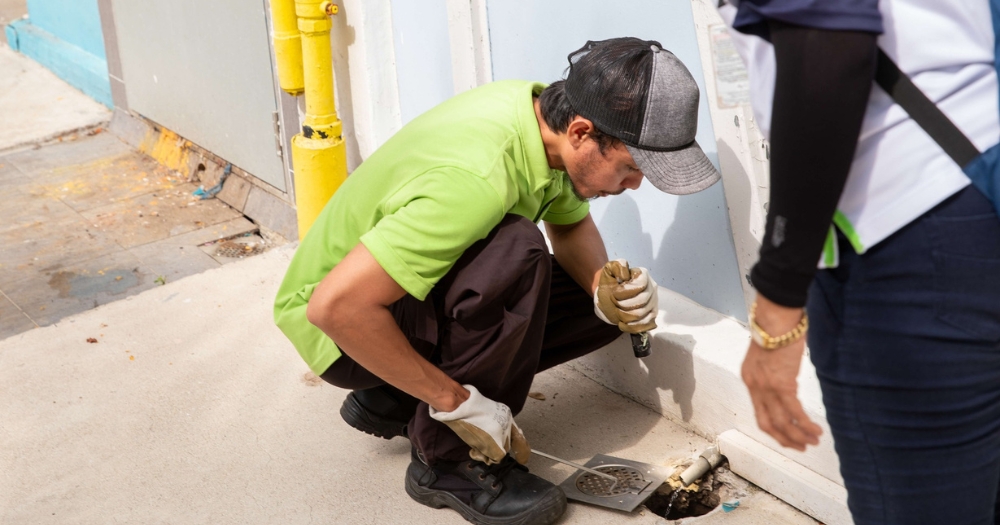



Over the last three years, the National Environment Agency (NEA) took an average of around five months to issue fines to Singapore residents after detecting mosquito breeding sites within their homes, Baey Yam Keng shared on Oct. 4, 2023.
When asked if the time between NEA detecting and issuing fines can be shortened, Baey said that residents should be happier to receive fines later as it gives them more time to respond.
How long to issue fines? How many fined wrongly?
Baey said while responding to a question filed by Bishan-Toa Payoh GRC Member of Parliament Saktiandi Supaat in Parliament.
Saktiandi asked about the average duration between when a mosquito breeding site is found and a fine is issued.
He also wanted to determine the number of fines in the past three years that were found to have been issued to the wrong households upon their appeal.
Four households wrongly issued fines since 2020
Baey, who is the Senior Parliamentary Secretary for the Ministry of Sustainability and the Environment (MSE), shared that of the 22,400 households that were issued fines for mosquito breeding offences in the past three years since 2020, four, or 0.02 per cent, households were wrongly issued fines due to administrative errors.
He said NEA rectified these cases immediately once they were alerted, either through feedback or appeals, and will continue to monitor and improve its processes to avoid such errors.
Time may vary on a case-to-case basis and depending on context
He added that NEA takes an average of five months between detecting breeding sites and issuing fines.
However, more time is needed for cases requiring further investigation and verification of the individual to be held accountable and issued a fine.
The time between detection and issuance may also vary depending on the context at the time.
For example, years with large dengue outbreaks have resulted in longer processing times, Baey said.
That said, Baey said MSE is currently reviewing the enforcement process to reduce the time taken to issue a fine.
Saaktiandi: Some worried residents unfamiliar with process complained about waiting time
Saaktiandi posed two supplementary questions to Baey in response.
He asked Baey if NEA can reduce the time taken to issue fines, which allows individuals to be notified of their mosquito breeding offences earlier, and whether the documents notifying individuals of their fines can be given to them in person.
He also wanted to find out how first-time offenders are treated.
He explained that several residents have complained about a long waiting time of close to six months or more, where some are first-time offenders unfamiliar with the process.
He added that one resident was told they would not be fined as it was their first offence but was surprised to learn they were fined after some time.
He said some of his residents found this "a bit worrying" as the fine can be quite significant, especially for low-income residents.
Baey: Residents "should be happier" to receive fines later
Baey said, "Actually, residents should be happier, right? If they receive the fines later, they have more time to respond to that."
He explained that NEA's priority is to stop dengue transmission.
As such, its resources are devoted to detecting and destroying breeding habitats before they proceed to issue fines.
That said, Baey reassured that NEA is committed to improving its processes so that residents do not have to wait too long to receive the fine.
Notification slips are issued upon inspection
Baey also provided some insight into the process, sharing that households are given notification slips upon the inspection, informing them that mosquito larvae have been detected within their premises.
The slip will either be handed to the household or left under the door if no one is home at the time.
The slip will inform the household that enforcement may be taken against them if the sample is verified to contain a vector.
No practice of leniency for first-time offenders
Baey clarified that NEA does not have a practice of letting first-time offenders off the hook, adding that officers are reminded not to give off the impression that first-timers will be let off more easily.
He added that affected residents can appeal against their fines through the number on their notification slips.
NEA will then review the appeal, investigate to ascertain the rightful party responsible for the area, and exercise leniency where necessary.
Households may still not be notified
That said, Baey acknowledged Saaktiandi's point that there may be instances where households may not be notified and, in turn, be surprised a few months later when they receive a letter informing them of their fine.
He said this might result from the household's own doing as they may not be aware of what the notification slip is about, ignored it and maybe threw it away.
How much is the fine for mosquito breeding offences?
NEA announced that it was tightening its measures on Jul. 15, 2020 to clamp down on local dengue cases, which were on the rise then.
The stiffer penalties kicked in with immediate effect and are as follows:
First-time offenders will be fined S$200 if a single mosquito breeding habitats is detected. They will be fined S$300 if multiple mosquito breeding habitats are detected within the same inspection
Second-time offenders will face higher fines of S$200 or S$300 if a single or multiple mosquito breeding habitats are detected.
Individuals who offend a third time and more will be prosecuted in court, where they may be fined up to S$5,000, jailed up to three months, or both.
Related stories

Top image from National Environment Agency (NEA)/Facebook


If you like what you read, follow us on Facebook, Instagram, Twitter and Telegram to get the latest updates.