


 July 24, 2023, 05:26 PM



A total of 49 self-radicalised individuals in Singapore have been dealt with under the Internal Security Act (ISA) since 2015, the Internal Security Department (ISD) under the Ministry of Home Affairs said in its Singapore Terrorism Threat Assessment Report 2023.
Of the 49 individuals, 37 were Singaporeans and 12 were foreigners.
In the past year alone, since July 2022, four individuals have been dealt with.
"There is no indication of an imminent attack, but Singapore continues to be a target for terrorist elements," the ISD said.
Terrorists continue to disseminate propaganda, raise funds and plot attacks, expedited by a virtual network of supporters, which fuel the spread of violent ideologies that have radicalised many individuals globally, the agency added in its annual report.
Young people are especially susceptible to these influences.
Among the 49 self-radicalised individuals, 11 were youths between 15 and 20, said the ISD.
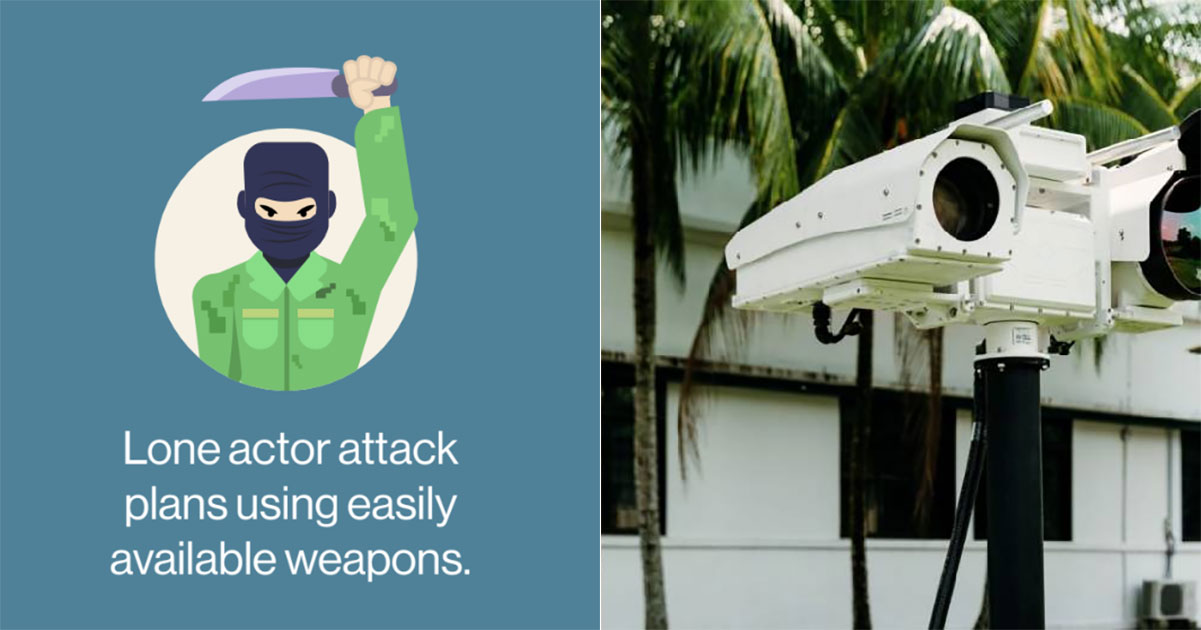
Five of the youths had plans to carry out attacks in Singapore using weapons.
Singapore a prized target
The ISD said in its report that the Islamic State in Iraq and Syria (ISIS), remain a persistent threat, with their intent to perpetrate attacks in non-conflict zones.
"Southeast Asian ISIS supporters in this amorphous and decentralised 'virtual caliphate' have incited one another to undertake violence," the report said.
Singapore remains a prized target and continues to be featured in ISIS propaganda, the report elaborated.
It highlighted: "For example, in June 2023, Southeast Asian ISIS supporters called on social media for retaliatory attacks to avenge the death of the Islamic State East Asia Province leader Abu Zacharia, and circulated a poster that pictured several government leaders in Southeast Asia including President Halimah Yacob as targets."
Heightened tensions
The ISD also highlighted that heightened tensions arising from conflicts around the world, such as in the Middle East and the Russia-Ukraine war, may cause actors to be more inclined to use terrorist modus operandi against their enemies, and that Singapore may be caught in the crossfire.
ISD added: "Public vigilance and preparedness are key components of our defence against terrorism. It is also important for the society to maintain zero tolerance of all forms of hate speech, as this may promote extremism, as well as of funding of terrorists or their activities."
Latest cases
In November 2022, a 38-year-old MOE teacher was detained under the Internal Security Act (ISA) for planning to travel to Gaza to engage in armed conflict.
In December 2022, two youths were detained.
One of the two youths, an 18-year-old student, had wanted to establish an Islamic caliphate in Singapore -- on Coney Island -- through violence, and planned to travel overseas to conflict zones.
He developed three attack plans against local targets.
The other youth, a 15-year-old, had wanted to establish an Islamic caliphate through violence, and considered conducting knife attacks against non-Muslims.
He had also considered becoming a suicide bomber.
Social media as a channel for radicalisation
The ISD said social media and online gaming platforms have become channels of radicalisation.
Social media channels are easily accessible, and extremist material can be replicated on various online platforms.
Social media also provides easy access to sermons of radical or segregationist foreign preachers, entrenching intolerant views that can serve as a pre-cursor to radicalisation.
It has enabled the creation of an amorphous and decentralised "virtual caliphate", where individuals from around the world can incite one another to undertake violence.
Public survey on terrorist threat
MHA also conducted a national-level survey to gauge public perception and sentiments towards the terrorism threat, and participation in emergency preparedness efforts as part of the SGSecure movement.
The survey was conducted from October to December 2022 and involved a representative sample of 2,004 Singapore citizens and permanent residents, aged 15 and above, through a series of face-to-face interviews.
One of the key findings was that 52 per cent of respondents believed that Singapore is a target for terrorist attacks.
While 70 per cent agreed that they were generally alert and would keep a lookout for suspicious behaviours or items when in a public place, only about 37 per cent would contact the authorities if they believed that one of their loved ones, such as family, relative or friend was displaying signs of radicalisation.
Top photo via MHA


If you like what you read, follow us on Facebook, Instagram, Twitter and Telegram to get the latest updates.