


 October 03, 2023, 06:50 PM
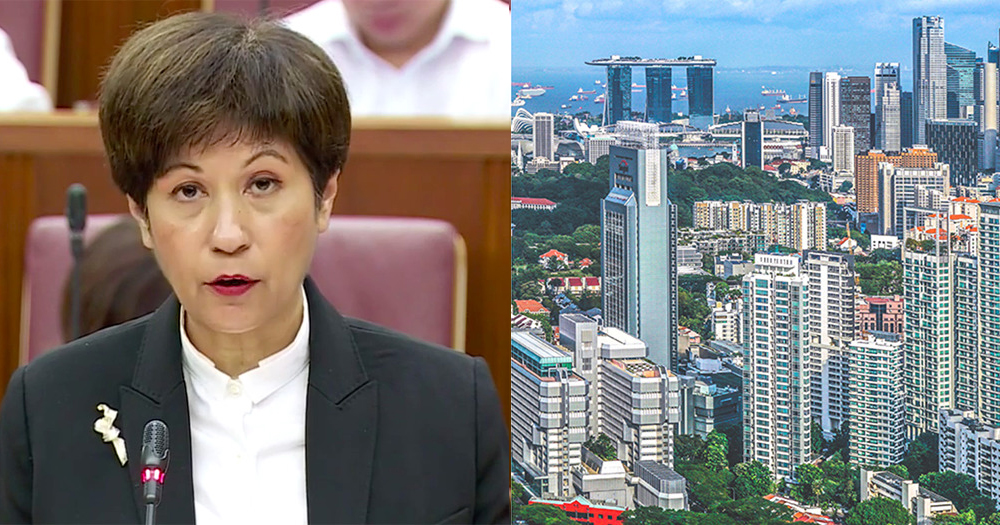



The government will be establishing an inter-ministerial committee to review and improve Singapore's anti-money laundering regime, in light of what has been learnt from the money laundering case involving S$2.8 billion.
The committee will be chaired by Second Minister for Finance and National Development Indranee Rajah and will comprise of political office holders from the Monetary Authority of Singapore (MAS), and the ministries of Home Affairs, Law, Manpower and Trade and Industry.
The review will focus on the following four areas:
- How the government can better prevent corporate structures from being abused by money launderers,
- How financial institutions can enhance their controls and work together more effectively with each other and the authorities, in flagging and guarding against suspicious transactions,
- How entities such as corporate service providers, real estate agents, and precious stones and metals dealers can help to better guard against money laundering risks, and
- Improving and centralising monitoring capabilities across government agencies.
"Where gaps are identified, we will tighten our regulations and enforcement to prevent exploitation by criminals," Indranee said in Parliament on Oct. 3.
The committee will also share its progress and findings in due time, she added.
ACRA studying restrictions on no. of directorships that can be held
Indranee's remarks were part of a larger ministerial statement on the case in which she also spoke at length about how the Accounting and Corporate Regulatory Authority (ACRA) is studying restrictions on directorships.
The aim of the study is twofold — to ensure that nominee directors are fit to take up the role, and examining whether it will be useful to limit the number of nominee directorships that one can hold.
Indranee said that these proposals were put out for public consultation in 2022 and will also be tabled in Parliament in early 2024. The government also will take into account risk factors and business needs, in deciding whether to introduce additional measures.
99 per cent of directors hold less than 10 directorships
Indranee was addressing a question raised by Member of Parliament (MP) Melvin Yong on the number of individuals who have held a large number of directorships.
Earlier in September 2023, The Straits Times reported that a Singapore resident was listed as the director, shareholder and secretary of 185 companies.
Nine of these companies also listed three of the suspects in the money laundering case — Su Haijin, Su Baolin and Vang Shuiming — as either a director or shareholder.
In line with international benchmarks in the U.S., UK and Australia, there are currently no limits to the number of companies that a director can be involved in.
Having said that however, 99 per cent of directors hold fewer than 10 directorships, she added.
Why would a person hold multiple directorships?
The minister further explained that because of Singapore's requirement for companies to appoint at least one resident director, foreigners based overseas often look for local nominee directors to act on their behalf for company-related matters.
To address this need, one of the services provided by corporate service providers is the appointment of nominee directors. Such a requirement is to also ensure that the government will be able to hold someone accountable for any breaches committed by the company in Singapore.
Hence, as some individuals take on nominee directorships as a business service, it is "understandable" for them to hold multiple directorships to support their clients in due diligence checks and incorporating their business.
These nominee directors also have the same legal obligations as other directors to fulfil their duties responsibly, and can face disqualification and debarment if they fail to do so.
How does ACRA monitor companies once they are incorporated?
Indranee also noted out that when a company is incorporated, ACRA screens all the officers and shareholders in the company's registers against lists of known adverse information.
When there are changes to the directorships, companies will also need to update ACRA accordingly and the new additions will be screened.
"All companies are required to have at least one director resident in Singapore to ensure that we will be able to hold someone accountable for any breaches committed by the company in Singapore," Indranee said, adding that this goes beyond the requirements of most jurisdictions.
Companies associated with money laundering case have been filing annual returns
This led to Indranee's next point that a clear sign of inactivity is when a company fails to file its annual returns.
Such companies will be struck off if they remain inactive after a certain period or are flagged by intelligence agencies.
However, not all companies that are being misused for money laundering are inactive or dormant firms, she clarified.
She said:
"Criminals often use front companies with a portfolio of businesses comprising a mix of legitimate and illicit activities. This makes it challenging for regulators to identify the true nature of companies unless active investigations of the company's activities are undertaken."
In the case of the companies associated with the current case, they have been filing annual returns with ACRA and have thus remained on the register, she pointed out.
Foreigners looking to establish companies must also engage ACRA-approved corporate service providers
In addition, foreigners seeking to establish companies here must engage ACRA-approved corporate service providers, also known as registered filing agents (RFAs), to incorporate a company.
This provides an additional layer of scrutiny, on top of ACRA's pre-incorporation checks, Indranee highlighted.
The RFAs are required to identify and verify the identifies of both the customer who engaged them and the beneficial owner of the intended incorporated company.
The RFAs must also conduct enhanced customer due diligence to compensate for the high risk if the customer is not physically present.
This is done by ensuring the customer's identity is established through additional documentation. The RFAs must also inquire into the purpose and legitimacy of the use of a company structure.
Should the RFA fail to complete the due diligence measures or any suspicious transaction in the course of their work, it should file a suspicious transaction report.
ACRA has also planned strengthened penalties on errant service providers
These service providers are also subject to ACRA's supervision, for compliance with anti-money laundering and combatting the financing of terrorism.
Between 2021 and 2023, ACRA imposed 24 sanctions against RFAs, eight of which saw the RFA's registration either cancelled or suspended. ACRA is also investigating the role of the RFA in this case and will take enforcement action if necessary.
Additional measures to strengthen the penalties on errant service providers have also been planned by ACRA and will be proposed in early 2024 as well, Indranee said. These proposals have also undergone public consultation.
Top left image via CNA, right photo by Mike Enerio via Unsplash



If you like what you read, follow us on Facebook, Instagram, Twitter and Telegram to get the latest updates.