


 August 24, 2023, 02:50 PM
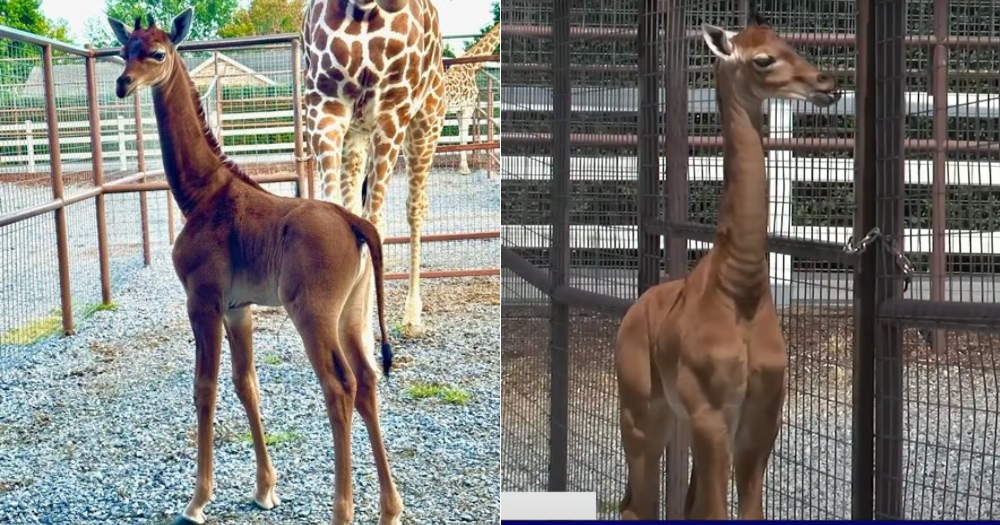



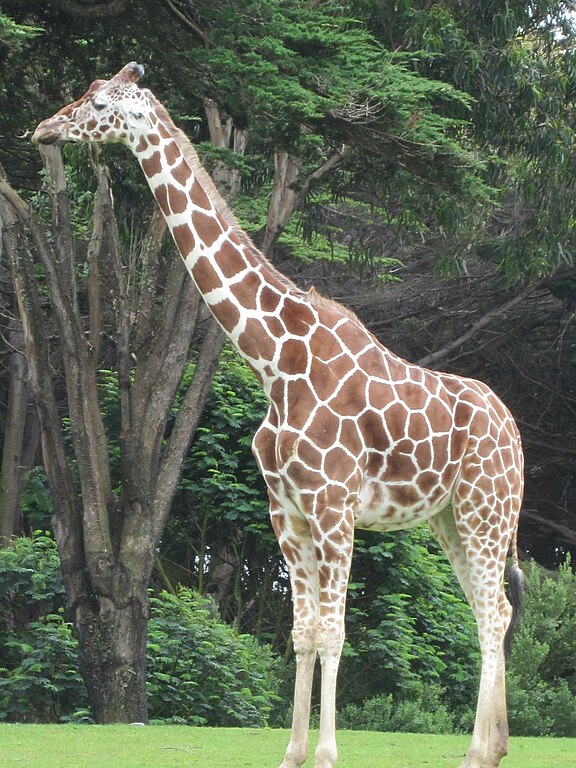
Reticulated giraffes are so named for the net-like patterns on their coat.
However, on Jul. 31, on a private, family-run zoo in Tennessee, U.S., a female Reticulated giraffe calf was born without the prominent brown polygons and cream lines.
Instead, the young female wears an all-brown coat.
Possibly only one in the world today
Owners of the zoo, Brights Zoo, told local media outlet, WJHL-TV, that "experts" believe she is the "only solid-coloured Reticulated giraffe living anywhere on the planet".
The zoo owners said they contacted "zoo professionals" from around the U.S. and concluded that "nobody's seen it".
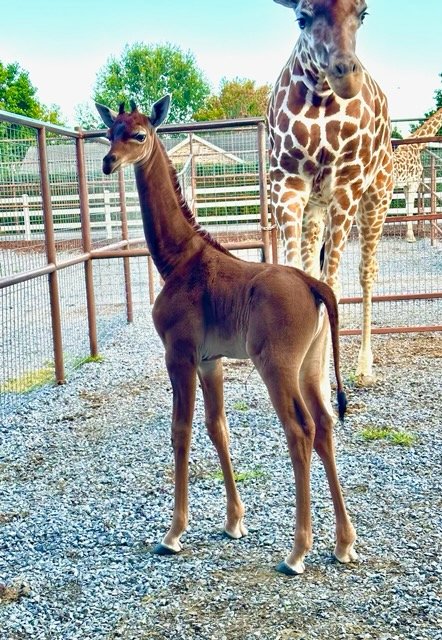 Image via Brights Zoo/Facebook.
The owners claimed there is one record of a giraffe being born without spots in Japan in the 1970s, WJHL-TV reported.
The last known record of the birth of a spotless giraffe was at the Ueno Zoo at Tokyo, Japan in 1972, the zoo owners told CBS News.
One X (formerly Twitter) user shared images purportedly showing the spotless giraffe in the Japanese zoo.
Really interesting to see this kind of odd mutation, As far as it seems, this is probably only the second time ever that a spotless giraffe has been publicly documented, the first being this calf born at the Ueno Zoo in Tokyo in the 1960s! https://t.co/NtONYXtUPD pic.twitter.com/AMaSoWemEd
— DinoDJ 🏳️🌈 (@DinoDJ14) August 22, 2023
Another X user pointed out that calling the calf spotless is a misnomer.
The user opined that it is, in fact, covered in one big brown spot.
Sorry but I have a biology degree and actually this giraffe calf is not spotless; it is in fact, *only* spot https://t.co/FdAaQO8hLO
— just festie (@NFESTA_tion) August 23, 2023
For comparison, here is what a typical Reticulated giraffe looks like.
Public can help name the calf
Despite its atypical appearance, the fully brown calf is thriving and is already six feet (1.82m) tall, another U.S. media outlet, WCYB-TV, reported.
Blood tests conducted by the zookeepers also indicated that everything was normal with the spotless calf, WJHL-TV wrote.
The zoo's director, David Bright, shared with WJHL-TV that he felt it was better for the giraffe to be born in the zoo.
"In the wild, they use those spots for camouflage. By being solid coloured, she may not be able to hide quite as well," Bright was quoted as saying by WJHL-TV.
According to NPR, the zoo has asked the public to help name the unique calf, proposing four Swahili names in a Facebook post.
The proposed names are:
- Kipekee, meaning "unique"
- Firyali, meaning "unusual" or "extraordinary"
- Shakiri, meaning "she is most beautiful"
- Jamella, meaning "one of great beauty"
Votes will be tallied and the name for the spotless giraffe calf will be announced on Sep. 4.
Endangered in the wild
The Reticulated giraffe is one of nine subspecies of giraffes.
While all giraffes are classified under one species, one 2016 study suggests that there are actually four distinct giraffe species.
The long-necked mammals are herbivorous and have an average lifespan in the wild of 25 years.
No two giraffes have similar patterns on their coats.
Reticulated giraffe is listed as "endangered" on the International Union for Conservation of Nature (IUCN) red list.
Historically, they are known to occur in the wild in Ethiopia, Somalia and Kenya.
Over the last 30 years, however, their numbers have declined significantly.
According to the IUCN, a 2016 study estimated that there were 36,000 Reticulated giraffes in the wild.
Estimates today count 15,785 individuals in the wild, which is about a 56 per cent decline in numbers.
Top image via Brights Zoo/Facebook, WJHL-TV/YouTube


If you like what you read, follow us on Facebook, Instagram, Twitter and Telegram to get the latest updates.