


 July 22, 2023, 10:24 AM
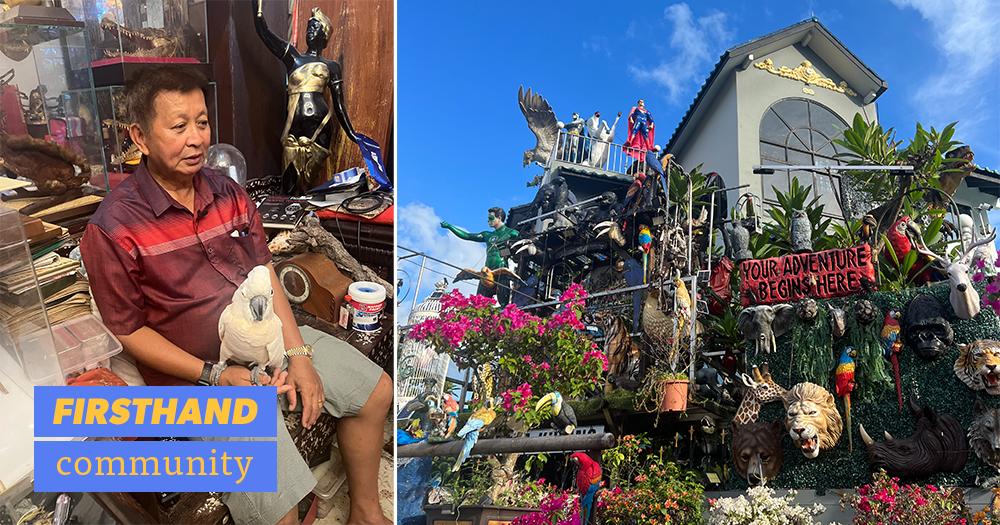



Firsthand: Community is a new series by Mothership, where we explore the spirit of community in Singapore through in-depth articles and videos.
From Tampines to Tuas, we’ll investigate the untold stories of the different neighbourhoods in Singapore — firsthand.

I'm idling away on my phone when the taxi uncle, who'd been silent so far, suddenly pipes up. "Wah, what's that?" he goes. "A temple?"
He's not entirely wrong. The semi-detached house in the serene neighbourhood of Jalan Chempaka Kuning is a sanctuary of sorts — an impossible-to-ignore monument to the various passions of retired towkay Cheong Boo Wee.
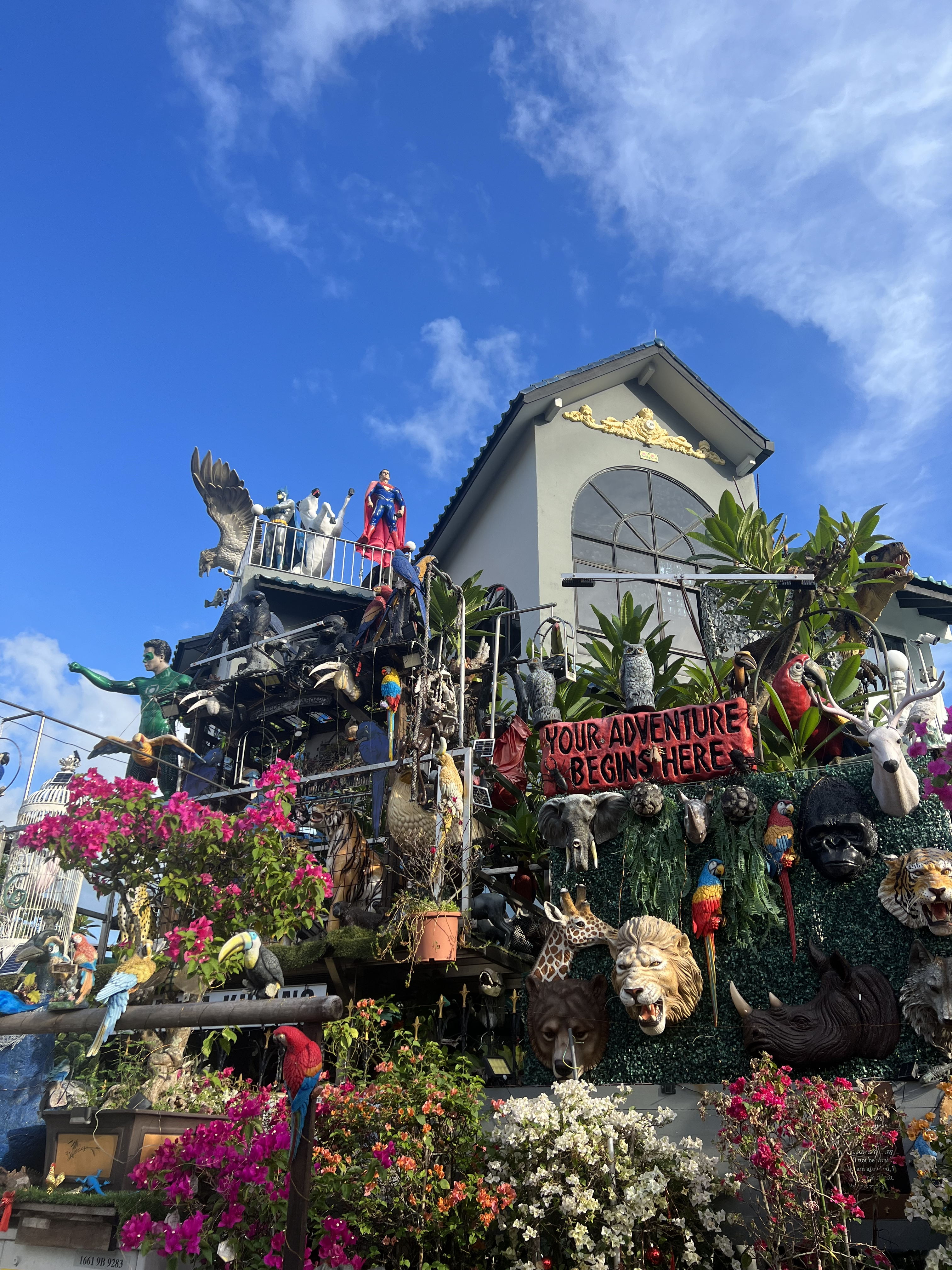
Featuring everything from technicolour statues to tropical birds (both living and taxidermied), the "mini theme park" has gotten its fair share of controversy.
After a complaint by a neighbour, authorities deemed it to be blocking the public pathway. Months of conflict pursued, and it was later revealed that the neighbour in question was the father of Chua Enlai, who Cheong had been involved in a hit-and-run with three years prior.
Cheong eventually took his display down. The endeavour cost about S$10,000 in total, in addition to the S$150,000 he'd spent on it in the first place.
But four years later, his display is back up — if in a somewhat more subdued fashion.
The greenery, while still lush, has been trimmed and tamed. Grass that used to grow on the pavement, carefully tended by Cheong, has been replaced by pieces of synthetic turf.
And while our conversation is regularly interrupted by the squawking of his birds, Cheong informs me that his famous flock of tropical birds — once the key attraction of his "mini theme park" — has been significantly depleted: from 50 in its prime, to a mere five today.
You might attribute the changes to the debacle with his neighbour; that the drama has caused him to give up, or at least cut down, on his collecting.
But you’d be mistaken. Cheong reassures me that his “collector’s disease” is as strong as ever. As we traverse the grounds, he points out empty spaces that he hopes to fill, statues still wet with paint.
But the man who guides us through the grounds is nevertheless much changed from who he was four years ago.
Fell sick
In 2020, Cheong found out that he was sick.
His arteries were compressed. Ordinarily, the doctor would recommend surgery — but Cheong was already in his 60s.
"The doctor said, if we operate on you, you may die on the operating table,” he explains.
"So he said you just leave it. Enjoy your life. You don't know when you will die suddenly, but just be happy."
The medical scare was transformative for him. It was the reason he decided to sell most of his parrots (he had about 30 at that time), including a hornbill he had “reared from young”.
"Selling my parrots was very painful for me, because I love them. I kept them for 20 over years. They're like my babies.
But if I die suddenly, my family will not be able to manage all these. So I thought, I let them go while I'm still alive. Now I'm left with five, they should still be able to manage. But having 30, 40 birds...they can't manage.”
That’s not to say that the birds are all he cares about.
Entering the house, I’m somewhat transfixed by the assortment of memorabilia that he’s amassed over the years, since he began collecting at age 22.
The inside of the semi-detached house is, like its outside, an assault to the senses. Taxidermied animals, statues, and stuffed toys stare at me from intricately carved armoires and glass cases.
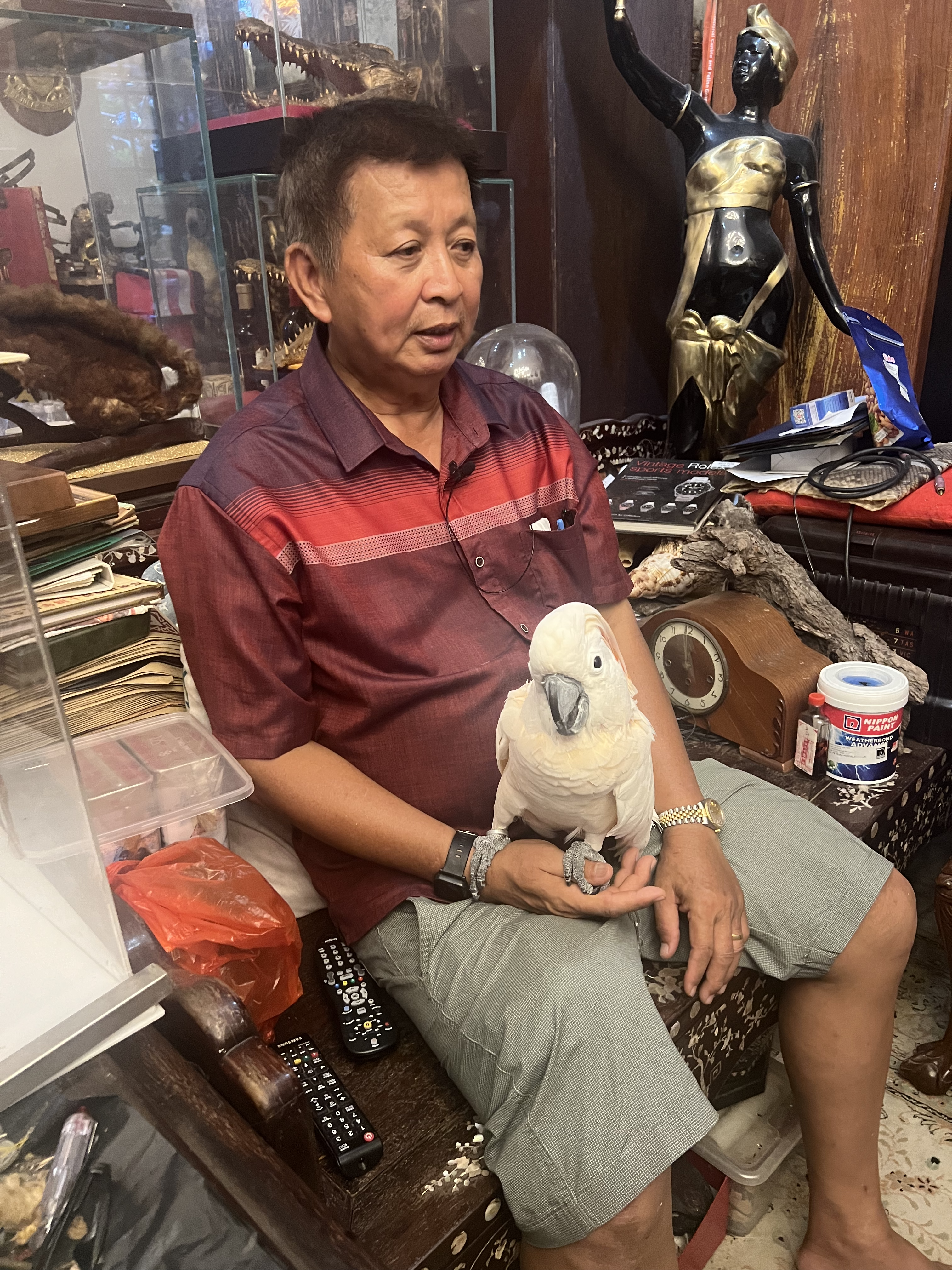
And even with just five birds, the whole house somehow still contains a musky, animal aroma. (Partially from the squawking bird on his arm, who loudly insists on accompanying him for the interview.)
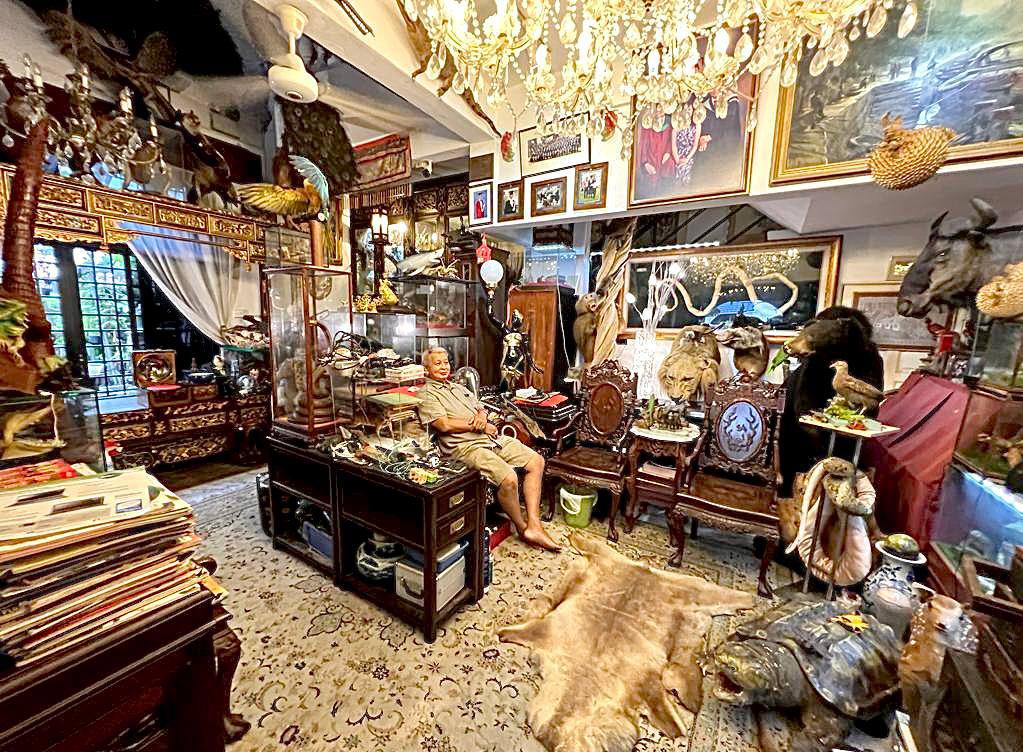
For sure, all of this is the result of decades of commitment to collecting. The "collector's disease" that kept him awake at night, that accompanied him from the HDB flat where he fixed and repaired broken-down clocks, to the miniature museum he resides in today.
More than that, it's his legacy. Something he can leave behind to his family when he passes.
He has no grandchildren yet — fingers crossed — but if and when they arrive, he hopes they can look at the house and learn a little about him.
And so, whatever people say about his house — “It’s good. I’m happy.”
Carpe diem
It was also due to his illness that he decided to let the past slide, and restore his outdoor display.
In a way, his diagnosis appears to have freed him, giving him a sense of carpe diem that borders on indifference. Cheong no longer seems interested in dwelling on the controversies of the past, instead focusing on building the collection he so loves — while he still can.
As he explains it, each part of the display is meaningful. The superhero statues are a reminder of the comics that enamoured him in his childhood. The animals, a lifelong love inherited from his grandfather who was a sea captain.
Even a small collection of farm animals has significance: he’d brought it in at the request of a neighbour, who’d wanted his grandchildren to know "what a cow, a pig, a goat looks like."
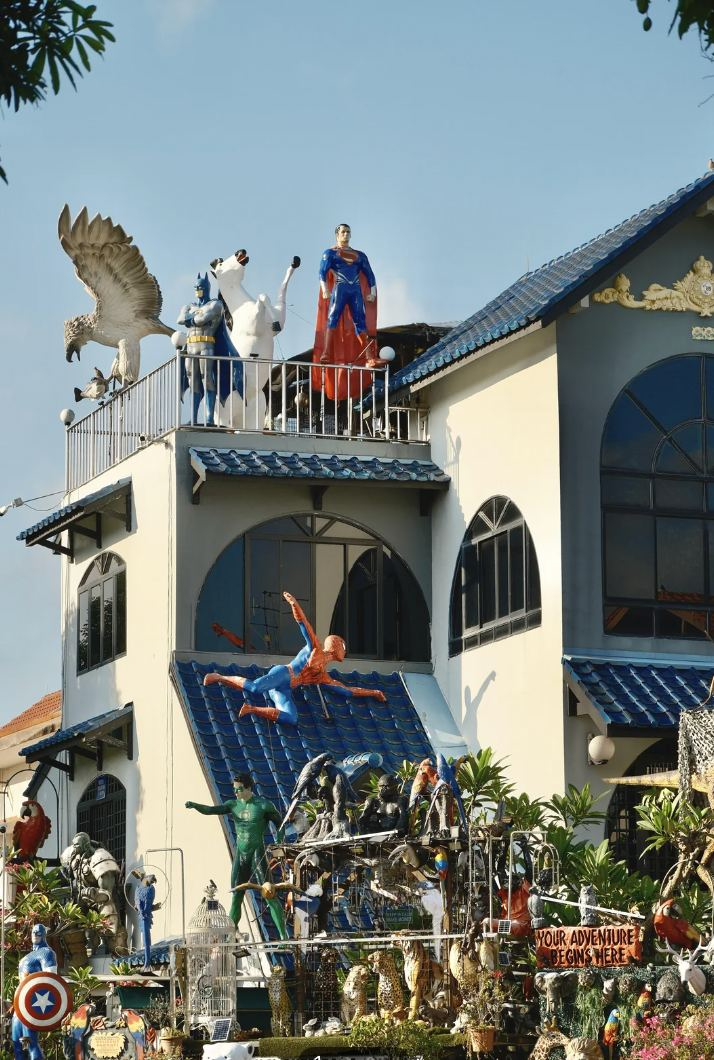
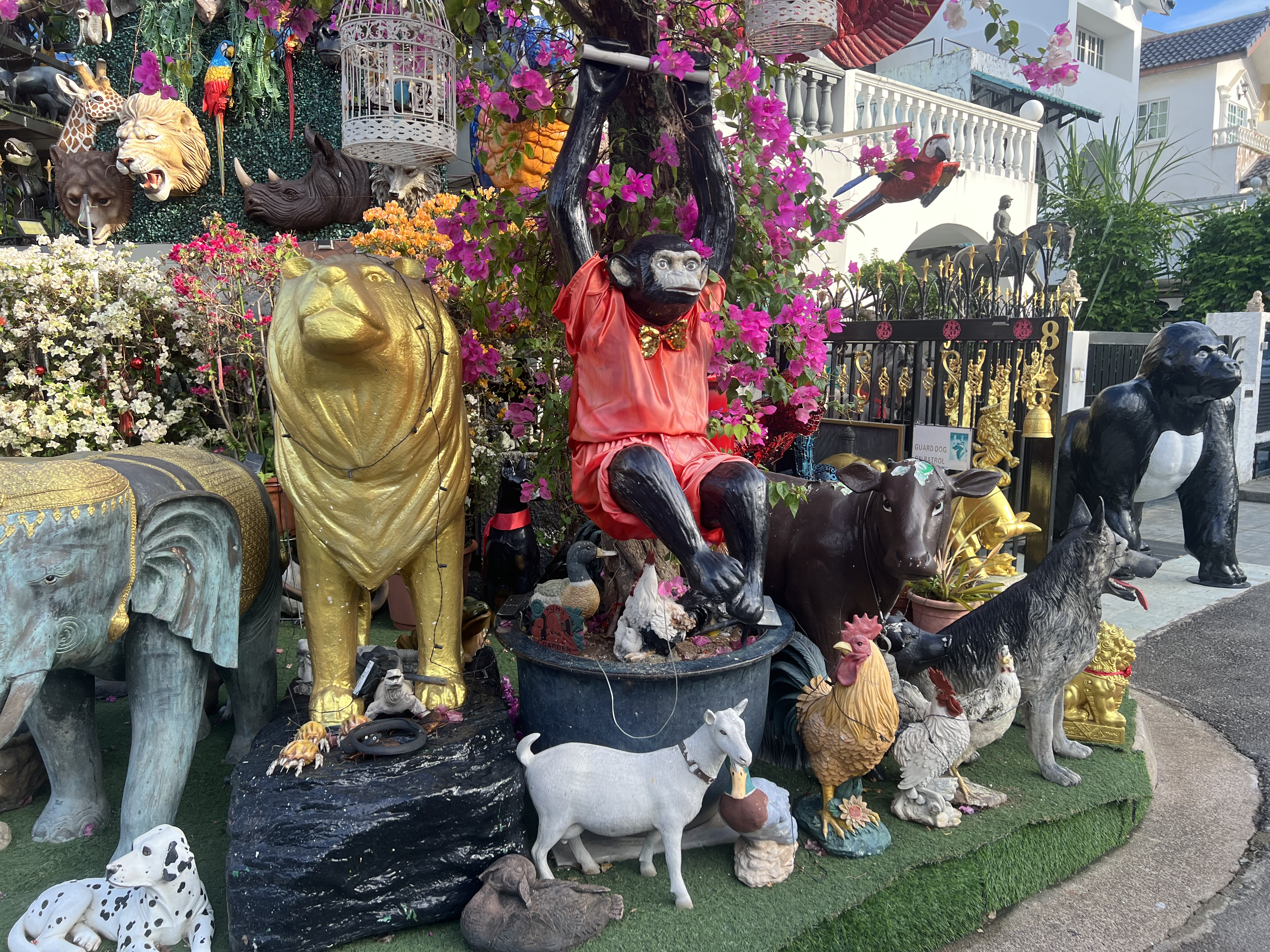
The display is a constant work in progress. Not only do the statues need regular maintenance (which Cheong does himself) he is always bringing in new things. Arranging things differently.
He indicates an empty space at the superhero corner: "Actually, I’m short of one. At the corner there I’m going to put either Iron Man or Wonder Woman".
And a pair of lions sitting on either side of a tree, partially painted: "I just got this pair," he informs me. "After all [the painting] is done, I’m going to put a spotlight on it, and then behind [I’ll put] all the artificial flowers or plants."
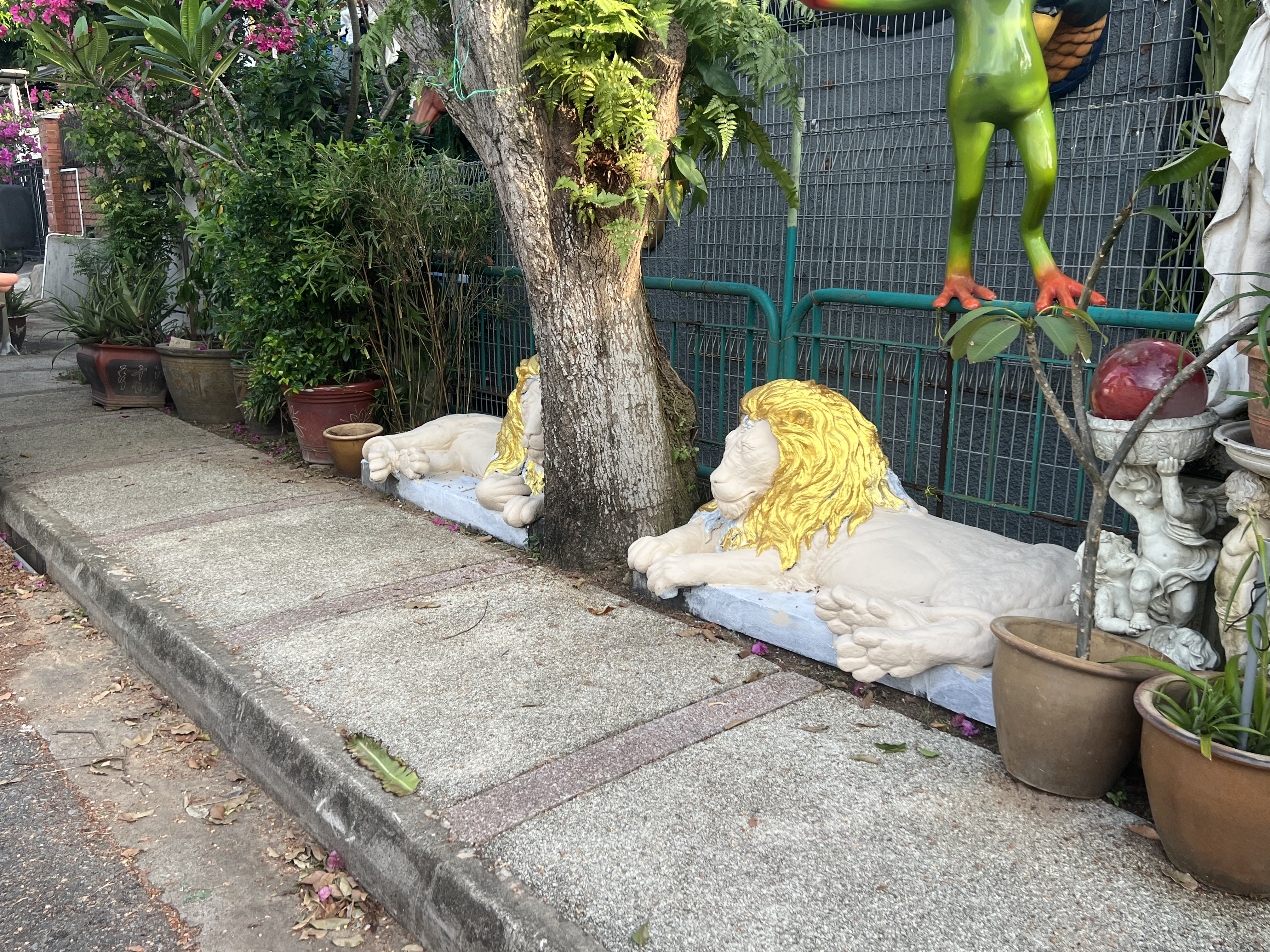
"It’s a passion. It’s my joyfulness, my happiness," the 69-year-old offers as an explanation of why he so carefully curates and maintains his collection.
"Now, I still can do it. But I think in another few years' time, I may not be able to do it anymore.”
As time passes by
Like Cheong, time has taken its toll on the small community at Chempaka Kuning. The past few years have been painful for the happy-go-lucky retiree and his colourful neighbourhood.
As we speak, Cheong continually alludes to his neighbours. He casually name-drops them at every turn: this neighbour helped him move that statue, that other neighbour helped him with a paint job.
Several times through my conversation with him, Cheong even pauses to wave or greet a passing neighbour.
Once, the neighbourhood was bustling — a true modern kampung in a sense. Cheong shows me pictures on his phone of gatherings at the intersection between houses, plastic chairs pulled onto the road, spreads of food against the backdrop of his glittering home. Him and his neighbours grinning at the camera.
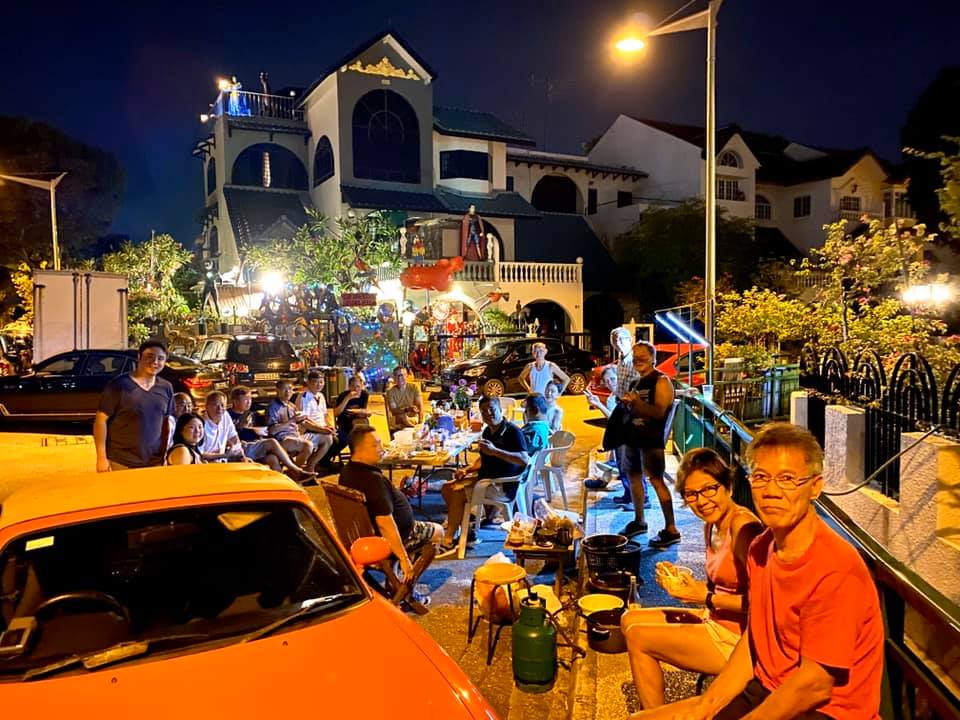 Photo courtesy of Cheong Boo Wee.
It’s also colourful in the literal sense; while it’s certainly the most dramatic, Cheong’s house is far from the only one boasting funky decor.
Here and there, I spot similar eye-catching statues in his neighbours’ homes: an outsize pineapple hanging in a tree, a pastel-pink pig waving from a rooftop.
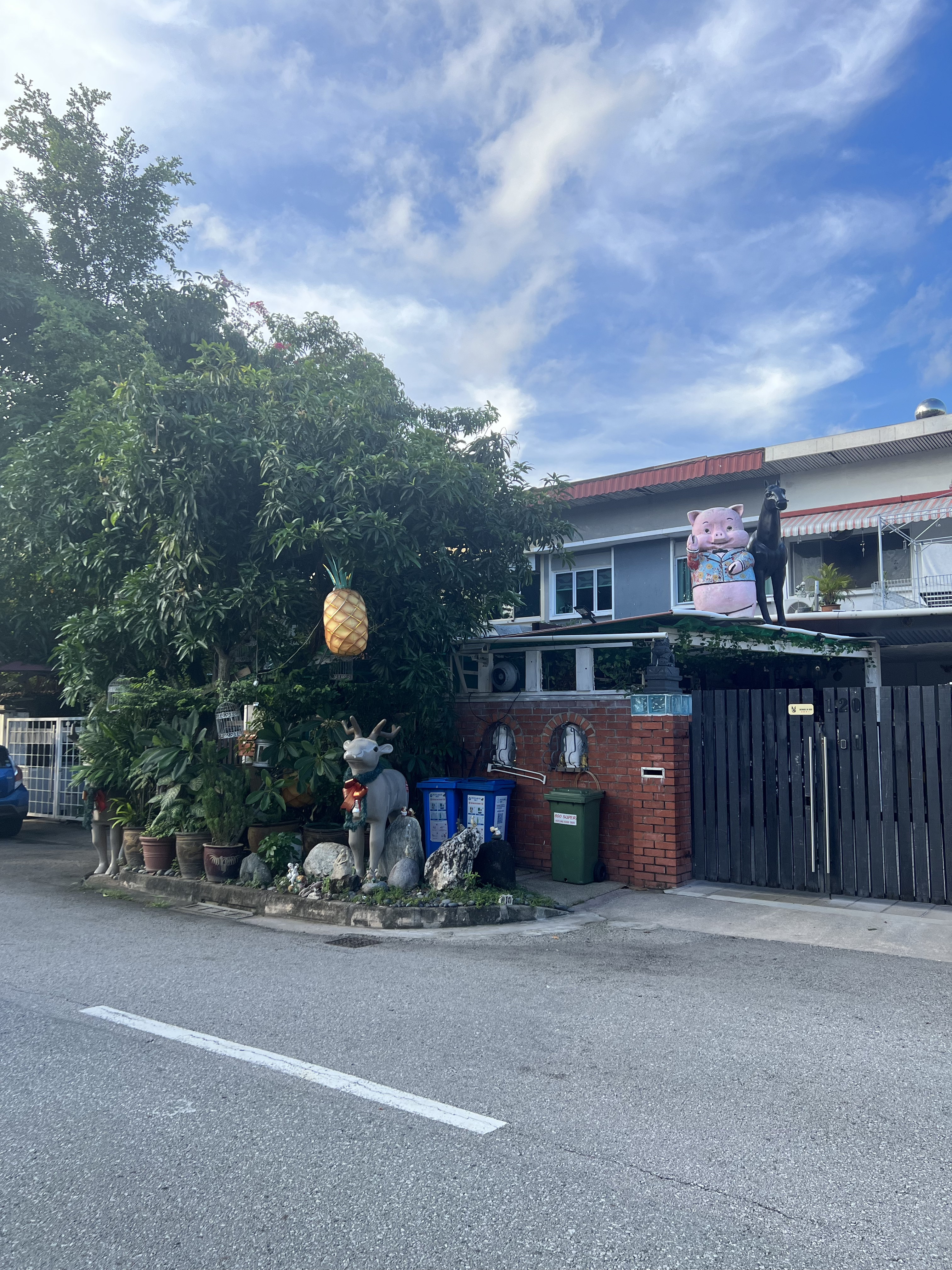
But things have quietened in recent months. Over the last two years, two members of the close-knit group have passed on.
"We all lived here for many years. Every night we used to sit together," Cheong reminisces. "Lunchtime, we'd go out for coffee. Weekends we'd go out together… We had so much fun, in those days.”
They still meet up on occasion, but not quite as regularly. And there’s a cloud of melancholy over the neighbourhood now — an oldness maybe, or a renewed awareness of their own mortality.
Cheong shows me a video that a neighbour made for him, after the initial controversy that forced him to take his display down.
“This song is very meaningful,” he tells me as the first strains of the video's accompanying song — Frank Sinistra’s “My Way” — begin to play. When he first heard it, the lyrics resonated with him, signifying the end of his garden and yet how he went about it “his way”.
Today, the song has a different, more bittersweet ring to it. Especially given the way he continues to resolutely persevere in doing what he loves, in the face of illness and death.
As the lyrics go:
“And now, the end is here
And so I face that final curtain
My friend, I'll make it clear
I'll state my case, of which I'm certain
I've lived a life that's full
I traveled each and every highway
And more, much more
I did it, I did it my way.”
Not just a hoarder
I’m ashamed to say that going into the interview, I had a few preconceived notions of what Cheong might be like.
Perhaps, I thought, he would be a true eccentric. Obsessed with building a colourful, tiny universe for himself alone.
Or perhaps he would be lonely, hence the desire for company in the form of birds and statues.
And later in the interview, as he recounted the meaning of the song and his bid to keep his “mini theme park”, I thought to myself, "ah. Perhaps this is the real Cheong" — an independent, mildly anti-establishment free spirit with a rebellious spirit and a taste for the unconventional.
But I was mistaken.
As he talks, I realise that Cheong’s story is less about the spectacle of his house than it is about people.
He talks about his neighbours and the people who visit his house — schoolkids, tourists, cyclists. He makes quips about his wife and what she thinks about his collection.
Even the reason for his famous “theme park house” is related to people.
Rather than just being a collection for its own sake, it's a legacy for future generations — strengthened, not diminished, by the revelation of his illness.
There's also the whole thing about his collection being outdoors, exposed to the elements, instead of being kept safe and coddled in glass and plastic.
I ask him why — isn't it a nuisance, having to constantly repaint and restore his treasured items?
"Many collectors tend to keep [their collection] inside their house," he explains to me.
"Of course, there are people who like it, there are people who don't like it. Some people say 'it's a place full of sh*t'."
But sharing with people, to let them see and so on, I think it is good."
Funnily enough, this is all coming from a man who initially made headlines for butting heads with a neighbour.
Truth be told, I'm not sure if this people-mindedness is something that has emerged in recent years, or if it's been there all along.
But even as Cheong laments that we're not seeing his house in its full, former glory, I'm still glad I'm meeting him just now.
Not just Cheong the collector.
But Cheong the family man. Who doesn't know if he'll get to see his grandchildren grow up, but hopes they'll know him anyway.
A life for people
At the end of our interview, as the sun sets and the outside lights come on, I head out to wait for my Grab. A group of domestic helpers pause at the sidewalk, admiring the display, throwing sheepish glances at Cheong.
It's clear they want to take a photo, but aren't quite sure if he'll be offended.
He takes the dilemma from them. "Come, I help you take," he offers, all affable energy, to the women's delight.
"One, two, three," he says, as he snaps a photo. "One more ah. You see whether can or not."
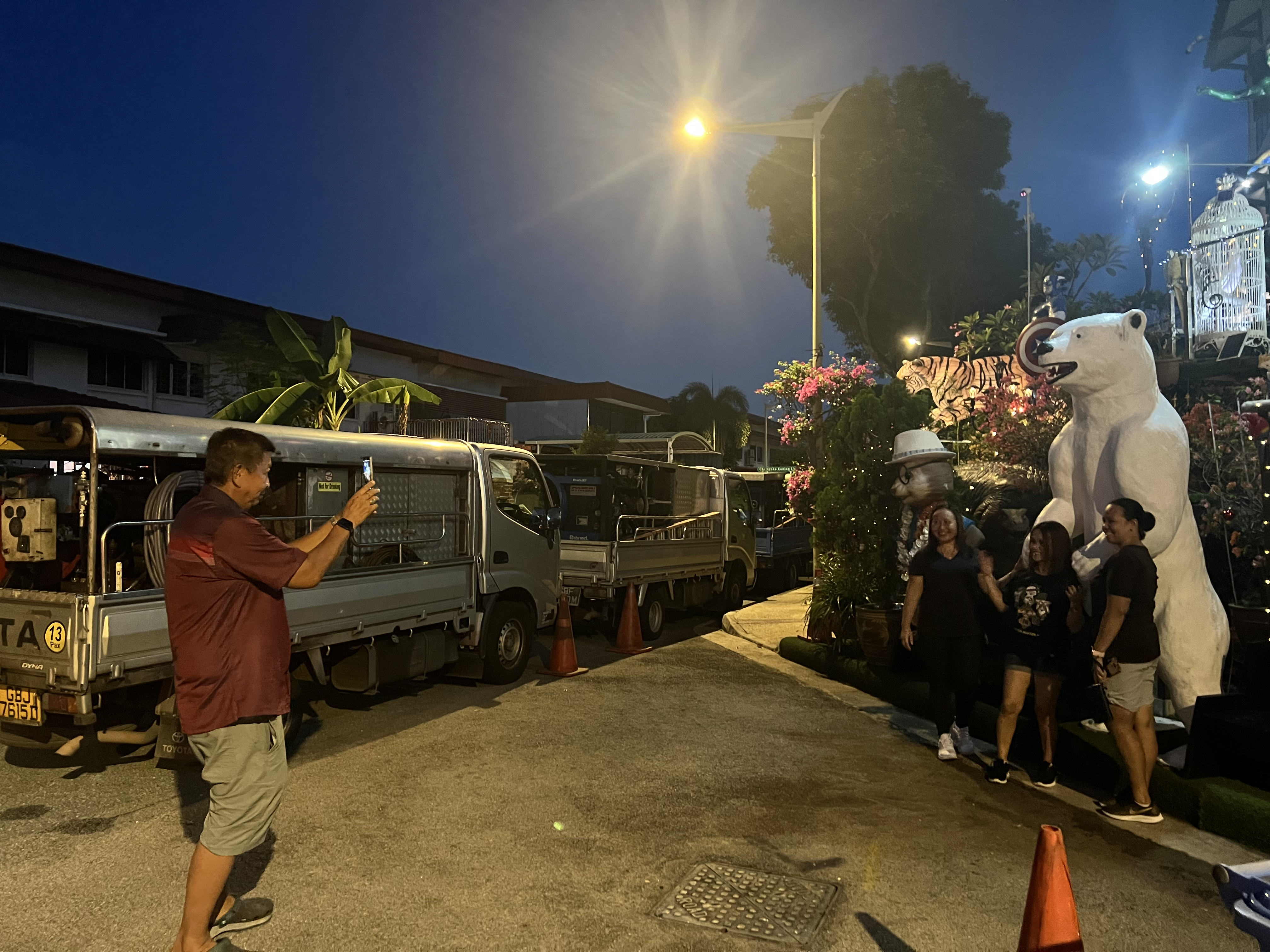
“Wah, people really like to take photos with your house," I comment as the women, satisfied with their group shot, now take turns posing for individual photos.
Cheong's reply is matter-of-fact, and, in retrospect, unsurprising.
"You see people happy, you feel their joy," he tells me. "That's passion."
Related articles
Have something even more interesting going on in your neighbourhood? One-up us at [email protected].
Firsthand is a new content pillar by Mothership, featuring in-depth stories about people and their issues.
Top image by Alfie Kwa and Ilyda Chua


If you like what you read, follow us on Facebook, Instagram, Twitter and Telegram to get the latest updates.