



Features


Mothership Explains: Why is pork blood back after 27 years & why did S'pore stop selling it in the 1st place?
This was the first official application since the requirements were established, SFA said.
April 13, 2026, 03:06 PM


For the first time in 27 years, the Singapore Food Agency (SFA) has allowed pork blood products to be imported into Singapore for consumption.
On Apr. 1, the agency announced that it had approved the import of heat-treated pork blood products from an accredited establishment in Thailand, Bangkhla Pig Slaughterhouse.
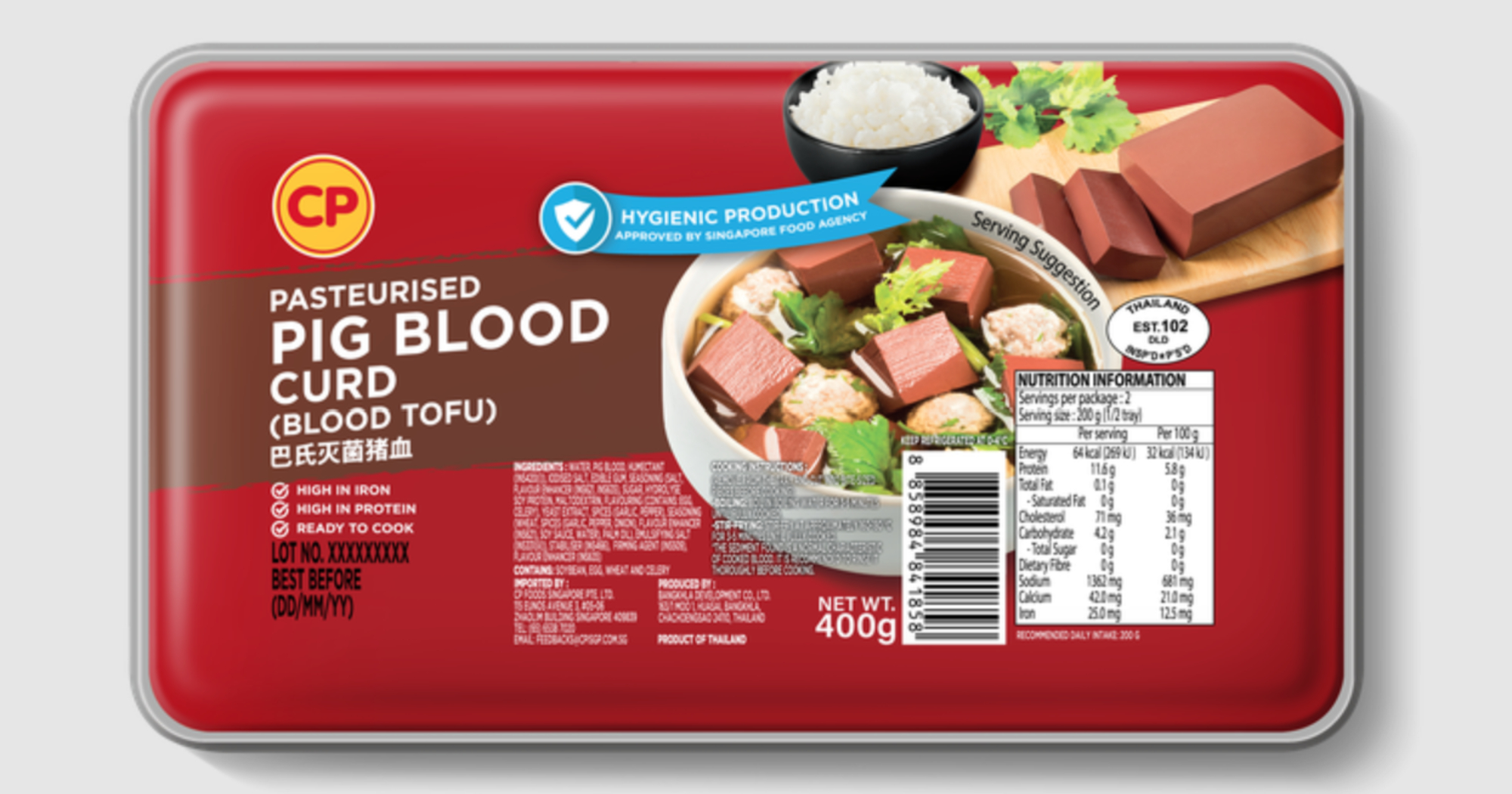 Photo from CP Foods
The supply of pork blood, both locally and imported, was prohibited in 1999.
But starting from mid-2026, pasteurised products from Thailand will hit our shelves, said a spokesperson for Charoen Pokphand Foods Public Company Limited (CP Foods).
The spokesperson added:
“CP Foods has been selling packaged pig blood curd in Thailand for many years. The pig’s blood undergoes high-temperature treatment and pasteurisation, and the packaging is similar to the boxed tofu commonly found in Singapore."
Pork's blood was popular
But why stop selling it in the first place?
Pre-1999, pork blood was a popular ingredient in dishes.
Checks on NLB's NewspaperSG by Mothership showed that it was a common ingredient at hawker centres islandwide, from Orchard Towers to Bedok.
It was a mainstay of kway chap, a Teochew dish consisting of rice noodles and braised pig offal and meat in a dark soy sauce broth.
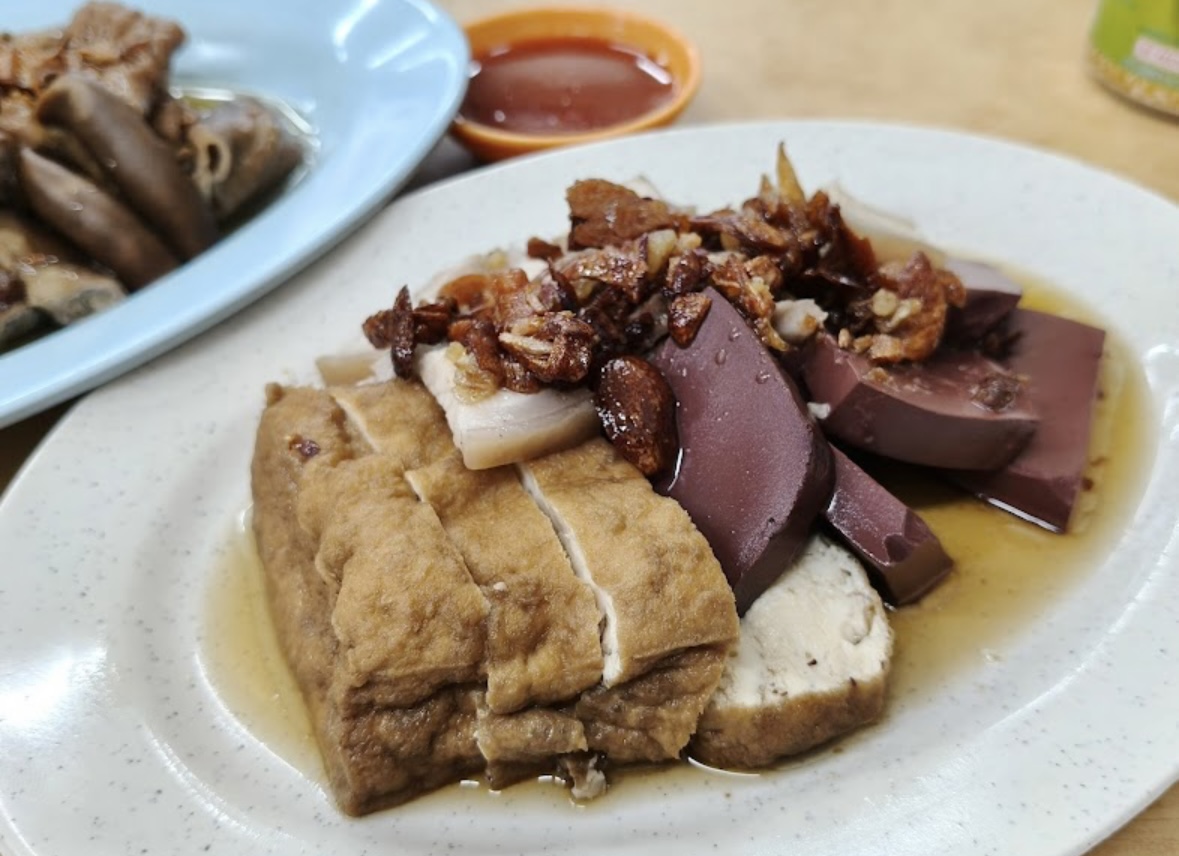 Photo of kway chap served at a Johor Bahru restaurant from Terence Lee/Google Maps
It was also featured in niang dou fu, otherwise known as yong tau foo, a Hakka soup dish of meat-stuffed tofu, vegetables in a clear soup.
Even hotels like the former Le Meridien Changi, which is now Village Hotel Changi, served pig's blood in their Hainanese-run restaurant.
Very long pause
Supplies ceased after the Nipah virus outbreak in 1998 and 1999.
According to NLB, the outbreak began in Malaysia.
An abattoir (slaughterhouse) worker in Singapore subsequently fell victim to the disease.
Then, the illness was believed to be from the Japanese encephalitis (JE) virus. The JE disease is spread by the Culex mosquito.
But reports of victims later revealed a different thread of connection: Swine.
In response, Singapore suspended the import of pork, and ordered all abattoir workers and pig traders to go for check-ups.
The outbreak lasted till June 1999 with a mortality rate of up to 40 per cent, according to the National Centre for Infectious Diseases (NCID) website.
By April 1999, there were 103 deaths in Malaysia.
A total of 11 people were infected in Singapore, with one fatality on Mar. 19.
The virus was later named the Nipah virus, after the location where it was first detected in Kampung Sungai Nipah, Malaysia.
Government response
No new cases have been reported in Singapore or Malaysia since.
But following the outbreak, all abattoirs in Singapore were closed for five days for disinfection.
A new abattoir was built in Jurong with refrigeration capabilities, and new regulations — involving refrigeration trucks and display chillers for food safety and hygiene — were implemented.
The ban on live pig imports was also lifted, although only from Indonesia and not Malaysia.
 Photo from National Archives of Singapore
It would only be over a decade later, in 2017, when Singapore would reinstate live pig imports from Malaysia, reported The Straits Times.
But animal blood products did not return to shelves.
This was because animal blood products were a potential source and mode of pathogen transmission, said an SFA spokesperson, according to CNA.
In the nearly three decades that followed, Singapore did not accredit any new sources of pig blood for import into the country.
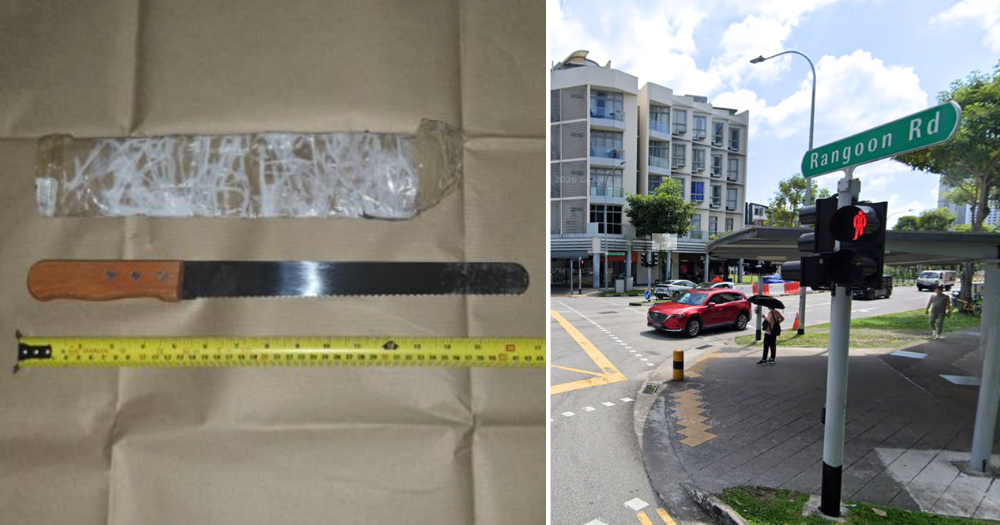
In December 2022, a woman was fined S$8,000 for selling illegally imported pig blood curd.
 Photo from SFA
Authorities seized approximately 30kg from her residence in January 2021.
Back then, SFA said animal blood food products, such as pig blood, can easily support the growth of bacteria and harbour diseases and unhygienic harvesting of blood may result in the introduction of food-borne pathogens.
 Photo from SFA
Laws at the time stated that any person who is found guilty of illegally importing and selling pig blood products can be fined up to S$50,000, jailed for up to two years, or be subjected to both for the first conviction.
So why did the reversal take nearly three decades?
In response to Mothership's queries, SFA said on Apr. 3 that since 1999, industry stakeholders had shown periodic interest in resuming pig blood product supply through imports.
The cessation was lifted following risk assessments in 2018, and with stringent food safety requirements imposed.
This was the first official application since the requirements were established, the spokesperson said.
After Bangkhla Pig Slaughterhouse sent in its import application, and SFA conducted an assessment.
It was found to have met requirements in terms of facilities, process, quality control and ensuring that only blood from healthy animals is used.
What's so special about pig blood?
As stated in the SFA circular, the products approved for import are heat-treated.
This includes products like pig blood curd, which will arrive on Singapore's shores in one to two months' time.
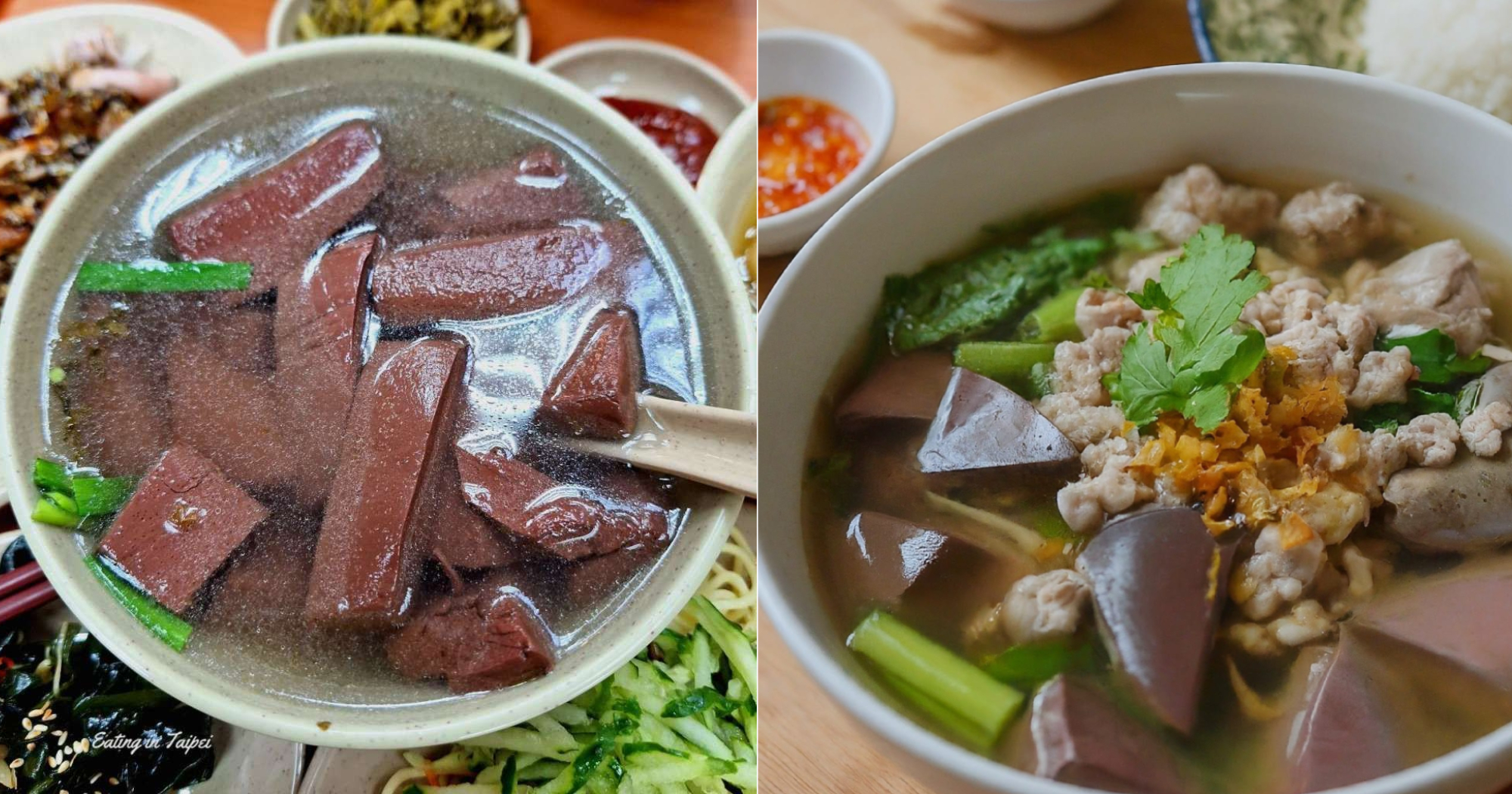
Pork blood curd, also known as blood tofu, is an iron-rich jelly with a mild, earthy and savoury flavour.
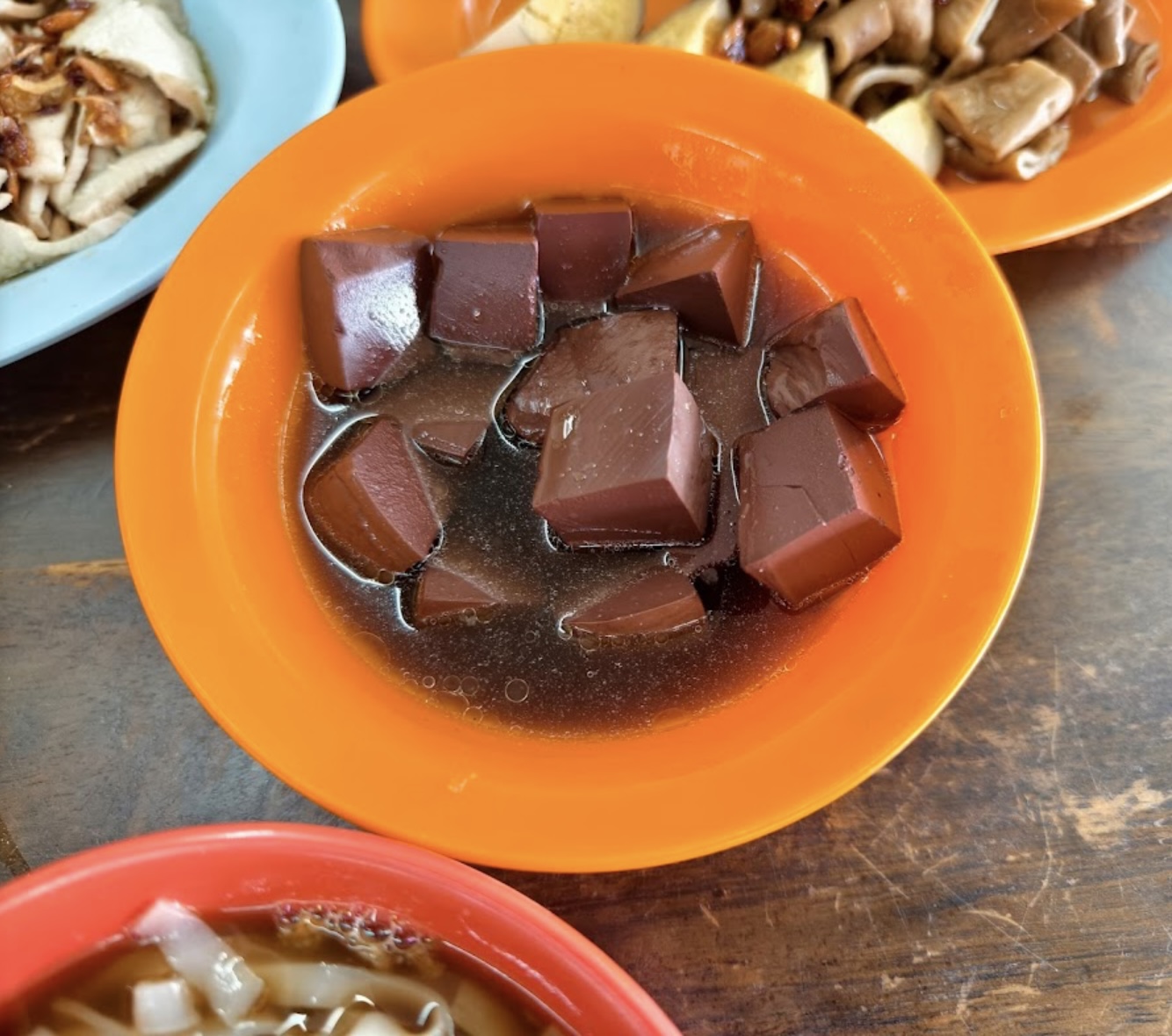 Photo of pig blood curd served in Johor Bahru, Wei/Google Maps
The soft and smooth curd is typically made by letting fresh blood coagulate in a container.
It is then cut into cubes and heated in a pot with water and salt.
The ingredient is protein-dense and is commonly used in East and Southeast Asian soups and stewed dishes.
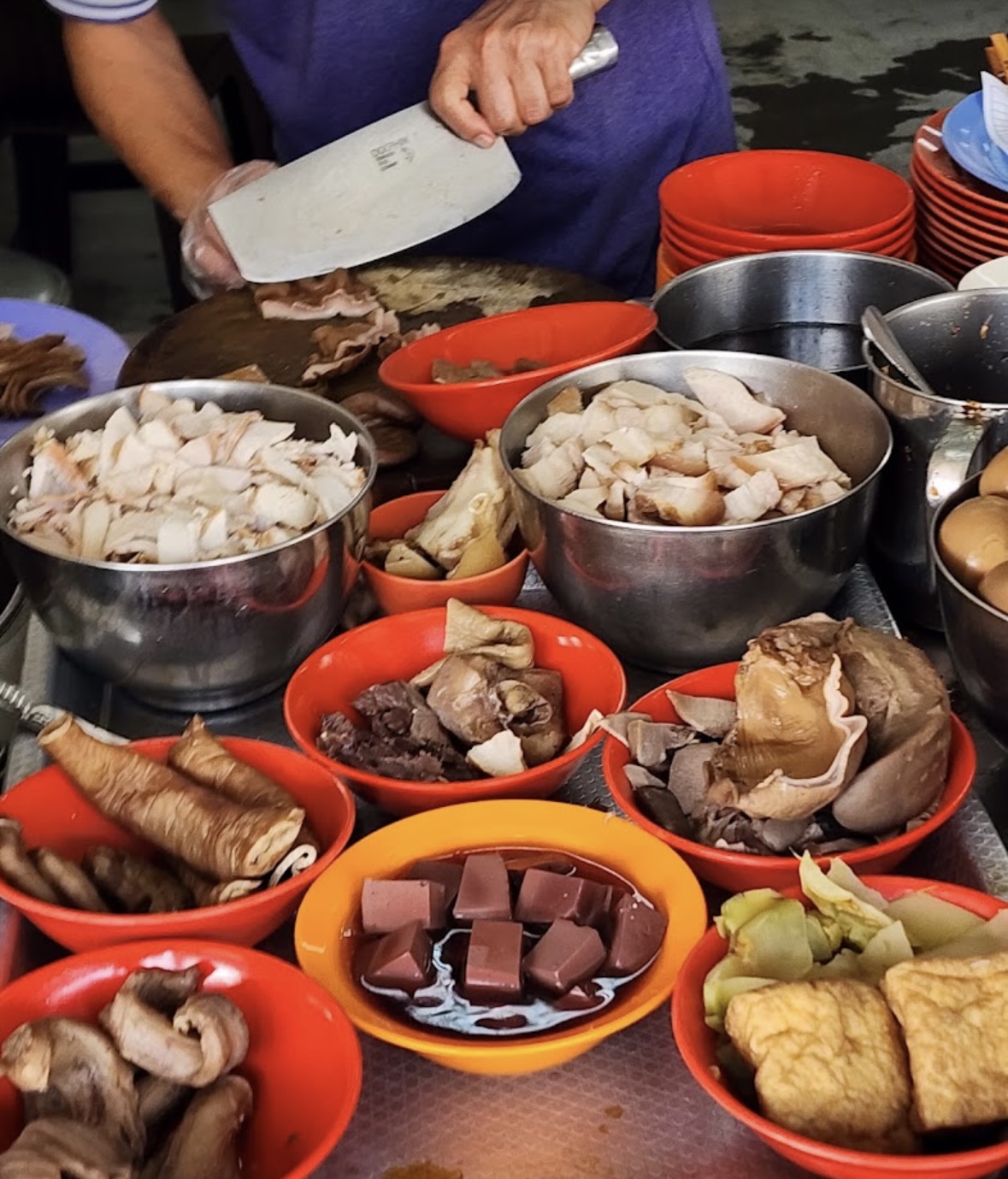 Photo of kway chap served in Johor Bahru from Egeria Teo/Google Maps
Food critic and Makansutra founder KF Seetoh took to Facebook to rejoice at the announcement, saying it would enhance the authenticity of dishes such as curry mee, yong tau foo, and Teochew pig organ soup.
Related articles
Top photo from Eating in Taipei Facebook & Vaczeen วัคซีน Facebook