Parliament


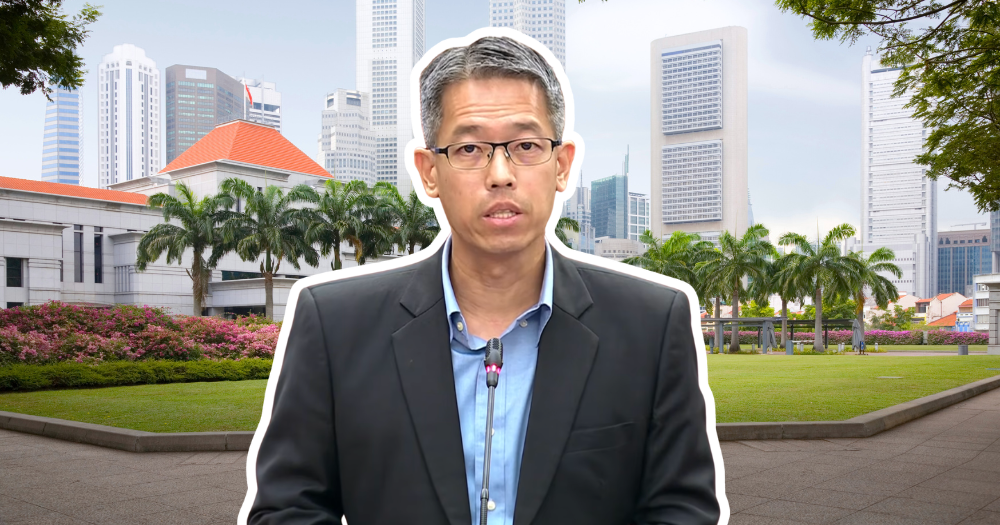
Gerald Giam asks if GST hikes should be re-evaluated in light of govt's fiscal abundance & revised MOH operating expenditure
True prudence is about balancing future security with current needs, Giam said.
February 24, 2026, 04:26 PM


Singapore's large fiscal surpluses must be used to support and empower workers who are caught in a "slow growth track", Workers' Party (WP) Member of Parliament (MP) Gerald Giam urged in his speech during Parliament's Budget debate on Feb. 24.
Although Giam said he supported the Budget, he asked if the government is "unnecessarily hoarding funds" with consistent underestimation of fiscal surpluses and called for more accurate forecasting to ensure current generations benefit as much as future ones.
Balancing needs of current and future generations
Giam remarked that employing Singapore's "huge" fiscal surplus to support and empower workers will allow the average Singaporean to see "tangible structural benefits" from the gains of growth, which will in turn secure the necessary "social license" for "elite sectors" to continue to pursue "high growth strategies".
However, Giam also called on the House to examine what he called the government's "recurring pattern of overly-conservative fiscal projections."
This year's revised FY2025 surplus, which is double the estimate, was not an "isolated incident", the Aljunied GRC MP said.
"It is part of a trend where projected deficits regularly transform into healthy surpluses, while the government points to the volatility of tax revenue," he continued.
He pointed out that surpluses in all but one of the last five years have exceeded S$1 billion, totalling S$22 billion.
He then asked if the consistent underestimation was an indication that the government was "unnecessarily hoarding funds".
'More accurate' forecasting
More accurate forecasting will ensure that the nation's "abundance" will benefit the current generations as much as future ones, Giam said.
True prudence, Giam said, is not about "amassing vast fiscal buffers", but balancing future security with current needs.
Giam also remarked, "Unnecessary taxation drains liquidity from households upfront, creating a dependency on government handouts rather than fostering genuine financial independence."
In his Budget speech, Prime Minister Lawrence Wong explained that the larger-than-expected surplus in FY2025 was due to higher Corporate Income Tax contributions.
"Strong external demand boosted key industry clusters, including electronics and biomedical manufacturing. These gains generated spillovers across the broader economy," PM Wong said.
Necessity of tax hikes
Giam also commented that the "fiscal abundance" raises questions about the government's tax strategies, such as the necessity of the GST hikes.
"The government said that the GST hike was meant to fund increased healthcare spending in an ageing society, but the Ministry of Health's revised FY2025 operating expenditure was S$305 million lower than estimated, mainly due to lower than projected funding needs for public healthcare institutions."
He asked if the government would revise its projections for future increases in healthcare expenditure.
Measure success not by size of reserves alone
Apart from commenting on the fiscal surplus, Giam also called for a more holistic means-testing model, that looks not just at gross income alone, but also at disposable income after essential expenses.
Additionally, Giam asked the government to shed more light on the specific milestones that will come out of the Ministry of Trade and Industry's estimated S$9.24 billion development expenditure in FY2026.
In conclusion, Giam stated his support for the Budget, saying that Singapore's success should not be measured by the size of our reserves, but by the "security, dignity and peace of mind" of every Singaporean.
Top image via MDDI / YouTube, Canva