Parliament


S'pore Budget should include 'report card' to track successes & shortcomings: WP's Pritam Singh
Lack of report cards on past initiatives goes against the participatory spirit of Forward Singapore, the WP chief said.
February 24, 2026, 02:29 PM
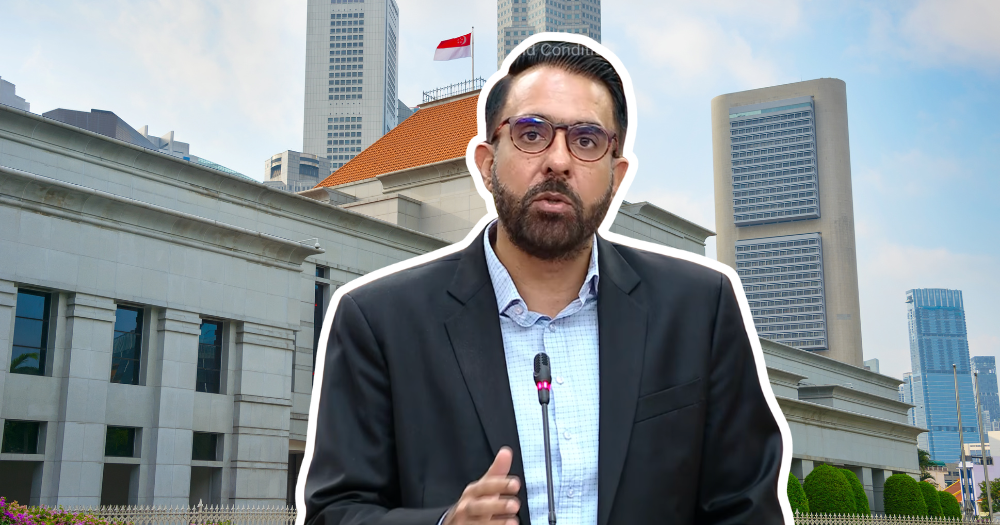


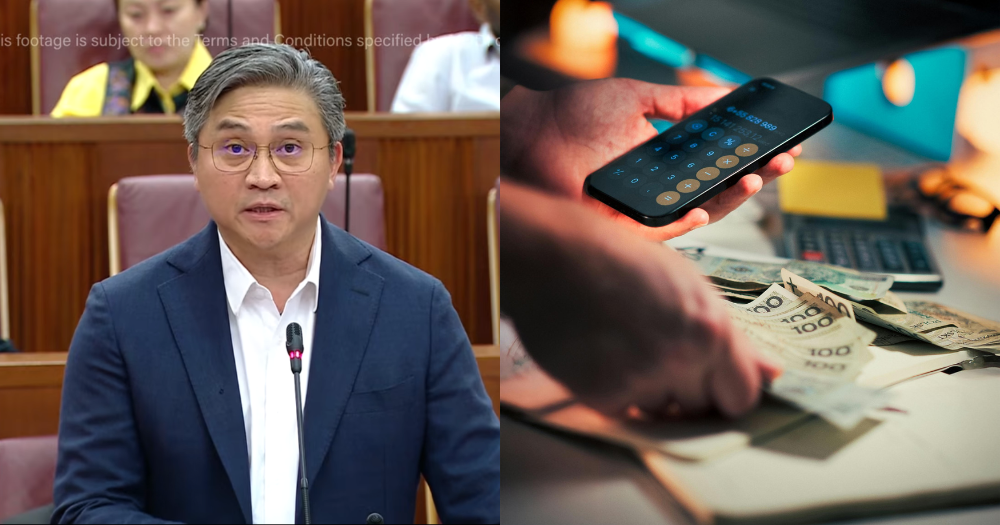
Singaporeans deserve a "detailed report card" on the government's Budget that distinguishes between "rhetoric about promises kept" with "measurable outcomes" subject to Parliamentary and public scrutiny, Workers' Party (WP) chief Pritam Singh said in Parliament on Feb. 24.
The government should also be conscious of the "public cynicism that grows" when Singaporeans "cannot see a clear accounting of how public funds are used", Singh added, speaking during the debate on Budget 2026, which kicked off in the House on the same day.
Singh also questioned if the way the National Bonus (a component of ministerial salaries anchored in economic metrics) is calculated should be reconsidered, if GDP growth may no longer lead to job growth.
Nevertheless, Singh said that the WP supports the Budget.
Singh was second to speak during the debate, going after Saktiandi Supaat, the chair of the Government Parliamentary Committee for Finance and Trade and Industry.
Government begins term with 'greatest surplus' in decades
Singh noted the fiscal surplus of FY2025, saying "this PAP government begins its new term with what may be the greatest fiscal surplus any PAP government has seen in decades."
Singapore recorded a S$15.1 billion fiscal surplus in FY2025, double the estimated S$6.8 billion.
In his Budget speech, Prime Minister Lawrence Wong explained that a large part of the surplus is derived from higher-than-expected corporate income tax collections.
"Last year, the resilience of the global economy, combined with our own economic strength, resulted in better-than-expected growth of 5 per cent.
Strong external demand boosted key industry clusters, including electronics and biomedical manufacturing. These gains generated spillovers across the broader economy."
This contributed to a higher Corporate Income Tax contribution.
Government coffers were also boosted by higher asset-related revenue collections, such as Vehicle Quota Premiums and Stamp Duty, driven by strong demand for private vehicles and properties.
Singh also alleged that the political timing of GE2025 was "calculated to put the PAP in the most advantageous position", using the uncertainty of the U.S.' Liberation Day tariff to rally voters.
However, definitive information on the impact of the tariffs on Singapore is unclear, he claimed.
Lack of report cards on past initiatives 'not good for Singapore'
The WP chief called for more "report cards" of past initiatives announced by the government, arguing that there are pitfalls of not doing so.
For example, the government announced an additional S$37 billion top-up to the RIE2030 plan, but has yet to provide a report on the outcomes of the S$25 billion deployed in the 2021-to-2025 cycle.
"There is a lack of easy-to-track outcomes on the headlines that have been announced, and the government should be conscious of the public cynicism and detachment that grows when Singaporeans cannot see a clear accounting of how public funds are being used," Singh said.
The lack of a report card on past initiatives is "not good for Singapore" and contradicts the "participatory spirit that Forward Singapore was meant to embody", he claimed.
On the budget surplus, Pritam noted that it far exceeds the two to three billion in additional revenue collected from the 2023 and 2024 GST hikes.
"There will be significant public interest in how these surpluses are ultimately deployed," the WP chief commented.
De-linking of GDP and job growth raises questions on ministerial salaries
Commenting on the announcements made by Deputy Prime Minister Gan Kim Yong at the Economic Strategy Review's mid-term update, Pritam noted the observation that GDP may no longer lead to job growth.
This raises several questions, including on ministerial salaries.
For one, every job-related policy initiative and scheme announced by the government is put into sharper perspective, and so Singaporeans deserve a well-publicised and detailed report card.
"DPM Gan's remarks also call into question whether three of the four National Bonus components, partly used to determine total ministerial salaries, remain fit for purpose," Pritam continued.
National Bonus components
Elaborating on this point, he said, "If the progressive wage model is driving income gains for the lowest 20 percentile rather than productivity, how far should it constitute a criterion of the national bonus for ministers?"
The National Bonus, one variable component that makes up a minister's salary, is determined by four indicators: real median income growth of Singaporeans, real growth rate of the lowest 20th percentile income of Singaporeans, unemployment rate and real GDP growth rate.
Pritam also questioned the use of unemployment rate and GDP growth as components to calculate the National Bonus.
"I would argue that the National Bonus should be anchored to one objective outcome: good jobs for Singaporeans in the age of AI," Pritam suggested.
CDC vouchers can be more equitably disbursed: Pritam
Speaking on specific initiatives announced in Budget 2026, Singh suggested that the CDC voucher initiative should be tweaked.
Currently, CDC vouchers are disbursed on a per-household basis and is agnostic to household size.
"That is not equitable," Singh said, explaining that a household of two receives the same amount as a household of five.
Singh's suggestion is to retain the base amount, or S$500 in the latest announcement, for all households with three members or fewer.
For households with three members or more, Singh called for an additional S$150 per person to be disbursed.
"Based on the average Singapore household size of 3.06 persons in 2025, this is a modest and practical refinement, one that better reflects the actual cost of living burden larger families carry," he said.
WP supports Budget
Ending his speech, Singh said, "This budget was delivered against a backdrop of genuine uncertainty, a shifting global order, the disruption of AI and the anxieties of working Singaporeans who worry about whether their wages, their savings and their children's future will keep up."
He noted during his remarks that the most significant line in Prime Minister Lawrence Wong's Budget speech on the impact of AI on workers was, "Because we take care of our own".
"Taking care of our own represents one standard by which all government policies will be unpacked, measured and scrutinised by the Workers' Party in this term of government," he concluded, stating that the WP supports the budget.
Top image via MDDI / YouTube, Canva