Parliament


Saktiandi Supaat suggests raising S'pore income tax threshold up to S$30,000 to help lower & middle-income groups
We need to ensure the threshold keeps up with the times, he said.
February 24, 2026, 01:57 PM


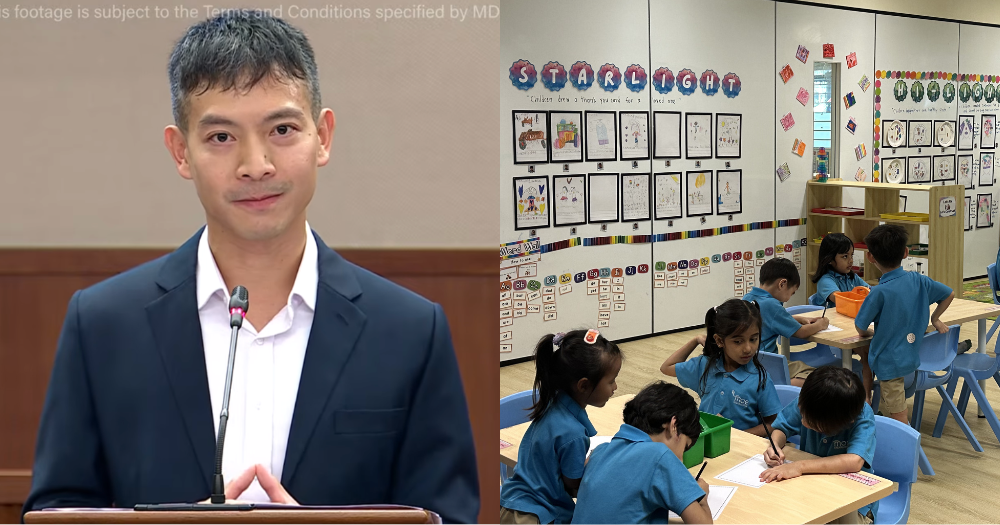
 The Singapore government should consider raising the income tax threshold to recalibrate the tax structure, suggested PAP's Bishan-Toa Payoh GRC Member of Parliament Saktiandi Supaat in Parliament on Feb. 24.
This would help to maintain the value of the threshold and ensure it changes with the times.
Without doing so, more middle and lower-income earners would invariably fall within the tax base despite not being more well-off, he said.
Worries on economic security
Currently, Singapore exempts income tax for the first S$20,000 of chargeable income.
However, this is based on a framework from "more than two decades ago".
"Since then, median incomes have more than doubled," he said, adding that GST has increased and cost structures have shifted materially.
Using the same structure, the value of the threshold will be eroded as incomes rise, and lower and middle-income earners end up within the tax base "not because they are significantly better off, but because the system has not been recalibrated".
Saktiandi recommended raising the income tax threshold from S$20,000 to "S$25,000 or S$30,000" for two reasons.
First, to provide meaningful relief to lower and middle income groups, and second, to help them retain more savings and potentially asset building and restore structural fairness without undermining progress.
This can be paired with calibrated adjustments at higher income tiers so that overall revenue sustainability is preserved, he said.
"In this way we strengthen progressivity while maintaining fiscal discipline as our revenue mix has shifted more towards indirect indirect taxes."
Supports PM Wong's Budget
Saktiandi spoke in support of this year's Budget, highlighting that the primary concern of residents in Singapore's "mature economy" is economic security.
"In a mature economy like ours, the central question is no longer simply GDP growth. What matters is whether growth translates into mobility, fairness and confidence across generations," he said.
"Can I sustain my earning power? Can my children do better than me? And can I retire with dignity?
He added that according to a survey conducted by the PAP Policy Forum, it was found that cost of living, healthcare affordability, job security and retirement adequacy remain the top concerns, reflecting Singaporeans' worry about "whether growth translates into real improvements in purchasing power and economic activity".
Mobility must keep up with the economy
Saktiandi also pointed out that while Singapore has made real progress, two structural issues remain.
"Wealth inequality is higher than income inequality," he said, adding "relative mobility may moderate as our economy matures."
The challenge is that wealth compounds faster than wages, said Saktiandi, who pointed out that "start line equality" must be strengthened.
He recommended publishing clearer mobility indicators such as school readiness, attendance and literacy, and strengthening efforts in terms of access for lower income use through internships, mentoring and enrichment opportunities.
"Mobility is not only about grades, it is about access."
Capital participation and tax structure
To match the structural compounding of wealth, capital participation must also be broadened, he suggested.
He addressed CPF's new investment scheme introduced by Prime Minister Lawrence Wong in his Feb. 12 Budget speech, noting that it is a "step in the right direction".
CPF Board will also be introducing a new investment scheme in 2028.
PM Wong also announced that eligible Singaporeans aged 50 and above, and with CPF retirement savings below the Basic Retirement Sum (BRS) will receive a CPF top-up of up to S$1,500.
Singapore can also consider a "Singapore opportunity account framework" he said, which will include a modest starting stake, a progressive top up for low income households, a safe, low cost investment structure and restricted uses such as education skills upgrading, housing support enhancements or CPF top ups.
"This is not redistribution, it is structured participation in asset building," he explained.
Top images via MDDI/YouTube & Canva