News

496 rough sleepers in S'pore in 2025 street count, reasons include relational & financial issues
A 6.4 per cent decrease from the 530 counted in the 2022 single-night count.
January 09, 2026, 03:01 PM


To strengthen support for rough sleepers, the Ministry of Social and Family Development (MSF) will be launching a S$450,000 Partnership to Tackle Homelessness (PATH) Fund.
This fund will support collaborations with organisations to trial innovative solutions to address the underlying causes of rough sleeping and help rough sleepers work towards housing stability.
From Apr. 1, 2026, organisations can apply for grant funding to trial initiatives to provide support (such as medical, psychological and social support) for rough sleepers.
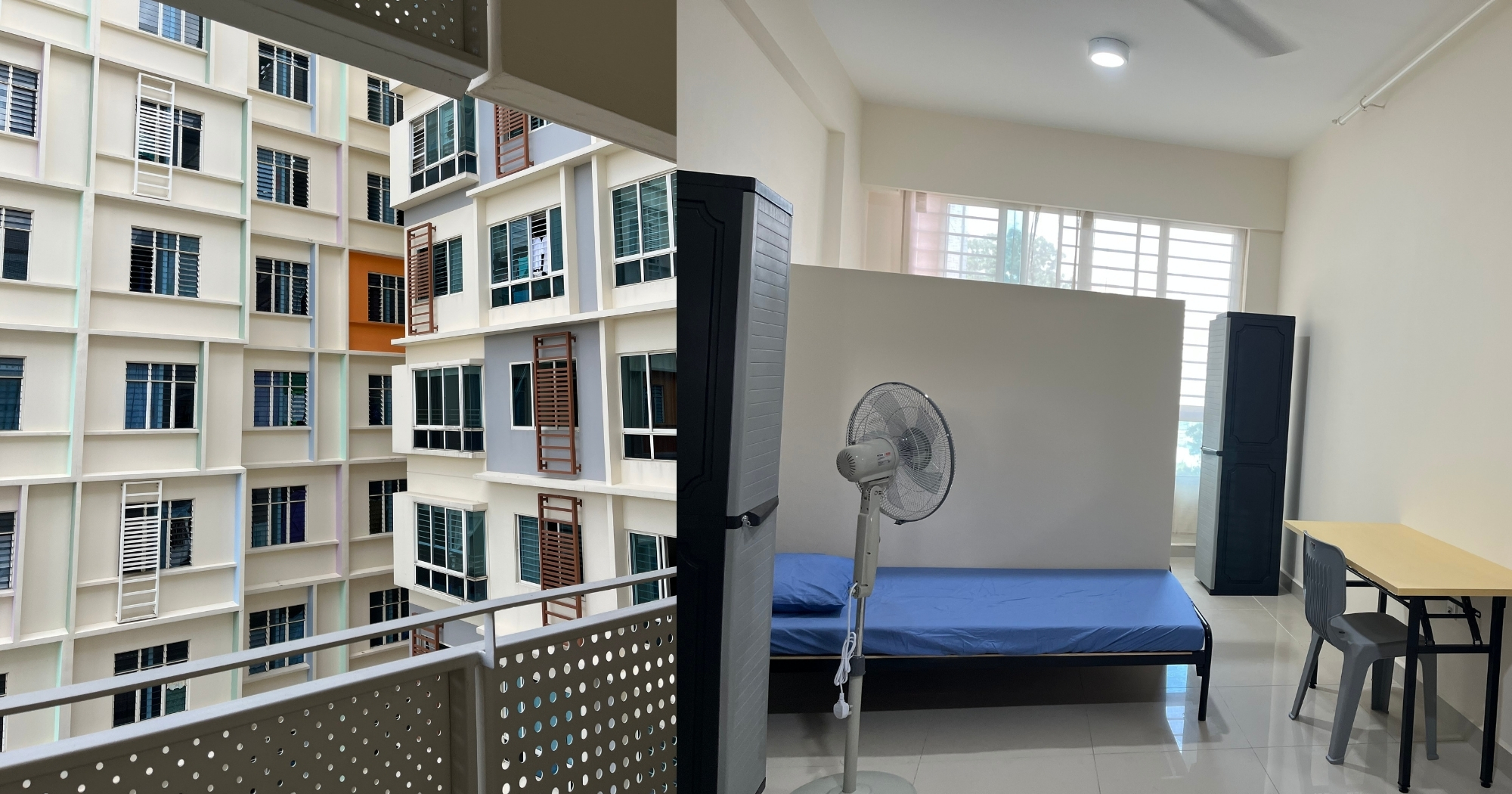
MSF has also partnered with two Transitional Shelters run by New Hope Community Services, namely Transit Point @ Yio Chu Kang and Transit Point @ Jalan Kukoh, to redesign shelter units to provide greater personal privacy and more storage space.
These enhancements aim to encourage more rough sleepers to take up shelter support.
 Photo via MSF's Report on the Street Count of Rough Sleepers 2025
 Photo via MSF's Report on the Street Count of Rough Sleepers 2025
This comes after MSF conducted the second street count of rough sleepers on Jul. 18, 2025, which counted 496 rough sleepers, a 6.4 per cent decrease from the 530 counted in the 2022 single-night count.
MSF released these findings on Jan. 9, 2026, in its 2025 Report on the Street Count of Rough Sleepers.
The report defined rough sleepers to be all persons sleeping in public spaces, regardless of their housing circumstances.
This includes persons who have no homes or those who have homes but face difficulty in returning home, and hence end up sleeping on the streets.
Homeless persons refer to those who do not have access to adequate housing. The report noted that not all homeless persons may have slept rough, as they could be staying in temporary accommodation (e.g. shelters) while seeking long-term stable housing.
Transitional shelters
To support rough sleepers, the report noted that befrienders from the Partners Engaging and Empowering Rough Sleepers (PEERS) Network, established by MSF in July 2019, conduct regular outreach to engage with them and encourage them to seek help.
Among these efforts include the Transitional Shelters (TSes) funded by MSF, which provide a safe space as well as on-site social work intervention and journey with rough sleepers in achieving stable housing.
Transitional Shelters are complemented by Safe, Sound Sleeping Places (S3Ps) run by PEERS Network partners in community venues, offering safe overnight accommodation. Some S3Ps provide well-rounded care through employment support programmes and counselling sessions, helping residents address underlying challenges while working towards stable housing.
In response to Mothership's queries, an MSF spokesperson said: "As at September 2025, the total capacity of our seven Transitional Shelters is about 730 beds and we have an occupancy rate of around 66 per cent."
The spokesperson added that at this point, there is a minimum age of 21 years old for individuals to be admitted into Transitional Shelters.
"For individuals who do not meet the age criteria, MSF has made provisions for shelter support on a case-to-case basis. Almost 90 per cent of residents admitted into Transitional Shelters are above 30 years old."
Individuals stayed in the Transitional Shelters for an average of 10 months, the spokesperson said.
From S$75 per person per month for different units
One such transitional shelter is Transit Point @ Yio Chu Kang, where its facilities, as seen by the media, include six-bedder, four-bedder and two-bedder units.
 Video via Mothership
 Video via Mothership
 Video via Mothership
In response to Mothership's queries, New Hope Community Services' director of social work, Lilian Ong, said that there are six-person and four-person units, each costing S$100 per person per month and including washing machines.
There are also two-person units that cost S$75 per person per month, with laundry facilities in a separate unit.
"The shelter is designed for independent living, most clients are employed and would take care of their own meals — either with hawker food or home-cooked meals and laundry," she said.
 Video via Mothership
All units are single-gender, and residents may stay for around six months while working towards long-term housing.
However, Ong noted that it "varies depending on the complexity of the clients’ housing barriers" and "so long as clients are actively engaging with their social workers to address the barriers, shelter stay extension would be granted".
Ong added that at shelters across Singapore and at Transit Point @ Yio Chu Kang, the biggest age group of rough sleepers being housed is aged 55 and above.
Currently, the oldest client is 82 and previously, the oldest client was 93, she said.
Misconceptions
Senior Parliamentary Secretary for Social and Family Development Eric Chua said one misconception about rough sleeping is that it is illegal.
“Rough sleepers do face a complex mix of problems,” he said.
He added that “it’s not just a housing issue” as relational issues or disputes with family members or co-tenants were “at the heart of” the difficulties faced by at least half of the rough sleepers surveyed on the ground.
Reasons for sleeping rough
According to an MSF survey, housing-related and financial problems remained the main reasons for sleeping rough.
They are:
- disagreements with family, friends, or co-tenants
- problems with securing or keeping housing
- financial issues
28 per cent of respondents indicated multiple reasons for sleeping rough, highlighting the complex nature of rough sleeping.
 Photo via MSF's Report on the Street Count of Rough Sleepers 2025
A single-night street count was held from Jul. 18 to 19.
The report noted that the geographical distribution of rough sleepers in 2025 showed the highest number in Bukit Merah, Jurong West, and Bedok.
 Photo via MSF's Report on the Street Count of Rough Sleepers 2025
Physical environment
The 2025 street count found that rough sleepers were most commonly sighted near HDB blocks and in sheltered and well-lit environments.
There was also a small increase of rough sleepers sighted in community places such as places of worship, neighbourhood police posts, community centres and hubs, and polyclinics that were often integrated within public housing estates.
 Photo via MSF's Report on the Street Count of Rough Sleepers 2025
Survey of rough sleepers
On top of a single-night street count, a survey of rough sleepers was also conducted from Jul. 27, 2025 to Aug. 26, 2025.
 Photo via MSF's Report on the Street Count of Rough Sleepers 2025
The survey found that 77 per cent of respondents had been sleeping rough for more than a year, while 18 per cent did so for less than a year.
When asked whether they had slept rough in public places before this current episode, 70 per cent of respondents indicated that it was not their first time.
The report suggests that some may be entrenched, possibly due to the complex and interconnected issues they face and their reluctance to seek help despite the support available.
 Photo via MSF's Report on the Street Count of Rough Sleepers 2025
In addition, 95 per cent of respondents indicated that they regularly slept rough in the location where they were surveyed, indicating a preference for being at or near familiar surroundings.
Respondents identified their preferred types of locations as HDB blocks, food centres and markets, commercial areas, and parks and beaches.
 Photo via MSF's Report on the Street Count of Rough Sleepers 2025
Respondents also prioritised practical and social needs when choosing the locations for sleeping rough, with easy access to amenities, proximity to workplace, safe locations, and near family and friends as primary considerations.
Among the respondents, 40 per cent reported challenges while sleeping rough, with safety as the primary concern, followed by discomfort and inconvenience.
 Photo via MSF's Report on the Street Count of Rough Sleepers 2025
Health risks
In addition, the report noted that even though 60 per cent of respondents shared that they faced no challenges while sleeping rough, they may face increased health risks or poor health outcomes from long-term sleeping rough.
The adverse health effects are particularly acute for rough sleepers who already have existing medical conditions.
49 per cent of respondents reported having some form of medical condition or disability, while a minority of 5 per cent were unsure whether they had any health conditions, as they had not undergone medical screening or visited a doctor.
The most frequently reported medical conditions included hypertension, other chronic conditions, and joint-related pain or issues.
A small segment of respondents reported having disabilities, mental health disorders and substance use disorders.
Among the 49 per cent who reported having medical conditions or disabilities, 67 per cent were medically compliant with taking medications and attending medical appointments.
 Photo via MSF's Report on the Street Count of Rough Sleepers 2025
In terms of employment, 65 per cent of respondents were either working full-time or part-time.
Among them, 76 per cent earned less than S$2,000 per month, while 20 per cent earned between S$2,000 and S$3,999 per month.
 Photo via MSF's Report on the Street Count of Rough Sleepers 2025
47 per cent of respondents had a place to return to despite their reasons for sleeping rough.
The available housing arrangements which they could return to were mainly public rental flats and purchased property.
Effective solutions to homelessness should be preventive
In response to Mothership's queries, the Institute of Policy Studies' (IPS) senior research fellow Harry Tan said that in the context of homelessness, informal accommodation mentioned by participants often refers to temporary stays at friends' or family members' homes, budget hotels, backpacker hostels, and workplaces.
"The ability to access informal accommodation tended to depend on participants' social networks and having enough funds to sustain stays at budget hotels or backpackers,” he said.
Tan added that these become unsustainable and unstable when:
- Funds run out
- Conflict with family or friends participants stayed with, or their goodwill was exhausted
- Leaving a workplace that had provided accommodation
- Death of a family member who owned the flat.
In response, Tan noted that there is no one best solution to homelessness for rough sleepers because some, particularly long-term rough sleepers, experience complex underlying stressors and issues.
He said: "Public rental flats, open-market rentals and homeownership were considered long-term housing options for rough sleepers in our study."
Tan added that for most rough sleepers, the rental flat option is the most affordable and realistic option, while a few with enough CPF savings had the ability to buy their own homes, particularly the HDB two-room flexi flats.
"As the research shows, effective solutions to homelessness should be preventive first and foremost, involving early intervention to prevent prolonged and protracted rough sleeping," he said.
"We should also think about increasing the types of shelters and long-term housing options to rough sleepers, look at how we could expand the potential of public rental scheme to prevent the recurrence of homelessness and enhance homeownership support to eligible rough sleepers."
Top photos via Mothership