


 December 28, 2022, 10:40 AM
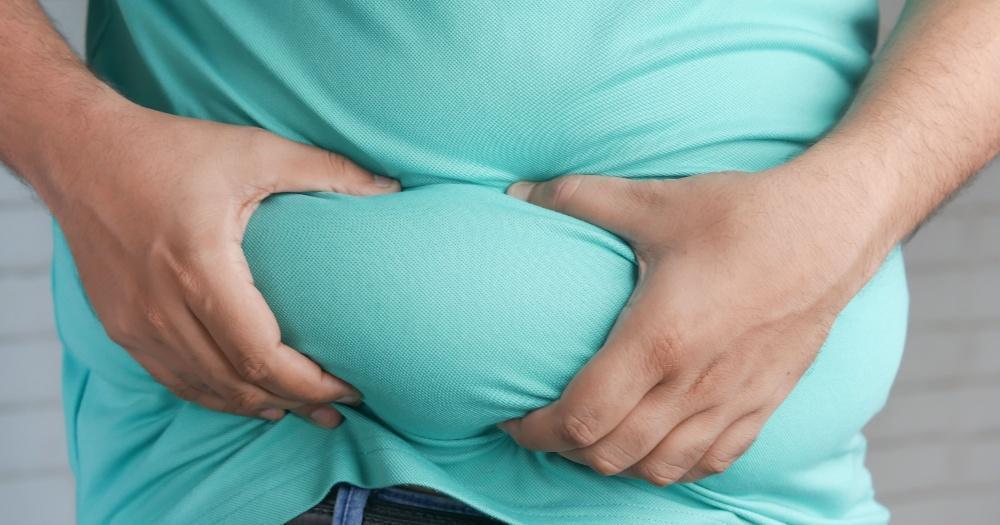
I knew I had “let myself go” too far and for too long when a guy I went out with asked me “What are you going to do about your weight?” after our first date.

While I am no longer in contact with said guy, his comment did trigger me to craft out a diet and an exercise plan to improve myself and get back in shape.
As someone whose weight has fluctuated from a healthy range to an obese range in recent years due to overeating and a largely sedentary lifestyle, I can only imagine how much tougher it must be for those who have had to struggle with weight issues since young.
That’s why I took on this article and spoke to Yvonne Lim, consultant at the Division of Paediatric Endocrinology at the Khoo Teck Puat – National University Children’s Medical Institute, National University Hospital, to find out more about obesity.
What is obesity?
Obesity is defined as abnormal or excessive fat accumulation which may impair health and is measured using body mass index (BMI).
Among children, obesity is present when the BMI-for-age is ≥ 97th centile for children of the same age and sex.
A child is overweight when the BMI-for-age is between the 90th to 97th percentile for children of the same age and sex.
BMI is calculated using the formula below:
BMI = weight (kg) ÷ [height (m)]²
As BMI is easily obtained from one’s height and weight, it is a convenient way to gauge if one’s weight is in the healthy range.
However, there are limitations to using BMI to define obesity.
Firstly, BMI cannot differentiate between excessive adiposity (severe obesity), heavy bones or increased lean muscle mass.
This means that someone with heavy bones or increased muscle mass can have high BMI too.
Secondly, a local study showed that Chinese adolescents in Singapore had a higher percentage of fat at the same BMI than their Dutch counterparts.
This shows that different ethnicities can have different body compositions.
Despite its limitations, BMI is a widely accepted and practical estimate of gauging adiposity in children.
However, we need to keep in mind that BMI changes during growth and development and is also influenced by race and ethnicity.
Causes of obesity are complex and multifactorial
Despite obesity being a serious and progressive disease, which can impact individuals, families and society in multiple ways, it is often poorly misunderstood.
Some of you may have tried out common weight loss methods such as watching your diet and doing daily exercises, but may have had a hard time seeing results and keeping your weight down.
This is because the causes of obesity are complex and multifactorial.
Here are some possible causes of or contributing factors to obesity:
- Genetics (Heritability plays a key role in the development of obesity during adolescence, with a rate as high as 70 per cent)
- A sedentary lifestyle
- Consumption of energy-dense and nutrient-poor foods and beverages
- Increased screen time
- Lack of sleep
In a small percentage of children, obesity is caused by underlying medical conditions such as:
- Endocrine disorders (including hypothyroidism, growth hormone deficiency and Cushing syndrome)
- Genetic conditions (like specific syndromes and single gene defects)
As obesity is a medical problem and can be resolved medically, you should speak to a doctor to understand more about your condition if you are obese.
What impact does obesity have on one’s body in the long run?
Obesity is associated with multiple complications.
The table below summarises the complications seen in children:
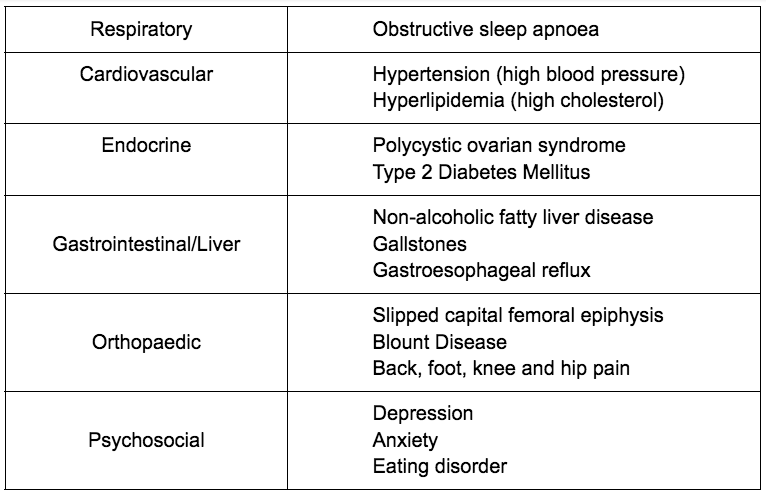
Living with obesity in adolescence also increases the risk of obesity as an adult, and that brings with it another long list of complications.
For one, 70 per cent of children who were overweight at seven years old stayed overweight as an adult.
Besides health problems, obesity may cause emotional stresses to both the patient and his/her family in the following ways:
- When complications set in, this may cause the family to be worried
- The patient may be bullied and ostracised
- The patient may develop mood disorders, anxiety or poor self-esteem, affecting his or her function in life
What are some realistic and manageable steps an adolescent with obesity can take to get to a healthy weight?
For starters, do not use weight loss as a goal.
Instead, set target healthy behaviours such as:
- Reducing daily sweet drinks to once every two to three days
- Drinking more water
- Climbing up stairs
- Getting enough sleep
Children and adolescents aged seven to 18 years can also try the following exercises, along with a combination of cardio and muscle-strengthening exercises:
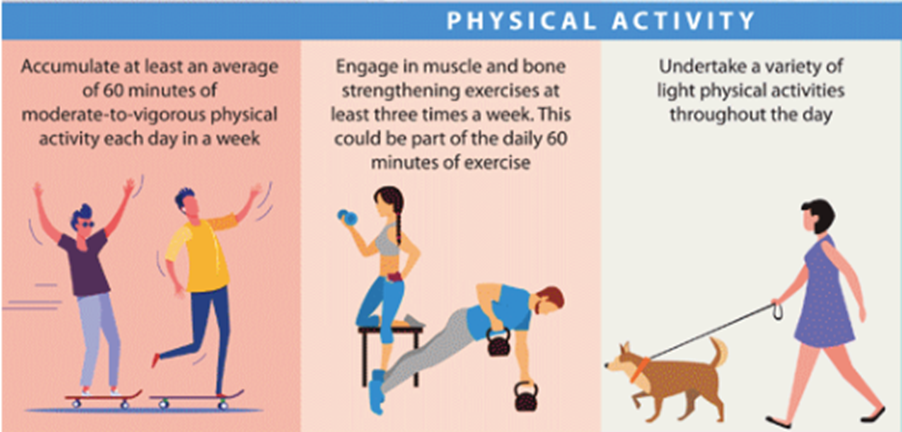
Take baby steps and put your plan in writing or on a calendar.
Share your goals with loved ones so that you can receive encouragement and feedback.
After all, a strong, loving and supportive family is key to guiding one to success.
A healthy lifestyle should be adopted from young to prevent obesity, not when it happens. What should parents do?
Parents should start right from conception, meaning the weight, diet and exercise of the mother during pregnancy is very important.
Preventing excessive weight gain antenatally is important.
After the baby is born, healthy habits should be reinforced from young.
These include getting your child into:
- Regular physical activities (outdoor play, sports)
- Healthy eating habits (no snacks or sweet drinks)
- Drinking lots of water
- Sleeping early and adequately
Preparing home-cooked meals may be difficult for some dual-income families.
After all, eating out is so much more convenient.
When eating out, one can take note of healthier choice logos, opt for less rice, and choose healthier options like brown rice.
Anti-obesity medications
If diet and exercise are not enough, one may also consider anti-obesity medications.
Some anti-obesity medications help to regulate appetite and reduce food portions.
Other medications prevent weight regain by managing your body’s biological responses to weight loss, such as persistent increase in hunger or help you lose weight by changing the way your body absorbs food
When it comes to anti-obesity medications, choose the ones that are approved by medical authorities and as prescribed by your doctor.
To learn more, click here to find a doctor or clinic nearest to you.
This directory is only intended as a guide and not a promotion or endorsement of any particular healthcare professional, clinic or healthcare institution. Please consult your trusted healthcare professional for any medical-related query or emergency at all times.
This sponsored article by Novo Nordisk helped this writer understand more about obesity.
Top image by Towfiqu barbhuiya on Unsplash. For illustrative purposes only, not intended as a direct or indirect reference to any individual or situation.


If you like what you read, follow us on Facebook, Instagram, Twitter and Telegram to get the latest updates.