Abroad


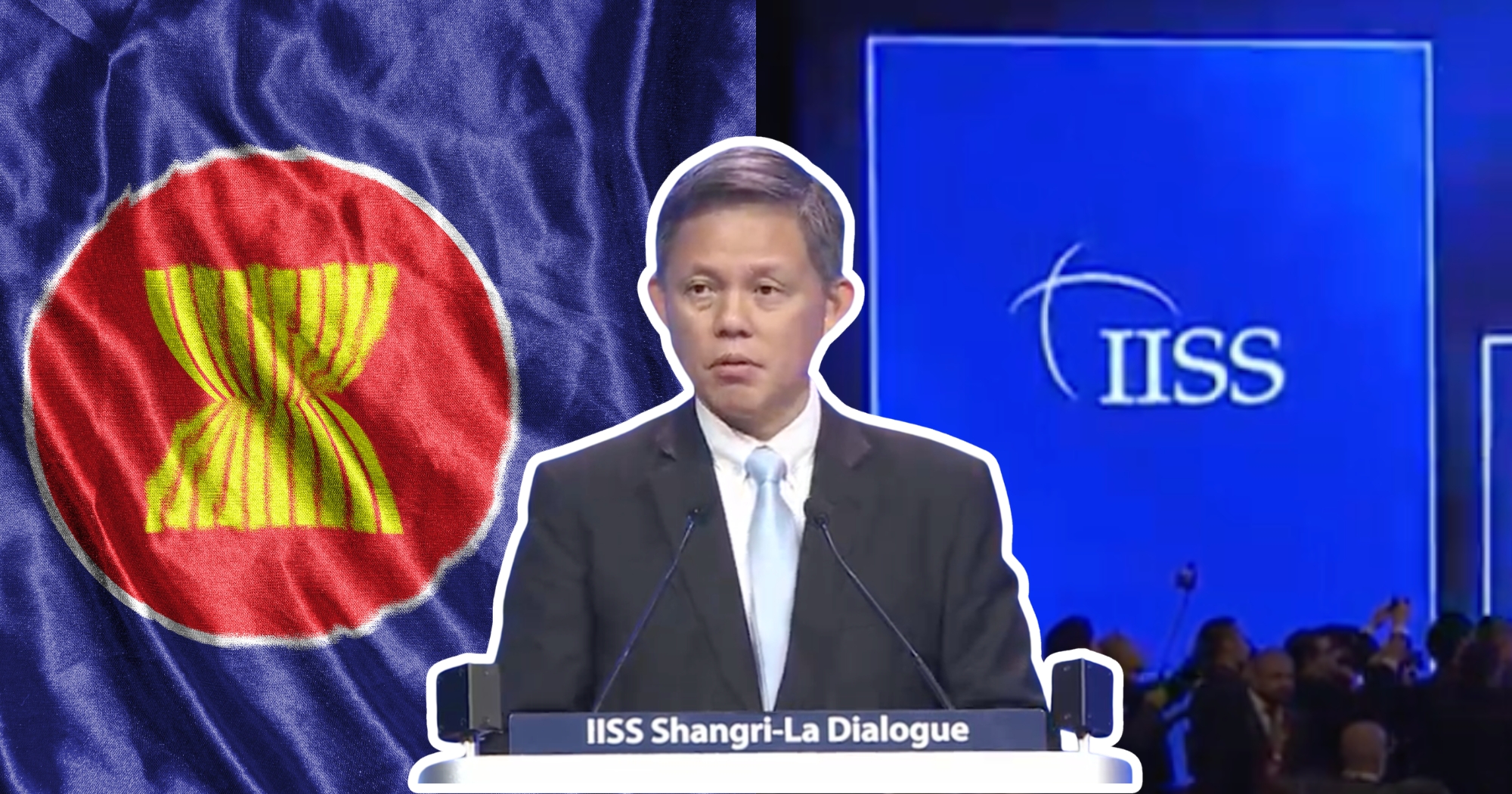
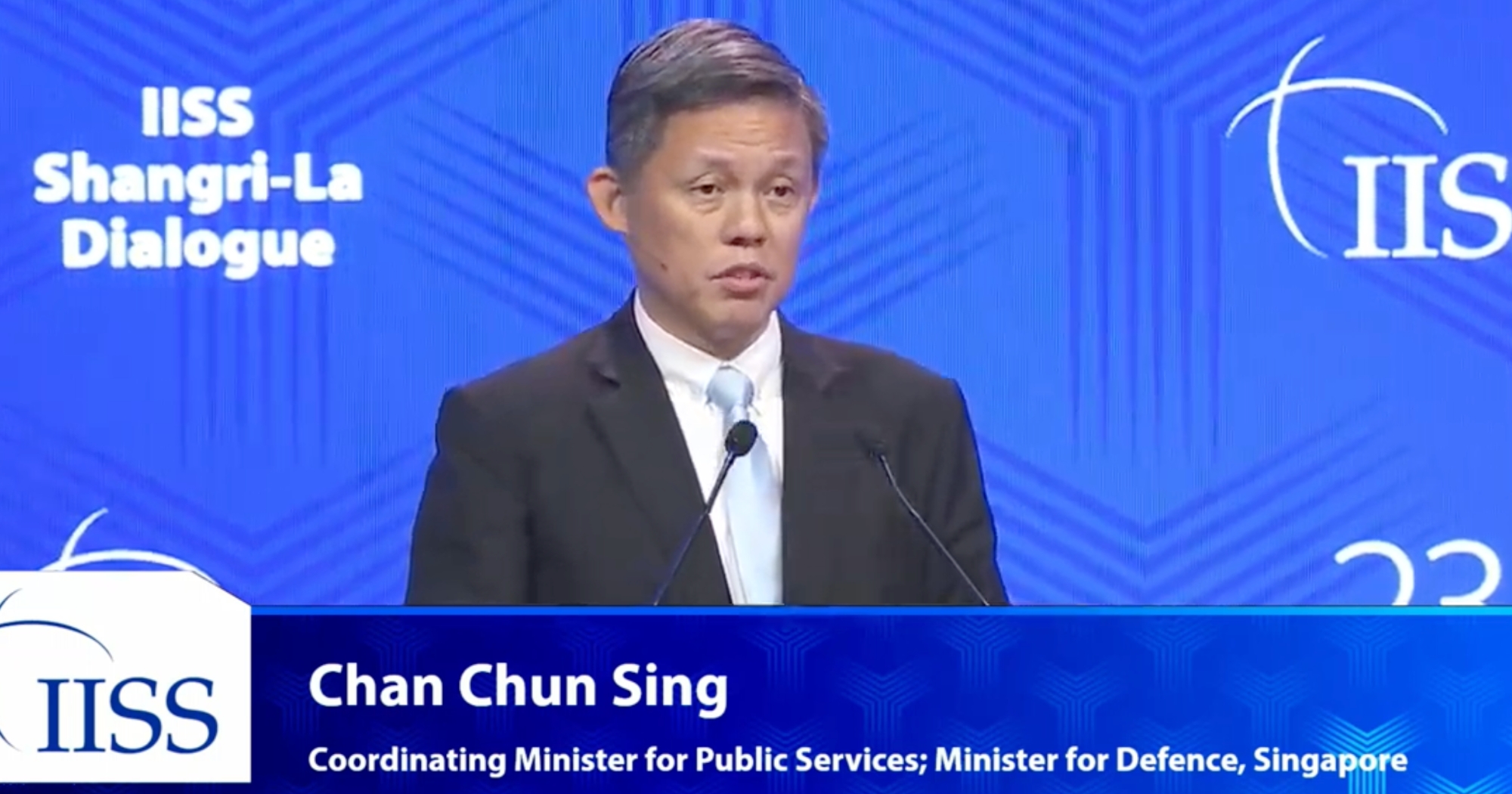
Chinese delegation made their presence felt, we respect their participation: Chan Chun Sing at 2026 Shangri-La Dialogue
Chan was speaking to the media following plenary sessions on May 31.
May 31, 2026, 05:50 PM
Photo from The International Institute for Strategic Studies' YouTube


"I'll just like to perhaps encourage people not to use this phrase, low level Chinese participation," said Singapore's defence minister Chan Chun Sing.
Addressing questions from the media after plenary sessions at the 2026 Shangri-La Dialogue held in Singapore on May 31, Chan said he personally does not "look down on people and cast them as whether they are low level or high level".
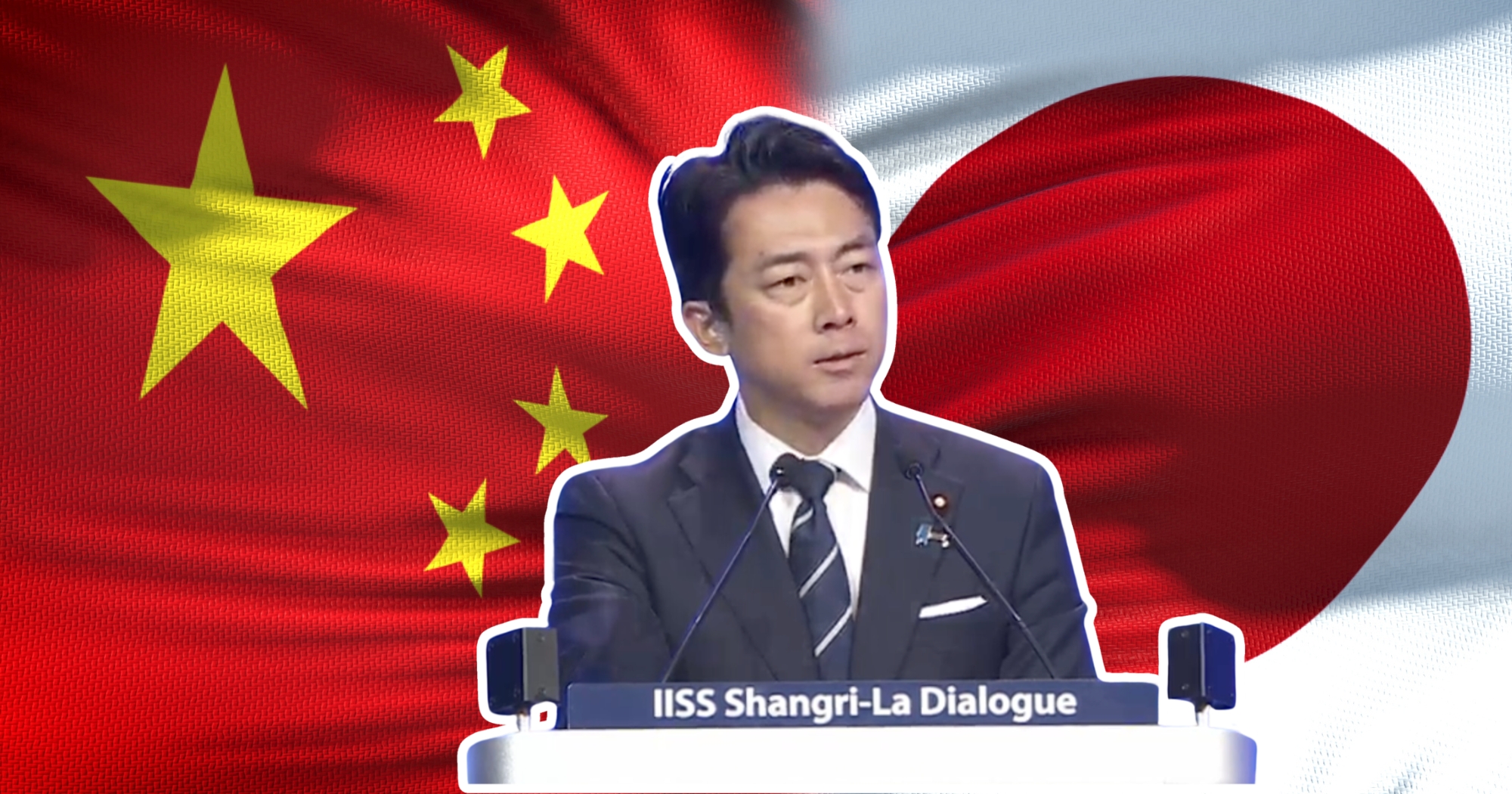
This came after media reports that Chinese Defence Minister Dong Jun, for the second year in a row, has not attended the SLD.
'Made their presence felt'
“I think we respect the Chinese participation,” said Chan.
He added: "The Chinese participation will be determined by their own considerations, and different years they have different levels of participation."
Emphasising that "it's not that the Chinese are not here", Chan noted that he thinks "the Chinese have, in the Chinese delegations, have made their presence felt in many of the plenary sessions".
To that, he said: "Please do not call the Chinese low level. I don't think you like people to call you low level."
He highlighted that even when one of his closest counterparts "wasn't able to be here at the Shangri-La conference because of other pressing domestic issues, we called each other, we kept each other informed of the progress as we went along".
"...We are in constant communication with one another to share notes, so that we minimise the chances of miscalculations, misunderstanding," he added.
Tangible outcomes
On the point of tangible outcomes, Chan noted that while there may be a desire to focus on specific initiatives, Chan said "there are many layers of outcome(s) that different people take from the Shangri-La dialogue".
Using Singapore as an example, Chan said "the ability to be in dialogue with so many partners to understand deeply what they are thinking, not just what they do or how they do, but why they do what they do, that is invaluable”.
He added: "And I think for many other countries it's the same, because when you, when we understand deeply why people do what they do, we reduce the chances of misunderstanding and miscalculation, now that is fundamental to defects."
"The second thing that I think many people take away from Shangri-La is what I call checking our own blind spots," he said.
"If we just talk amongst ourselves, we may always come to the same conclusion, but in every Shangri-La Dialogue, particularly during the ministerial round tables of yesterday and today, you get a chance to see how other people are dealing with the issues and whether there are things that we can learn from one another," Chan added.
Spending on defence
In addition, Chan shared his thoughts on defence spending.
Media outlets had earlier posed questions about this matter after United States Secretary of Defense Pete Hegseth had called on U.S. allies in the Asia Pacific to "contribute more" to sustaining peace and stability by increasing defence spending to 3.5 per cent of their gross domestic product (GDP).
To that, a reporter from the South China Morning Post noted that "we heard from a lot of Asean countries that they can't really afford to do that".
She then asked if Chan was concerned that "this could cause a rift within Asean with countries that can afford to spend 3.5 per cent on defence and those who cannot?"
'Different countries spend different amounts': Chan
Responding to this issue, Chan said: "Each of us must pull our own weight, for us to be a credible partner, for us to be a relevant partner."
"Each of us, as we, whether we increase our defence spending or whether we build new capabilities and become a more relevant partner, we must spend the time and effort to reassure others of our intention," he added.
Noting that "ultimately in the defence sector people look at not just capabilities, people look at intentions", Chan said "the more powerful we are, the more effort we need to spend to reassure others".
Having been in this sector for the last almost 40 years, Chan said "there is no linear correlation between expenditure and capability".
"Different countries spend different amounts, different countries use their expenditure differently, wisely, to build up capabilities according to their needs, and this is the same thing for Singapore, and I have said this before," he added.
Chan explained that his response to where Singapore's defence expenditure is, is that "we will spend as much as we need in order to make ourselves capable of defending ourselves and the relevant partner to others".
He noted, however, that "what is even more important is that we spend the money consistently over the years to build up real capabilities, particularly on the human capital side, it takes years to train a pilot, a sailor, and so forth".
ASEAN must not be complacent: Chan
Yet, Chan emphasised that "Asean is not, and must not be complacent".
"Yes, we are relatively more fortunate compared to many other regions that are having conflicts, kinetic conflicts now," he said.
He added: "But Asean must never be complacent. Asean must be very clear in our perspective."
"Where are those challenges today, and where are those challenges tomorrow," he asked.
"We have to deal with not only today's challenges, we have to deal with tomorrow's challenges."
He added: "How do we establish the frameworks to deal with those issues? How do we build the trust for us to work together on those issues? How do we build real capabilities to deal with those issues?"
"That's why I say in my speech that circumstances don't define us, our responses to circumstances define us," Chan said.