News


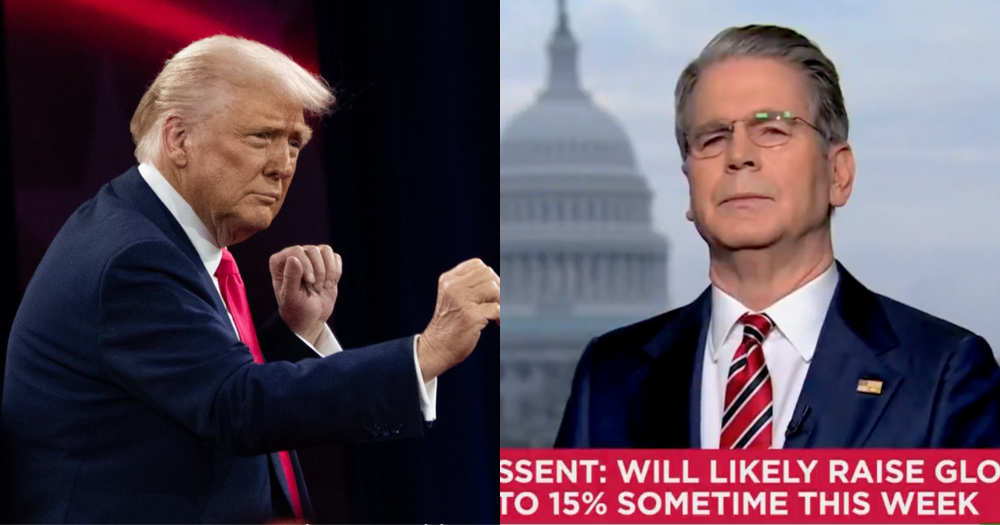
US 'likely' to raise global tariffs from 10 to 15% this week: US Treasury Secretary Scott Bessent
Trump previously hinted at this on Feb. 21.
March 05, 2026, 06:16 PM

 The tariffs imposed by the U.S. on Singapore and other countries is "likely" to be raised from the current 10 per cent to 15 per cent some time in the coming week, said U.S. Treasury Secretary Scott Bessent.
Asked on Mar. 4 about when the 15 per cent tariff would be imposed, Bessent told CNBC during an interview: "That’s likely some time this week," reported the Financial Times.
The announcement is the latest confirmation of an increase that has been hinted at since the end of February.
Just hours after the Supreme Court's Feb. 20 rejection of the Trump Administration's sweeping tariffs imposed since April 2025, U.S. President Donald Trump announced that he would impose a 10 per cent tariff for 150 days under a different law.
Just hours later, he raised this number to 15 per cent.
In a Truth Social post on Feb. 21, he said that the "fully allowed, and legally tested" 15 per cent tariffs would be implemented on countries, based on a "thorough, detailed, and complete review" of the" ridiculous, poorly written, and extraordinarily anti-American decision on Tariffs issued".
Many of these countries had been "ripping the U.S. off for decades without retribution", he claimed.
He ended by saying he would continue his "extraordinarily successful process of Making America Great Again — GREATER THAN EVER BEFORE!!!".
Implications for Singapore
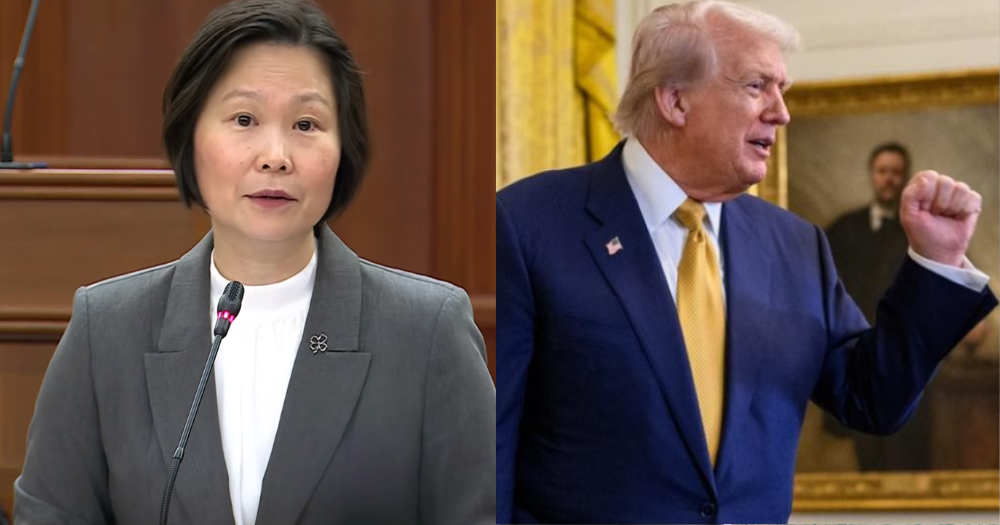
At the Committee of Supply debate in Parliament on Mar. 5, Minister of State for Manpower Gan Siow Huang said that the U.S. began collecting the 10 per cent global tariffs on Feb. 24.
Singapore had previously been subject to a different "reciprocal" tariff announced during Trump's "Liberation Day", but also at the 10 per cent rate, imposed on Singapore's exports to the U.S. since April 2025.
Gan said that the U.S. has yet to issue an official directive on this increase, which has created considerable uncertainty, adding, "It is also unclear what the overall tariff landscape will be after the current 150 day timeline."
Under the current tariff rate of 10 per cent, the immediate, direct impact on Singapore's economy is not expected to be significant, according to Gan.
This is because there would be broadly no change from the previous tariff.
Nonetheless, Gan noted that sectors with a greater dependence on the U.S. for final demand, and whose exports are covered by the new tariffs, could see a greater impact from any tariff increase.
Such sectors include the precision engineering cluster, and some segments under the general manufacturing cluster.
At the same time, Singapore may get hit by sectoral tariffs from the U.S., and tariffs imposed by other different legal authorities in due course.
"We will continue to monitor such developments closely, and engage our U.S. counterparts to ensure that our economic interests are safeguarded," Gan said.
Top images via The White House/Facebook & Scott Bessent/X