Abroad


Trump imposes new 10% global tariffs after US Supreme Court strikes down his sweeping import taxes
The new tariffs will be in place for 150 days, starting on Feb. 24, for all countries.
February 21, 2026, 11:57 AM


On Feb. 20, the United States Supreme Court rejected most of the sweeping tariffs that President Donald Trump imposed in 2025, ruling that he exceeded his authority by using a law reserved for national emergency to justify the tariffs.
Hours after the decision, Trump responded by announcing that he will impose a temporary 10 per cent global tariff under a different law, the Trade Act of 1974, NBC News reported.
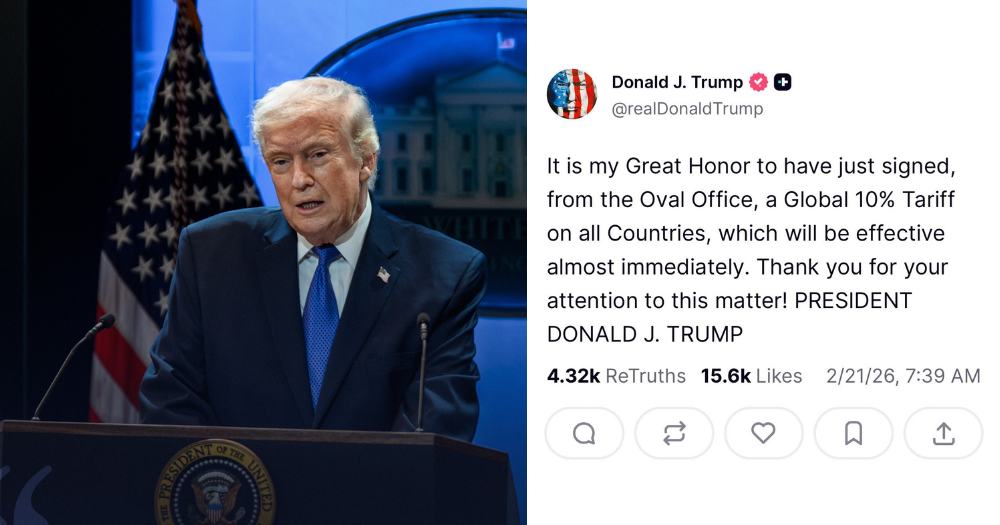
He has signed an order to implement the new tariffs on all countries, he wrote on Truth Social.
The Supreme Court ruling
The U.S. Supreme Court ruled in a 6-3 decision to invalidate the tariffs Trump levied using the International Emergency Economic Powers Act.
This law from 1977 gives the president broad economic powers during a national emergency.
Explaining the majority opinion behind the ruling, Chief Justice John Roberts said there was no historical precedent where a U.S. president invoked this law to impose any tariffs.
That, along with "the breadth of authority that the President now claims, suggests that the tariffs extend beyond" Trump's authority, he added, as quoted by NBC News.
Trump's response
Speaking to reporters at the White House, and later on Truth Social, Trump called the decision "deeply disappointing".
He said he was "ashamed of certain members of the court for not having the courage to do what's right for [their] country".
He praised the justices who voted in his favour, and slammed the others as a "disgrace" to the nation.
"It is my opinion that the Court has been swayed by foreign interests, and a political movement that is far smaller than people would think — but obnoxious, ignorant, and loud!"
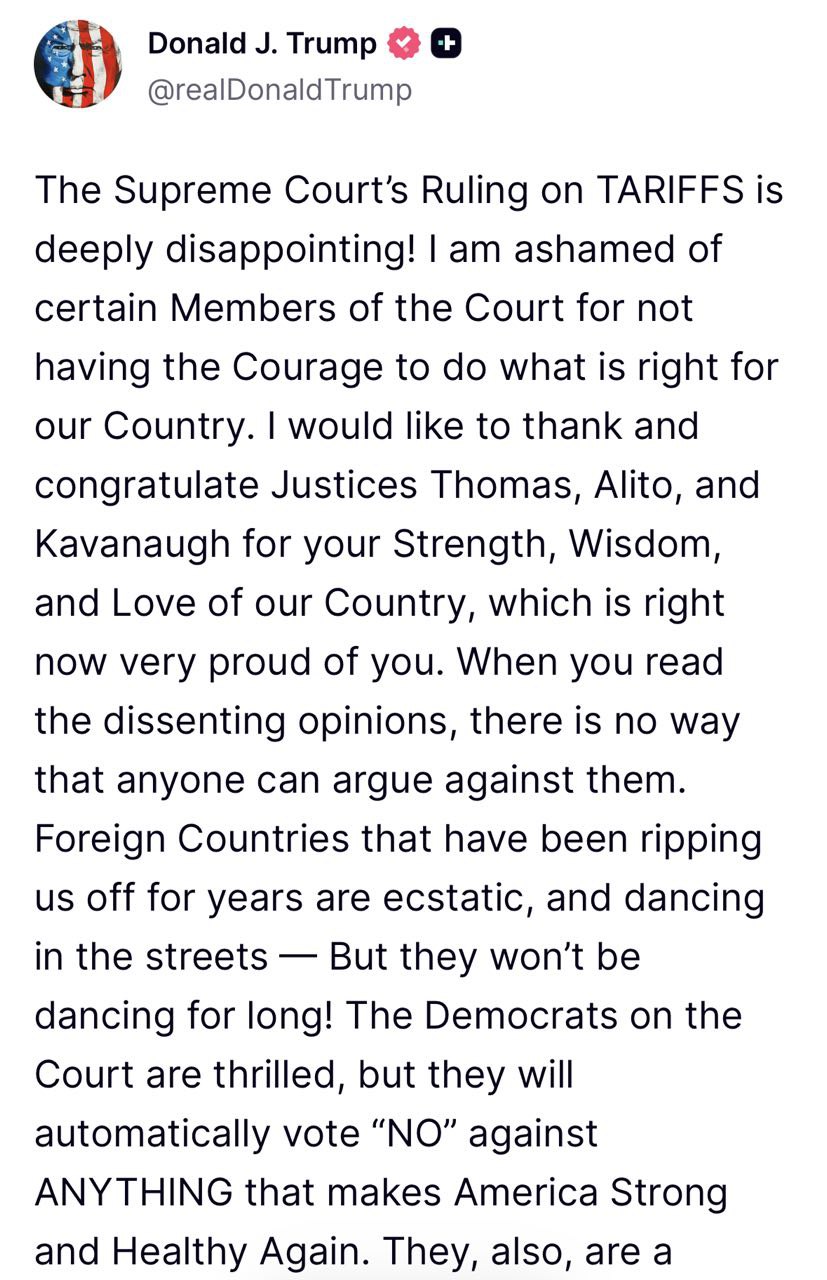
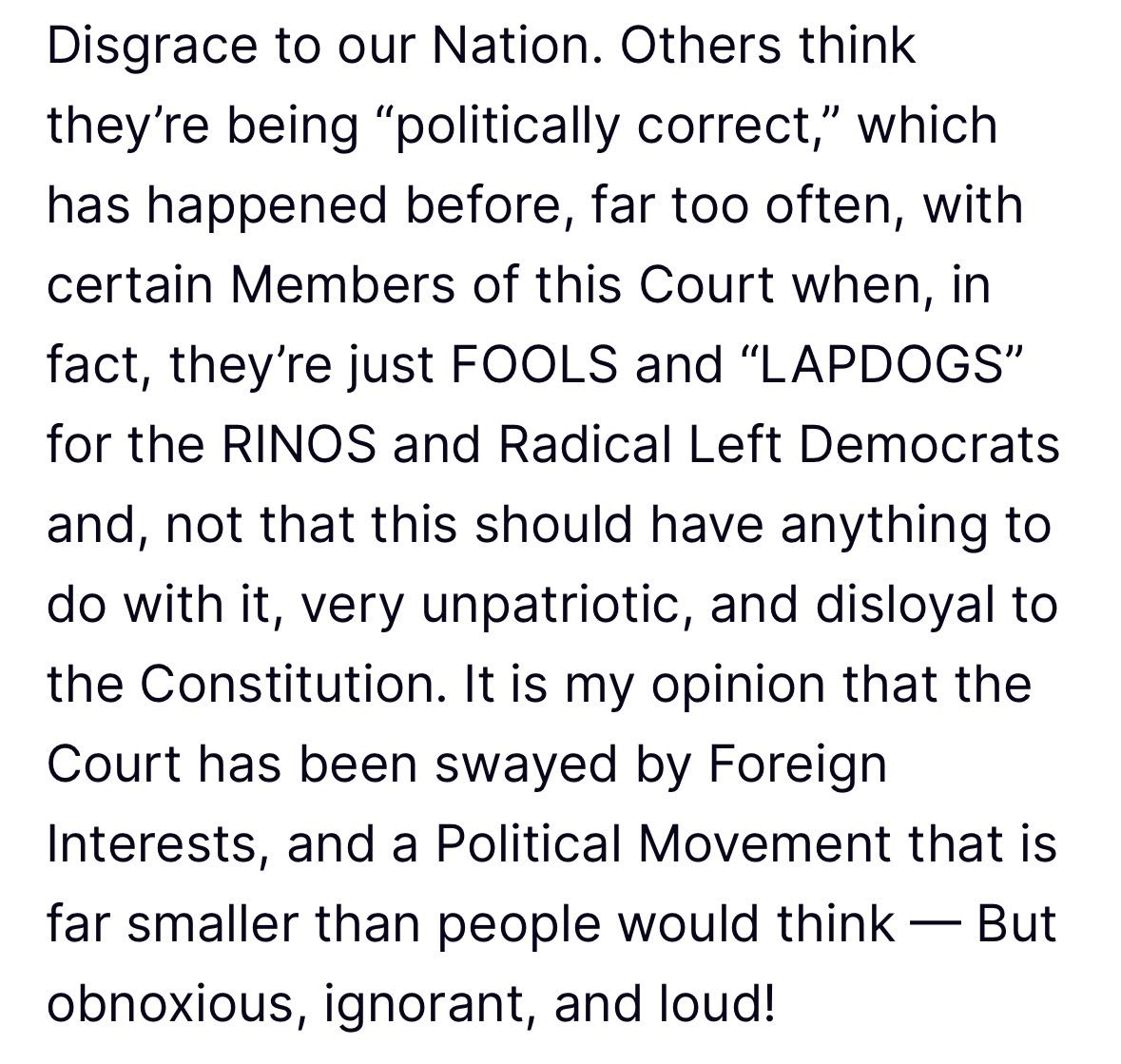 Screenshot from Truth Social
New tariffs
Pressing on with the tariffs, Trump turned to invoke Section 122 of the Trade Act of 1974 to impose a new 10 per cent levy on all countries.
This law gives the president power to put in place tariffs up to 15 per cent for 150 days, at which point Congress must step in, according to BBC.
Compared to the sweeping tariffs that were struck down, a 10 per cent levy would be a cut in import taxes for many countries.
A White House official said the new 10 per cent tariff will apply to countries that negotiated trade deals with the U.S. to lower their tariffs, including the United Kingdom, India, and the European Union, BBC reported.
According to a White House document about the new order, the new global tariffs will take effect at 12:01 am on Feb. 24, Eastern Standard Time.
Some goods will not be affected, including certain agricultural products, certain critical minerals, pharmaceuticals, and some electronics and passenger vehicles.
They will not be subjected to the import duty because of the needs of the U.S. economy, or to focus on addressing the fundamental international payments problems in the U.S.
Singapore has already been subject to a 10 per cent tariff on trade with the U.S., and this is expected to remain unchanged.
Top images from the White House's Facebook and Truth Social