News


About half of S'pore's gas piped from region & unaffected by Iran war, but higher electricity prices expected: Tan See Leng
He reminded the public that they can offset some of the impact by adopting energy-conserving practices.
March 12, 2026, 11:09 AM


Singapore has multiple lines of defence to safeguard Singapore's energy security from the ongoing Middle East conflict, Manpower Minister Tan See Leng wrote in a Facebook post on Mar. 12.
He noted that the effects of the global fuel supply disruptions and price fluctuations have been felt in Singapore, which relies completely on imports for natural gas to fuel about 95 per cent of its electricity generation.
However, about half of Singapore's gas is piped to the country from the region, and is currently unaffected, Tan explained.
Diverse sources of energy
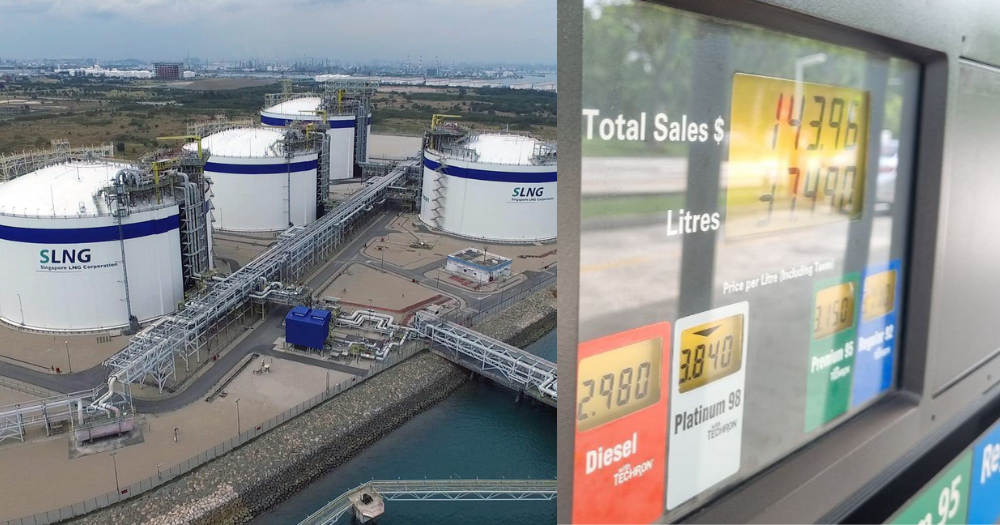
Singapore imports liquified natural gas (LNG) from diverse sources around the world, including the U.S. and Australia.
Singapore's LNG importers can tap on these sources to replace cargoes originally from the Middle East.
Hence, the supply is not overly exposed to the Middle East, Tan said.
He also noted that Singapore has also established a fuel stockpile of both gas and diesel, which power generation companies can draw from in the case of a severe gas supply disruption.
The country's electricity-generating turbines can run on both gas and diesel, under the Energy Market Authority (EMA)'s requirements.
All power plants are also regularly tested to ensure that they are able to switch to diesel generation if ever needed.
Higher electricity prices still expected
Tan was responding to recent reports of oil and gas prices rising due to the Middle East conflict.
He cautioned that while Singapore has measures in place to ensure energy security, global gas prices are indeed rising.
Local petrol prices have been increasing since early March, and have been projected to go up further.
"We must therefore expect electricity prices to increase in the coming months," Tan said.
He reminded households and businesses that they have a part to play — they can offset some of the impact by adopting energy-saving practices.
The government will also be ready to support households and businesses as necessary, he added.
As part of Budget 2026, eligible HDB households will receive up to S$570 in U-Save rebates to offset utilities expenses this financial year — 1.5 times the regular amount.
Additionally, the government will monitor the evolving situation in the Middle East, especially for secondary effects of disruption.
"This conflict is a reminder that we live in an unpredictable world, and we cannot take our energy security for granted," Tan said.
"We must therefore do what we can to economise on our use of energy, and everybody has a part in this."
Related stories
Top images from Singapore LNG Corporation and Mothership