News


5 key thrusts for S'pore's economy in uncertain global environment: Gan Kim Yong
Singapore had to be "clear eyed" in a more uncertain world.
March 02, 2026, 02:00 PM


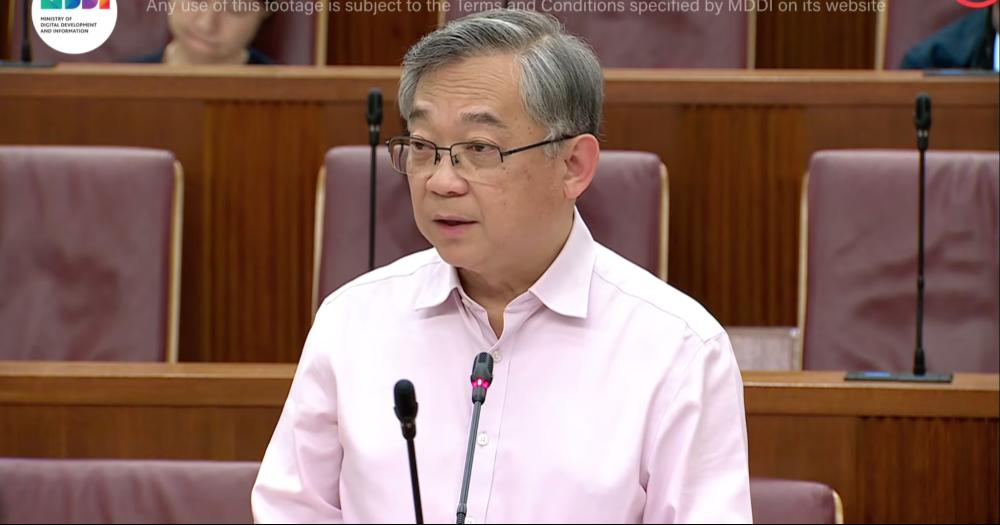
On Mar. 2, Deputy Prime Minister and Minister for Trade & Industry Gan Kim Yong spoke in Parliament during his ministry’s Committee of Supply debate.
In his speech, he warned of the increasingly complex global environment in which Singapore now operates and called on Singaporeans to be “clear-eyed” as the country enters a new phase in its economic journey.
Complex global environment
Gan began by providing some background, where he acknowledged the better-than-expected 5 per cent economic growth that Singapore enjoyed in 2025, but also a world where the rules that allowed for Singapore’s prosperity had changed fundamentally.
But he also acknowledged the more complex global environment Singapore is in, with uncertainty emanating from multiple sources, such as an uncertain application of the U.S. “reciprocal tariffs”, renewed conflict in the Middle East, possibly leading to higher energy costs for businesses and consumers, as well as longer-term structural shifts in areas like AI and automation, decarbonisation, and demography.
Despite these concerns, Gan said he believed that there were still good opportunities for Singapore “as a trusted, knowledge-driven, and connected hub”.
Thus, the government set up the Economic Strategy Review to take a “hard, honest look at how Singapore must reset its economic strategy".
Gan laid out five key strategic trusts, to enable Singapore “work harder and smarter, be creative, take strategic risks, and explore bold solutions, in order to meet its GDP trend-growth target and create good jobs.
The Five Key Strategic Thrusts
Establish Leadership in Key Growth Sectors — and Push the Frontier into New Growth Areas
Firstly, Singapore will “establish and deepen” its leadership in key growth sectors, while “pushing the frontier into new areas of growth”, such as in advanced manufacturing, trust-based services, and frontier sectors.
Gan said investments in technology aimed to raise productivity, quality, and reliability in Singaporean manufacturing, and will increase demand in skilled jobs, such as automation and robotics engineers.
Singapore also intends to extend its lead in modern services, using its “trust premium” to develop itself as a global hub for trust-based services, such as cybersecurity and AI assurance.
“Taken together, this will deepen what we already do well in advanced manufacturing and modern services, while creating new engines that expand Singapore’s growth frontier — and secure high-quality jobs for Singaporeans.”
Sustain a dynamic and vibrant enterprise ecosystem
Gan spoke about the need to “sustain a dynamic and vibrant enterprise ecosystem”.
Singapore would do this by working with leading MNCs to anchor high-value activities in Singapore, such as regional and global headquarters functions, and advanced manufacturing.
Singapore should also nurture a new generation of globally leading companies, from emerging enterprises that have yet to establish themselves as world leaders, requiring Singapore to be prepared to take some risk.
Alongside this, Singapore would need to sustain a vibrant start-up community and foster an “entrepreneurial culture where people dare to dream big and take risks”.
Establish Singapore as an AI leader and AI-empowered economy
Gan spoke about Singapore’s effort to establish itself as an AI leader, with an AI-empowered economy.
Singapore wanted to empower more companies to “harness AI end-to-end”, and has so far supported over 60 companies to establish AI centres of excellence and intends to take it further by launching a “Champions of AI” programme.
This would involve select companies committed to using AI to drive growth, and the government would partner with them to embed AI across core operations, organisational processes, and workforce practices.
This included workforce training to support the development and execution of AI transformation projects, and the companies will invest in training and upskilling their employees, allowing them to take on higher-value AI-enabled job roles.
Enable our businesses to proactively navigate transitions
Singaporean firms increasingly need to relook at how they operate, and pursue different pathways.
Singapore intends to enable businesses to proactively and confidently navigate these transitions.
Gan said the government intends to work with Trade Associations and Chambers, enterprises, and the labour movement, to support firms through such transitions.
It would help by, amongst other things, helping assess options early, and pursue new growth opportunities in overseas markets, and “manage change in a way that strengthens long-term competitiveness and supports workers through the transition”.
Strengthen connectivity and linkages to global markets, and more aggressively support firms to internationalise
Gan said that due to Singapore’s “small domestic economy”, many growth opportunities lay overseas.
The government wants to help companies expand and invest internationally, to benefit from the growth of the global economy, while anchoring value, capabilities, and leadership functions in Singapore.
Gan said that Singapore would step up support for leading companies to pursue significant overseas ventures, with higher risks and capital outlay, especially in emerging markets.
Gan added that this would allow these companies to grow their overseas revenues and profits, they would bring better jobs and stronger demands for local capabilities, and deeper integration into global growth opportunities back to Singapore.
Road ahead
Gan warned of an uncertain, uneasy road ahead, but said that Singapore’s success was not built by “waiting for certainty, but by planning long term, acting early, and moving ahead decisively".
The five strategic thrusts built on Singapore’s strengths, embraced new opportunities, harnessed technology, and would keep Singapore open and connected.
But it would also support Singapore through change, and Gan said that “growth must translate into good jobs for Singaporeans”.
“Above all, our strategy is to give workers the confidence to adapt, businesses the ability to compete, and every Singaporean a share in our progress and a stake in our future.”
Top image via MDDI/YouTube