News

Thailand govt to offer direct support to companies in wake of 19% US tariffs
The U.S. reduced its tariffs on Thai goods from a proposed 36 per cent to 19 per cent.
August 04, 2025, 03:37 PM


Thailand’s Finance Ministry has prepared measures to support companies adjusting to the new 19 per cent tariff on Thai goods imposed by the U.S.
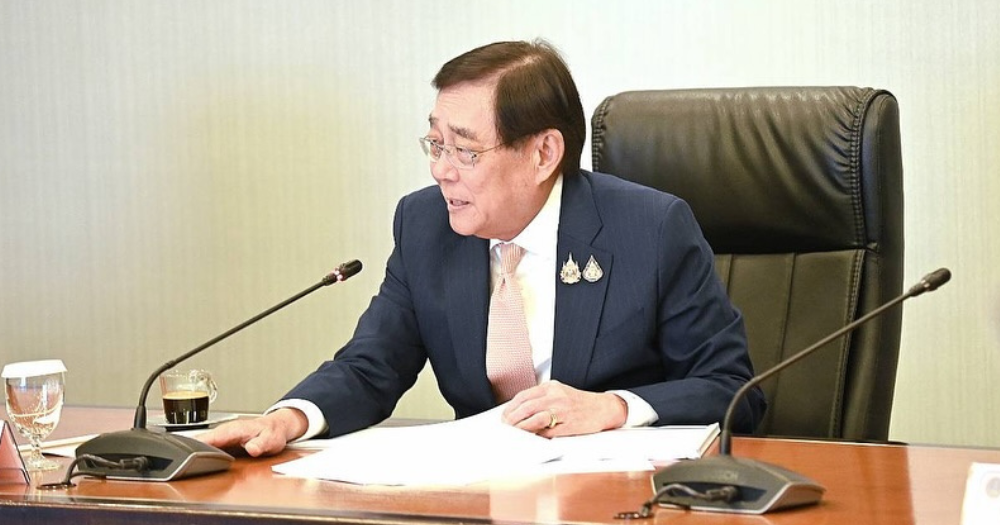
Outlining the transitional measures on Aug. 1, Deputy Prime Minister and Finance Minister Pichai Chunhavajira also said that plans to reduce tariffs for selected U.S. goods to zero per cent are pending parliamentary approval, Khaosod English reported
This comes after Thailand negotiated to lower its U.S.-imposed tariffs to 19 per cent, from the originally proposed 36 per cent.
Support for Thai exporters
During his announcement, Pichai said the government is introducing two forms of targeted assistance to support Thai exporters.
Low-interest loans
Low-interest loans will be available to help companies overcome production and export delays caused by previous uncertainty about the tariff rates.
Only shipments made after Aug. 7 will face the 19 per cent rate.
Meanwhile, shipments made before Aug. 7 will face a 10 per cent tax, with the government expecting a spike in exports ahead of the deadline.
Two funding sources available
The government will also provide short-term and long-term schemes to help exporters with funding, working with the Confederation of Thai Industries and the Thai Chamber of Commerce to develop sector-specific approaches.
When can imports from the U.S. enjoy zero per cent duty?
One key concession Thailand agreed to in exchange for the reduced tariff rate was a near-total tariff exemption for U.S. goods, allowing over 10,000 out of 11,000 items to enter the Thai market duty-free.
According to Pichai, imports from the U.S. will only enjoy a zero per cent duty after parliamentary approval, with priority given to items that are already tariff-free under other trade agreements.
Some goods will be subject to a quantitative cap on the amount that can be imported at zero per cent duty, depending on domestic demand.
“There is no fixed timetable yet,” Pichai said. “The U.S. and Thailand must first finalize the agreement. Once completed and we’ve finished the necessary legal procedures, we will proceed.”
Locally-produced goods that are insufficient in quantity
To protect local producers, Pichai announced safeguarding measures for goods Thailand produces domestically, but still relies on U.S. imports for.
He said the government has requested either a five-year transition period or quota-based imports to limit the amount of duty-free U.S. goods imported into Thailand.
This includes corn, which faces a rising demand and is significantly cheaper when purchased from the U.S.
As such, Thai companies could be mandated to purchase the first 5 million tons of corn from local farmers, then from neighbouring countries, before they can buy from the U.S.
Locally abundant goods
For locally abundant goods, such as pork, Pichai noted that the market will not immediately allow imports, as domestic producers need time to improve efficiency and reduce costs.
Any future opening of the market for such goods would be limited, possibly accounting for less than 1 per cent of imports. It will also face strict monitoring.
Imports of pig internal organs are banned as they are extremely cheap in the U.S.
Preventing abuse
Adopting a similar measure to Vietnam, goods found to be evading tariffs will face a 40 per cent tariff.
Thailand’s Customs Department and Commerce Ministry will also jointly double down on tracing the origin of imports by inspecting factories and supply chains.
Thailand’s concessions to the U.S. for reduced tariffs
According to Nation Thailand, the lowered 19 per cent tariff rate was secured in exchange for a series of concessions.
Along with a near-comprehensive elimination of tariffs for U.S. goods, Thailand has agreed to relax certain non-tariff barriers, including hygiene regulations, as well as customs and certification protocols.
Thailand also plans to reduce its trade surplus with the U.S., which is currently over 120 billion baht (S$4.77 billion) annually, by 70 per cent.
The plan involves the Thai public and private sectors purchasing Liquefied Natural Gas (LNG) and Boeing aircraft models from the U.S.
As quoted by the Bangkok Post, he previously said that the 19 per cent rate, which Thailand shares with Malaysia, Indonesia and Cambodia, “reflects [its] strong friendship and close partnership” with the U.S.
“It helps maintain Thailand's competitiveness on the global stage, boosts investor confidence, and opens the door to economic growth, increased income, and new opportunities for the country,” he added.
During his briefing, Pichai noted that this marked the beginning of a series of future negotiations, during which the U.S. is expected to scrutinise Thailand’s proposals against those of other countries.
Top image via pichaichunhavajira/Instagram