News

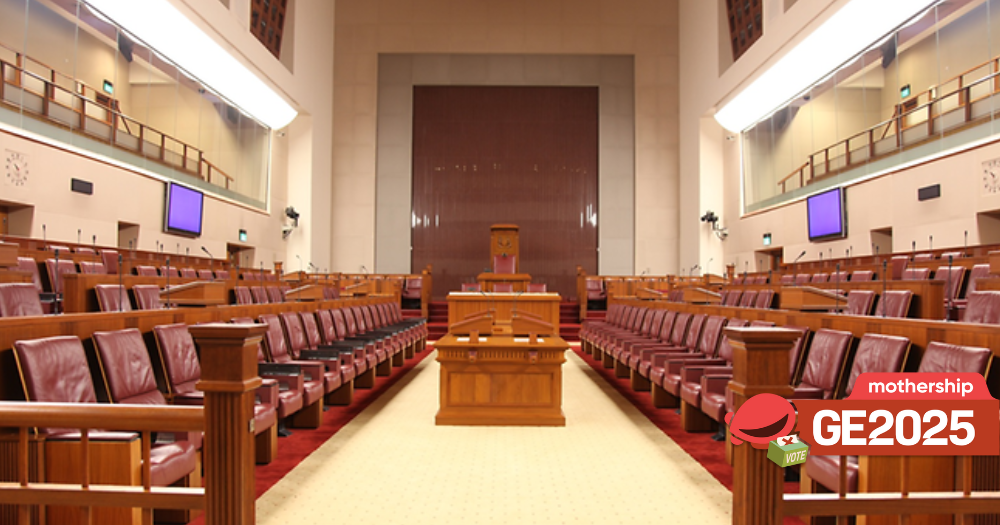
Parliament dissolved, all your MPs have vacated their seats. Who's in charge now, explained
What happens now that parliament is dissolved?
April 15, 2025, 04:03 PM


You've seen the headlines — Parliament has been dissolved — but you haven't got a clue what that means.
Maybe you do have some clue but you aren't quite sure how this all works.
Or maybe you're just worried about what will happen between now and Polling Day. Surely, with Parliament dissolved, we can't just be left to fend for ourselves while politicians ask for our votes?
Well, we try and answer all your questions on what will happen next starting with...
What does it mean for parliament to dissolve?
The dissolution of parliament is its formal disbandment, signalling the need for parliamentary elections to be held so that Singapore's voters can choose who will represent them in parliament once again.
When this happens, all Members of Parliament (MPs) are required to vacate their seats.
When does this happen?
Parliamentary terms last for five years each (maximum), starting from the first sitting of a newly elected parliament.
At the end of each five-year term, parliament will be dissolved automatically as per Article 65(4) of Singapore’s Constitution.
However, in Singapore's history the dissolution of Parliament has always occurred before a term expires.
For example, back in 1991, Goh Chok Tong — who had just taken over the role of Prime Minister at the time — advised the dissolution of Parliament on Aug. 14, 1991, a mere two years and seven months after Singapore’s seventh Parliament had its first sitting.
How does this happen?
Under the Constitution, in Article 65, parliament can be dissolved early by Singapore’s President at any time.
Also, the President is required to do so in certain conditions, including:
- If there is no Prime Minister for some reason, and the President determines that "there is no member of parliament likely to command the confidence of a majority of the members", or
- If the Prime Minister advises the President to dissolve Parliament, as alluded to earlier
So the President is pretty important in this situation?
Yep. It’s worth noting that according to Article 65(3) of the Constitution, even if the Prime Minister advises the President to dissolve Parliament, the President is not obligated to actually follow through on it.
The President can reject the Prime Minister's advice to dissolve Parliament, if he or she does not think that the majority of Parliament is in support of the Prime Minister’s decision.
However, this has yet to happen in Singapore’s history.
And what happens next?
Once Parliament has been dissolved, the General Election must be held within three months, as per Article 66 of the Constitution.
At this point, the President issues what is called a writ of election — a legal document which spells out the date, and the location where candidates can nominate themselves for the upcoming elections.
After the writ is issued, the President can set Nomination Day anytime between five days and one month later, according to Section 24(2) of the Parliamentary Elections Act (PEA).
This election, Nomination Day will be on Apr. 23.
Once successfully nominated, those contesting the elections then campaign to convince Singaporeans to vote them into Parliament on Polling Day.
The Returning Officer for the election must give at least 10 days' notice before Polling Day can be held.
And once notice has been given, Polling Day must be held no later than day 56 of this notice being issued, according to Section 34 of the PEA.
So while all this is happening, who’s in charge?
As stated above, when Parliament is dissolved, Article 46(1) of the Constitution says that every member of Parliament shall cease to be a part of Parliament.
But that doesn’t mean that no one's left in charge. There still needs to be a government in place, especially if the General Election is called during tumultuous times.
As per Article 25 of the Constitution, the Prime Minister can appoint ministers from among the members of the most recently-dissolved Parliament, even after it has been dissolved, until the next Parliament convenes.
Therefore, what happens in practice when Parliament is dissolved is that Singapore’s government retains decision-making power for the nation until the election is over, and a newly-elected government is sworn in and starts its first day of work.
Furthermore, looking at Article 26 of the Constitution (which spells out the tenure of office for the Prime Minister and his Cabinet) the dissolution of Parliament is not one of the given reasons for a minister or Prime Minister to vacate their posts.
In other words, the existing Cabinet will be in power until the first sitting of the newly-elected Parliament.
When will that be, then?
Article 64(1) of the Constitution sets out that a session of Parliament — when Parliament officially meets — must happen at least once a year, with no more than six months between each session.
So you can expect a new elected Parliament to have its first sitting within six months of when the last parliament last met.
Over the next few years, these individuals will meet in Parliament to discuss and pass the laws that govern Singapore.
And in about four-plus years time, when the Prime Minister decides it's time, Parliament will be dissolved and we’ll do this all over again.
Top image from Suhaimi Abdullah/Getty Images