News

SAF making concrete plans to provide further medical assistance to people in Gaza: Ng Eng Hen
Ministry of Defence (MINDEF) spoke to counterparts in the Middle East and concluded that "the risks are high and unlikely to subside for some time to come".
March 03, 2025, 02:00 PM
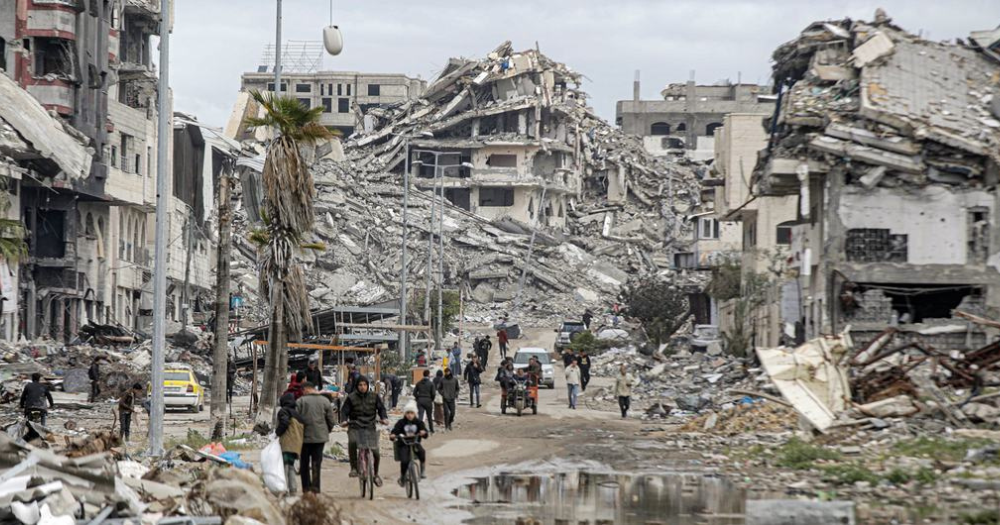


"It's not safe now to deploy SAF medical facilities in Gaza," said Defence Minister Ng Eng Hen in his speech at the Committee of Supply (COS) debate on Mar. 3.
He said that the Ministry of Defence (Mindef) spoke to their counterparts in the Middle East and concluded that "the risks are high and unlikely to subside for some time to come".
Ng added that they "do not want to put Singapore Armed Forces (SAF) soldiers and civilian volunteers in harm's way there".
However, SAF is making concrete plans to provide medical assistance to the people in Gaza.
SAF plans to provide medical assistance to displaced Palestinians
The SAF medical teams, together with MOH medical teams, may be deployed to nearby countries such as Egypt, Jordan, and the United Arab Emirates in the coming months, where more civilians from Gaza have gone to receive treatment.
Just last week in parliament on Feb. 28, Minister for Foreign Affairs Vivian Balakrishnan reiterated Singapore's position on a negotiated two-state solution for the Israeli-Palestinian conflict, and emphasised that Singapore has consistently supported the right of the Palestinian people to a homeland of their own.
Singapore sent its seventh tranche of humanitarian aid in mid-February this year, consisting of nearly nine tons of medical, food, and hygiene supplies from various Non-Governmental Organisations and the Ministry of Health.
Since October 2023, Singapore has delivered more than S$19 million worth of humanitarian aid to Gaza.
Tensions arise from disagreements on a ceasefire deal
Israel has blockaded entry of all food and other supplies into Gaza on Mar. 2 after disagreements arose between Israel and Hamas over new ceasefire terms, as reported by AP News and Reuters.
The first phase of the previously agreed six-week ceasefire expired on Mar. 1, and both parties exchanged hostages and prisoners.
Israel's new temporary ceasefire proposal would have fighting paused until the end of the Ramadan fasting period around Mar. 31 and the Jewish Passover holiday around Apr. 20.
The deal proposed that Hamas release half of the living and dead hostages on the first day, with the remainder released at the end if an agreement is made on a permanent ceasefire.
Hamas rejected the new proposal and says it is committed to proceeding with the second phase of the originally agreed ceasefire, which may lead to the release of dozens of remaining hostages in return for an Israeli pullout from Gaza and a permanent ceasefire.
Top image via Mohammed Nateel/UNICEF website.