Branded
SIT offers new undergrad programme with dual specialisation in hospitality & AI. But why?
You can’t spell hospitality without AI.
If you think workforce demands have drastically changed over the past decade, we have yet to see it all.
In the past, digital skills were nice-to-have.
Now? They are considered workplace non-negotiables, and no, we are not talking about basic computer literacy.
The future is now
Back in 2019, Singapore rolled out its first National Artificial Intelligence (AI) Strategy, outlining plans to deepen the use of AI to transform our economy.
In 2024, the Digital Enterprise Blueprint was launched to accelerate digital transformation and empower Singaporean enterprises by leveraging emerging technologies such as AI.
Most recently, Prime Minister and Finance Minister Lawrence Wong announced that the government has committed up to S$150 million for a new Enterprise Compute Initiative to encourage businesses to adopt AI-powered analytics and digital marketing tools.
Need more convincing that AI has become an integral part of our lives and will become even more so?
AI-related capabilities are one of the three skills that were identified to be crucial for future job roles, along with digital expertise and sustainability knowledge, according to the Skills Demand for the Future Economy Report 2025.
Changing the game in hospitality and tourism
Think AI is just for the tech people? You might want to think again.
Common apps and tools that we use in school and work have embraced AI as well. The Skills Demand for the Future Economy Report 2025 shared that Adobe Photoshop integrated Generative Artificial Intelligence to help users with editing.
AI is driving a major transformation in hospitality and tourism too.
The use of AI in the MICE sector locally is precisely an area that Singapore Institute of Technology (SIT) hospitality business students, Koh Kok Hui and Andre Tan, have been researching for close to a year, since May 2024.
These third-year students have been studying how AI has been reshaping the hospitality industry in Singapore as part of their capstone project.
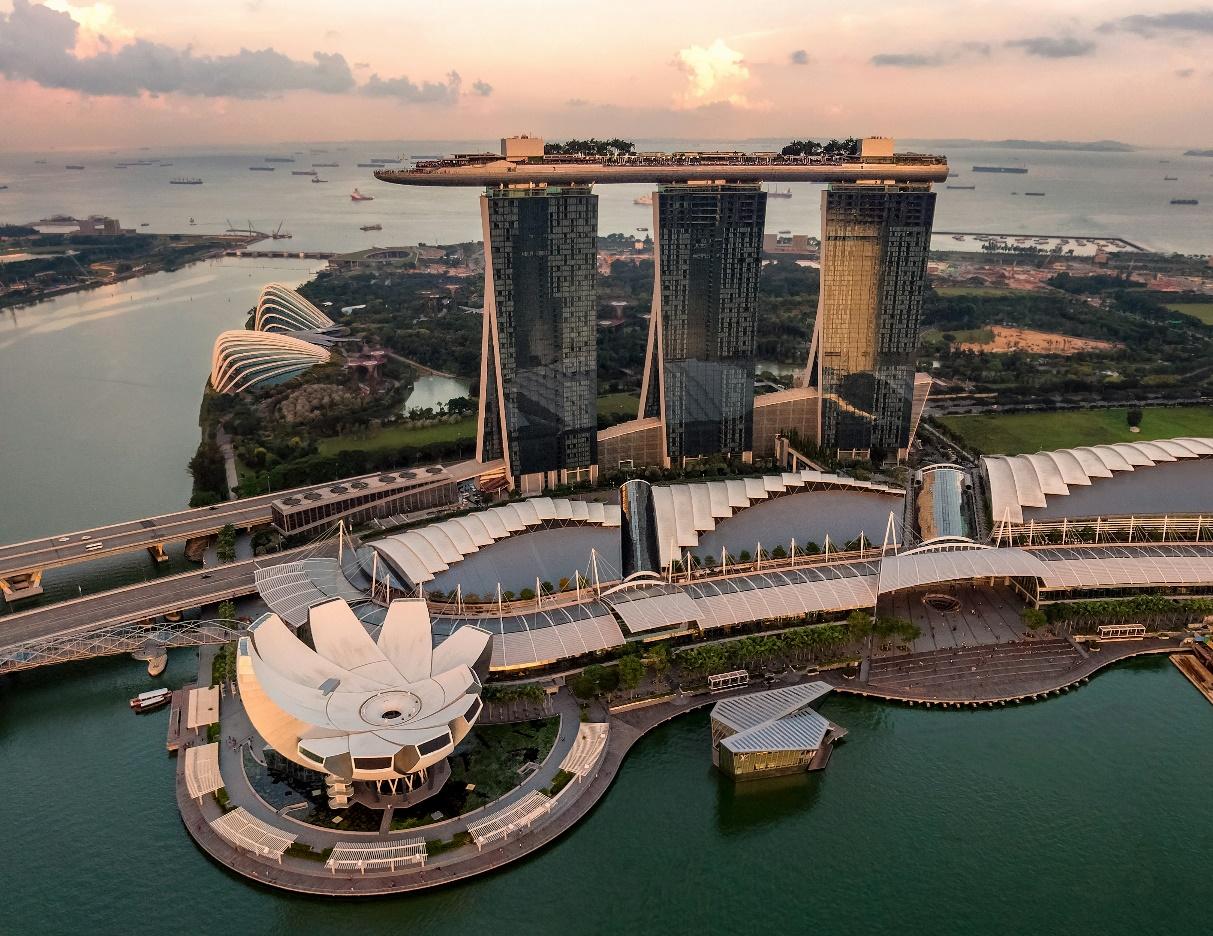 AI in the MICE industry is reshaping event planning, personalisation, and attendee engagement. (Photo: Unsplash)
And no, we don’t just mean the front-of-house robots that help you with your check-ins.
The pair discovered that AI is also integrated into back-end functions, allowing hotels to reduce the time spent on “tedious, administrative matters”.
All these are done in a bid to allow their staff to focus on what truly matters – guests.
Now, Tan is learning how AI enhances personalisation — streamlining processes like reservations, room preferences, and customer service to create seamless guest experiences.
Koh added that AI can handle repetitive tasks, allowing staff to focus on meaningful human interactions — essential for delivering a personalised, “high-touch” experience.
While AI’s potential in the MICE sector and hospitality industry is clear, its full-scale adoption is still unfolding, the two students shared.
BISBICT: SIT’s new programme that combines AI and hospitality knowledge
“AI was a very new thing when we were in Year 1 and I don’t think we could have predicted how it has come to dominate in many industries,” Tan reflected.
AI is definitely not going anywhere.
Eventually, AI is going to be all around us.
Recognising the importance of AI in the hospitality and tourism industry, SIT has launched a new degree programme, the Bachelor of Integrated Studies in Business and Infocomm Technology (BISBICT) with dual specialisations in Hospitality and Tourism Management (HTM) and AI.
The first of its kind in Singapore, the programme offers students a robust blend of ICT-infused business modules, real-world applications through Integrative Industry Projects (IIP) and Capstone projects, and practical experience via an Integrated Work Study Programme (IWSP).
“By integrating technology and emphasising real-world competencies, we prepare our graduates to meet industry demands, excel in dynamic environments, and contribute effectively from day one,” said Steven Wong, director of SIT's Centre for Digital Enablement.
This aligns with SIT’s commitment to shaping its students to be knowledgeable, industry-relevant, and job-ready upon graduation.
As to why it is integrating ICT into its business course, Wong stated that this model ensures that the undergraduates’ education evolves alongside changes “driven by rapid technological advancements and the volatility, uncertainty, complexity, and ambiguity (VUCA) of the modern world”.
Additionally, the university noted that the specialisation aligns with Singapore’s push for digital transformation, particularly in the hospitality sector.
The BISBICT (HTM & AI) degree is open for enrolment till Mar. 19, 2025, for the September 2025 intake.
Find out more about the SIT’s latest programme here.
This branded article is brought to you by SIT.
Top photo via SIT/Facebook and Canva.