News

'Operationally challenging' for S'pore govt to track amount of seized scam proceeds returned to victims or forfeited to State
Seized proceeds could be mixed with non-scam-related activities like unlicensed money lending cases.
February 28, 2025, 12:45 PM


Update on Mar. 17 at 11:10am: This article has been updated to include a factual correction issued by Minister of State Sun Xueling to her reply to Member of Parliament Gerald Giam.
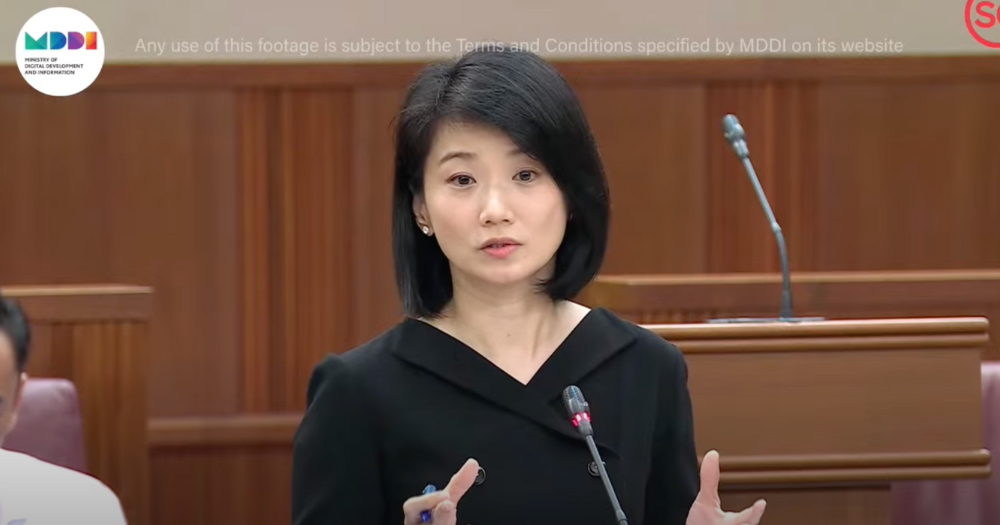
It is tough for the government to track the proportion of seized scam proceeds that are returned to victims or forfeited to the State, said Minister of State for Home Affairs, Sun Xueling.
This was in response to a question by Gerald Giam, a Member of Parliament from the Workers' Party, regarding the restitution to victims of confiscated assets from financial crime cases.
In addition, he asked what proportion of the seized scam proceeds were forfeited to the State instead of returned to victims.
Sun explained that tracking this is "operationally challenging" as seized proceeds could be mixed with those from non-scam-related activities like unlicensed money lending cases.
Seized proceeds may also not be directly related to a crime committed in the same year, and it would be resource intensive due to the high volume of scam cases.
Forfeited properties
Sun explained that the Singapore Police Force would freeze bank accounts and seize any assets suspected to be proceeds of crime or which constitute evidence.
The police would do their best to ascertain the ownership of the seized property by examining bank transaction records.
Seized properties may also be required for investigations and subsequent court proceedings. If not, the police would apply to the Court for the property to be returned to the rightful owners.
Sun stated that the police would publish a notice in the Government Gazette if the persons entitled to the seized property cannot be ascertained or found.
The seized property would only be forfeited to the State if no one establishes a claim after a six-month period.
Sun concluded that the Ministry of Home Affairs will explore the feasibility of tracking the amount of seized proceeds in the longer term.
A scam victim restitution fund?
In a follow-up question, Giam asked if the Government Gazette has been published to invite potential victims from a recent money laundering case to submit their claims.
Giam was referring to a November 2024 case where S$3 billion of assets were seized from 27 foreign nationals.
Sun responded by inviting Giam to file another parliamentary question specific to the case.
Giam also asked if the government considered establishing a scam victim restitution fund that would be financed by the confiscated proceeds from money laundering cases.
This is "so that local scam victims can also be able to make claims and get some restitution... for the thousands of dollars that they have lost in scams".
Sun replied that various proposals are being considered on how best to return recovered scam proceeds to victims.
However, she pointed out that the government is not able to ascertain whether all monies recovered by the anti-scam centre pertain to scams.
This is because the syndicates that run these scams operate various other crimes as well, like illegal money lending.
"There could be other proceeds that pertain to other forms of crime, and therefore there are other victims who may also similarly feel that they have a claim to those proceeds."
"It is often very difficult to be able to track whether this dollar that is part of the proceeds and monies recovered actually is that dollar which was lost to one particular victim, and that's because of the co-mingling of funds," she added.
Sun also mentioned that out of S$1.1 billion lost to financial crimes this year, only S$182 million was recovered, a fraction of what was lost.
As such, there will be "far more claimants for the monies than there are actually proceeds".
"At the end of the day, victims, if they ever are to be able to recover some portion of their monies, it is going to be a tiny fraction of what they lost in the first place."
Lastly, Sun noted that scammers may try to pivot to see how they can entice other types of mules to participate in scam activities and try to recover monies from these scam recovery funds.
Sun said that these are some of the difficulties and concerns about Giam's proposal, but ultimately agreed with him "principle wise".
"But at the end of the day, principle wise, I agree with you that we should do our very best to be able to find some way of recovering proceeds and, of course, returning them to victims."
Top photo via MDDI/YouTube