Environment


Lee Kong Chian Natural History Museum seeking S$1 million to help fund display of skeleton of dead whale found in S'pore waters in 2025
The whale carcass has been identified as a male Omura's whale, one of the lesser-known whale species.
June 02, 2026, 07:05 PM
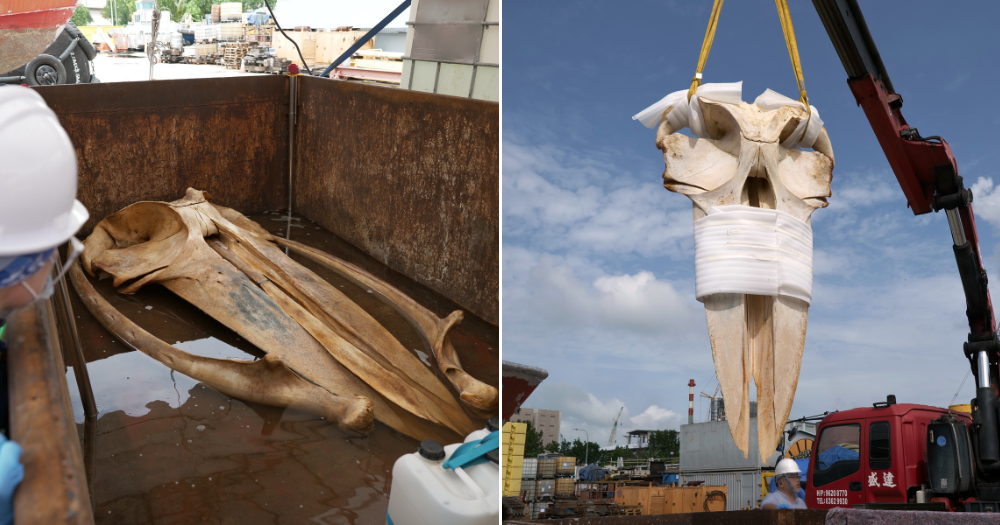
Photos via Lee Kong Chian Natural History Museum.


The whale carcass that washed up in Singapore waters in September 2025 has been identified by researchers at the Lee Kong Chian Natural History Museum (LKCNHM) as a male Omura's whale.
Omura's whale is a lesser-known, rarely-sighted species that was only formally recognised as new to science in 2003.
The museum is seeking to raise S$1 million in funds to create an exhibition centred on the whale specimen, as well as fund related education programmes.
Likely died due to ship strike
In a press release and media factsheet, LKCNHM shared that determining the whale's species and sex "proved particularly challenging" because of the carcass' advanced stage of decomposition.
Identification was done by analysing DNA extracted from tissue samples and examining the shape of the skull.
The effort was undertaken by Molecular Lab Manager, Jayanthi Puniamoorthy, and Assistant Senior Curator of Mammalia, Marcus Chua.
The carcass was ultimately identified as a sub-adult male Omura's whale.
Further examination of the skeleton revealed evidence of injuries consistent with a ship strike, believed to have caused the whale's death.
The LKCNHM team also observed signs of an earlier traumatic injury that the whale survived, prior to its fatal injuries.
The skull of the carcass measures 2.64m in length, with a mandible length of 2.71m.
Based on skull measurements, it is estimated that the whale's body length measured 10.6m when it was alive.
One of the least understood whale species
"Omura's whales are among the least understood baleen whale species in the world," Chua said.
"Most of the records of the species come from the warmer coastal waters of the Indo-West Pacific, including Southeast Asia, where sightings and strandings have been documented in Indonesia, Malaysia, the Philippines, Thailand and Vietnam," Chua continued.
In its factsheet, the museum shared that Omura's whales are rarely sighted.
Prior to their formal description as a distinct species in 2003, they were misidentified as Bryde's whale.
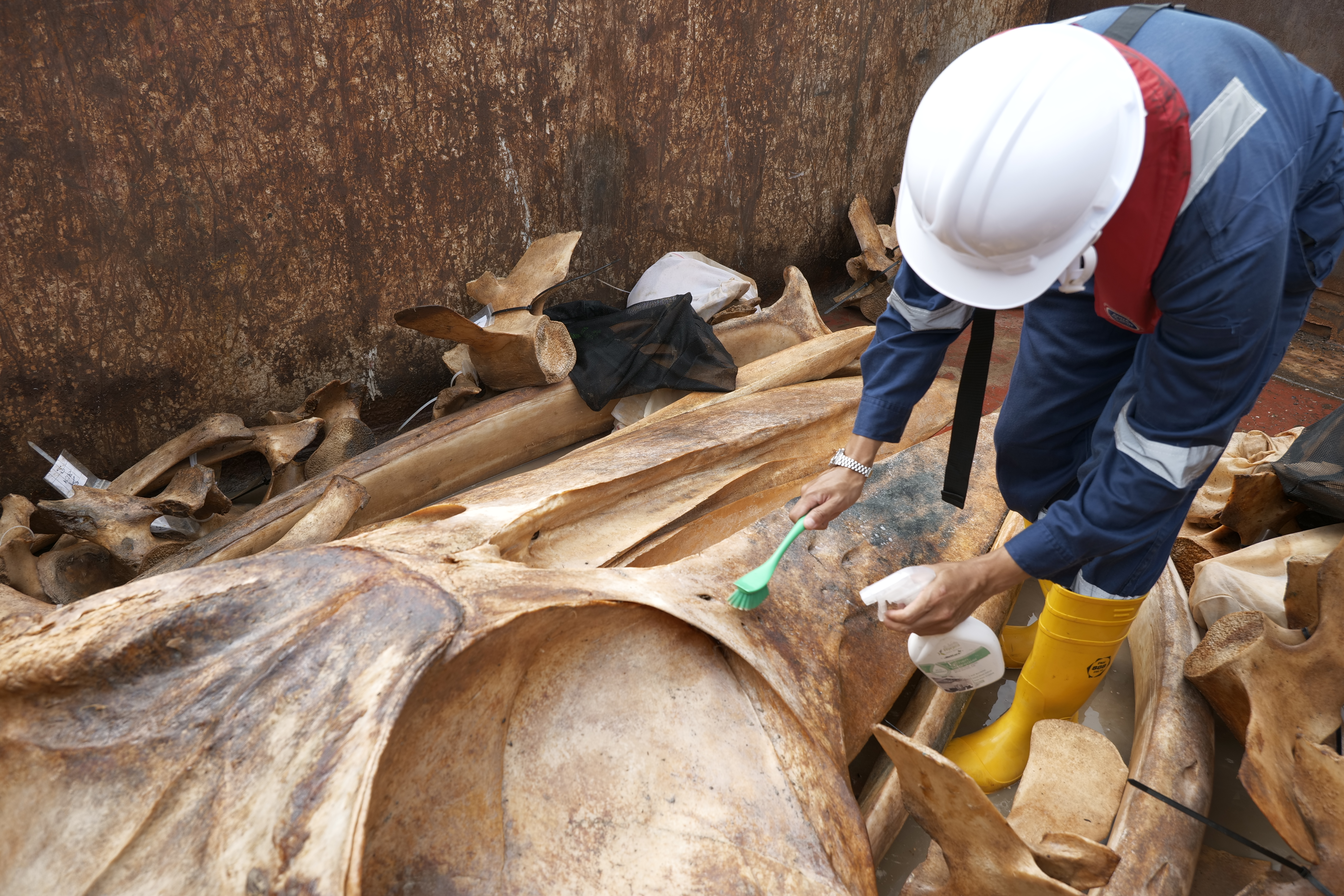 Photo via Lee Kong Chian Natural History Museum.
Preserving the carcass
Following the carcass' discovery on Sep. 6, 2025, the LKCNHM team degreased the carcass to remove natural oils from the skeleton as part of the preservation process.
The whale's 2.6m-long skull was too large to fit into the museum's degreasing pots and had to be treated separately in a specially prepared tank, the museum shared.
The degreasing process took place between October and December 2025 and required multiple rounds.
The skull itself required six rounds of degreasing.
Degreasing of the skull was eventually halted after April 2026 due to increasing fragility.
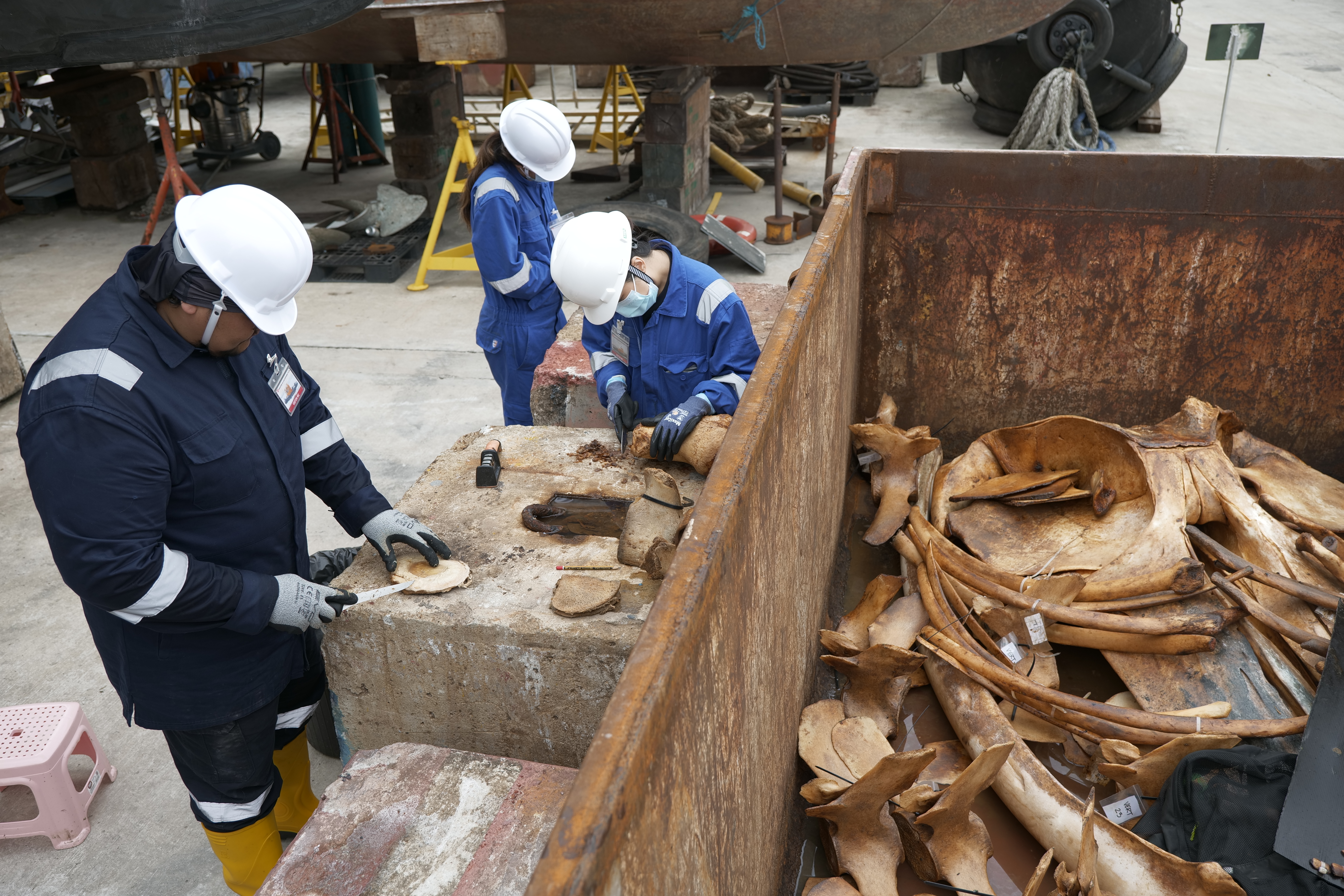 Photo via Lee Kong Chian Natural History Museum.
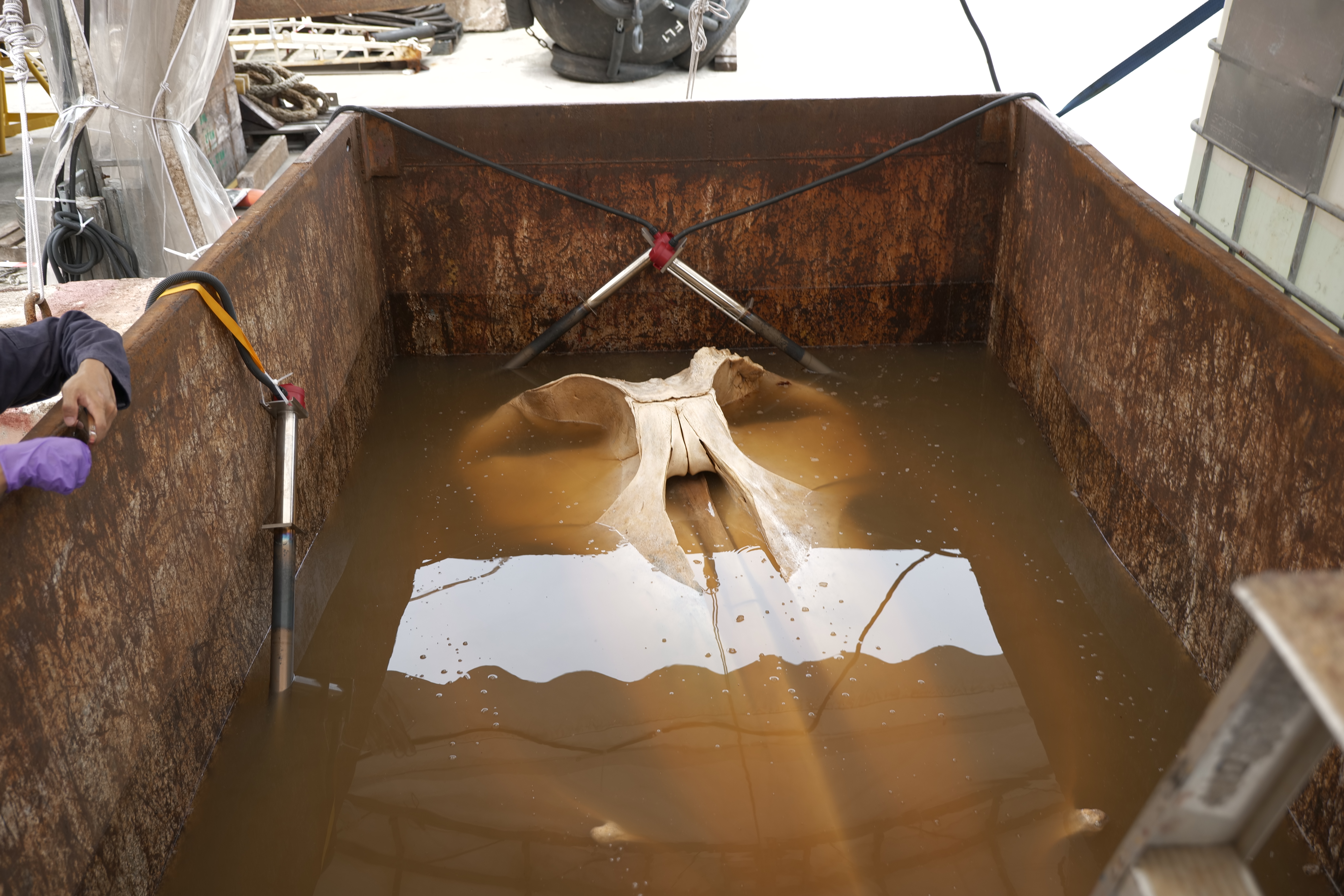 Photo via Lee Kong Chian Natural History Museum.
Museum fundraising to support exhibition plans
Once fully preserved, the Omura's whale skeleton will eventually be displayed in the museum's gallery.
Further details, including exhibition plans, will be shared at a later date, the museum said.
To support the exhibition plans, the museum is seeking "philanthropic support" for the display of the specimen and the development of a "dedicated education programme on marine mammals and ocean giants for schools".
"Contributions will also support ongoing research on Singapore's marine and coastal environments," the museum said.
More information on supporting this initiative can be found at the museum's website.
It is stated on the website that the fundraising goal is S$1 million.
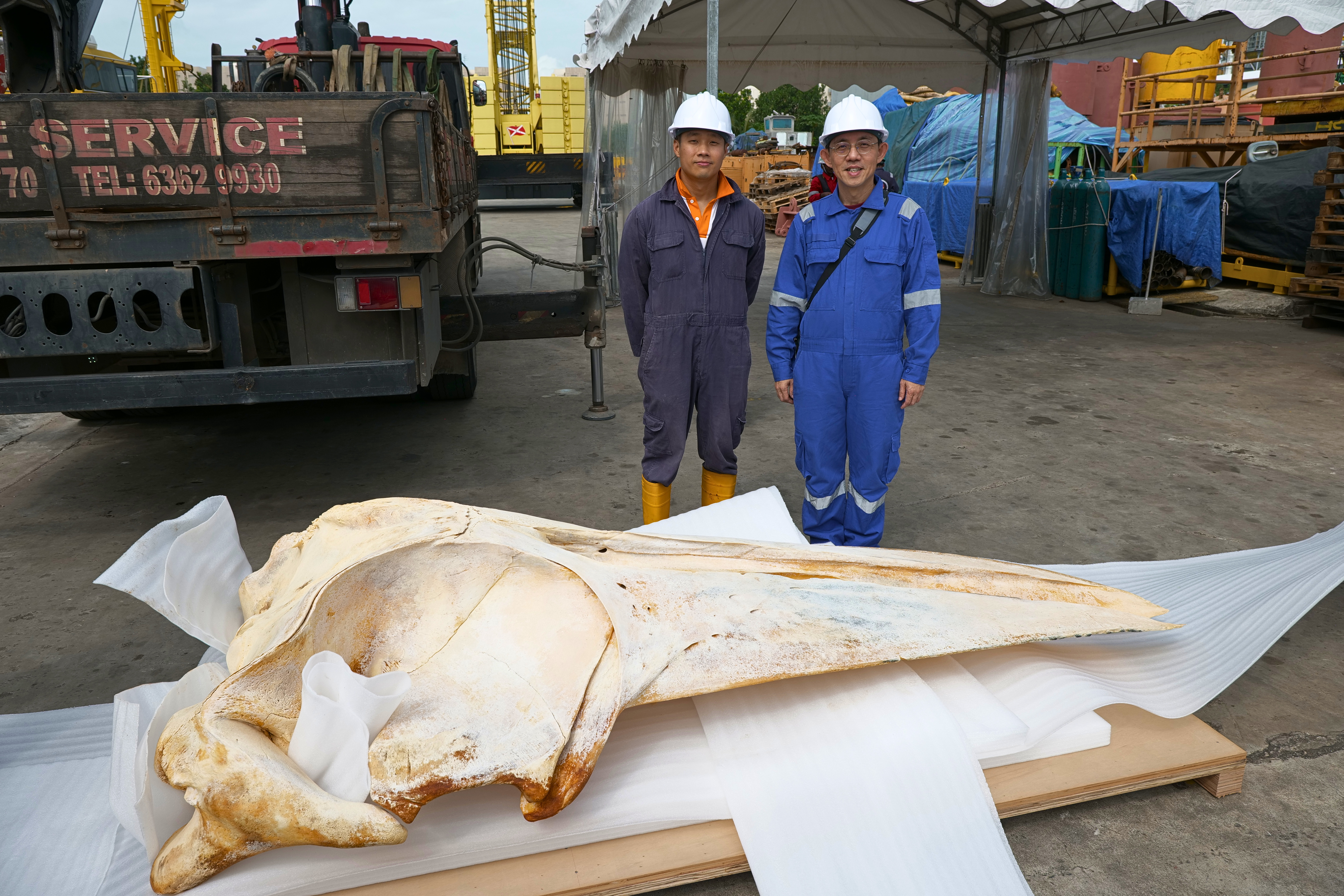 Photo via Lee Kong Chian Natural History Museum.
The funds raised will go towards conservation of the whale bones, mounting them for display, education and outreach programmes for schools and research, among others.
In 2015, the museum also sought S$1 million for the creation of one of its centrepiece exhibitions, which is a sperm whale skeleton specimen.
On the museum's donation page, it says that LKCNHM relies "almost entirely on the generous support of donors".