News


Governments must address people's insecurities before trust in globalisation can be restored: Ong Ye Kung
"People need to see governments addressing their insecurities, protecting their livelihoods, dignity and way of life."
June 11, 2026, 01:21 PM
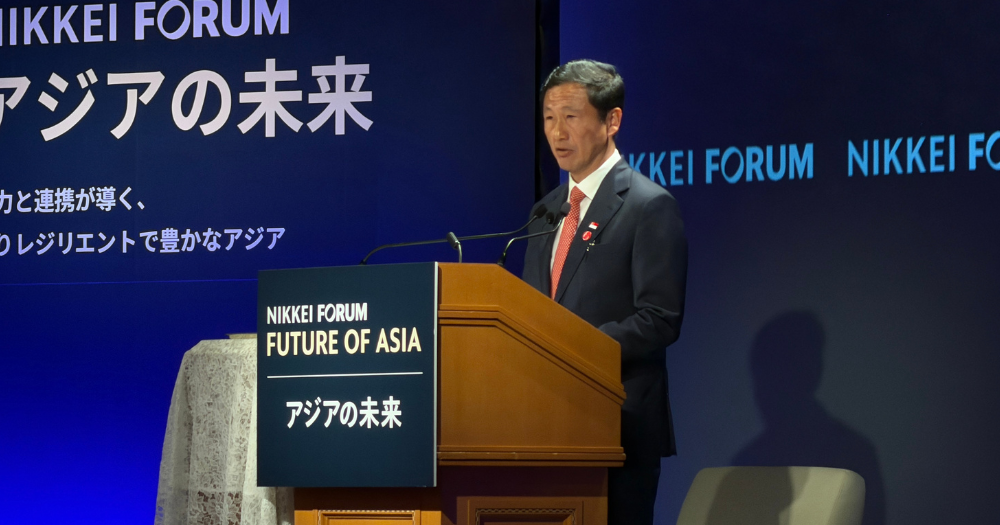
Photo by Mothership.


As the world becomes increasingly globalised, governments must do more to address the insecurities of their people if public trust in an interconnected world is to be restored, said Minister for Health and Coordinating Minister for Social Policies Ong Ye Kung on Jun. 11.
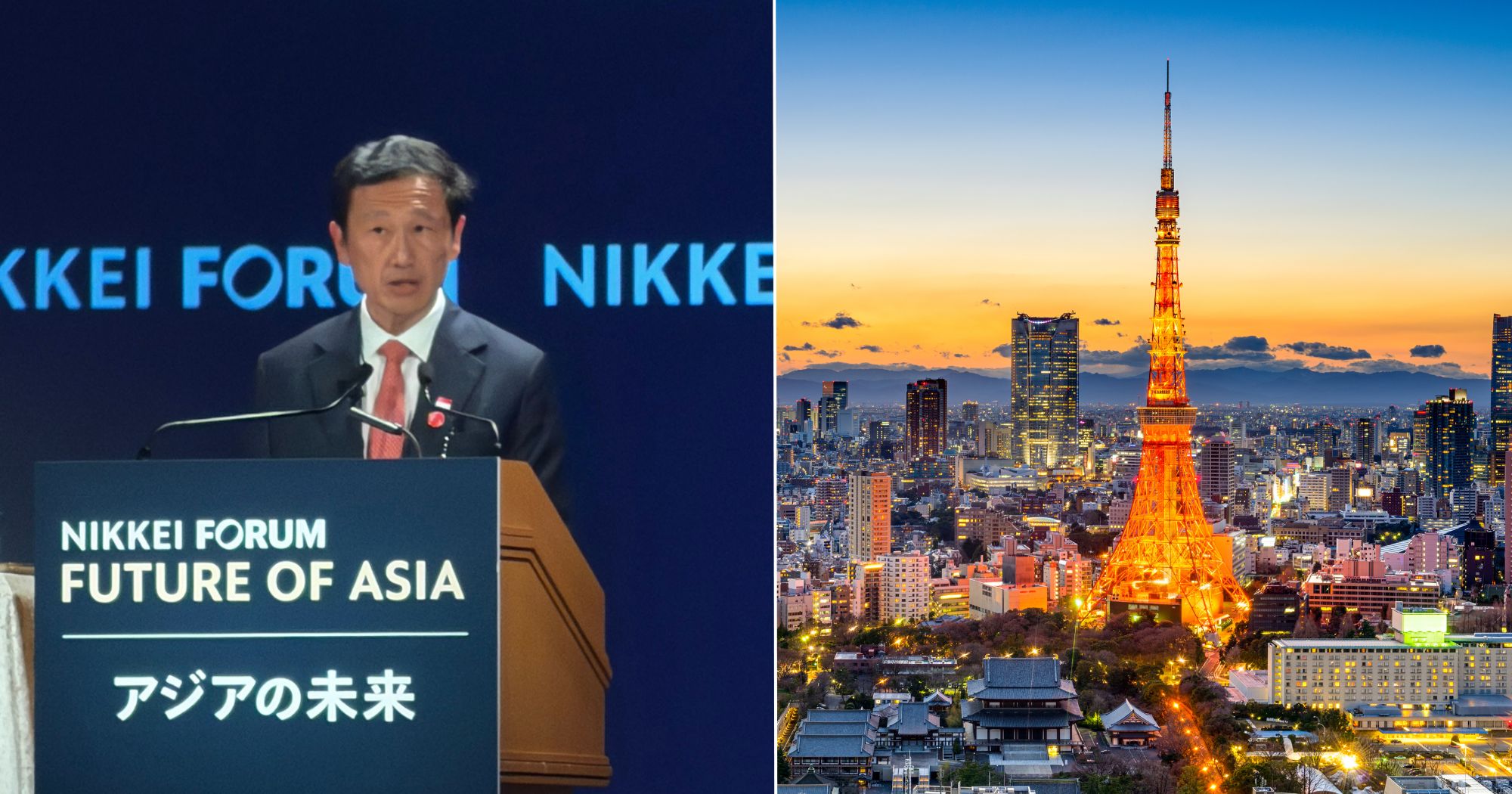
Speaking on the second day at the 31st Nikkei International Forum 'Future of Asia' in Tokyo, Japan, Ong said the current era of "hyperconnection", with growing discontent, demands active, deliberate, and coordinated governance.
"People need to see governments addressing their insecurities, protecting their livelihoods, dignity and way of life," he said. "Only then will there be confidence and trust to embrace globalisation again."
Three pillars
Ong outlined three areas governments must address to sustain public confidence in globalisation.
The first is fiscal soundness.
Ageing populations, he noted, pose as much a fiscal challenge as a social one, with healthcare and pension costs rising in many countries.
He pointed to Singapore as an example of a country that has taken a deliberate and pragmatic approach to long-term fiscal sustainability.
As a result of active and deliberate policy choices, Singapore's health expenditure is about five per cent of GDP, which is among the lowest in the world, he said, adding that the country still achieves relatively strong health outcomes despite spending less.
"With a sound fiscal system, we can invest in the future, such as in education, housing and infrastructure. Each society is different, but governments need to balance social support, fiscal sustainability and building a hopeful future."
The second area is developing an economic model that generates growth and opportunity, while instilling hope.
Ong explained how new technologies such as electric vehicles and artificial intelligence have forced economies to choose between embracing transformation or persisting with established approaches.
Singapore has chosen to lean into change, he said, adding that the country is reviewing its education, digital governance, investment attraction, industry growth and workforce preparation for change.
"We will put in place policy guardrails to ensure that technology does good rather than harm," he added, stressing the need for coordination between the government, employers and unions.
The third and final area is social cohesion, particularly around immigration, which Ong described as especially pressing for Singapore as a small city-state with an open economy.
Singapore's approach, he said, is one of "calibrated openness and deliberate integration".
He stated that the country monitors immigration numbers closely, the sectors in which foreigners work, and how well they integrate.
He added that Singapore works to prevent the formation of enclaves, be it in residential, social or professional settings, while investing in shared spaces where people can come together.
"The objective is not just to bring people in, but to help everyone live together, understand one another and preserve a shared sense of society."
US-China relations
Ong described the relationship between the United States (U.S.) and China as "the most consequential bilateral relationship for the future of globalisation".
While the two economies have grown increasingly intertwined, with the U.S. leading in technological innovation and China excelling in large-scale manufacturing, this complementarity has also deepened economic rivalry and mutual insecurity.
"The U.S. wants to produce and bring more manufacturing jobs home, while China is working hard to invent and innovate to bring about higher quality growth," he said.
Ong noted that while the two powers need not be enemies nor close allies, both must address their citizens' anxieties in order to create political room for cooperation.
This, he said, will lead to sustained constructive strategic stability — an outcome that would be important for globalisation and for Asia.