News


Japan has much to contribute on trade & ageing population issues amid globalisation challenges: Ong Ye Kung
Future of globalisation.
June 11, 2026, 11:13 AM
Photo from Mothership and Canva


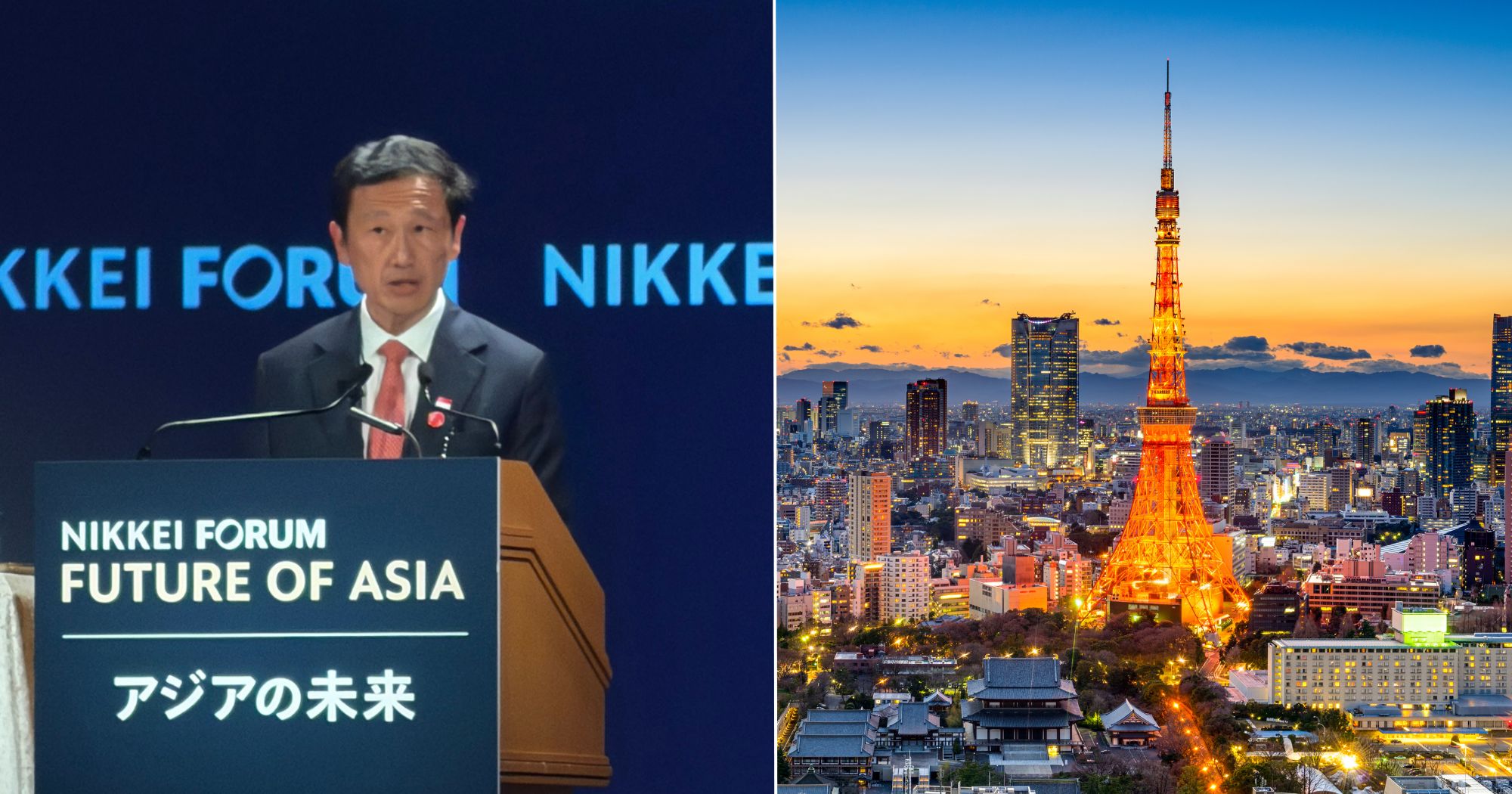
Japan has much to contribute even as the world grapples with the challenges of globalisation, said Singapore’s Minister for Health and Coordinating Minister for Social Policies Ong Ye Kung.
He was speaking on the second day of the 31st Nikkei Forum held in Tokyo, Japan, on Jun. 11.
The annual conference saw regional leaders gather to discuss ways to make Asia more resilient amid an increasingly uncertain world.
Ong spoke about the future of globalisation against the backdrop of a “new era of interdependence” and growing discontent.
He said that Japan’s contribution to Asia has been “broad and sustained”, especially through its investments in Asean countries, and especially relevant today in the areas of trade and ageing.
Stalwart for free trade
Ong said that on international co-operation, Japan can be a “stalwart for free trade”.
Recalling how Japan and Singapore commenced negotiations on the Japan-Singapore Economic Partnership Agreement (JSEPA) in 2000, he said that Japan has since emerged as an active international player for free trade.
It demonstrated important leadership in shaping various regional free trade frameworks, Ong highlighted, including the Comprehensive and Progressive Agreement for Trans-Pacific Partnership (CPTPP) and the adoption of the interim arrangements for the World Trade Organisation (WTO) E-Commerce Agreement.
“At a time when the free trade agenda was flailing, Japan’s leadership and interventions have been decisive on the domestic front,” he said, noting how Japan stepped in and revived the Trans-Pacific Partnership (TPP) as the CPTPP.
Adaptability to its demographic shift
Ong also pointed out that despite its ageing population, Japan has adapted to its demographic shift and managed to overcome years of persistent deflation, embrace technology, brought about productivity increase, and register consistent growth.
He noted Japan’s disaster response as a “powerful lesson in social resilience”.
In particular, the Fukushima nuclear incident in 2011, which saw over 100,000 residents evacuated and many communities destroyed, produced an “inspiring tale of ground-up self-help”, he said.
Many people came together to re-establish social networks for seniors, Ong said, enabling them to run community activities and feel purposeful again.
The concept, called Ibasho, was something Singapore’s Ministry of Health concluded that it needed to learn and study from.
Ong said Singapore subsequently launched the Age Well SG national programme, and established Active Ageing Centres throughout the island, where seniors can establish social networks, participate in activities and volunteer work.
Forward-looking agenda
Ong also said that long-standing partnerships remain valuable anchors, noting that 2026 also marks the 60th anniversary of diplomatic relations between Japan and Singapore.
“It was a timely milestone for Japan and Singapore to elevate ties to a Strategic Partnership,” he said.
This lays out a forward-looking agenda to deepen co-operation in areas such as supply chain resilience, digital technologies, AI governance, cybersecurity, low-carbon solutions and the green economy.