



News


'A new terminal alone won't do the job': Josephine Teo announces update to National AI strategy, uses T5 expansion as example
The update introduces 10 refreshed priorities.
May 20, 2026, 02:14 PM
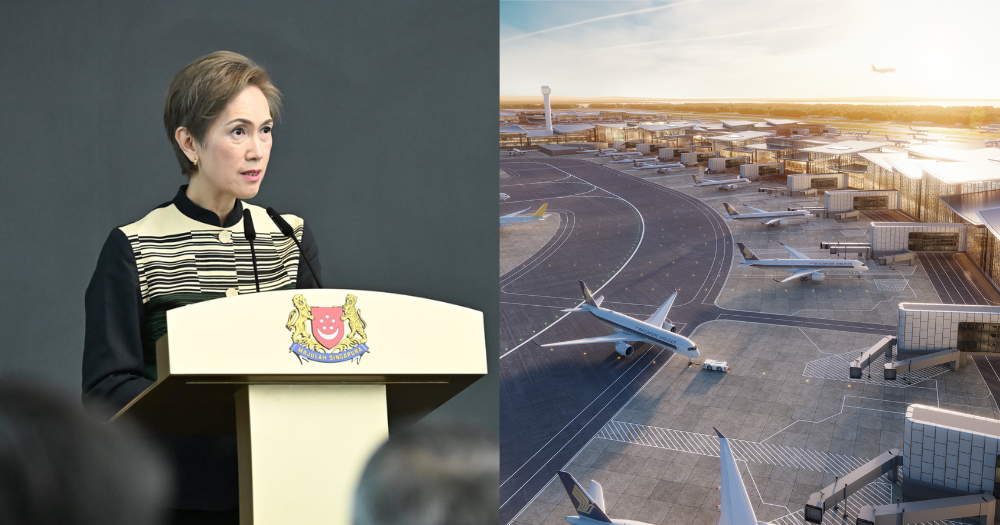
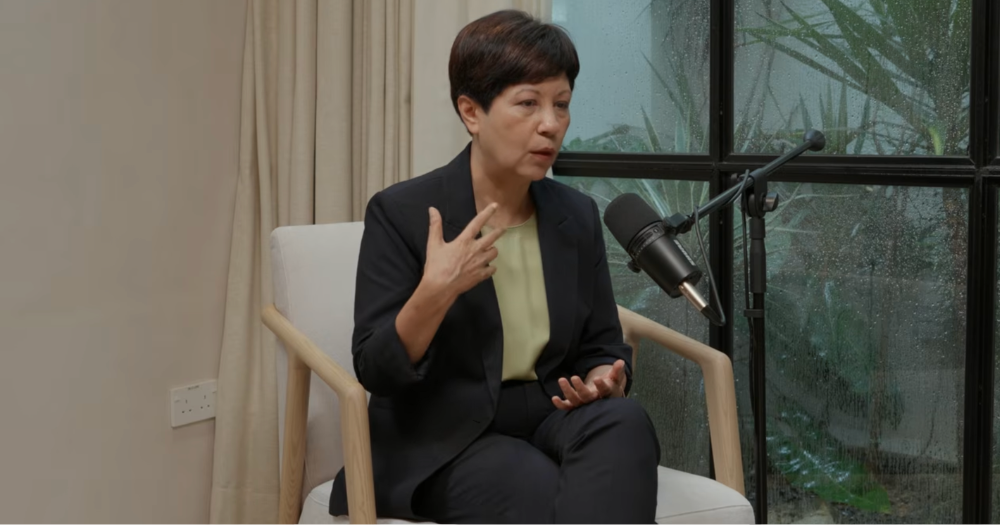
Photo from Josephine Teo/Facebook and Changi Airport Group.


Construction for Changi Airport Terminal 5 (T5), which was first announced in 2013, began in 2025 and is expected to be completed in the mid-2030s.
The expansion is expected to increase the airport's annual passenger handling capacity by about 50 million passengers.
But construction alone, said Minister for Digital Development and Information Josephine Teo, is only half the equation — Singapore must also rethink how the air hub operates.
Teo was speaking at the ATxSummit on May 20, where she announced an update to Singapore's National AI Strategy (NAIS).
She posed a series of questions:
"How will passengers move from one gate to another? How will baggage be delivered across multiple terminals? How will aircraft landings and take-offs be sequenced on our runways?"
She described these as "genuinely hard problems that need both hardware and software innovations".
According to Teo, among other challenges, the airport will need a next-generation Air Traffic Management system that can not only handle the significant increase in volume, but also ensure that safety remains the top priority.
"A new terminal alone won't do the job," she said.
This, she added, is precisely where AI comes in.
10 refreshed priorities
 Photo from MDDI.
Describing the NAIS update as a "'double-click' rather than a system reboot", Teo said it builds on progress made since NAIS 2.0 and reflects the elevated ambitions of the National AI Council (NAIC), which was established in February 2026 under the chairmanship of Prime Minister Lawrence Wong.
"We are fleshing out how to push the boundaries in each component of our AI ecosystem," she said.
NAIS 2.0 was launched by PM Wong in December 2023, setting out Singapore's vision to harness AI for the public good.
The new update sets out 10 refreshed priorities across three directions:
1. Deepening sectoral and public sector transformation
On sectoral and public sector transformation, Singapore will pursue national AI Missions in Advanced Manufacturing, Financial Services, Connectivity, and Healthcare.
In her speech, Teo highlighted two programmes aimed at driving enterprise adoption.
She noted that the National AI Impact Programme aims to help 10,000 SMEs adopt meaningful AI use, while the Champions of AI programme offers more targeted support for those ready to make a larger, organisation-wide commitment.
AI will also be embedded more deeply across government agencies to improve citizen services.
2. Mainstreaming AI adoption and strengthening workforce readiness
On workforce readiness, Singapore will continue to support a wider base of enterprises and public agencies in adopting AI in practical, everyday ways, paired with efforts to build baseline AI literacy across the workforce and sustained work on governance and public trust.
3. Building an AI hub
On hub-building, Singapore will work to secure more computing capacity, improve AI model system and deployment efficiency, and deepen ties across its AI community at home and abroad.
Teo pointed to NVIDIA's new Research Lab in Singapore and the Punggol Digital District as early signs of momentum.
She was also candid about the country's constraints.
"On its own, Singapore's domestic market may not warrant so much attention. What makes us compelling is the global network we are connected to and our track record for trusted technology adoption," she said.
Singapore's ambition, she explained, is not for entities to be "passive observers" and wait for solutions to arrive from elsewhere.
"We will engage actively, address pain points along with our partners, strengthen our ecosystem to create new value for business and industries."