




Branded

I didn’t expect to become the ‘health police’ for my dad but I did
Nagging doesn’t work as well as evidence backed by data.
Photos by Zheng Zhangxin
I didn’t grow up thinking I’d one day become the “health police”.
As I entered adulthood, my parents entered a different stage of life too.
It’s a stage where they have to deal with “unwelcome friends” such as high blood cholesterol, high blood pressure and high glucose levels.
Over time, I found myself nagging them out of concern, much like they used to nag me about my bad habits.
Managing “unwelcome friends”
Unfriending these “friends” isn’t as easy as clicking “unfollow” on social media.
Like many of us, my dad turns to food to decompress after a long day – often in the form of late-night snacking, despite being diagnosed with diabetes in recent years. He tries to adjust his lifestyle to keep his glucose levels in check, but old habits are hard to break.
Whenever he suspects his glucose levels are high, he pricks his finger to check his blood sugar – a small but constant reminder of his condition.
At home, I’ve become the “health police”, knowing that such a lifestyle cannot continue. As a family, we try to help him manage his glucose levels more closely before things worsen and affect his quality of life.
I used to nag at him when he reached for a can of beer or a pack of peanuts. I would remind him the next morning when he lamented snacking the night before, hoping he would change.
Even after getting married and moving out, I still worry about his glucose levels and being away makes it harder to keep a close eye on him.
A way to care (and monitor) from a distance
Don’t get me wrong. I’m not trying to limit my dad’s freedom of choice, but moderation is key to staying healthy.
Like many caregivers, there’s a limit to what nagging can do. Sometimes, it can even create tension between loved ones.
Recently, I found a way to have better conversations with my dad about his glucose levels, with the help of Dexcom’s G7 Continuous Glucose Monitoring System.
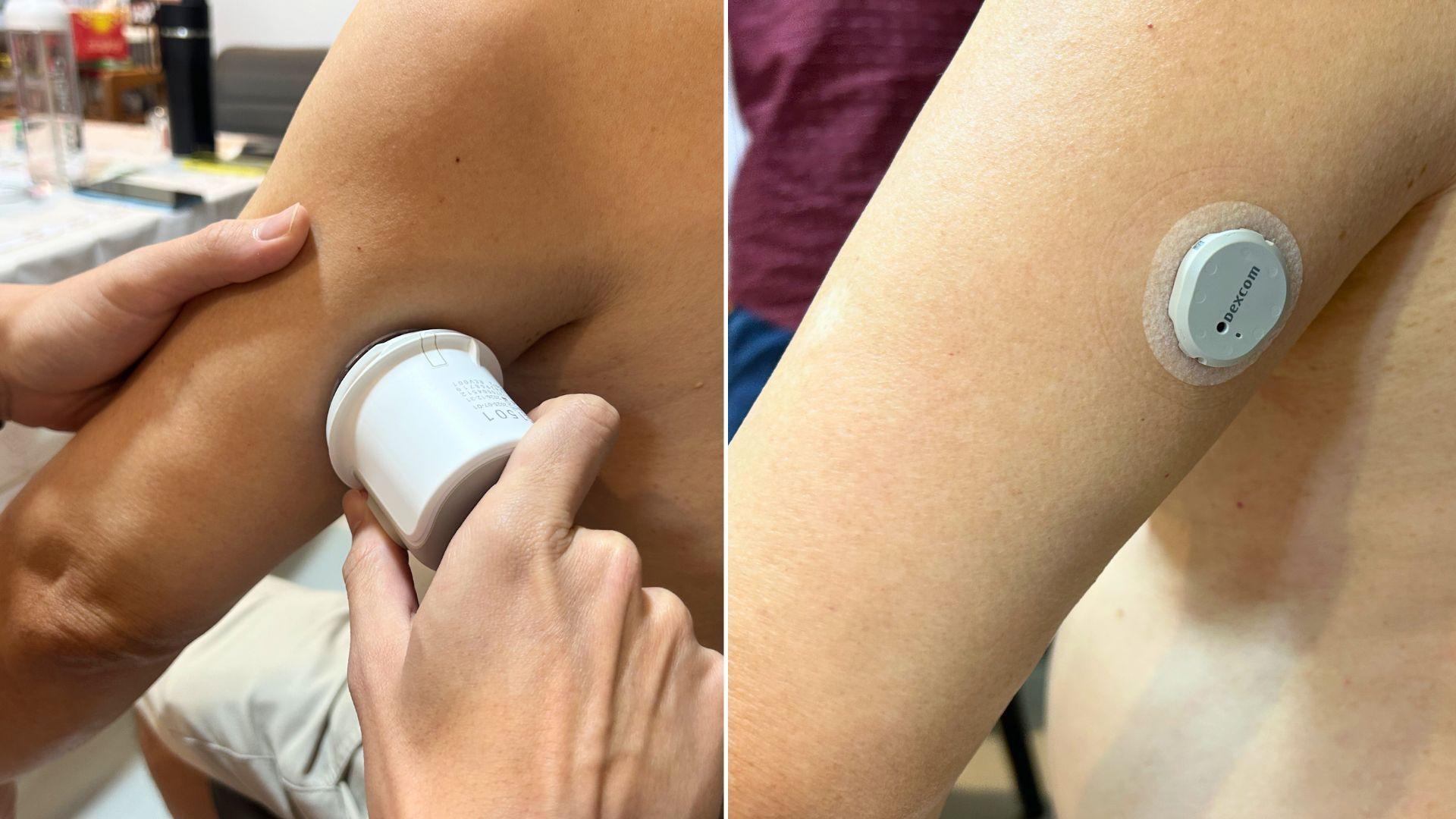
This was my dad’s first time trying a Continuous Glucose Monitor.
He was hesitant at first, but placing the Dexcom G7 sensor on the back of his arm was easier than expected. He even commented that finger-pricking felt more painful than putting on the sensor.
Unlike traditional glucose meters that only show his blood sugar at a single point in time, the Dexcom G7 allowed him to see how his glucose levels changed throughout the day, rather than relying on occasional tests.
There was a short 30-minute warm-up period before the readings stabilised. After that, it updated every five minutes – adding up to over 280 readings a day. This gave us a much clearer picture of how his glucose levels fluctuated.
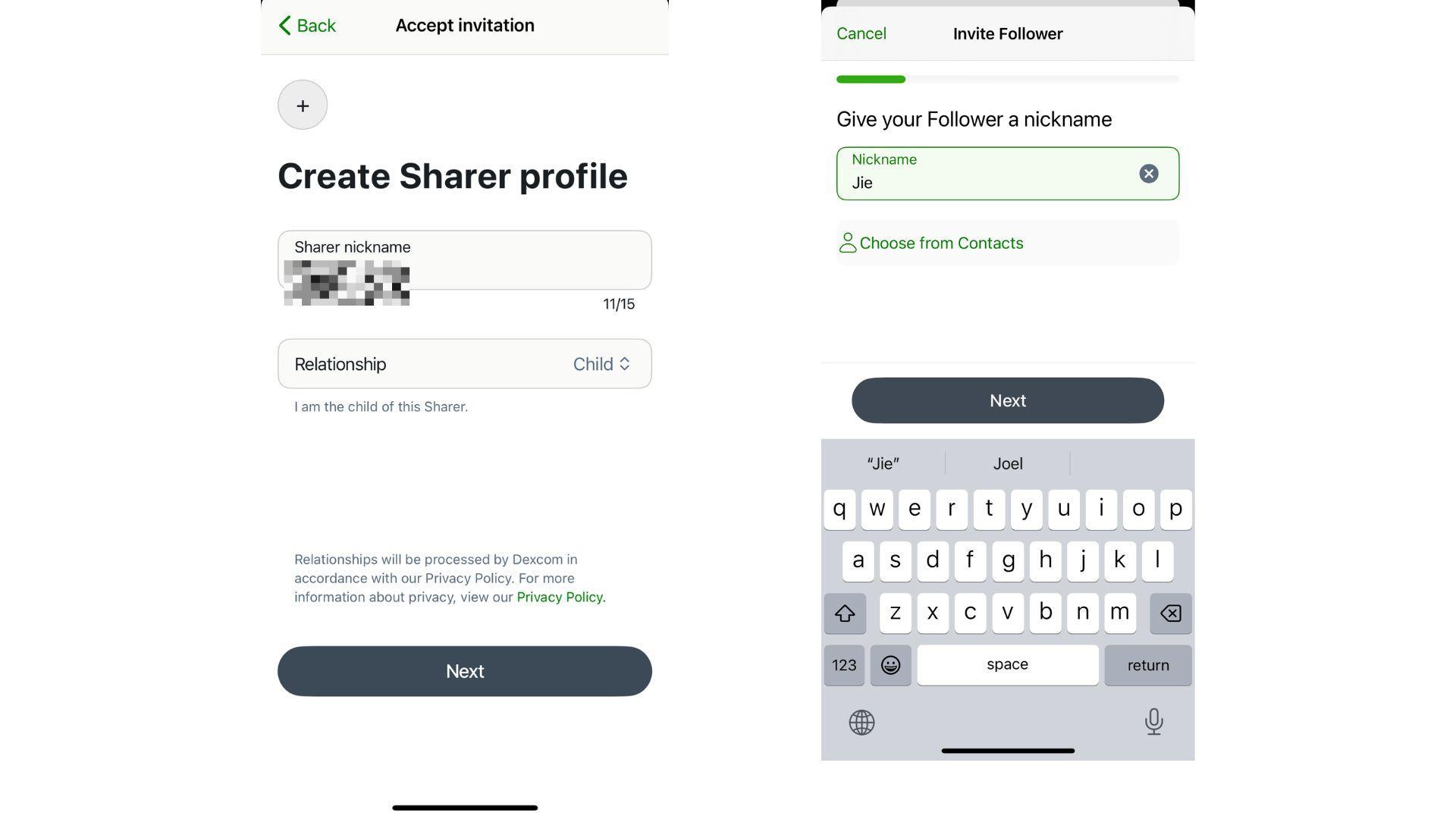
What stood out to me most was how it made things easier to keep track of, even from a distance. With the Dexcom G7 Continuous Glucose Monitoring System, I could view my dad’s glucose data in real time through the Dexcom Follow app.
Each Dexcom G7 user can choose to share their glucose data with up to 10 followers, allowing family members and caregivers to stay informed even when they are not physically together.
The readings can also be viewed on compatible smartwatches, including the Apple Watch and select Wear OS devices, making them easy to check at a glance.
Feel anything with Dexcom G7 on your skin?
And if you’re wondering whether he felt anything with the Dexcom G7 sensor on his arm all day, he went about his routine as usual.
He was initially concerned about showering with it on, but it wasn’t an issue at all.
The compact sensor sat comfortably under his sleeve, and with an additional overpatch keeping it secure, it stayed in place and continued updating his glucose data smoothly over 10 days.
Fruitful conversations on managing glucose levels
Throughout the 10 days, my dad was able to monitor his glucose levels conveniently by viewing real-time data on his phone.
One thing we quickly realised was that it wasn’t just about managing high glucose levels, the lows mattered just as much. There were moments when he noticed his levels dipping, and he would have a meal before they dropped too low. The Dexcom G7 would also send an “Urgent Low Soon” notification to warn him of predicted low glucose levels, giving him an added sense of reassurance.
Over time, having more regular and timely meals helped him avoid overeating and cut down on late-night snacking.
As his caregivers, my siblings and I used the data trends to identify causes behind glucose spikes that we had overlooked in the past.
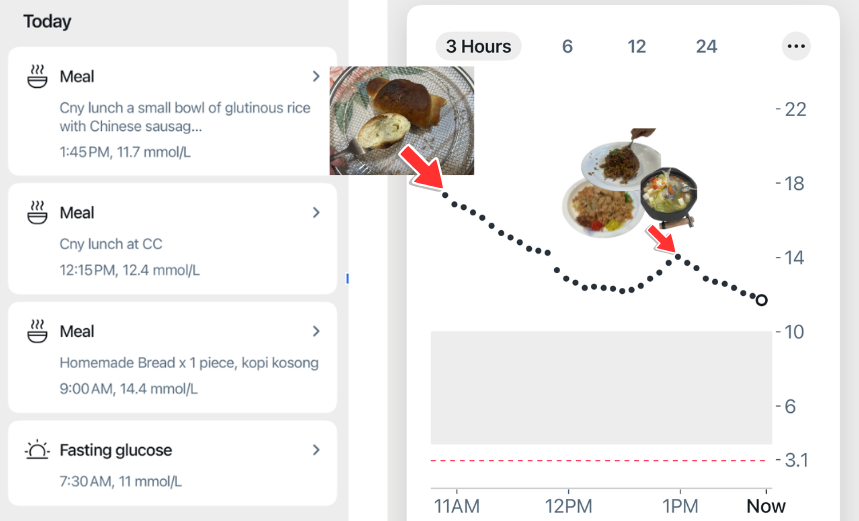
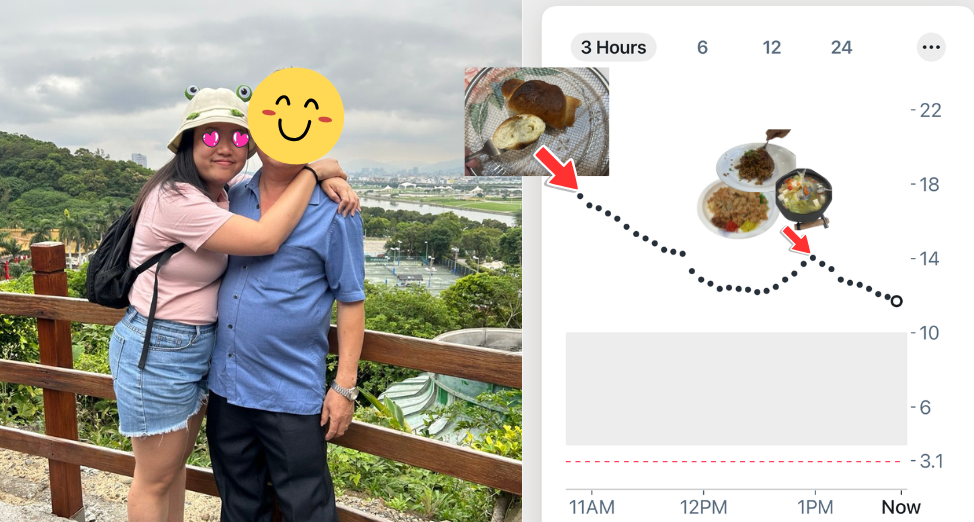
For instance, there was a day when the readings showed that my brother’s homemade Shio Pan bread caused a bigger spike than a Chinese New Year lunch, where food was served in small portions – something that surprised all of us.
The data also proved that drinking beer and eating peanuts late at night wasn’t ideal. In fact, snacking past 11pm elevated his glucose levels throughout the night, which may also have contributed to his poorer sleep quality.
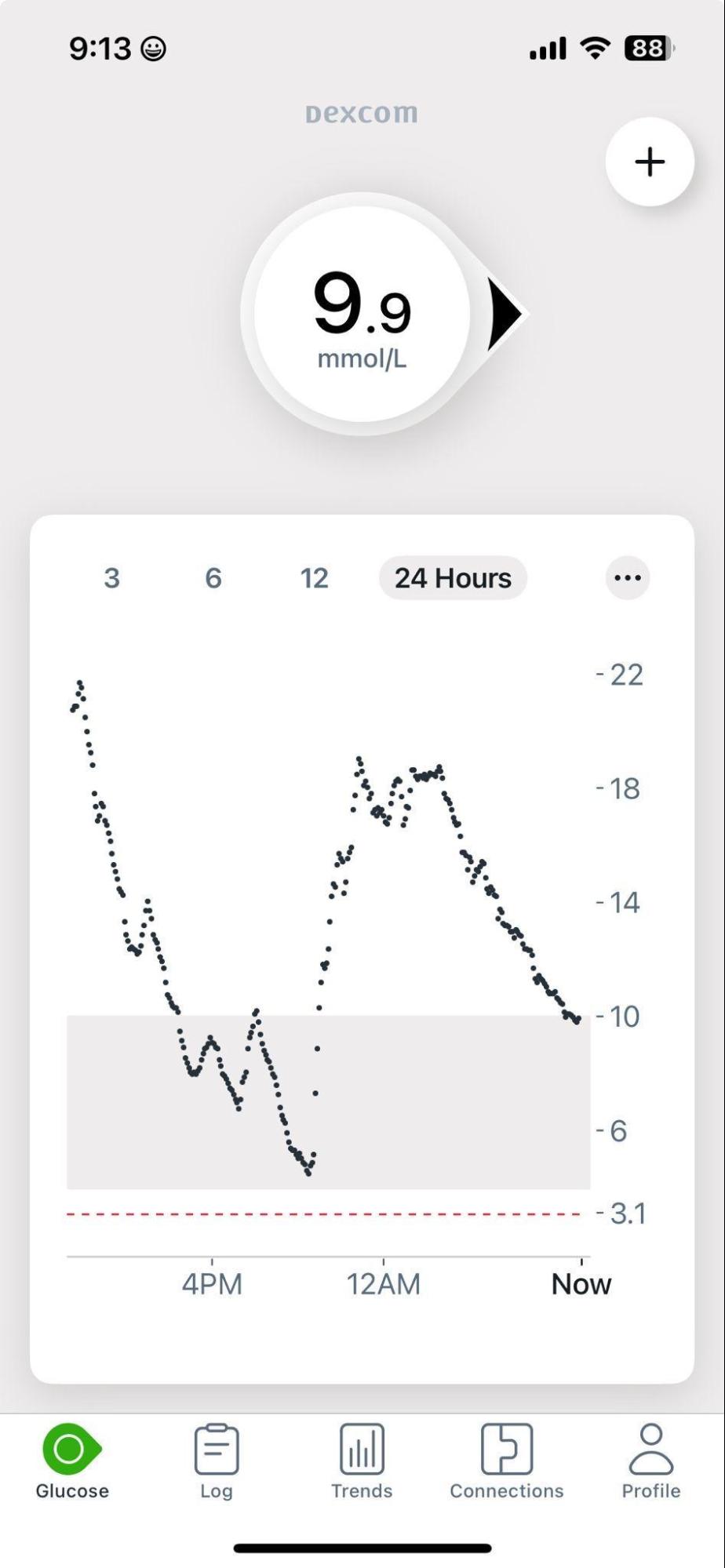
Thanks to the real-time data, it was no longer just incessant “nagging”. We were able to have more constructive conversations by linking his food intake to his glucose data. With this, my dad became more mindful of when and what he eats, and more proactive in making lifestyle decisions for himself. It’s not that he can’t have peanuts, just not at 11pm.
Saying goodbye to the “health police”
As caregivers, we sometimes fall into the role of the naggy “health police”, and it can be exhausting for both sides.
Instead of relying on reminders alone, we can talk about what the numbers are showing and what small changes might help, with the support of real-time glucose data.
That changed the dynamic between my dad and me, reducing the friction that conversations about his glucose levels used to create.
For a daughter who just wants her dad to stay healthy (and happy), that means a lot.
If you’re interested in finding out more about Dexcom G7 CGM, you can purchase it online via the Dexcom Official Store on Shopee or Lazada.
This article is brought to you by Dexcom.