News


Comment: If we have to turn up aircon temperatures in S'pore to save energy, poorly conceived office attire has to change as well
Long story: Shorts
May 13, 2026, 02:37 PM

Image from Canva

 Singaporeans are once again being asked to save energy by turning up our air conditioning by (at least) one degree.
This is usually the most prominent energy-saving method mooted to the public.
This decree/request/suggestion has always chafed me, not because it went too far, but in many ways, because it didn’t go far enough.
I have no issue with being asked to take individual and systemic change to adapt to or combat climate change.
The science is sound, and at any rate, the monetary savings alone, in my opinion, are enough justification for action.
But if we’re taking the long-term climate crisis, and the shorter-term (but not that short) energy crisis caused by the blockage of the Strait of Hormuz, seriously: maybe we can easily do more?
I have a proposal: let’s make shorts the default in offices.
Long story: Shorts
It’s a simple suggestion, and a limited one: first of all, it can’t just be any short (no short shorts), and… well, there’s a whole debate to have about exactly which short, but that’s a secondary concern.
My suggestion comes from a simple place.
It is fair to ask people to sacrifice some comfort for higher ideals, but in turn, it is fair to be asked to give something back in return.
Shorts, to me, is the simplest exchange.
Some people need trousers for work: if you’re in a high-exposure area, long trousers are a matter of safety and protection, so no need to debate that.
But many of us work in offices.
Practical dress
Almost nothing I do at work requires me to wear trousers. I do not write faster, speak on the phone more clearly, or research subjects better in trousers.
At most, I am marginally more presentable with stakeholders or interviewees, but I am willing to keep a change of clothes in the office for that. We could also come to a social understanding that it's unnecessarily performative and it's nothing a generation of counter-conditioning cannot fix.
I honestly cannot take any energy-saving plan seriously until we acknowledge that there is no need for any of us in this country to regularly dress like we’re in Europe (and by that same token, to cool our offices to feel like we’re in Europe).
Air-conditioned nation
I think it’s not too small to say that AC has become a focal point in Singaporean life.
We are, at times, derisively called the air-conditioned nation. Visitors regularly tell me they’re shocked at how cold we keep our offices and our malls.
Even former Prime Minister Lee Kuan Yew hailed air conditioning as the technological marvel that unlocked Singapore’s productivity, and frankly, having tried to work through sweltering heat before, I find it hard to disagree.
But no attempt to lower energy usage comes without consequence.
For many, including myself, urgings to take more public transport have little impact: there’s not that much more public transport I can take (and also, if I could, I would, cabs aren’t exactly expensive here, but they aren’t that cheap).
And if you have kids or elderly parents, public transport is more than a challenge; it can be a complete barrier under certain circumstances.
AC temperature feels like the accommodation we can all make, especially if you wander into your office in the middle of a sweltering day to see most of your colleagues wearing a hoodie or jacket of some kind.
(AC)comodation
But we should also do what we can to make that accommodation as comfortable as we can.
And don’t get me wrong, I know shorts are not the best-looking item of clothing for everyone.
One of the minor miracles of modern fashion is the suit, capable of making just about anyone look presentable, if not good.
The only time I’ve ever gotten a compliment for my dress sense was when wearing a suit.
But even the British knew when to choose practicality in the face of temperature. They fought the Second World War in Asia in shorts (although, to be fair, they lost).
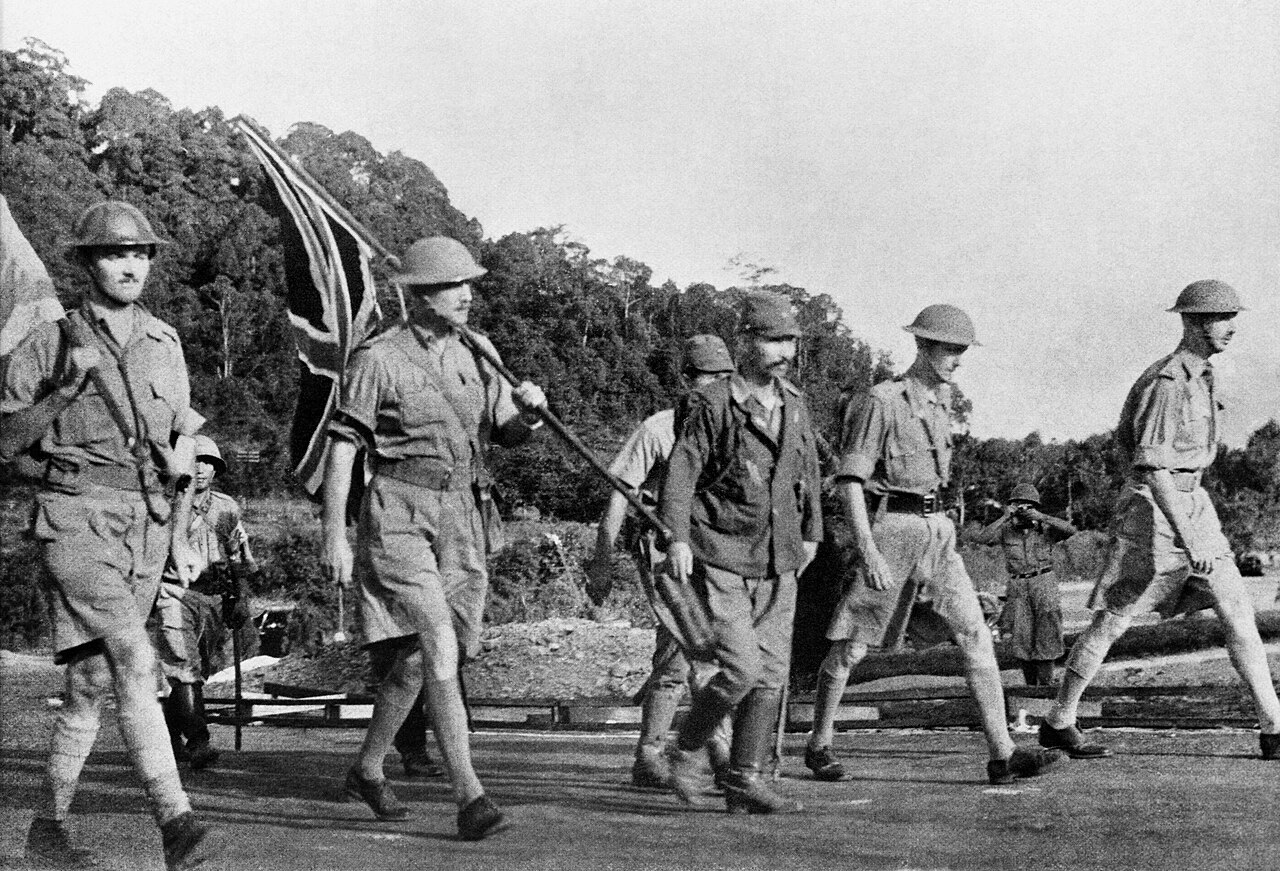 Image via Wikipedia
Until 1969, Singaporean policemen wore shorts with button-up shirts, as shown here, and I’d say they looked both authoritative and professional (it might be the hats, though).
A different world
Hey, speaking of the 1960s, one of the first things former Prime Minister Lee Kuan Yew did in government was to allow civil servants to lose their jackets and ties, allowing for short-sleeved shirts instead.
But the world he did that in was very different: in the 1960s, Singapore’s average temperature was about 26°C (I run my AC at 26°C at home, for comparison).
Meteorological Service Singapore's 2025 Annual Climate Assessment shows an alarming decadal temperature increase of a quarter of a degree celcius.
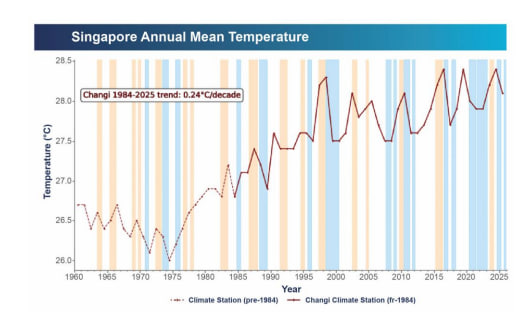 Image via Meteorological Service Singapore
“Office attire” in Singapore was designed for a time when the world was different, when it was cooler, when we didn’t have to run the machine that makes everything hotter always in order to make some places cooler, sometimes.
Shorts alone don't fix everything, maybe not even anything. But maybe just doing something will help.
Skirting the rules
And this won’t be the first time this trade-off has been acknowledged.
Just the other week, the government of Tokyo urged office workers to shed their trousers for shorts to accommodate higher AC temperatures.
There are regular stories of schoolchildren in other countries being forced to wear trousers on sweltering days, fighting back against regulations by wearing skirts instead.
National pride
My favourite version of this is the Bermuda short.
Bermudas are named for the island of Bermuda, and come from British Army Officers adopting them to deal with the tropical heat. It is such a point of national pride that their civil servants, even at official functions, may wear Bermuda shorts.
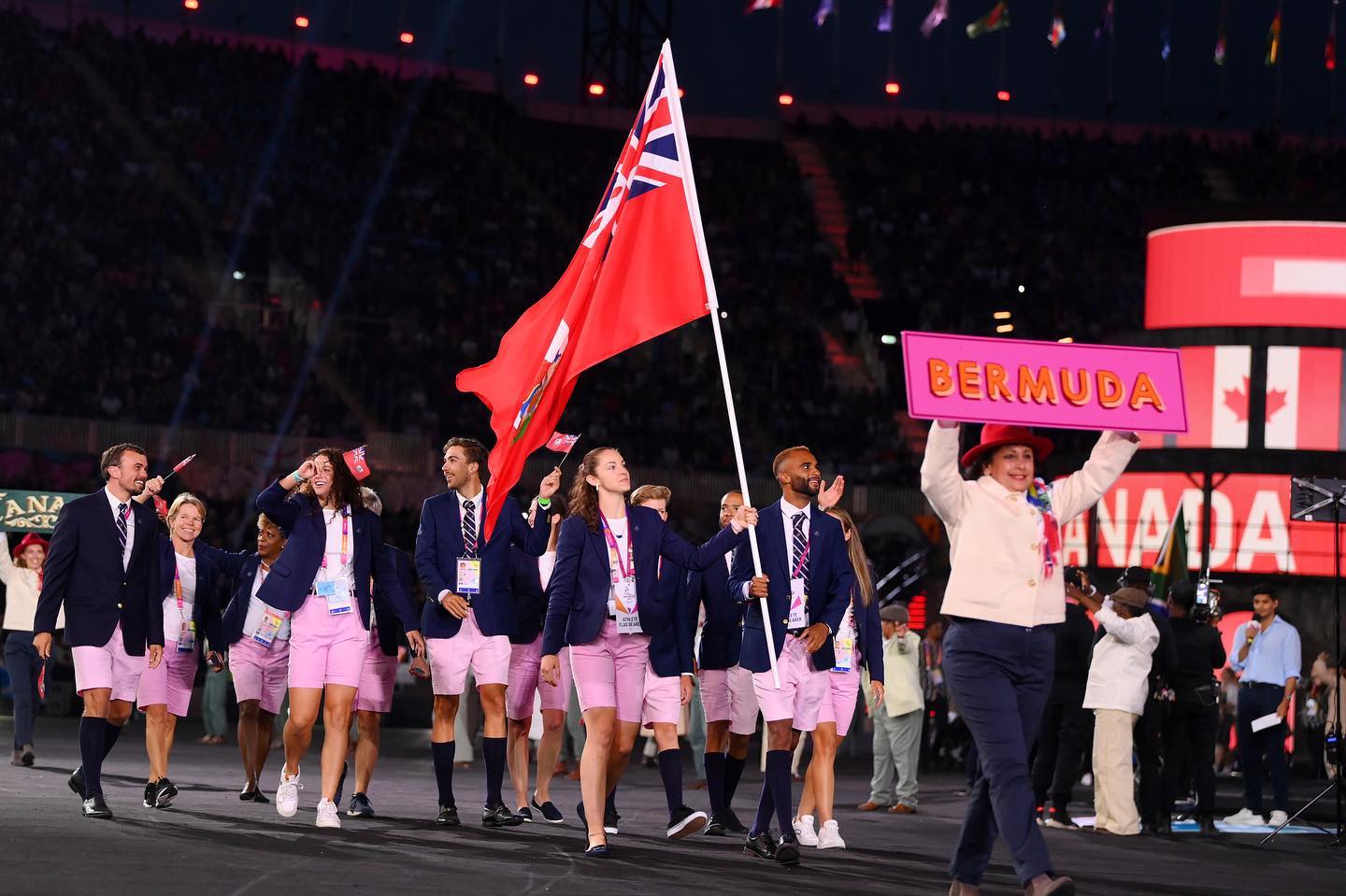 Image via Bermuda Olympic Association/Facebook
They wear them with blazers and long socks because, ironically, it can actually get quite chilly in Bermuda.
Singapore could take a leaf out of their book, and designate a style of shorts to be "Singapore's short", declare it an item of national wear, and give ourselves an excuse to wear it, if, for some reason, adapting to our climate is not enough reason.
We could just pretend it's always been an item of national heritage, like we did with the Merlion (invented in the 1970s, true story).