


Environment


About 1,300 enforcement actions taken by NEA & SFA against premises owners for rat-related lapses in 2025: NEA
Targeted operations were also launched in areas such as Little India.
March 26, 2026, 12:24 PM


The National Environment Agency (NEA) took more than 13,600 enforcement actions for high-rise littering offences across Singapore in 2025, the agency said in a media advisory on Mar. 26.
High-rise littering
Feedback on high-rise littering has held steady over the past three years, averaging around 28,600 cases annually, said NEA.
In 2025 alone, the agency carried out approximately 2,200 camera deployments and issued about 350 enforcement actions related to the offence.
NEA reminded the public that under the Environmental Public Health Act, first-time litterbugs face a court fine of up to S$2,000, rising to S$4,000 for a second offence and S$10,000 for third and subsequent convictions.
Courts may also impose a Corrective Work Order (CWO), requiring offenders to clean public spaces for up to 12 hours.
 Corrective Work Order. Photo from NEA.
Stepping up enforcement at hotspots
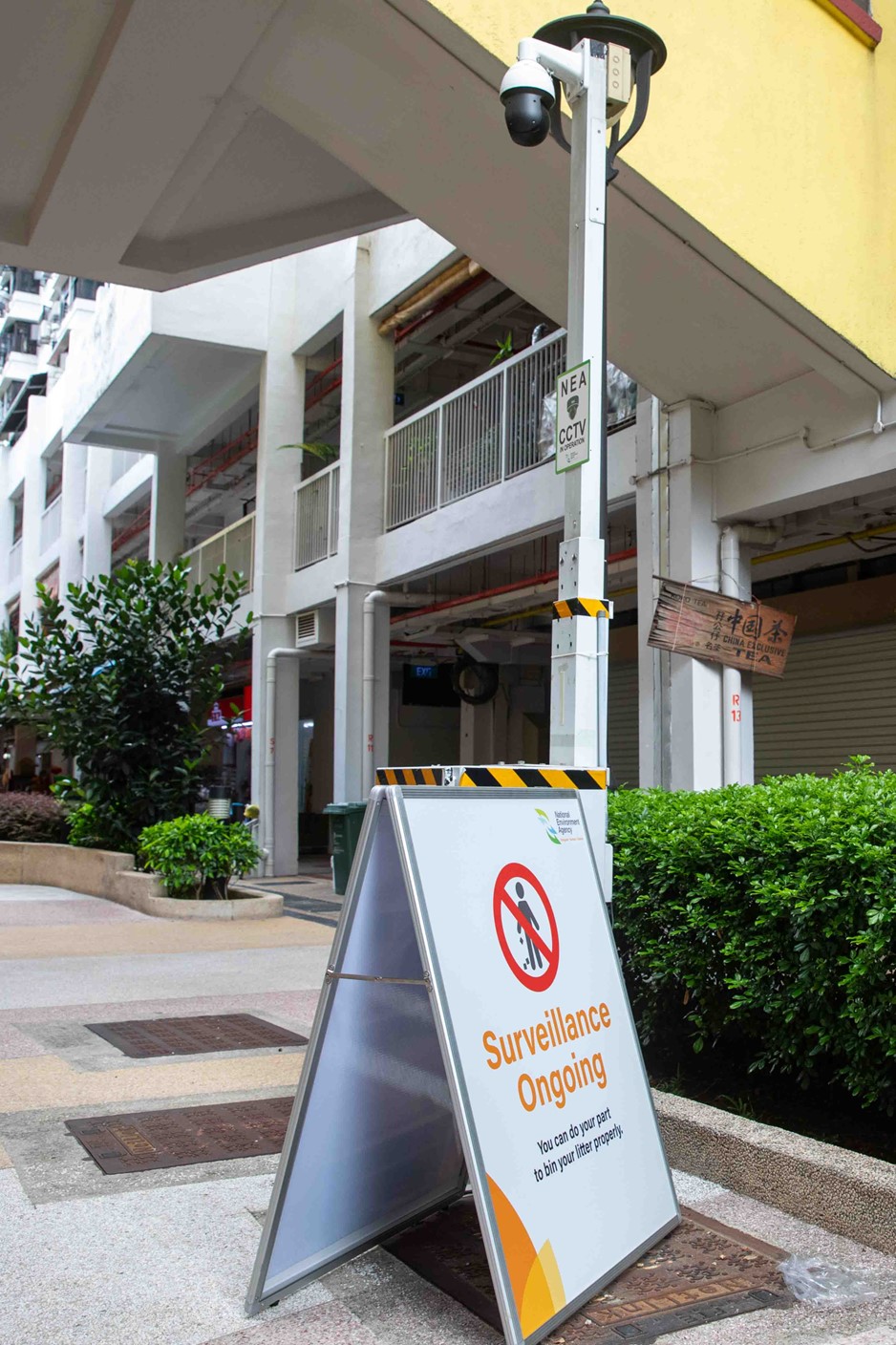 NEA surveillance camera and standee. Photo from NEA.
NEA has also ramped up enforcement efforts at cleanliness hotspots through visible patrols, standees, surveillance cameras and ground engagements.
 Officer carrying out enforcement action. Photo from NEA.
Hotspots are identified using localised litter counts, public feedback and sustained ground observations.
Additionally, the agency conducted 300 enforcement blitzes at such hotspots — more than double the number carried out in 2024.
It also issued over 700 CWOs in 2025, with 60 CWO sessions held at hotspots to strengthen deterrence.
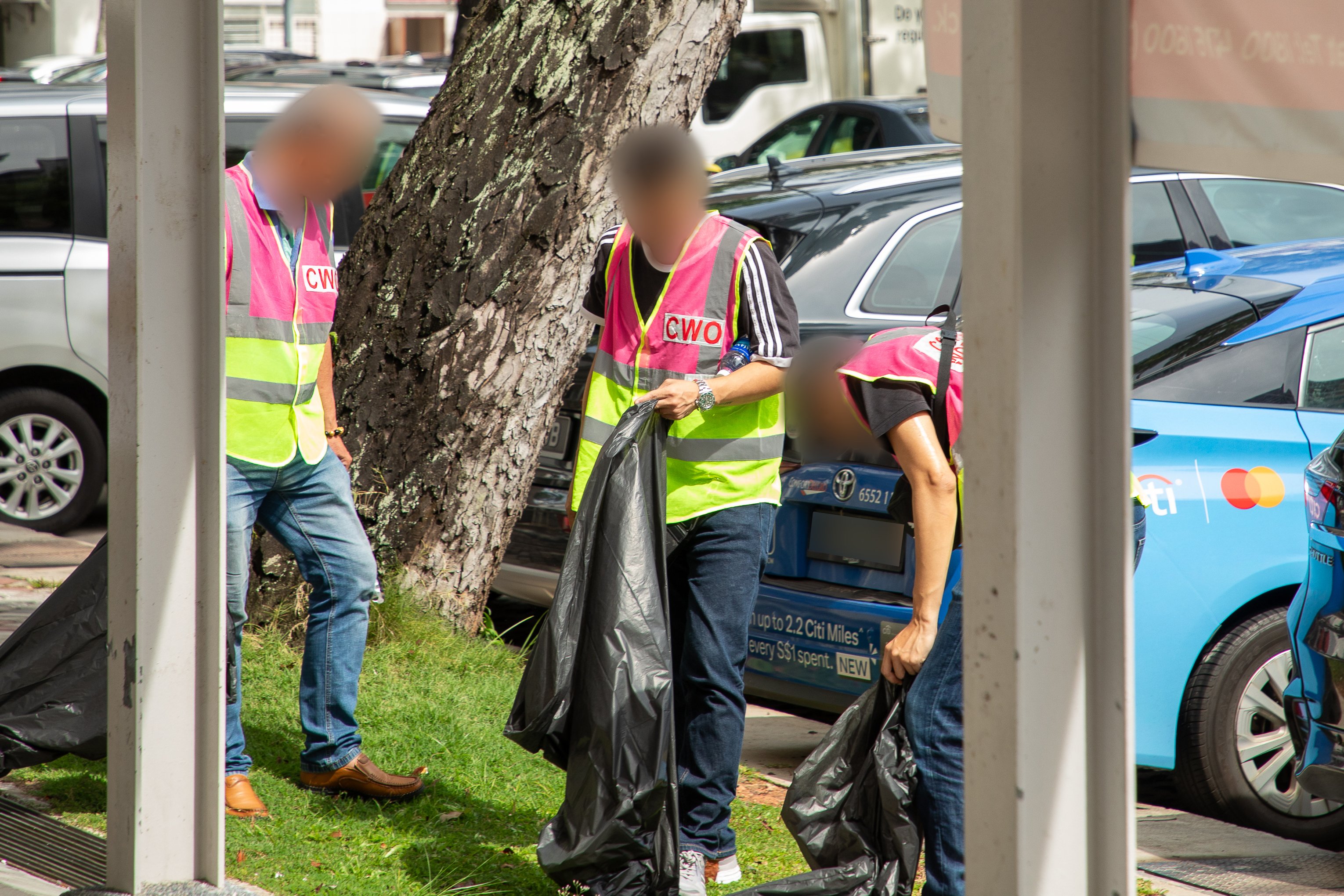 Corrective Work Order in progress. Photo from NEA.
These measures proved effective: litter counts at monitored hotspots fell by 40 per cent over a six-month period.
Rat control efforts
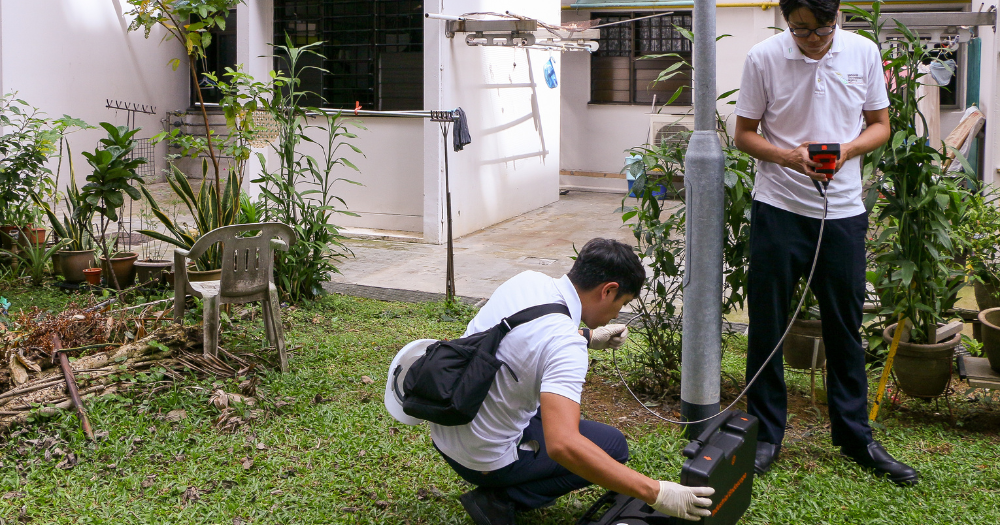
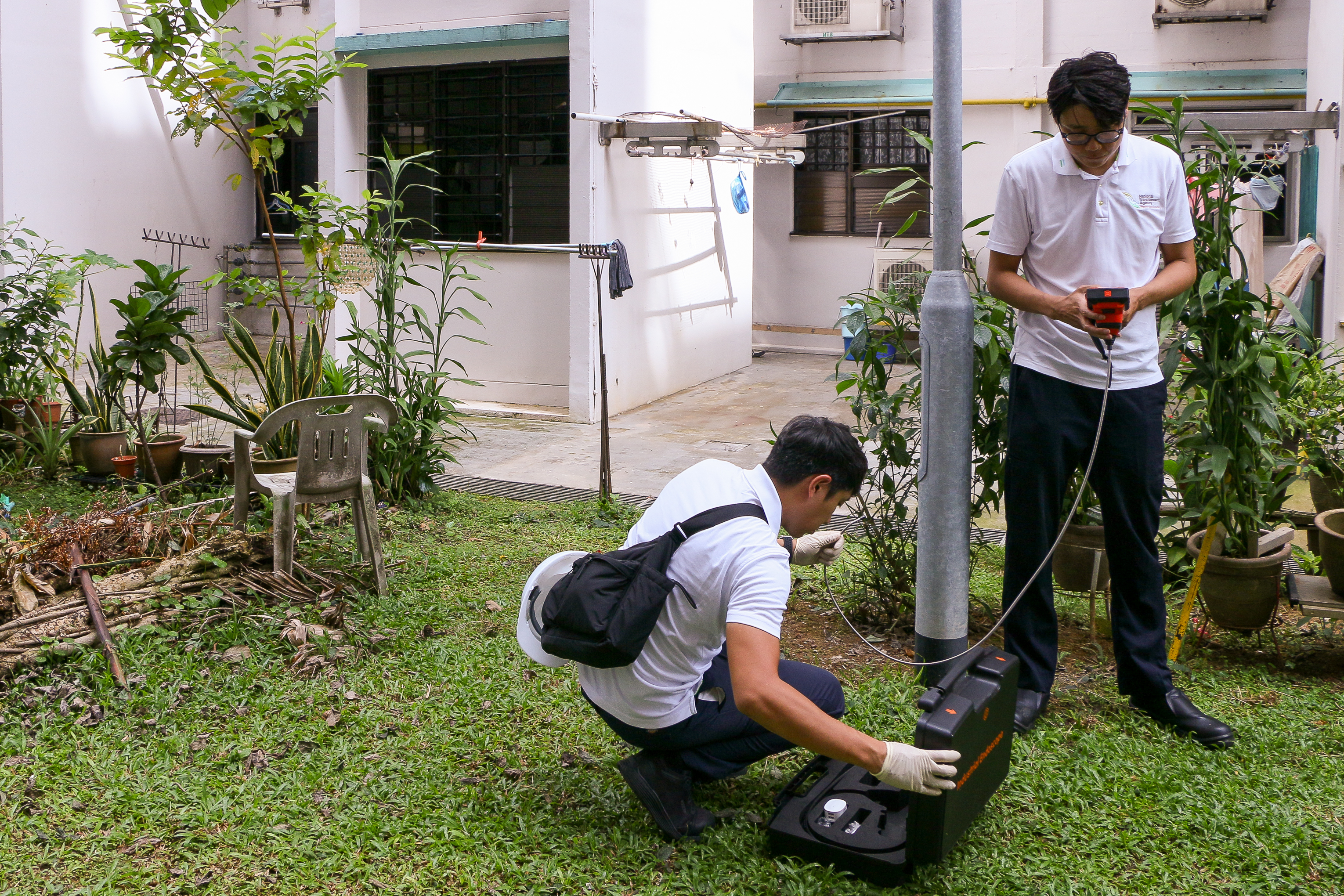 Rat inspection with videoscope. Photo from NEA.
With regard to rat control efforts, NEA noted that according to its bi-monthly surveillance cycle, the average number of rat burrows per cycle declined from around 5,400 in the first half of 2025 to approximately 4,200 in the second half.
Most burrows were found in public housing estates, followed by grass verges along roadsides and in industrial areas.
Since Apr. 1, 2025, NEA tightened enforcement against premises managers and owners for rat-related lapses, including poor refuse management, inadequate housekeeping, defects in refuse-handling facilities and the presence of rat harbourage.
About 1,300 enforcement actions were jointly taken by NEA and the Singapore Food Agency against premises owners for rat-related lapses, of which about 620 were for poor refuse management.
Targeted operations were also launched in areas such as Little India, with stepped-up rat control efforts since September 2025.
Such efforts included stakeholder engagement on proper housekeeping and refuse management, as well as regular night inspections.
Thermal and passive infrared camera deployments subsequently recorded up to a 70 per cent reduction in rat activity at various sites in the area, the agency added.
"Sustained efforts from all stakeholders remain crucial, as rat populations can quickly rebound if good housekeeping practices are not maintained consistently," NEA said, adding that it would continue adopting a multi-pronged approach encompassing enforcement, innovative solutions and stakeholder engagement.
"Everyone plays a part to keep Singapore clean."
Improving surveillance capabilities
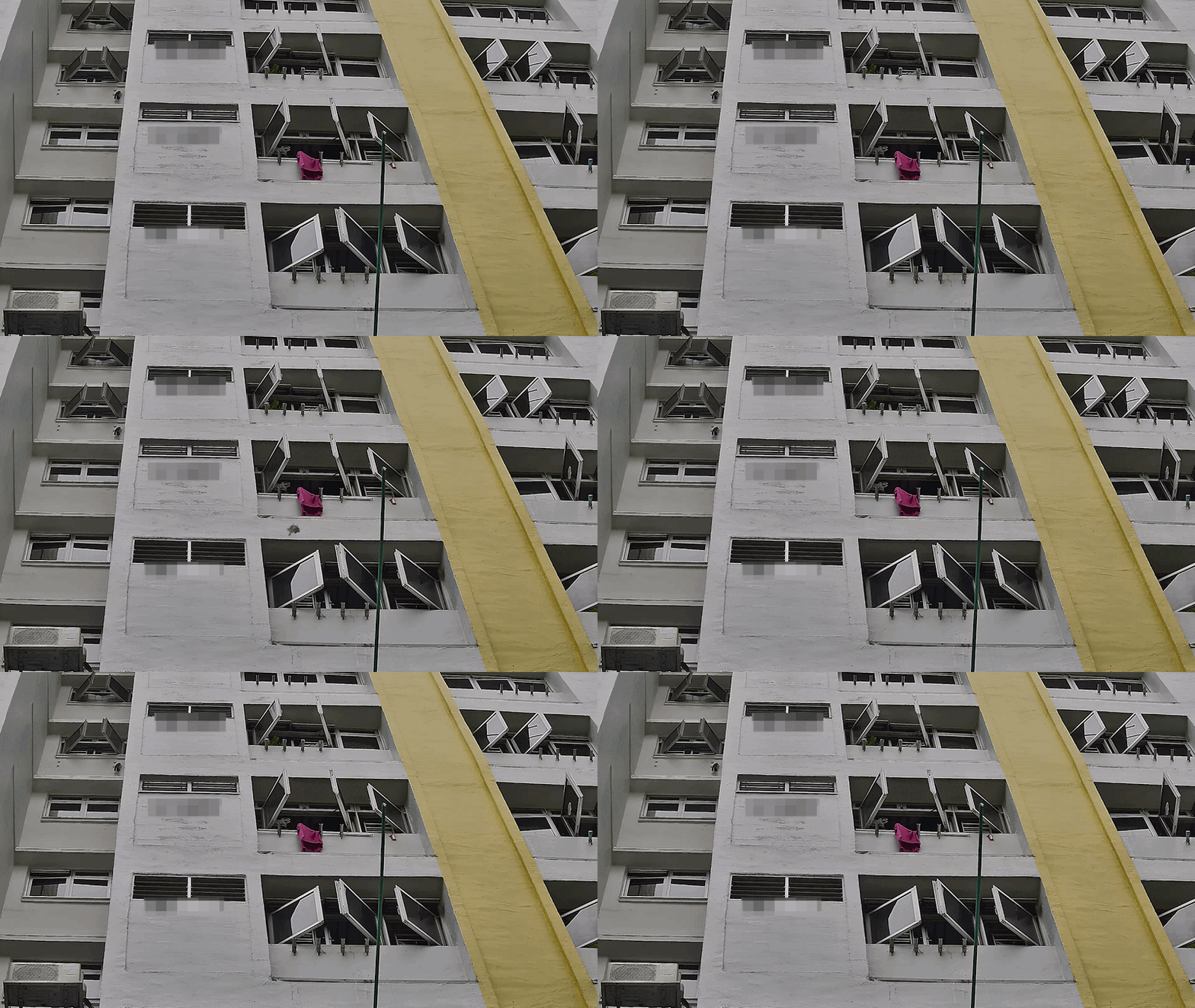 High-rise littering act captured at Ang Mo Kio. Video from NEA.
To improve the effectiveness of the intervention, NEA extended the duration of high-rise littering camera surveillance from 14 days to up to 28 days starting August 2025.
In October, the agency also launched a six-month pilot with town councils (TCs), providing each TC with two camera deployments per month to allow them to respond more swiftly to ground-level issues.
TCs can deploy cameras at high-rise littering hotspots flagged by their own staff.
All TCs have since joined the pilot, with 39 cameras deployed and a catch rate of 30 per cent recorded as of October 2025.
Top photo from NEA